
Restaurant in Bernalillo, United States
Prairie Star Restaurant & Winebar
100ptsPueblo Land Destination Dining
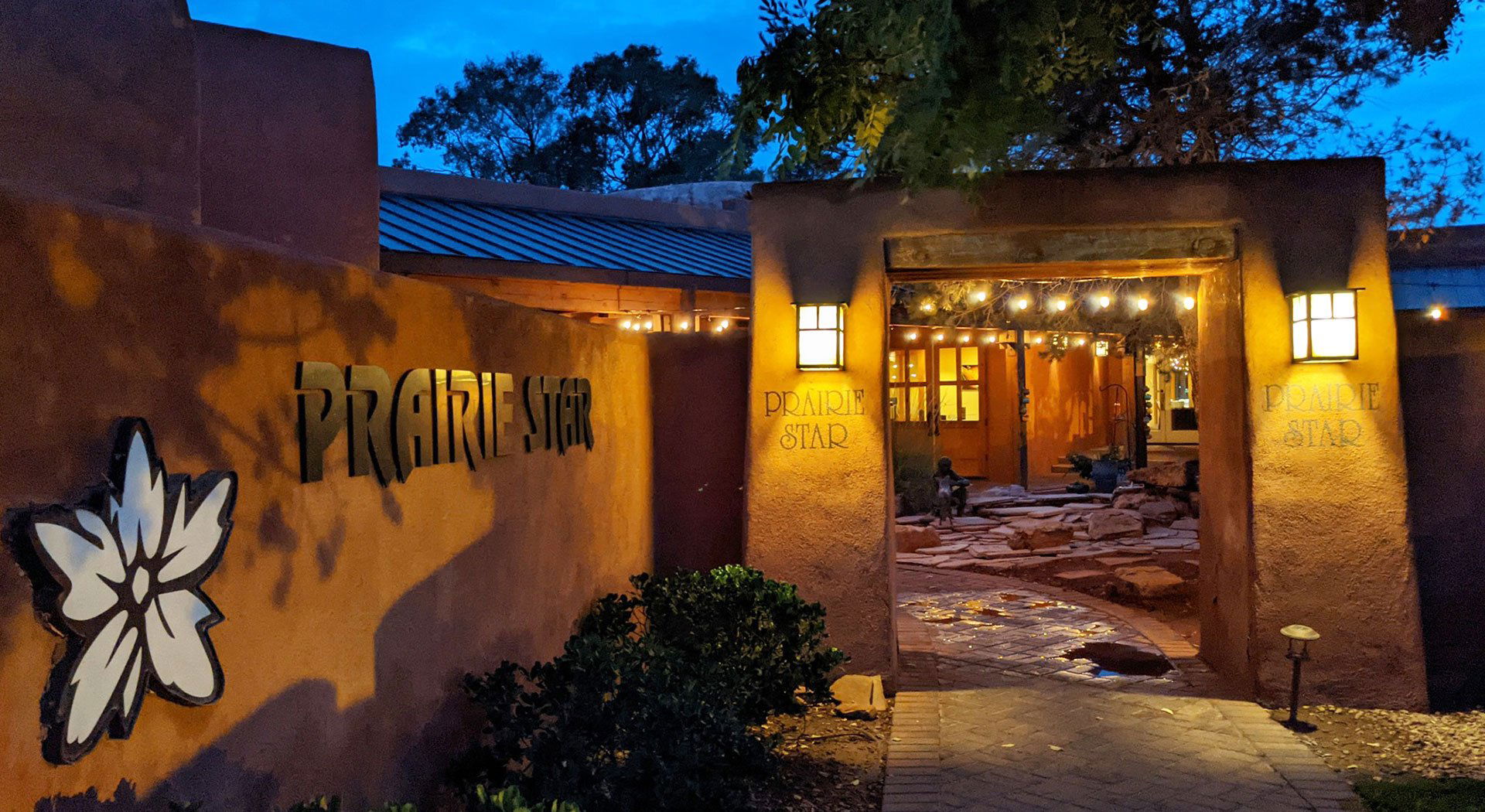
About Prairie Star Restaurant & Winebar
Prairie Star Restaurant & Winebar sits on Santa Ana Pueblo land outside Bernalillo, where the high desert setting shapes the dining premise as directly as the kitchen does. The restaurant occupies a position in the Southwest fine-dining tier where place and ingredient provenance carry more argumentative weight than imported technique. For visitors to Bernalillo or the wider Rio Grande corridor, it represents a distinctly grounded alternative to the region's more generic resort dining.
Where the Land Sets the Terms
The drive to Prairie Star along Pueblo land northwest of Bernalillo already frames what the restaurant is arguing. The Rio Grande bosque stretches to the west, the Sandia Mountains rise to the east, and by the time a diner reaches the address at 288 Prairie Star Road on Santa Ana Pueblo, the geography has done considerable editorial work. This is not a restaurant that happens to be located in New Mexico — it is a restaurant whose entire premise depends on that location. In the American Southwest fine-dining tier, that distinction matters more than it might elsewhere, because the region's culinary identity is still being actively negotiated between imported fine-dining grammar and something more specifically rooted.
That negotiation is most visible in how ingredient sourcing operates at restaurants in this bracket. The high desert and the Rio Grande valley produce a specific pantry: green and red chile in forms that no coastal market replicates convincingly, heritage corn varieties with pre-colonial lineage, lamb from ranches that have grazed the same plateau for generations, and stone fruit from orchards at altitude. When a kitchen in this corridor takes those materials seriously, the food reads differently from technically equivalent cooking in, say, a comparable price tier in Denver or Santa Fe's more tourist-facing strip. The sourcing is not a marketing posture — it is a structural fact about what grows and is raised here.
The Southwest Sourcing Argument
Across American fine dining, sourcing-led identity has become the dominant editorial framework for premium restaurants positioning themselves outside the major coastal markets. Blue Hill at Stone Barns in Tarrytown and Single Thread Farm in Healdsburg represent the most formally documented versions of this model, where the farm or land relationship is front-of-house conversation as much as kitchen practice. In the Southwest, the equivalent argument runs through Indigenous agricultural heritage , the Three Sisters tradition of corn, beans, and squash, the chile cultivation that defines New Mexico's culinary identity at a constitutional level (the state officially designated red and green chile as its state vegetables), and the livestock economies that predate statehood.
A restaurant on Pueblo land is operating inside that history whether it chooses to or not. The more considered kitchens in this setting use proximity to Pueblo agricultural networks as a genuine sourcing advantage rather than ambient atmosphere. That specificity is what separates regional fine dining with actual stakes from the kind of approximation that Emeril's in New Orleans or the broader celebrity-chef expansion model produced in the 1990s and 2000s , technically polished rooms with only a surface connection to local ingredient reality.
In the Rocky Mountain and Southwest corridor, a smaller group of restaurants is working with this kind of material integrity. Brutø in Denver and Frasca Food & Wine in Boulder represent different versions of the regional premium dining argument , one hyper-local and fermentation-driven, the other Italian-rooted with wine program depth. Prairie Star occupies a different coordinate: New Mexican specificity on Pueblo land, with a wine bar component that positions it as a full evening destination rather than a purely food-focused counter.
The Wine Bar Dimension
The restaurant-plus-wine-bar format is a deliberate signal in this market tier. It addresses a structural problem in destination dining outside major cities: without a serious drinks program, a remote or semi-remote fine-dining room struggles to justify the full evening investment for a diner who has driven forty minutes from Albuquerque. Adding a wine bar component creates a different rhythm , it allows the space to function as a pre- or post-dinner gathering point and builds a clientele that is not exclusively tasting-menu committed.
This format is common in wine-producing regions, where proximity to production provides an obvious curatorial angle, but in New Mexico it requires a different kind of curation. The state has a growing wine industry concentrated in the southern part of the state and the Rio Grande corridor, producing styles that do not yet have broad national recognition but are increasingly serious in quality terms. A wine program that integrates local production alongside conventional fine-dining selections , French, Californian, Italian , signals a kitchen with an opinion about regional identity rather than a room simply validating itself through imported prestige. For context on how the wine-program dimension can become a central part of a restaurant's argument, Le Bernardin in New York City and Providence in Los Angeles demonstrate how beverage curation reinforces a kitchen's sourcing and technique narrative at the highest price tier.
Prairie Star in Its Competitive Set
Within Bernalillo and the broader middle Rio Grande valley, the premium dining options are limited in number. The closest comparator on the same campus is Corn Maiden, which draws on an overlapping geographic and cultural identity. That pairing reflects a broader pattern in destination resort dining, where two differently pitched restaurants share a property and a philosophy without directly competing , one might carry a more formal tasting structure while the other operates at a more accessible price point and format.
Nationally, the restaurants most useful as reference points for what Prairie Star is attempting are those that have most seriously resolved the tension between regional specificity and fine-dining craft: The French Laundry in Napa built its case on California produce and technique parity with France; Addison in San Diego has done similar work with Southern California sourcing at the Michelin level; Bacchanalia in Atlanta anchored the Southern fine-dining argument on its own farm relationship. Prairie Star operates at a different scale and in a market with less national attention, but the underlying structural argument , that a place's ingredient identity is its most defensible asset , is the same one those kitchens have made in their respective regions.
For context on the wider spectrum of American progressive fine dining, Alinea in Chicago, Lazy Bear in San Francisco, and Atomix in New York City represent the technically maximalist end of the market , rooms where the sourcing argument is subsumed into a broader modernist or cultural project. Prairie Star's setting and Pueblo land context point in a different direction: toward a dining argument where the land itself is the primary text.
Planning a Visit
Prairie Star sits at 288 Prairie Star Road on Santa Ana Pueblo, a short drive from central Bernalillo and roughly thirty minutes north of Albuquerque. Given the remote setting, a reservation is advisable rather than optional , walk-in availability at this kind of destination room is limited on weekends and during peak shoulder seasons in the fall, when the light on the Sandia Mountains and the cooler temperatures make the setting particularly compelling. The wine bar component may offer more flexibility for those without a dining reservation, but confirming current format and hours directly with the venue before making the drive is the practical move. For a broader picture of what Bernalillo's dining scene offers across price points and styles, our full Bernalillo restaurants guide maps the options across the area.
Frequently Asked Questions
- Is Prairie Star Restaurant & Winebar child-friendly?
- The setting on Santa Ana Pueblo and the fine-dining positioning suggest a room that skews toward adult evening dining, which is common at this price tier in smaller markets. Families visiting Bernalillo with children would likely find a more relaxed fit at casual options in the area, though the outdoor setting and landscape views can make the approach appealing for older children with an interest in the environment. Confirming the current format directly with the venue is advisable before bringing younger guests.
- How would you describe the vibe at Prairie Star Restaurant & Winebar?
- The setting on Pueblo land with Rio Grande valley views creates a specific atmospheric register that is difficult to replicate in an urban room. The combination of a wine bar component and a destination fine-dining premise means the room can operate at different intensities depending on the evening and the guest's intention. In a city like Albuquerque or Santa Fe, a room with equivalent ambitions would be competing against a denser peer set; here, the relative isolation is part of the offer.
- What's the must-try dish at Prairie Star Restaurant & Winebar?
- Without current verified menu data, naming a specific dish would be speculative. What the kitchen's context suggests is that preparations drawing on the New Mexico chile tradition and regional livestock , lamb, in particular, from the high desert ranching economy , are the most defensible ordering positions. The sourcing argument is strongest when it runs through ingredients that the surrounding land actually produces at quality.
- Is Prairie Star Restaurant & Winebar reservation-only?
- For a destination fine-dining room at this remove from a major urban center, advance reservations are the reliable approach. The wine bar element may accommodate walk-ins with more flexibility, but driving to Santa Ana Pueblo without confirming availability first is a planning risk. Contact the venue directly to confirm current booking policy and format before your visit.
- What's the defining dish or idea at Prairie Star Restaurant & Winebar?
- The defining idea is geographic specificity: a kitchen on Pueblo land in the Rio Grande valley has access to an ingredient heritage , heirloom chile, heritage corn varieties, high desert lamb and beef , that no kitchen outside this corridor can replicate with the same fidelity. That sourcing argument, rather than any single dish, is the organizing principle that separates this kind of regional fine dining from technically equivalent rooms with less rooted ingredient programs.
- Does Prairie Star Restaurant & Winebar reflect Pueblo culinary heritage in its menu?
- Operating on Santa Ana Pueblo land places the restaurant in direct proximity to one of the oldest continuous agricultural traditions in North America, and serious kitchens in this position tend to engage with that heritage through sourcing relationships with Pueblo producers and through the use of indigenous crop varieties. Whether Prairie Star's current menu formalizes that engagement programmatically or expresses it more organically through ingredient selection is leading confirmed with the venue directly. For travelers interested in the intersection of Indigenous food traditions and contemporary fine dining, this geographic context is the most substantive differentiator in the Bernalillo area dining tier.
Related editorial
- Best Fine Dining Restaurants in ParisFrom three-Michelin-star icons to the next generation of Parisian chefs pushing boundaries, these are the restaurants that define fine dining in the world's culinary capital.
- Best Luxury Hotels in RomeFrom rooftop terraces overlooking ancient ruins to Michelin-starred hotel dining, these are the luxury hotels that make Rome unforgettable.
- Best Cocktail Bars in KyotoFrom sleek lounges to hidden speakeasies, Kyoto's cocktail scene blends Japanese precision with global influence in ways you won't find anywhere else.
Save or rate Prairie Star Restaurant & Winebar on Pearl
Keep this venue in your Pearl passport, rate it after you visit, and track it alongside every other place you collect.