
Restaurant in Gyumri, Armenia
Poloz Mukuch
100ptsShirak Plateau Hospitality
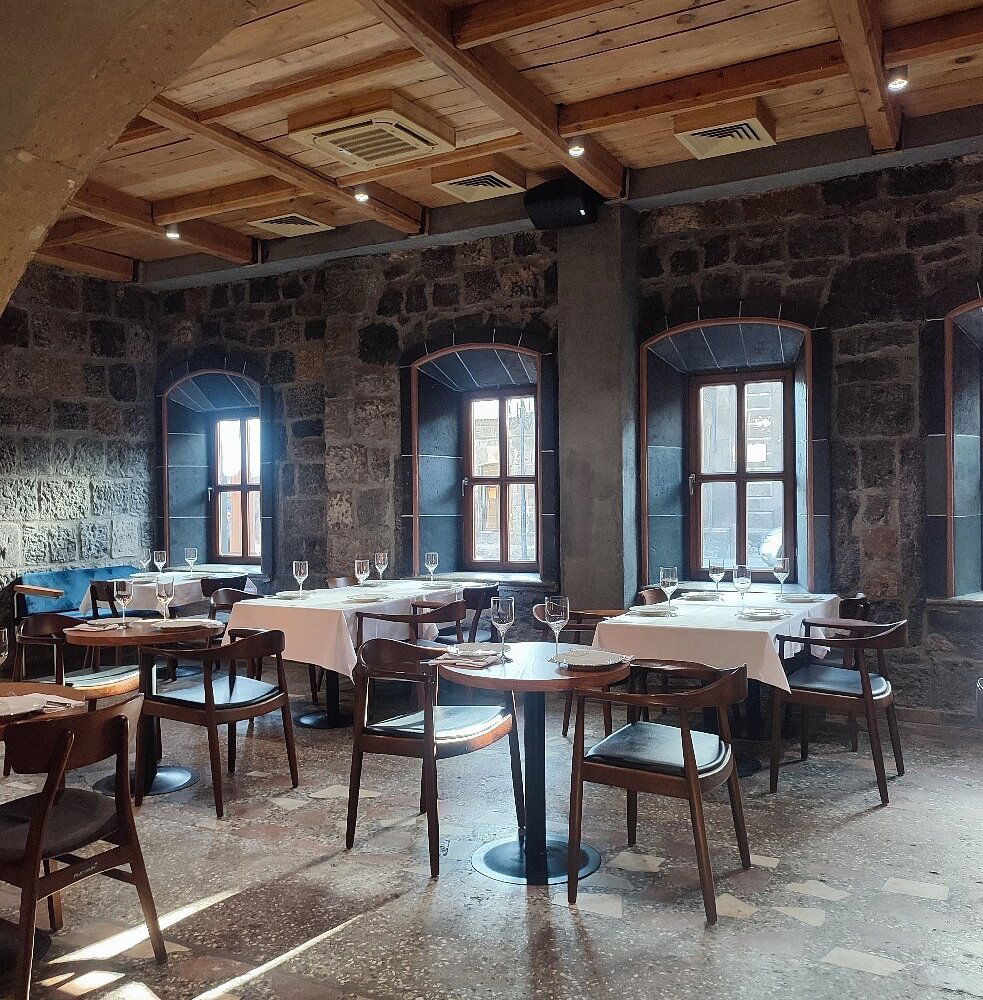
About Poloz Mukuch
Poloz Mukuch sits on Jivani Street in Gyumri, Armenia's second city and a place where post-Soviet culinary traditions meet a slow-growing appetite for ingredient-driven cooking. The restaurant draws on the Shirak region's pastoral larder, positioning it within a small cohort of Gyumri addresses worth planning around rather than stumbling upon.
Gyumri's Table: What the Shirak Region Puts on the Plate
Armenia's second city does not announce itself the way Yerevan does. Gyumri moves at a different pace — the black tuff stone facades of the old merchant quarter absorb afternoon light rather than reflecting it, and the streets around Jivani carry the unhurried rhythm of a city that rebuilt itself slowly after 1988 and is still, in some ways, deciding what it wants to become. That ambiguity shapes the dining scene here more than any single restaurant. Where Yerevan has developed a recognisable tier of contemporary Armenian cooking — places like At Gayane's in Yerevan anchoring a serious conversation about national cuisine , Gyumri's restaurants operate closer to the source: regional, seasonal, and less mediated by international influence.
Poloz Mukuch sits on Jivani Street in this context. The address places it inside the older residential and commercial fabric of the city rather than near the tourist-facing squares, which tells you something about who the restaurant is primarily cooking for. In cities where ingredient-led kitchens draw most of their custom from locals rather than visitors, the food tends to stay honest to the regional larder in a way that export-facing operations sometimes don't.
The Shirak Larder and Why Provenance Matters Here
The Shirak plateau is high-altitude, cold-winter, and historically pastoral. The agricultural character of the region , livestock, grain, preserved vegetables, fermented dairy , has shaped Armenian cooking in this part of the country in ways that differ meaningfully from the fruit-forward, herb-heavy traditions of Ararat Valley cooking further south. Lamb raised at altitude tends toward leaner, more mineral-edged meat than lowland equivalents. Dried and fermented ingredients carry more weight in the winter diet than fresh produce. These are not romantic abstractions; they are the practical results of geography and climate that any kitchen drawing on local supply will reflect whether it intends to or not.
This is the framing in which Poloz Mukuch is worth understanding. The restaurants that have drawn the most serious attention globally for ingredient provenance , Atelier Moessmer Norbert Niederkofler in Brunico with its Alpine-sourcing discipline, or Reale in Castel di Sangro working the Apennine plateau , make the case that regional altitude and isolation produce ingredients worth treating with precision rather than compensating for. The Shirak region makes a structurally similar argument, even if the dining infrastructure around it remains far less developed.
For comparison, places like Piazza Duomo in Alba and Jordnær in Gentofte have built internationally recognised programs around hyper-local sourcing within distinct regional ecosystems. The Armenian highlands present an analogous opportunity , one that Gyumri's kitchens are better positioned to explore than their Yerevan counterparts, given proximity to the source.
What to Expect at the Table
Without a confirmed menu record in the venue database, naming specific dishes would cross into fabrication. What the broader pattern of Gyumri restaurants in this location type suggests, drawing on the regional cooking tradition, is a kitchen working with preserved meats, dairy preparations including Armenian matzoon and aged cheeses, legume-based dishes built around the plateau's pulse crops, and bread traditions that remain central to the meal structure rather than incidental to it. Armenian flatbread , lavash and its thicker regional variants , functions as both utensil and course in this part of the country, a culinary convention that European tasting-menu culture has largely abandoned but that retains real functional logic here.
Restaurants like Dilijan in Dilijan have shown that Armenian cooking, when given space to operate on its own terms rather than in dialogue with European fine dining, can hold the attention of a serious food traveller. Poloz Mukuch's Jivani Street location suggests a similar ambition pitched at a local audience rather than an international one , which in practice often means the food is less performed and more direct.
Elsewhere in the world, some of the most compelling ingredient-driven restaurants , Uliassi in Senigallia, Quattro Passi in Marina del Cantone, Dal Pescatore in Runate , have built long reputations on cooking that stays geographically and seasonally anchored. The operating logic is the same at every scale: when the supply chain is short and the kitchen is paying attention, the food reflects a place rather than a category.
Planning a Visit: Practical Notes
Gyumri is approximately 120 kilometres north of Yerevan and accessible by marshrutka or train, with the journey running roughly 90 minutes to two hours depending on the mode. The city receives a fraction of Yerevan's visitor traffic, which means restaurants here are not calibrated around the expectations of international tourists in the way that capital-city establishments increasingly are. That cuts both ways: pricing tends to be lower than Yerevan equivalents, but operating hours and booking infrastructure are less predictable. No phone number, website, or confirmed booking method appears in the current venue record for Poloz Mukuch, so arriving directly at Jivani Street remains the most reliable approach. Gyumri's dining culture is generally earlier-evening in orientation , plan accordingly rather than arriving late.
For the broader Gyumri dining picture, including other addresses worth pairing with a visit here, see our full Gyumri restaurants guide. Travellers building a wider Armenian itinerary will also find relevant context in the Yerevan scene, where restaurants like At Gayane's offer a useful point of comparison for what Armenian cooking looks like when it operates at higher production values. For a sense of how destination restaurants at the sharp end of ingredient sourcing operate internationally, the programs at Le Calandre in Rubano, Quique Dacosta in Dénia, Waterside Inn in Bray, Le Bernardin in New York City, Lazy Bear in San Francisco, Atomix in New York City, Emeril's in New Orleans, and HAJIME in Osaka provide a useful frame for what regional sourcing discipline can look like at full resolution.
Frequently Asked Questions
- What's the vibe at Poloz Mukuch?
- Gyumri operates outside the international dining circuit that shapes the tone of Yerevan's higher-profile restaurants. The atmosphere at an address like Poloz Mukuch, situated in the older residential streets rather than the tourist centre, tends toward the local and unfussy , a room where the food does the work and the setting does not perform for an outside audience. Without confirmed awards or a published profile, the reasonable expectation is a neighbourhood-facing operation rather than an occasion restaurant.
- Is Poloz Mukuch suitable for children?
- Armenian restaurant culture is generally family-oriented, and Gyumri in particular maintains a strong tradition of multi-generational dining. A neighbourhood restaurant on Jivani Street is unlikely to impose the format constraints , fixed tasting menus, extended seatings, strict dress codes , that make some higher-end city restaurants less practical with children. Pricing in Gyumri runs below Yerevan equivalents across most categories, which also reduces the calculus around a difficult meal.
- What's the leading thing to order at Poloz Mukuch?
- No confirmed menu record exists in the venue database, so naming specific dishes would be speculative. What the Shirak region's cooking tradition consistently produces is lamb-centred preparations, preserved and fermented dairy, and bread-forward meal structures that reflect the plateau's agricultural character. A kitchen sourcing locally in this region will naturally produce food that reflects those patterns. Order around the table rather than from a single dish , Armenian meals at this level of locality tend to function as shared spreads rather than individual plates.
- How does Poloz Mukuch fit into Gyumri's dining scene compared to the capital?
- Gyumri's restaurant culture sits at a different point in its development than Yerevan's, where a recognisable tier of contemporary Armenian cooking has begun attracting attention from food travellers. Poloz Mukuch, on Jivani Street in the Shirak region, operates closer to the regional supply chain that underpins Armenian cuisine , a position that gives it access to plateau-raised ingredients before they reach the capital. For travellers who have already covered the Yerevan circuit, a meal in Gyumri offers a less mediated version of the same culinary tradition.
Related editorial
- Best Fine Dining Restaurants in ParisFrom three-Michelin-star icons to the next generation of Parisian chefs pushing boundaries, these are the restaurants that define fine dining in the world's culinary capital.
- Best Luxury Hotels in RomeFrom rooftop terraces overlooking ancient ruins to Michelin-starred hotel dining, these are the luxury hotels that make Rome unforgettable.
- Best Cocktail Bars in KyotoFrom sleek lounges to hidden speakeasies, Kyoto's cocktail scene blends Japanese precision with global influence in ways you won't find anywhere else.
Save or rate Poloz Mukuch on Pearl
Keep this venue in your Pearl passport, rate it after you visit, and track it alongside every other place you collect.