
Restaurant in Bari, Italy
Pizzeria Di Cosimo Mauro
100ptsApulian Neighbourhood Pizza
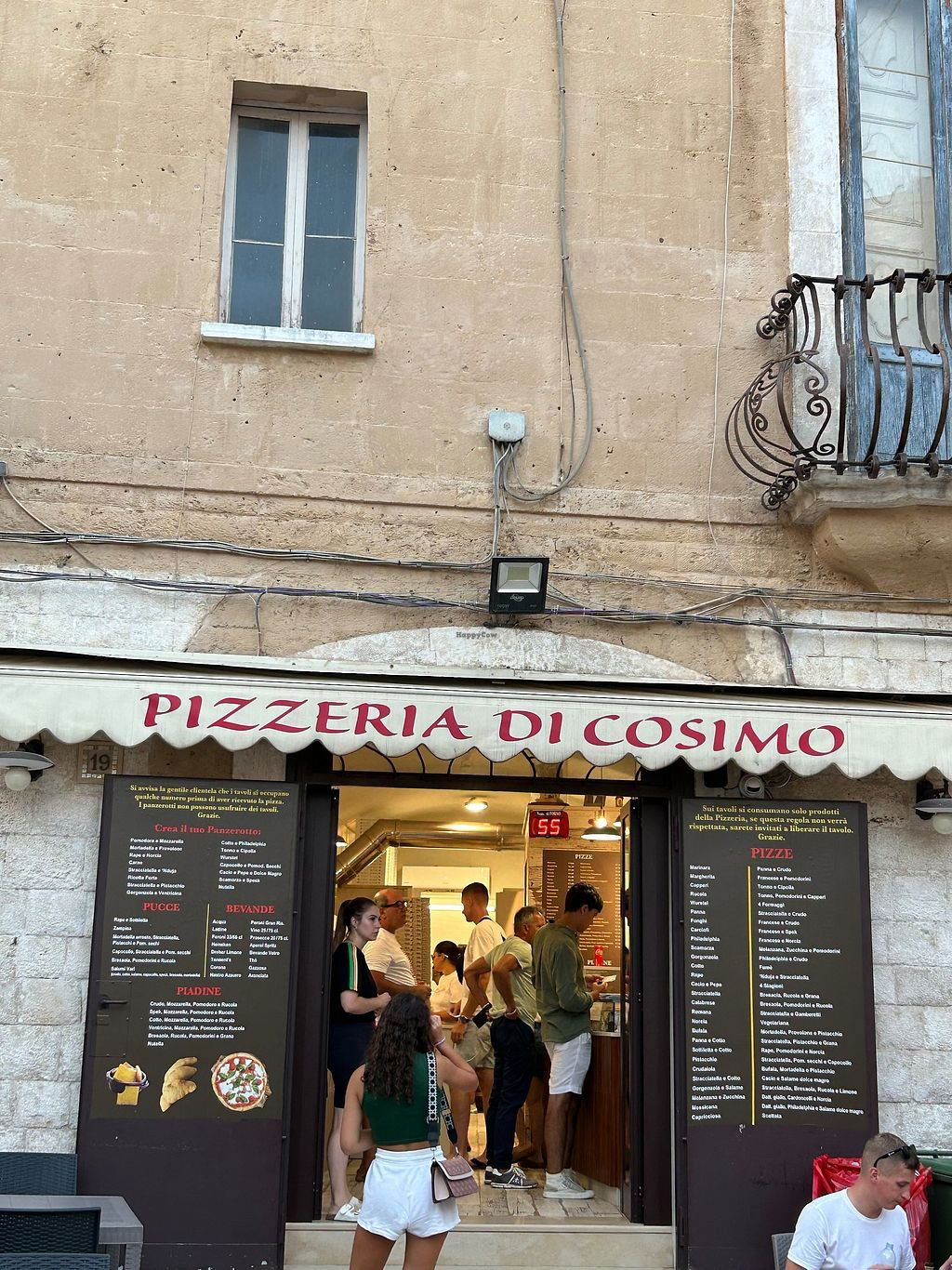
About Pizzeria Di Cosimo Mauro
On a residential stretch of Via Giovanni Modugno in the Libertà quarter, Pizzeria Di Cosimo Mauro occupies the kind of address that Bari's pizza tradition has always favoured: unglamorous, local, and focused entirely on what arrives at the table. In a city where pizza culture runs deep and ingredient provenance matters more than décor, this is the type of pizzeria that earns its reputation through repetition and sourcing discipline rather than positioning.
Pizza in Bari: A Tradition Built on Sourcing, Not Spectacle
Bari's relationship with pizza is older and more specific than the Neapolitan narrative that dominates international conversation. In Apulia, the wheat is different, the water is different, and the culture around pizza consumption skews local and unsentimental. Pizzerias here are not stages for chef performance; they are neighbourhood institutions where the quality of the flour, the provenance of the tomato, and the temperature of the oven determine the outcome far more than any front-of-house drama. Pizzeria Di Cosimo Mauro, on Via Giovanni Modugno in Bari's Libertà district, belongs squarely to that tradition. The address is residential, the surroundings unremarkable, and the draw is almost entirely culinary — which, in the context of Bari pizza culture, is exactly the point.
For visitors accustomed to the theatrics of Italy's more publicised dining scenes — the tasting menus at Osteria Francescana in Modena, the architectural precision of Le Calandre in Rubano, or the Adriatic refinement of Uliassi in Senigallia , a neighbourhood pizzeria in Bari operates at a fundamentally different register. That is not a qualification; it is a description of what makes it worth understanding on its own terms.
What the Libertà Quarter Signals
The Libertà neighbourhood sits west of Bari's historic centre, a working-class district that has long functioned as a counterweight to the tourist-facing posture of Bari Vecchia. Pizzerias in this part of the city tend to serve a local clientele with specific expectations: dough that has had adequate time to ferment, tomato that tastes of the season it came from, and fior di latte that holds its structure under heat rather than collapsing into a watery pool. These are not abstract standards , they are what regular customers notice and return for.
Via Giovanni Modugno itself is not a destination street. There is no pedestrian foot traffic, no adjacent wine bar pulling diners into an evening itinerary. The location functions as a mild form of self-selection: the people who find Pizzeria Di Cosimo Mauro are, with rare exceptions, the people who were looking for it. That pattern of purposeful, repeat custom is one of the more reliable signals of a pizzeria's standing in its own community. Contrast this with the more internationally oriented end of Bari's dining scene , venues like La Bul, which operates in a different register altogether, pitching modern cuisine at a different audience , and the distinction in audience and intention becomes clear.
Apulian Ingredients and Why They Define the Category
Southern Italian pizza culture is inseparable from the agricultural geography surrounding it. Apulia produces roughly 40 percent of Italy's wheat, and the region's durum varieties have long informed the texture and flavour profile of local breads and pizza bases. While the Neapolitan tradition draws from Campanian flour blends and San Marzano tomato cultivation, the Barese approach has its own sourcing logic: local flour strains, regional olive oil, and a tomato culture that connects more directly to Apulian growing conditions than to the volcanic soils further north.
For a pizzeria operating in this context, the sourcing decisions are inseparable from the product. The character of the dough , its chew, its crust coloration, its fermentation flavour , reflects choices made before anything enters the oven. This is why Apulian pizza culture resists the kind of direct comparison that visitors sometimes attempt with Neapolitan benchmarks. The two traditions share a format and diverge in almost every underlying variable. Understanding that divergence is one of the more useful frames a visitor can bring to a meal on Via Giovanni Modugno.
Italy's most decorated restaurants , from Piazza Duomo in Alba to Reale in Castel di Sangro to Dal Pescatore in Runate , are routinely analysed for their sourcing philosophies. The same scrutiny, applied at the neighbourhood pizzeria level, reveals that the sourcing logic is present throughout Italian food culture, not just at its Michelin-starred apex. A pizzeria that treats its flour, tomato, and dairy with the same intentionality that Atelier Moessmer Norbert Niederkofler in Brunico applies to its alpine ingredient programme is operating from the same underlying principle, expressed at a radically different scale and price point.
How to Approach a Meal Here
Bari rewards visitors who move between registers. An evening that begins with a pizza on Via Giovanni Modugno and ends with a glass of Primitivo in the old city is not a compromise , it is how the city actually functions for people who live there. Practical logistics for Pizzeria Di Cosimo Mauro follow the rhythms of a neighbourhood rather than a restaurant district: walk-in visits during off-peak hours are the most direct approach, given that detailed booking information is not publicly listed. Arriving early in the dinner service, before the local crowd fills the room, is generally the lower-friction option in pizzerias of this type across southern Italy.
For those building a broader Bari itinerary, our full Bari restaurants guide maps the city's dining character across price points and neighbourhoods, from the historic centre to the residential quarters where addresses like this one sit. The guide contextualises what the city's food scene looks like in 2024, including how the local pizza tradition relates to the newer wave of Apulian cooking attracting wider attention.
Visitors planning a wider Italian circuit who want to benchmark against the country's formal fine dining tier will find relevant reference points at Enoteca Pinchiorri in Florence, Enrico Bartolini in Milan, Villa Crespi in Orta San Giulio, Da Vittorio in Brusaporto, La Pergola in Rome, Casa Perbellini 12 Apostoli in Verona, and Quattro Passi in Marina del Cantone. For international comparison beyond Italy , particularly around how ingredient sourcing drives reputation at opposite ends of the price spectrum , Le Bernardin in New York City and Atomix in New York City offer instructive contrast cases.
Frequently Asked Questions
- Does Pizzeria Di Cosimo Mauro work for a family meal?
- For families eating in Bari on a budget, a neighbourhood pizzeria on Via Giovanni Modugno is about as practical as it gets in this city.
- Is Pizzeria Di Cosimo Mauro better for a quiet night or a lively one?
- Neighbourhood pizzerias in Bari's residential quarters tend to run warmer and louder as the evening progresses, reflecting the local custom of late, social dining rather than the more contained atmosphere you would find at a formal address. Without the award profile or price point that draws destination diners, the energy here tracks the rhythm of the surrounding community , which typically means quieter early and fuller after 8 pm.
- What dish is Pizzeria Di Cosimo Mauro famous for?
- The venue database does not carry confirmed signature dish data, and Apulian pizza culture generally resists the single-dish shorthand that marketing tends to encourage. What defines pizzerias of this type in Bari is less a single preparation and more a consistent approach to dough fermentation and local sourcing , the same principles that appear, at a different scale, across the regional cuisine Apulia is increasingly known for internationally.
- How far ahead should I plan for Pizzeria Di Cosimo Mauro?
- Given the absence of a listed booking system and the neighbourhood-pizzeria format, planning a same-day or next-day visit is the realistic approach. High-demand booking windows and allocation systems belong to a different tier of the Italian dining market , the kind of advance planning required at Michelin-level addresses in Bari or elsewhere in Italy simply does not apply here.
- What makes a Barese pizzeria different from a Neapolitan one, and does that distinction matter at Pizzeria Di Cosimo Mauro?
- The distinction matters considerably. Bari and Naples share a southern Italian wheat-growing heritage but diverge in flour selection, dough hydration norms, and the tomato varieties that define the sauce profile. Apulian pizzerias typically work with local durum-influenced flour blends that produce a slightly different crumb structure and crust character than the high-hydration Neapolitan standard. At an address like Pizzeria Di Cosimo Mauro, which operates within the Barese neighbourhood tradition rather than as a crossover or tourist-facing hybrid, those regional distinctions are the product rather than a footnote to it.
Related editorial
- Asia's 50 Best Restaurants 2026: The Chairman and Wing Go 1-2 from the Same BuildingThe Chairman takes No. 1 and Wing climbs to No. 2 at Asia's 50 Best Restaurants 2026. Both operate from the same Hong Kong building. Here's what it means.
- Four Seasons Yachts Debut: 95 Suites, 11 Restaurants, and a March 2026 Maiden VoyageFour Seasons I launches March 20, 2026, with 95 suites, a one-to-one staff ratio, and 11 onboard restaurants. Worth tracking if you want hotel-grade service at sea.
- LA Michelin Guide 2026: Seven New Restaurants from Tlayudas to Uzbek DumplingsMichelin's March 2026 California Guide update adds six LA restaurants and one Montecito newcomer, spanning Oaxacan tlayudas, Uzbek manti, and Korean-Italian pasta.
Save or rate Pizzeria Di Cosimo Mauro on Pearl
Keep this venue in your Pearl passport, rate it after you visit, and track it alongside every other place you collect.