
Restaurant in Darmstadt, Germany
Olbrick - Loved Sushi & Asian Fusion
100ptsFusion Counter, University City
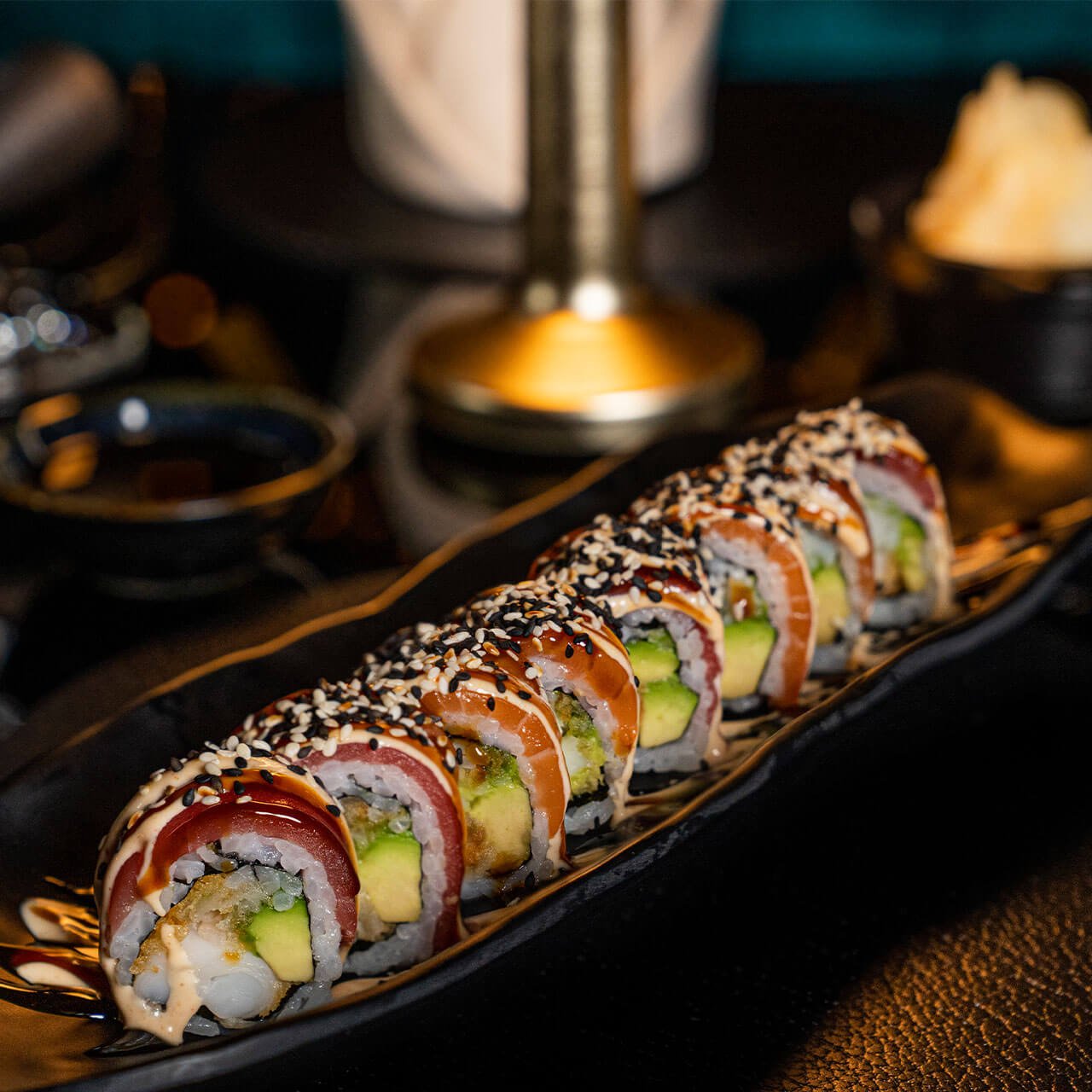
About Olbrick - Loved Sushi & Asian Fusion
On Frankfurter Strasse in Darmstadt, Olbrick brings sushi and Asian fusion to a city whose dining scene skews heavily European. The address places it at a practical midpoint between the city centre and the southern neighbourhoods, making it one of the more accessible options for Japanese-leaning cuisine in a market where such choices remain limited. For Darmstadt diners seeking something outside the regional Germanic register, it fills a real gap.
Asian Cuisine in a German University City
Darmstadt's restaurant scene has historically been shaped by its identity as a Wissenschaftsstadt — a city of science and academia — rather than a culinary destination. The dining map skews toward European formats: modern cuisine at addresses like OX (Modern Cuisine), neighbourhood bistros such as das krü, and globally inflected kitchens like Djadoo. Against that backdrop, dedicated sushi and Asian fusion operations occupy a narrower slice of the market, serving a resident population that includes a significant international academic and tech community with expectations shaped by eating in Frankfurt, Tokyo, or Seoul.
Olbrick , Loved Sushi and Asian Fusion sits on Frankfurter Strasse 67, one of the arterial roads connecting central Darmstadt to the Frankfurt corridor. The address is not tucked into a courtyard or set back from foot traffic; it occupies a working urban street where the surrounding commercial mix is practical rather than atmospheric. What this location lacks in curated neighbourhood charm it compensates for in accessibility: the Frankfurter Strasse corridor is well-served by public transport, and the venue is reachable from the main station and the central districts without significant effort.
The Sourcing Question in Asian Fusion Cooking
Ingredient provenance is where Asian fusion restaurants in Central European cities face their sharpest challenge. The gap between Japanese or broader Asian sourcing ideals and what is practically available in landlocked Germany is not trivial. Sushi-grade fish in Germany typically arrives via Frankfurt Airport, which handles a meaningful volume of Japanese seafood imports, or through specialist distributors operating out of Hamburg and Düsseldorf. The supply chain is real but adds cost and, more critically, transit time relative to coastal Japanese cities or even London and Paris.
How a restaurant responds to that constraint tells you more about its kitchen priorities than any menu description does. Operations that absorb the import costs and maintain relationships with specialist suppliers are making a different statement from those that default to whatever local cash-and-carry fish is available. Across Germany, the gap between these two approaches is visible in the texture and temperature discipline of the nigiri, in whether the rice carries appropriate seasoning, and in whether the kitchen treats the sourcing constraint as a ceiling or as a problem to solve. The German-speaking world does have serious sushi practitioners , you can see what sustained culinary ambition at the highest level looks like at addresses such as Aqua in Wolfsburg or JAN in Munich, where ingredient sourcing is documented and defended , but those represent a different tier and a different price point than a neighbourhood fusion operation.
For mid-market Asian fusion in a secondary German city, the operative question is whether the kitchen is making intelligent use of what is available, compensating with technique where raw material quality has limits, and pricing honestly against the sourcing reality rather than against an aspiration that the supply chain cannot sustain.
Darmstadt's Mid-Market Dining Register
The city's dining scene at the mid-market level is genuinely international relative to its size. Alongside Olbrick, addresses like Radieschen and Restaurant Yetenbi reflect a population that eats across cuisines without necessarily expecting Michelin-tier execution. The academic and technology sector presence , TU Darmstadt draws students and researchers from across Europe and Asia , creates a customer base with direct comparison points for Asian food quality, which applies a different kind of pressure on kitchens than a purely local clientele would.
That pressure is not always visible from the outside, but it tends to show up in repeat business patterns. A sushi operation in a university city with a substantial East Asian student population either meets a standard those diners recognise or it does not survive long on that audience. The fact that Olbrick has established a presence on Frankfurter Strasse suggests it has found a workable equilibrium with that community, even if the specifics of execution are not independently documented in the available record.
For a broader map of the city's dining options across price points and cuisine types, the full Darmstadt restaurants guide covers the range in detail.
Contextualising the Asian Fusion Format in Germany
Asian fusion as a restaurant category in Germany has diverged sharply over the past decade. At one end, high-precision Japanese-influenced cooking appears in tasting-menu formats at addresses recognised by Michelin and the broader German fine dining circuit , Schwarzwaldstube in Baiersbronn and Vendôme in Bergisch Gladbach represent the classical end of that spectrum, while CODA Dessert Dining in Berlin and ES:SENZ in Grassau show how the country's creative dining tier continues to absorb global ingredient languages. At the other end, the category has expanded into everyday dining, where the sushi-and-noodles format has become one of the standard options alongside pizza and kebab across German high streets.
Olbrick occupies the middle ground , a category that in Germany often means: technically competent, locally adapted, and priced for repeat visits rather than special occasions. Comparable addresses to Victor's Fine Dining by Christian Bau in Perl, Waldhotel Sonnora in Dreis, Restaurant Haerlin in Hamburg, or Schanz in Piesport operate in a categorically different register. The relevant comparison for Olbrick is not those addresses but the mid-market Asian dining options in comparable Rhine-Main secondary cities, where the standard has been rising steadily as the audience grows more experienced. Internationally, operations like Le Bernardin in New York City and Atomix in New York City set the global ceiling for what seafood sourcing discipline and Korean-influenced fine dining can look like; they are useful calibration points, not competitive peers.
Planning a Visit
Olbrick is located at Frankfurter Strasse 67, 64293 Darmstadt. Current hours, pricing, and booking arrangements are not confirmed in independent sources available to EP Club at time of writing; the most reliable approach is to check directly with the venue before visiting, particularly for group bookings or weekend evenings when capacity at mid-sized operations in Darmstadt can be tighter than it appears. The Frankfurter Strasse address is served by tram lines running between the central station and the southern districts, making it reachable without a car from most central Darmstadt locations.
Frequently Asked Questions
Is Olbrick suitable for children?
Asian fusion restaurants at this price point and city context in Germany tend to be broadly family-accessible, with menus that typically include familiar formats like maki rolls alongside more adventurous options. Darmstadt's mid-market dining culture skews informal, and a Frankfurter Strasse location on a working urban artery suggests a relaxed room rather than a formal one. That said, specific family policies and high-chair availability are not confirmed in the public record; direct contact with the venue before visiting with young children is advisable.
Is Olbrick better for a quiet night or a lively one?
Without documented awards or a price tier that signals a hushed, formal register, the Frankfurter Strasse location and the Asian fusion format both point toward a mid-energy dining room rather than a destination-occasion one. Darmstadt as a city does not have the late-evening dining culture of Frankfurt just 30 kilometres north, so the ambient energy in most mid-market restaurants tracks closer to relaxed weeknight than high-volume weekend scene. If a quieter table is a priority, earlier sittings on weeknights are the standard approach across the city's casual dining tier.
What should I order at Olbrick?
Specific dish recommendations are not available in independently verified sources, and EP Club does not fabricate menu descriptions. What the Asian fusion format in a German mid-market context reliably implies is a menu structured around sushi sets, maki rolls, and broader Asian-inflected cooked dishes alongside the raw fish offering. In operations of this type, the sushi formats are typically the menu's core identity rather than supplementary; the cooked fusion dishes tend to follow that anchor. Visiting with that structure in mind and asking the kitchen what is freshest that day is the most reliable path to the better items.
How does Olbrick fit into the broader Asian dining options in the Rhine-Main region?
The Rhine-Main region, anchored by Frankfurt, carries a more developed Asian dining infrastructure than most German secondary cities, with specialist Japanese, Korean, and Chinese operations across price tiers. Darmstadt draws on that proximity, and residents have Frankfurt as a direct reference point for Asian cuisine quality. Olbrick's position on Frankfurter Strasse places it on the literal road connecting the two cities, and its sushi-and-fusion format addresses a gap in Darmstadt's own restaurant map rather than competing directly with Frankfurt's denser Asian dining offer. For diners based in Darmstadt, the question is whether the kitchen's execution justifies the convenience premium over commuting to Frankfurt; for visitors already in the city, it represents one of the few dedicated options in the local Asian cuisine category.
Related editorial
- Best Fine Dining Restaurants in ParisFrom three-Michelin-star icons to the next generation of Parisian chefs pushing boundaries, these are the restaurants that define fine dining in the world's culinary capital.
- Best Luxury Hotels in RomeFrom rooftop terraces overlooking ancient ruins to Michelin-starred hotel dining, these are the luxury hotels that make Rome unforgettable.
- Best Cocktail Bars in KyotoFrom sleek lounges to hidden speakeasies, Kyoto's cocktail scene blends Japanese precision with global influence in ways you won't find anywhere else.
Save or rate Olbrick - Loved Sushi & Asian Fusion on Pearl
Keep this venue in your Pearl passport, rate it after you visit, and track it alongside every other place you collect.