
Restaurant in Osaka Shi, Japan
Okonomiyaki Kiji
150ptsShowa-Era Teppan Counter

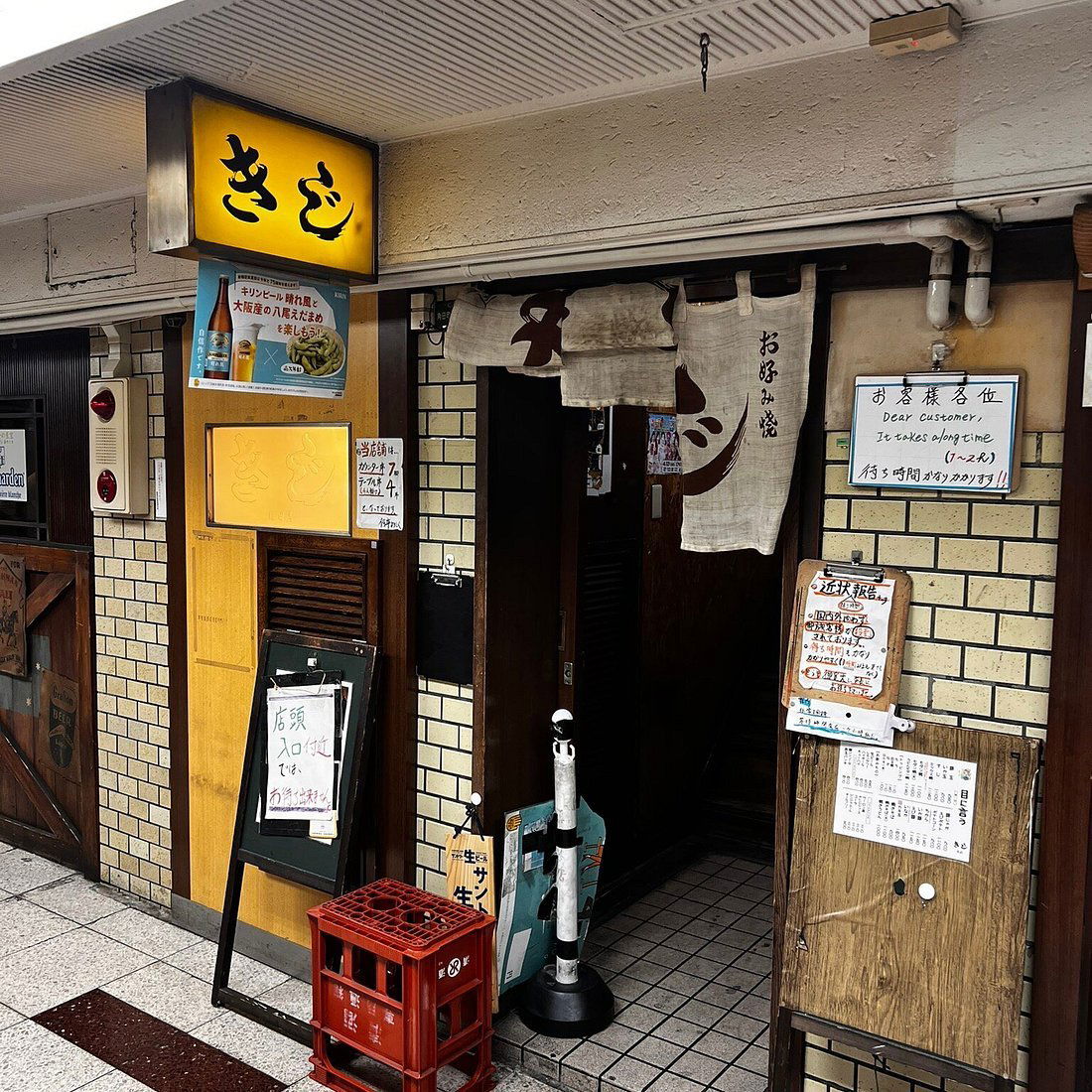
About Okonomiyaki Kiji
Okonomiyaki Kiji operates from the basement level of Osaka's Umeda Sky Building, placing one of the city's most discussed okonomiyaki counters inside a landmark modernist structure. The format is tight, the focus absolute: Osaka-style savory pancakes cooked on an iron teppan griddle, served without ceremony or distraction. For visitors building an itinerary around Kansai's food traditions, it anchors the casual end of a serious dining city.
Below the Sky, On the Griddle: Osaka's Okonomiyaki Tradition and Where Kiji Fits
Osaka has a deserved reputation as Japan's kitchen city, a place where eating is taken seriously at every price point and every format. Within that spectrum, okonomiyaki occupies a particular position: neither the refined edge of kaiseki nor the spectacle of a tasting counter, but a deeply ingrained civic food with its own technique, its own regional argument with Hiroshima, and its own set of practitioners who have spent careers perfecting what looks, to the uninitiated, like a simple batter-bound pancake. The city's leading okonomiyaki specialists operate at the intersection of craft and familiarity, a register that rewards patience and repetition more than novelty.
Okonomiyaki Kiji sits inside the basement level of the Umeda Sky Building, one of Osaka's more architecturally ambitious structures in the Kita Ward district of Oyodonaka. The building itself is a 1993 Hiroshi Hara design, known for its twin towers connected at the summit by a floating garden observatory. Most visitors arrive for the view; a portion arrive specifically for the basement, where a cluster of restaurants including Kiji operate in a retro-styled corridor meant to evoke the postwar food alleys that defined Osaka's urban eating culture in the Showa era. The physical context matters: you descend into something that feels deliberately separated from the contemporary city above, which calibrates expectations before any food arrives.
The Menu as Argument: What Osaka-Style Okonomiyaki Actually Means
Okonomiyaki is sometimes described to outsiders as a savory pancake, which is accurate as far as it goes and misleading in what it omits. The Osaka version, which Kiji represents, is built on a batter mixed directly with cabbage, egg, and a chosen protein, then cooked as a unified whole on a flat iron griddle. This contrasts with the Hiroshima approach, where the layers are assembled sequentially and noodles are incorporated as a structural element. The distinction is not cosmetic; it reflects genuinely different ideas about texture, density, and the role of each ingredient. Osaka practitioners tend to favor a lighter, airier result, where the cabbage volume is high enough to prevent the batter from reading as heavy.
The condiment architecture on an okonomiyaki plate is its own subject. Okonomiyaki sauce, Japanese mayonnaise, dried bonito flakes, and aonori (dried green seaweed) are the standard quartet, and the proportions applied by the cook rather than the diner are where individual style becomes visible. At a counter-level specialist like Kiji, these finishing decisions are the equivalent of seasoning choices at a serious kitchen: made with intention and not negotiable mid-service. The bonito flakes, responding to heat, move on the surface in a way that has become one of the visual signatures of the dish across Japan, though it is worth noting that the movement is a function of thin slicing and convection, not any property unique to any single establishment.
Kiji's menu, appropriately, keeps its focus narrow. The okonomiyaki format is the core proposition, with protein variations allowing for pork, seafood, and combination options in the tradition of Osaka-style preparation. This narrowness is an editorial statement in itself: a restaurant that does one thing and does not expand into adjacent formats is making a claim about where its quality lies. Compare this to the broader izakaya model, where okonomiyaki might appear as one item among thirty. At Kiji, the menu architecture forces the diner to engage with the dish rather than treat it as an incidental order.
Positioning Within Osaka's Casual Dining Tier
Osaka's dining scene spans a considerable range, from the multi-Michelin-starred kaiseki of restaurants like HAJIME in Osaka and the refined Japanese cooking of Ajikitcho Bunbuan, through mid-tier specialists, down to the counter-format casual restaurants where Kiji operates. This lowest tier is not a lesser tier in Osaka's framework; the city's food culture explicitly validates the neighborhood specialist, the family-run counter, the place that has been doing the same thing for decades without ambition to expand or diversify. Kiji operates in that tradition, though its placement inside a landmark building rather than a street-front shophouse gives it a slightly different profile than a pure neighborhood institution.
For visitors building a multi-day Kansai itinerary, Kiji anchors the casual end of a spectrum that might also include French-influenced omakase dining at Calendrier, contemporary courses at Aka to Shiro, or the broader Osaka restaurant coverage in our full Osaka Shi restaurants guide. Beyond the city, the Kansai region's serious dining extends to Gion Sasaki in Kyoto and the Nara-based akordu in Nara, with the broader Japanese dining conversation also touching Harutaka in Tokyo and Goh in Fukuoka. Kiji's appeal is specific and different from all of these: it is not about discovery or prestige, but about eating something regionally specific in a setting that has absorbed decades of that regional tradition.
The Umeda Sky Building location also means Kiji draws a mix of tourists and Osaka residents, which affects the pacing of service and the ambient noise level during peak hours. Lunchtime and early evening slots are the busiest, consistent with how okonomiyaki functions in Osaka's daily rhythm: it is rarely a late-night meal in the way ramen might be, and more commonly a midday or early-dinner proposition. Arriving outside standard meal peaks, particularly mid-afternoon on weekdays, is the more reliable way to experience the counter without a significant wait.
The Umeda and Kita Ward area, where the Sky Building sits, is also home to other notable Osaka dining, including Ajihei Sonezaki and the contemporary options at Az. For visitors willing to range further across Japan, the database also covers regional specialists from Abon in Ashiya to Aji Arai in Oita, Akakichi in Imabari, Ajidocoro in Yubari District, and affetto akita in Akita. For a sense of how a Western-rooted fine dining counter at the opposite end of the format spectrum operates, the contrast with Le Bernardin in New York City or the communal tasting format of Lazy Bear in San Francisco is instructive.
Planning Your Visit
Kiji is located at 1 Chome-1-90 Oyodonaka, Kita Ward, Osaka, in the basement level (B1F) of the Umeda Sky Building. The building is accessible from Osaka's Umeda station cluster, with several subway and JR lines within walking distance, making it logistically direct from most Osaka city-center hotels. Phone and website information for reservations is not currently listed in verified sources, so confirming current hours and booking options directly on arrival or through the building's directory is advisable before planning around a specific time slot. Walk-in dining is the typical mode for this format, though waits during peak meal periods are a documented characteristic of the busier sessions.
Frequently Asked Questions
What is the signature dish at Okonomiyaki Kiji?
Kiji focuses on Osaka-style okonomiyaki, the savory batter-and-cabbage pancake cooked on a flat iron griddle. The restaurant's reputation is built on this format rather than on a single named dish; the pork and seafood variations are the most ordered options within the Osaka okonomiyaki tradition. No specific dish names from the current menu are confirmed in verified sources.
Should I book Okonomiyaki Kiji in advance?
Verified booking policy information is not currently available for Kiji. The restaurant operates in a casual counter format typical of Osaka's okonomiyaki specialists, where walk-in dining is standard. Peak lunch and early-evening periods, particularly on weekends and public holidays, are likely to involve waiting. Arriving mid-afternoon on a weekday reduces that probability.
What is the signature at Okonomiyaki Kiji?
Kiji's defining proposition is Osaka-style okonomiyaki: batter mixed with cabbage and protein, cooked as a unified whole on a teppan griddle, finished with okonomiyaki sauce, mayonnaise, bonito flakes, and aonori. The menu's focus on this single dish category, rather than a broader izakaya spread, is itself the clearest signal of where the restaurant's quality claim lies.
Is Okonomiyaki Kiji good for vegetarians?
Confirmed menu details for vegetarian options are not available in verified sources. Osaka-style okonomiyaki can in principle be prepared without meat or seafood, using egg and cabbage as the base, but whether Kiji offers this as a standard option cannot be confirmed without current menu documentation. Checking directly with the restaurant before visiting is the appropriate step for dietary-specific queries.
Does Okonomiyaki Kiji justify its prices?
Verified pricing information is not available in current sources. As a general reference point, Osaka-style okonomiyaki at specialist counters in the city sits at a price point considerably below the kaiseki and fine dining tier, typically representing accessible everyday dining rather than a significant expenditure. Whether Kiji's specific pricing aligns with, or sits above, the category average cannot be confirmed without current data.
Why is Okonomiyaki Kiji located inside the Umeda Sky Building rather than a traditional street-front location?
The basement level of the Umeda Sky Building was designed to replicate the atmosphere of Osaka's postwar Showa-era food alleys, a deliberate preservation of a dining culture that has largely disappeared from the city's streets. Kiji's placement there is less about tourist convenience and more about the building's curatorial decision to anchor that retro corridor with Osaka food specialists. It means the restaurant draws both visitors arriving for the building's observation deck and Osaka residents seeking a specific regional dish in a setting that gestures toward the era when that dish became embedded in the city's identity.
Recognized By

Related editorial
- Asia's 50 Best Restaurants 2026: The Chairman and Wing Go 1-2 from the Same BuildingThe Chairman takes No. 1 and Wing climbs to No. 2 at Asia's 50 Best Restaurants 2026. Both operate from the same Hong Kong building. Here's what it means.
- Four Seasons Yachts Debut: 95 Suites, 11 Restaurants, and a March 2026 Maiden VoyageFour Seasons I launches March 20, 2026, with 95 suites, a one-to-one staff ratio, and 11 onboard restaurants. Worth tracking if you want hotel-grade service at sea.
- LA Michelin Guide 2026: Seven New Restaurants from Tlayudas to Uzbek DumplingsMichelin's March 2026 California Guide update adds six LA restaurants and one Montecito newcomer, spanning Oaxacan tlayudas, Uzbek manti, and Korean-Italian pasta.
Save or rate Okonomiyaki Kiji on Pearl
Keep this venue in your Pearl passport, rate it after you visit, and track it alongside every other place you collect.