
Restaurant in Waldorf, United States
Momi's Kitchen
100ptsSuburban Community Table
About Momi's Kitchen
A neighborhood kitchen in Waldorf's Mall Circle corridor, Momi's Kitchen draws from a tradition of home-style cooking where ingredient sourcing and personal hospitality define the experience. Positioned among Waldorf's growing dining options, it represents the kind of local establishment that anchors a community's food identity rather than chasing regional recognition.
Where Waldorf Eats Close to Home
The stretch of Mall Circle in Waldorf, Maryland, functions less as a dining destination in the conventional sense and more as the operational backbone of a county that runs on convenience and familiarity. Southern Maryland's Charles County has historically been underserved by the kind of editorial restaurant attention lavished on Washington D.C.'s corridors, roughly 30 miles to the north, which means venues like Momi's Kitchen occupy a different social role than their metropolitan counterparts. They are not auditions for broader recognition. They are the actual dining infrastructure of the people who live here.
That context matters when assessing what Momi's Kitchen represents. In cities where ingredient sourcing has become a marketing category, where menus carry the names of farms and foragers as a form of cultural signaling, the question of where food comes from can feel performative. In a community-rooted kitchen in Waldorf, that same question operates differently. The sourcing decisions, whatever they are, reflect what the kitchen believes its regulars deserve, not what a critic's checklist demands.
The Character of the Space
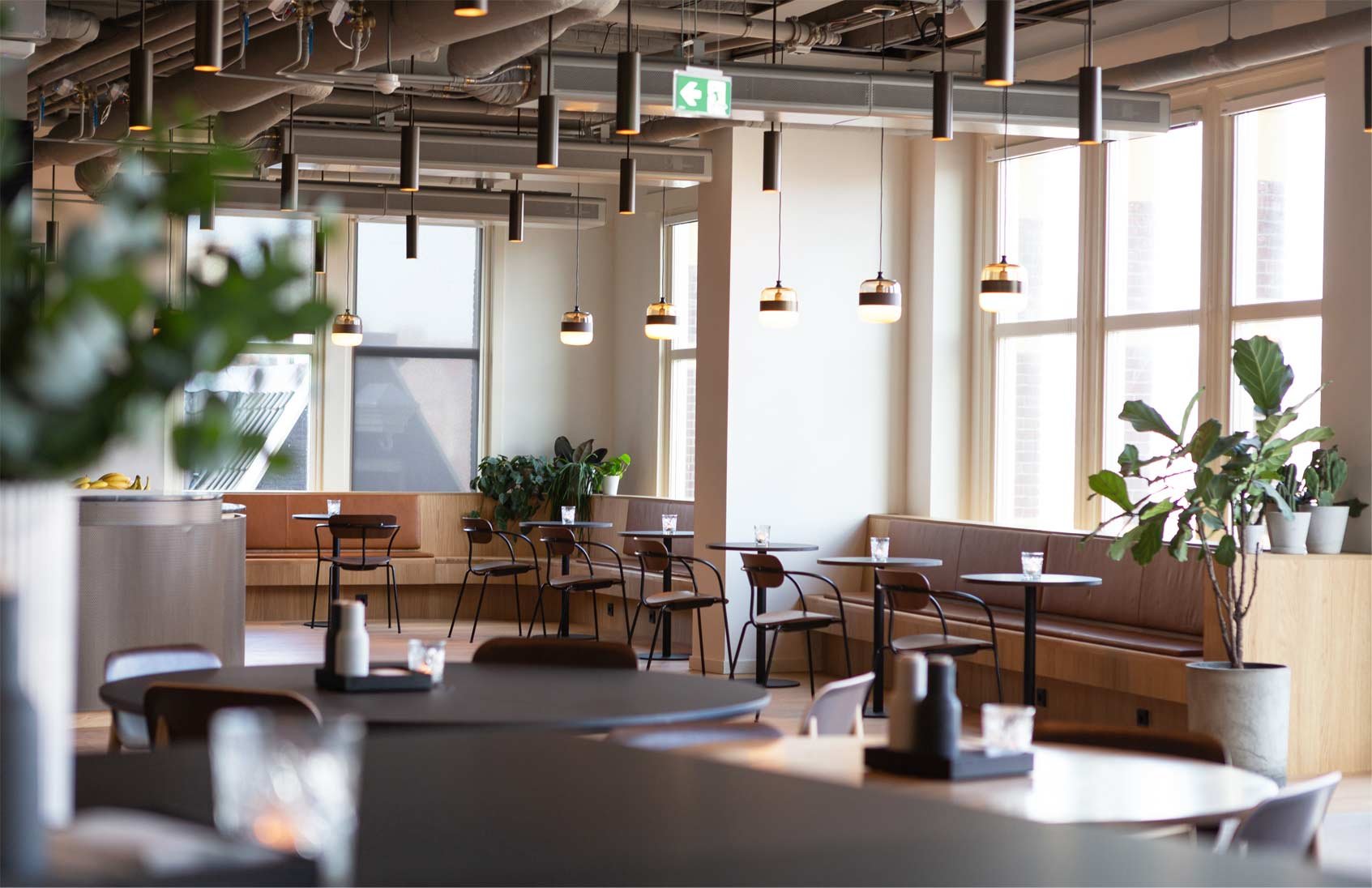
Mall Circle's commercial strip is functional by design. Strip mall adjacency in American suburban dining tends to produce a particular kind of interior: practical, lit for visibility, arranged for throughput. Momi's Kitchen occupies that register. The experience of arriving is not about architecture or theatrical staging. It is about a room that signals it is there to feed you rather than impress you, which in the context of suburban Maryland dining carries its own kind of credibility.
The contrast with Waldorf's better-documented dining options is instructive. Firepan Korean BBQ in Waldorf draws on a specific culinary tradition with built-in theatrical elements, the tabletop grill as both cooking method and social ritual. Milk and Honey Waldorf occupies a different tier of the local scene. Momi's Kitchen sits in a category shaped by consistency and community trust rather than format novelty. See our full Waldorf restaurants guide for a broader picture of how the local dining scene is structured.
Ingredient Sourcing in a Suburban Context
The ingredient sourcing conversation in American dining has been dominated by coastal and agricultural-region venues: Single Thread Farm in Healdsburg, which operates its own farm to supply the kitchen, or Blue Hill at Stone Barns in Tarrytown, where the farm is the premise. At the other end of the spectrum, The French Laundry in Napa has long maintained kitchen gardens as part of its sourcing identity. These are resource-intensive models built around documented supply chains and substantial operational infrastructure.
Suburban community kitchens operate in a different economy entirely. The Chesapeake region that surrounds Waldorf has genuine sourcing assets: Maryland blue crab, Eastern Shore produce, and the broader Mid-Atlantic agricultural belt that feeds both restaurant and household kitchens across the region. Whether Momi's Kitchen draws directly from those regional streams is not documented in available records, but the geography creates the possibility. Charles County sits close enough to southern Maryland's farming communities and the Chesapeake watershed that local sourcing, where it occurs, costs less logistically than it would in a more urbanized corridor.
The broader point is this: ingredient sourcing at community-scale kitchens is often invisible in the way that farm-to-table programs at destination restaurants are not, because it does not need to be sold. The food either tastes like it was sourced carefully or it does not, and regular diners calibrate quickly. That calibration, sustained over time, is what builds the kind of local loyalty that keeps a neighborhood kitchen operating.
Waldorf in the Wider American Dining Picture
Southern Maryland's dining scene does not yet produce the kind of editorial momentum that drives destination restaurant culture in cities like Washington D.C., where Causa is reshaping how the capital thinks about Peruvian technique, or where venues compete for proximity to political and cultural power. Nationally, the farm-sourcing and community-kitchen conversation is being advanced by places like Bacchanalia in Atlanta and Brutø in Denver, both of which have built sourcing programs that generate critical attention alongside community identity.
Closer in spirit to Waldorf's operational reality are venues in secondary markets that have built reputations on consistency and community embeddedness without requiring metropolitan critical infrastructure to validate them. Emeril's in New Orleans built its initial identity on Southern Louisiana sourcing before scaling into a broader presence, and the principle that regional ingredients anchor community dining identity has held across decades of American restaurant culture.
Momi's Kitchen does not operate in that tier of documented recognition. What it shares with those venues is the underlying premise: that a kitchen rooted in its community, drawing from available regional ingredients, and serving a consistent local clientele occupies a legitimate and necessary place in the American dining ecosystem, even when that place goes underdocumented by food media.
Planning Your Visit
Momi's Kitchen is located at 11075 Mall Cir, Waldorf, MD 20603, positioned within the commercial strip that serves the surrounding Charles County residential base. Contact information, hours, and booking details are not currently listed in public-facing records, so the practical approach is to visit in person or check local directory listings before making a trip. Given its community kitchen format, walk-in dining is the likely mode of access, though confirming current hours before traveling is advisable. Waldorf is accessible from Washington D.C. via US-301 South, placing it within reasonable reach for D.C.-area diners looking to explore Southern Maryland's local food scene rather than another downtown option.
For travelers whose dining itineraries extend beyond Waldorf, the Mid-Atlantic region's documented high-end options include The Inn at Little Washington in Washington, Virginia, which represents the opposite end of the formality and price spectrum. Nationally, venues like Le Bernardin in New York City, Providence in Los Angeles, Alinea in Chicago, Lazy Bear in San Francisco, and Atomix in New York City define the destination-dining tier. Addison in San Diego and 8½ Otto e Mezzo Bombana in Hong Kong extend that peer set internationally. Momi's Kitchen operates in a different category from all of them, which is not a qualification but a description of its actual function.
Frequently Asked Questions
- Is Momi's Kitchen good for families?
- Waldorf's dining infrastructure is built around family and community use, and a kitchen operating in the Mall Circle corridor almost certainly reflects that. Pricing in community-format kitchens in suburban Maryland typically runs accessible relative to D.C. metropolitan benchmarks, making family visits financially practical. That said, specific seating arrangements, kids' menu availability, and current pricing are not in our records, so confirming directly before visiting with a group is the sensible approach.
- How would you describe the vibe at Momi's Kitchen?
- Mall Circle's commercial context sets the tone: functional, community-facing, without theatrical staging. Waldorf does not have the awards-circuit energy of a D.C. dining neighborhood, and Momi's Kitchen does not position itself in that register. The atmosphere is closer to what you find at neighborhood kitchens across suburban Maryland, where the priority is feeding regulars reliably rather than constructing an experience for occasional visitors.
- What's the signature dish at Momi's Kitchen?
- Specific dishes are not documented in available records, and naming a signature without verified source data would misrepresent the kitchen. What the cuisine type and chef details suggest, once confirmed, would offer clearer direction. The Chesapeake region's ingredient strengths, including Maryland seafood and Mid-Atlantic produce, provide a plausible culinary frame for community kitchens in this geography, but we would not speculate beyond that without verified menu data.
- Does Momi's Kitchen source ingredients locally from the Southern Maryland or Chesapeake region?
- No sourcing program or supply chain details are documented in current records for Momi's Kitchen. What is geographically true is that Charles County sits within reasonable proximity to the Chesapeake watershed and southern Maryland's farming communities, giving kitchens in the area access to regional seafood and produce if they choose to engage with local suppliers. Whether Momi's Kitchen uses those channels is a question leading put directly to the kitchen.
Related editorial
- Asia's 50 Best Restaurants 2026: The Chairman and Wing Go 1-2 from the Same BuildingThe Chairman takes No. 1 and Wing climbs to No. 2 at Asia's 50 Best Restaurants 2026. Both operate from the same Hong Kong building. Here's what it means.
- Four Seasons Yachts Debut: 95 Suites, 11 Restaurants, and a March 2026 Maiden VoyageFour Seasons I launches March 20, 2026, with 95 suites, a one-to-one staff ratio, and 11 onboard restaurants. Worth tracking if you want hotel-grade service at sea.
- LA Michelin Guide 2026: Seven New Restaurants from Tlayudas to Uzbek DumplingsMichelin's March 2026 California Guide update adds six LA restaurants and one Montecito newcomer, spanning Oaxacan tlayudas, Uzbek manti, and Korean-Italian pasta.
Save or rate Momi's Kitchen on Pearl
Keep this venue in your Pearl passport, rate it after you visit, and track it alongside every other place you collect.