
Restaurant in Piracicaba, Brazil
Mohamad Culinária Árabe
100ptsLevantine Mezze Tradition
About Mohamad Culinária Árabe
Mohamad Culinária Árabe brings Arab culinary tradition to the Centro district of Piracicaba, São Paulo state, from its address on Rua São Francisco de Assis. The restaurant represents a strand of Middle Eastern cooking that took root in Brazil through waves of Lebanese and Syrian immigration, translating centuries-old recipes into the interior São Paulo dining scene. Visitors should confirm current hours and booking arrangements directly with the venue.
Arab Cooking in the Brazilian Interior: What Mohamad Culinária Árabe Represents
Piracicaba is not the city that typically comes to mind when tracing Brazil's Arab culinary inheritance. São Paulo's capital absorbs most of that conversation, with its Liberdade and Bom Retiro neighbourhoods carrying the visible markers of immigrant food culture. But the interior of São Paulo state has its own quieter version of the same story, and restaurants like Mohamad Culinária Árabe on Rua São Francisco de Assis in the Centro district are part of that less-documented chapter. The address alone — a commercial street in a mid-sized sugar-industry city — signals something about how Arab food traditions filtered outward from the coastal metropolis into towns that absorbed their own waves of Lebanese, Syrian, and Palestinian settlers across the twentieth century.
Brazil holds one of the largest Arab diaspora communities outside the Middle East, a demographic fact that shaped the country's food culture in ways that go well beyond the famous kibbeh and esfiha that appear on snack bars from Recife to Porto Alegre. In the interior of São Paulo state, Arab-Brazilian cooking often operates in a register that is neither strictly traditional nor fully assimilated: dishes carry the structural logic of Levantine cooking , spiced ground meat, cracked wheat, yoghurt-based sauces, slow-cooked legumes , while adapting to Brazilian ingredient availability and appetite patterns. That negotiation between origin and context is what makes venues in this category worth attention from anyone mapping the regional food picture honestly.
The Levantine Tradition Behind the Menu
Levantine cooking, which forms the dominant thread in Arab-Brazilian cuisine, is built around a logic of sharing. Mezze culture means multiple small dishes arriving simultaneously rather than sequentially, which runs counter to the Brazilian habit of the single large prato principal. How restaurants in the interior of São Paulo reconcile that cultural difference varies: some lean into the mezze format fully, others adapt it into larger portions suited to the local expectation of a filling midday meal, since lunch remains the anchor meal in most of interior Brazil.
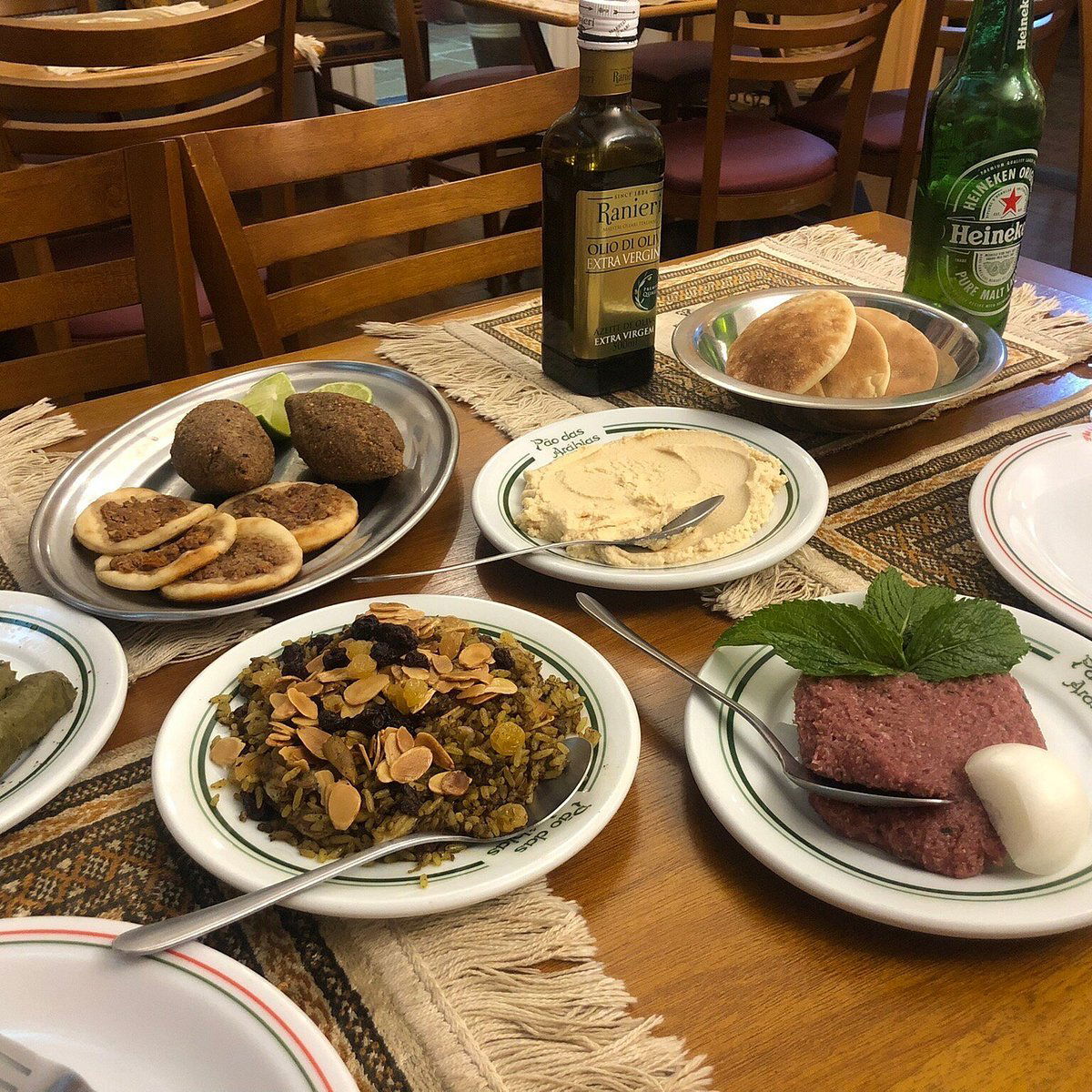
The ingredient anchors of this tradition are worth naming specifically. Kibbeh , ground lamb or beef mixed with bulgur wheat and aromatic spices, shaped and fried or baked , arrived in Brazil with the first waves of immigration in the late nineteenth and early twentieth centuries and became sufficiently absorbed into the broader Brazilian diet that it now appears in contexts far removed from its origin. Esfiha, the open or closed bread filled with spiced meat or cheese, followed a similar trajectory. Beyond those two recognizable staples, the Levantine pantry includes sumac, pomegranate molasses, dried mint, pine nuts, and preserved lemon in combinations that give the cuisine its characteristic balance of acid, fat, and warm spice. These are not approximations of Western flavour profiles; they follow a distinct structural grammar that rewards attention.
Piracicaba's dining scene spans several registers. On one end sit the European-influenced options , a category that includes Café Tirol and Casaretto Pasta & Vinho, representing the Italian and Central European strands of the city's immigration history. On another end sits the Japanese-influenced category, represented by Kobu Sushi. Arab cuisine occupies a third strand, one that is demographically significant in interior São Paulo but often underrepresented in editorial coverage relative to its actual footprint. See our full Piracicaba restaurants guide for a broader view of the city's options across all categories.
Context Within Brazilian Dining More Broadly
The gap between the fine-dining conversation about Brazilian food and the everyday regional dining reality is wide. The venues that draw international attention, such as D.O.M. in São Paulo or Lasai in Rio de Janeiro, operate in a register of tasting menus and Amazonian ingredient sourcing that tells one part of the country's food story. The other part , which includes immigrant-tradition restaurants in mid-sized cities across the interior , rarely gets the same editorial treatment despite representing how most Brazilians actually eat. A Lebanese-heritage restaurant in Piracicaba sits closer to the demographic centre of Brazilian dining than almost anything covered in the international food press.
Across other Brazilian cities, similar dynamics play out in different idioms. Cantina Pozzobon in Santa Maria and Bistro Fitz Carraldo in Manaus each represent regional dining traditions shaped by specific immigration or geographical histories. The pattern repeats: cities outside the major coastal centres have developed distinct food identities that reflect who settled there and what they brought with them. Piracicaba's Arab culinary presence is that city's version of the same logic.
For comparison across the country's broader dining geography, venues like Famosa Pizza in Ribeirao Preto, Casa da Flor Restaurante in Dourados, Aero Burguer e Grill in Santa Cruz Do Sul, Fornazzo Pizzaria in Passo Fundo, Kampeki Sushi in Canoas, Casa da Picanha Penedo in Itatiaia, Arte e café Imperial in Angra Dos Reis, and Casa da Dika Restô e Eventos in Braganca each illustrate how Brazilian regional dining organizes itself around specific local histories and community identities rather than around the metro-centric narratives that dominate food media coverage.
Planning a Visit
Mohamad Culinária Árabe is located at Rua São Francisco de Assis, 756, in the Centro district of Piracicaba, São Paulo state, postal code 13400-550. The Centro location means the restaurant is accessible within the city's walkable central area, though visitors arriving from outside Piracicaba will typically drive or use ride-hailing services. Current pricing, hours of operation, and any booking requirements are not published in available records, so confirming directly with the venue before visiting is the practical step. As with many family-run Arab-Brazilian restaurants in interior São Paulo, lunch service tends to be the primary trading period, reflecting the broader rhythm of mid-sized Brazilian cities where the midday meal carries social and commercial weight. Independent of the specific details at this venue, the category generally runs at accessible price points relative to European or Japanese-influenced restaurants in the same city tier.
Frequently Asked Questions
- Would Mohamad Culinária Árabe be comfortable with kids? Arab-Brazilian restaurants in interior São Paulo typically operate in a family-oriented register, and Piracicaba's Centro dining scene is not a high-formality environment, so the setting is likely comfortable for families with children. Confirm specific facilities directly with the venue.
- How would you describe the vibe at Mohamad Culinária Árabe? If you are expecting the kind of recognition signals that distinguish high-profile venues in São Paulo or Rio, this is a different context entirely: a mid-sized city restaurant in a commercial Centro street, operating within a community dining tradition rather than a fine-dining or tasting-menu framework. If that register appeals to you, the atmosphere will likely read as unpretentious and practical; if you need the formal markers of awarded venues, this category will feel understated by comparison.
- What's the signature dish at Mohamad Culinária Árabe? No specific dish data is available in published records for this venue. Within Arab-Brazilian cuisine broadly, the anchoring preparations tend to be kibbeh (in its various fried, baked, or raw forms) and esfiha, supplemented by rice dishes, slow-cooked proteins, and yoghurt-based accompaniments. These are the structural pillars of the tradition this restaurant works within.
- Is Mohamad Culinária Árabe representative of the Lebanese-Syrian cooking tradition in interior São Paulo, or does it take a different approach? The name and address place it within the Arab-Brazilian restaurant category that runs through interior São Paulo cities with Lebanese and Syrian settlement histories, a tradition distinct from both the metropolitan Arab food scene in greater São Paulo and from the adapted esfiha-and-kibbeh snack-bar format that appears across Brazil. Without published menu data, the precise position within that spectrum requires a direct visit, but the restaurant's presence in Piracicaba's Centro reflects the same immigration-rooted culinary continuity that defines this regional category. For a reference point on how immigrant food traditions anchor Brazilian regional dining across different city contexts, venues like Le Bernardin in New York City and Atomix in New York City show how diaspora-connected cooking traditions operate at the high end of a different market entirely, which clarifies by contrast how community-scale restaurants like this one function within their own local systems.
Related editorial
- Best Fine Dining Restaurants in ParisFrom three-Michelin-star icons to the next generation of Parisian chefs pushing boundaries, these are the restaurants that define fine dining in the world's culinary capital.
- Best Luxury Hotels in RomeFrom rooftop terraces overlooking ancient ruins to Michelin-starred hotel dining, these are the luxury hotels that make Rome unforgettable.
- Best Cocktail Bars in KyotoFrom sleek lounges to hidden speakeasies, Kyoto's cocktail scene blends Japanese precision with global influence in ways you won't find anywhere else.
Save or rate Mohamad Culinária Árabe on Pearl
Keep this venue in your Pearl passport, rate it after you visit, and track it alongside every other place you collect.