
Restaurant in San Francisco, United States
Mägo
285ptsWood-Grill Restraint


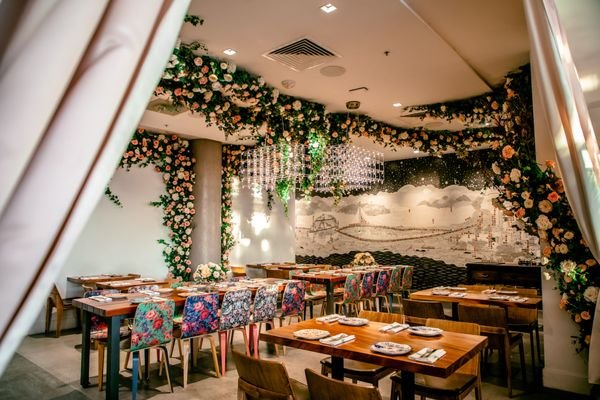
About Mägo
On Piedmont Avenue in Oakland, Mägo operates at the quieter end of the Bay Area dining spectrum: wood-grilled seasonal produce, casual small plates, and a menu that resists the tasting-counter orthodoxy dominant across the bay. Chef Mark Liberman's kitchen trades in ratatouille on zucchini bread, kimchi-style sungold tomatoes over pasta alla chitarra, and nightly shared meat options that anchor the table without theatrics. Google reviewers rate it 4.6 from 228 reviews.
The Case Against the Tasting Menu, Made in Oakland
The Bay Area's fine-dining conversation has spent the better part of two decades converging on a single format: the chef-driven tasting menu, often multi-course, frequently double-digit in price, and structured around a kitchen's argument rather than a diner's appetite. Places like Alinea in Chicago and The French Laundry in Napa defined what premium dining was supposed to feel like for a generation of chefs. Locally, Lazy Bear, Benu, Atelier Crenn, Quince, and Saison operate in that $$$$ tier, each built around an evening-length commitment to a single narrative. Mägo, on Piedmont Avenue in Oakland, takes the opposing position quietly and without apology.
The restaurant sits at $$$ pricing and runs an à la carte format built around small plates, a wood grill, and seasonal Californian produce. That may sound like a modest ambition, but in the context of the current Bay Area market, it reads more like a considered argument: that great food does not require a captive audience, a fixed sequence, or a bill that precludes a second visit this month.
Piedmont Avenue and the East Bay Dining Shift
Oakland's Piedmont Avenue corridor occupies a distinct position in the broader Bay Area dining geography. While San Francisco proper houses most of the region's Michelin-starred establishments and the editorial attention that follows them, the East Bay has developed a parallel track: neighbourhood-anchored restaurants with serious kitchens but less appetite for ceremony. The approach visible at Mägo echoes what Ethel's Fancy and Foreign Cinema represent on the San Francisco side: cooking grounded in place and produce rather than in performance.
Piedmont Avenue itself is a walkable, residential-commercial strip that rewards the kind of restaurant that wants a regular clientele rather than a destination-dining tourist circuit. For Mägo, that context shapes everything from format to price point. A wood grill is a neighbourhood kitchen tool as much as it is a fine-dining technique, and the menu reads accordingly: approachable entry points, a flexible structure that accommodates a solo diner or a table of four, and a dessert list built around seasonal fruit rather than architectural sugar work.
The Menu as a Philosophy of Restraint
Chef Mark Liberman's cooking draws on high-end kitchen experience, but the menu at Mägo is deliberately not a showcase of that training. The frame here is Californian: wood fire, seasonal produce, and an à la carte structure that lets the ingredients determine the pace rather than the kitchen's preferred narrative arc. Ratatouille on toasted zucchini bread and crispy soft-shell crab with peaches and plums are small plates that foreground produce at a specific moment in the season. Kimchi-style sungold tomatoes over pasta alla chitarra introduces fermentation logic into a format that could otherwise read as straightforwardly Italian-adjacent, which is where much of the menu's character sits: familiar frameworks, unexpected inflections.
The nightly shared meat option, available as rabbit saddle or grilled tri-tip depending on the evening, functions as the table's anchor. This is the à la carte format doing what the tasting menu claims as its own: a single dish that requires a commitment, shared across the table, and timed by the kitchen. The difference is that here, it arrives inside a meal you have built yourself rather than one the chef has pre-assembled. Corn pudding with blueberries and lime granita closes the meal in the same register: seasonal, direct, and without pretension to dessert-course theatrics.
For context on where this sits in the Californian idiom more broadly, Citrin in Los Angeles and Heritage in Long Beach represent the same tradition applied further south, while Single Thread Farm in Healdsburg takes Californian seasonality into a much more formal, multi-course structure. Mägo lives closest to the first two in ethos, whatever the geographic distance.
The Prix Fixe Question, Answered by Omission
The economics of the American tasting menu have become harder to ignore. At the $$$$ tier, multi-course menus across major American cities now routinely price between $200 and $350 per person before wine, service, or supplemental courses. The format delivers a kind of theatre and a level of kitchen control that some diners value highly. Le Bernardin in New York City and Providence in Los Angeles represent the ceiling of that argument: technically precise, occasion-defining, and priced to reflect both. Emeril's in New Orleans built a different kind of authority through a more accessible format and a regional identity that was always as much about place as about technical ambition.
Mägo's $$$ positioning and small-plates structure implicitly side with the latter tradition. The format respects the diner's autonomy: you choose the pace, the portion size, and the degree of commitment. A table that orders heavily and shares the nightly meat option will spend differently from one that takes two plates and a dessert. That flexibility is not a concession to the market; it is a structural argument about how fine dining should function in a neighbourhood restaurant rather than a destination-dining room.
The 4.6 Google rating from 228 reviews suggests the argument lands with the people actually eating there. For a restaurant without a heavy awards profile or a tasting-menu price point to drive editorial attention, that kind of sustained audience approval carries its own authority.
Placing Mägo in the Bay Area Context
Compared to the $$$$-tier San Francisco restaurants that occupy most of the region's critical bandwidth, Mägo operates in a different register without operating at a lower standard. The distinction worth making is between complexity of format and quality of execution. A well-handled wood grill producing properly seasonal small plates is a harder discipline than it appears from the outside; the absence of sauce work and architectural plating means the produce and the fire carry everything. 3rd Cousin and Sun Moon Studio represent adjacent Bay Area restaurants where a focused format and strong ingredient sourcing do similar work within a $$$ frame.
For broader Bay Area planning, our full San Francisco restaurants guide, San Francisco hotels guide, San Francisco bars guide, San Francisco wineries guide, and San Francisco experiences guide cover the full range of the region's options across price points and formats.
Know Before You Go
- Address: 3762 Piedmont Ave, Oakland, CA 94611
- Cuisine: Californian, wood-grill focused, seasonal small plates
- Price range: $$$
- Format: À la carte; casual small plates with a nightly shared meat option
- Google rating: 4.6 from 228 reviews
- Booking: Contact the restaurant directly; hours and online booking details not confirmed at time of writing
- Getting there: Piedmont Avenue is accessible by BART (MacArthur or 19th Street Oakland stations) and by car with street parking along the corridor
Frequently Asked Questions
What is the signature dish at Mägo?
Mägo does not operate around a fixed signature dish in the way a tasting-menu restaurant would, which is part of the point. The menu rotates with the season and the availability of produce. That said, a few preparations recur as reference points: the kimchi-style sungold tomatoes over pasta alla chitarra represent the kitchen's tendency to introduce unexpected fermentation or acidity into familiar formats, and the nightly shared meat option, which has appeared as rabbit saddle and grilled tri-tip, functions as the meal's most committed course. The corn pudding with blueberries and lime granita has been noted as a dessert that rewards ordering. The wood grill is the constant; what comes off it changes with the season.
Recognized By


More restaurants in San Francisco
- SaisonSaison is the right call for a serious San Francisco celebration dinner: 2 Michelin stars, an OAD #3 North America ranking for 2025, and a personalised open-hearth tasting menu built around your preferences. The wine list — 2,540 selections with deep Burgundy holdings — is among the strongest in the country. Dinner only, Tuesday to Saturday. Book far in advance and contact the team before arrival to shape your menu.
- Atelier CrennAtelier Crenn is San Francisco's most decorated tasting-menu restaurant: three Michelin stars, a World's 50 Best ranking, and a 14-course pescatarian menu built around Dominique Crenn's Poetic Culinaria concept. At $$$$ with near-impossible reservations, it is the right booking for a milestone occasion — but confirm the pescatarian-only format suits your table before you commit.
- QuinceQuince holds 3 Michelin Stars in San Francisco's Jackson Square and earns them with a pasta-forward tasting menu grounded in Northern California produce and Italian technique. The wine list runs to 1,700 selections and the 2023 remodel produced a room worth the $$$$ price point. Book two months out minimum — this is one of the hardest tables in the city to secure.
- BenuThree Michelin stars, a No. 7 ranking in Opinionated About Dining's North America list, and nearly 20 courses of Corey Lee's technically precise Asian-inflected cooking make Benu one of the most credentialed tables in the country. Book at least six to eight weeks out — closer to three months for a weekend date. The quiet, contemplative room suits serious food travellers over groups seeking a convivial night out.
- Lazy BearLazy Bear holds two Michelin stars and a Pearl Recommended designation, and it earns both through a genuinely distinctive dinner-party format — menu booklets, communal energy, and a James Beard-nominated wine program with over 10,500 bottles. Book the upstairs mezzanine, arrive ready to participate, and plan well ahead: reservations run near impossible and the 2024 remodel has only increased demand.
Related editorial
- Best Fine Dining Restaurants in ParisFrom three-Michelin-star icons to the next generation of Parisian chefs pushing boundaries, these are the restaurants that define fine dining in the world's culinary capital.
- Best Luxury Hotels in RomeFrom rooftop terraces overlooking ancient ruins to Michelin-starred hotel dining, these are the luxury hotels that make Rome unforgettable.
- Best Cocktail Bars in KyotoFrom sleek lounges to hidden speakeasies, Kyoto's cocktail scene blends Japanese precision with global influence in ways you won't find anywhere else.
Save or rate Mägo on Pearl
Keep this venue in your Pearl passport, rate it after you visit, and track it alongside every other place you collect.