
Restaurant in Monte Carlo, Monaco
Marius
100ptsQuayside Provençal Precision

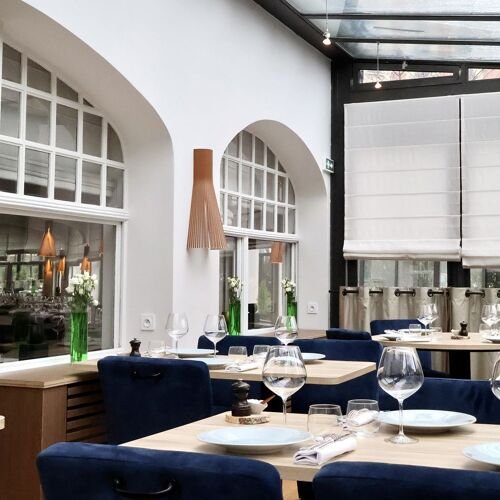
About Marius
Marius sits on Quai Antoine-1er, where Monaco's port meets the Provençal coastline tradition, earning a Michelin Plate in 2025 with a 4.7 Google rating across 272 reviews. The kitchen draws from the same southern French larder that defines the Côte d'Azur's most serious tables, positioning it as a mid-tier entry point into Monaco's competitive dining scene without the four-figure price tags of its neighbours.
Where the Port Meets the Provençal Table
The quayside in Monaco has a particular quality in the early evening. As the light flattens over the harbour, the superyachts recede into silhouette and the pedestrian energy along Quai Antoine-1er shifts from spectacle to something quieter. Marius sits directly on this waterfront strip at number 6, facing the port with the kind of address that in most cities would guarantee a kitchen coasting on its location. The Provençal tradition, however, tends to demand more than that.
Provençal cuisine is among the most geographically specific cooking styles in France. It draws on a larder defined by altitude and latitude: olive oil from the Var, tomatoes slow-cooked down to a concentrated paste, salt-marsh lamb from the Camargue, fish pulled from the same Mediterranean that borders Monaco's coastline. At its most serious, this is food shaped by terrain rather than technique, which explains why the tradition has produced some of the most durable restaurants on the Côte d'Azur. The benchmark in Monaco remains Alain Ducasse's Louis XV, where Provençal cooking operates at its most ambitious and most expensive. Marius operates in a different register: the €€€ price tier places it below the concentrated luxury of the principality's multi-starred rooms, offering a more accessible entry into the same regional tradition.
Provençal Cooking in a City Built Around Spectacle
Monaco's restaurant scene has a structural tension that most principalities don't face. The city-state's identity — wealth on display, Formula 1 circuits through the streets, casino architecture that would look excessive anywhere else — sits in complicated dialogue with a cuisine rooted in peasant practicality, seasonal thrift, and the cooking of farmers and fishermen. The restaurants that resolve this tension most effectively are the ones that treat Provençal food as a serious idiom rather than a decorative backdrop.
The wider dining tier in Monaco skews heavily toward the €€€€ bracket. L'Abysse Monte-Carlo operates at that level with a Japanese format, as does Blue Bay Marcel Ravin with its creative Caribbean-influenced cooking. Les Ambassadeurs by Christophe Cussac anchors the modern French end of that expensive tier. Within this context, Marius and La Table d'Élise occupy a different position: a €€€ bracket that allows the food to carry the conversation without the ceremonial weight of a tasting-menu format.
A Michelin Plate , awarded in 2025 , signals that the guide's inspectors consider the cooking here worth recommending, placing it in a tier of recognized quality without star pressure. This is a meaningful distinction. The Michelin Plate is awarded to restaurants offering good food in the guide's assessment; it reflects consistent kitchen standards rather than the innovation premium required for starred recognition. With a 4.7 rating across 272 Google reviews, the guest response aligns with that reading: consistent satisfaction, not occasional brilliance.
The Regional Tradition and Its Coastal Inflection
To understand what Marius is likely doing on the plate, it helps to understand what Provençal cooking means when executed close to the coast rather than in the inland villages of the Luberon or Vaucluse. The coastal expression of this tradition gives greater weight to fish and seafood: sea bass cooked with fennel and olive oil, daurade à la niçoise, bouillabaisse when the fisherman's catch justifies it. Vegetables take on a secondary structural role rather than the starring function they hold in the more agrarian interior. Herbs, garlic, and olive oil remain constant anchors regardless of geography.
The Côte d'Azur stretches from Menton at the Italian border westward through Nice and Cannes, and serious Provençal tables are distributed along this arc. Inland and further west, the tradition deepens: Hostellerie Jérôme in La Turbie, just above Monaco in the hills, holds two Michelin stars and represents the most ambitious version of this cooking in the immediate vicinity. Further afield, the Provençal canon is carried by addresses such as Alain Llorca in La Colle-sur-Loup, La Bastide Bourrelly with Mathias Dandine in Cabriès, and, deep in the Alpes-de-Haute-Provence, La Bastide de Moustiers in Moustiers-Sainte-Marie. In the Alpilles, Maison Hache in Eygalières, Allegria in Paradou, and La Bonne Étape in Château-Arnoux-Saint-Auban hold the tradition in the more pastoral register. Auberge de Cassagne in Le Pontet represents yet another Provençal node to the west. Marius, by contrast, is Provençal cooking rooted in an urban principality , the seaside and the port define its immediate context more than any particular landscape.
Planning a Visit
Marius is located at 6 Quai Antoine-1er, directly on Monaco's harbour. The quayside is walkable from the casino district and from the Monte-Carlo train station, which receives TGV connections from Paris and regional trains from Nice. The address is leading approached on foot or by taxi from within the principality; the harbour-adjacent streets require some navigation but reward the walk with the visual context of the port itself.
The summer months bring Monaco's peak visitor load, which concentrates between June and August around the Grand Prix season in May and the summer influx thereafter. A reservation made in advance is the practical approach for this period, particularly for quayside tables. The autumn shoulder season, when the crowds thin and the light on the Mediterranean turns cooler and more even, is often the better time to eat in Monaco's mid-tier rooms without the logistical pressure of peak season. Spring, similarly, offers a Riviera that is active but not saturated. For broader context on where Marius fits in the principality's full dining picture, see our full Monte Carlo restaurants guide. Those extending a stay can reference our full Monte Carlo hotels guide, our full Monte Carlo bars guide, our full Monte Carlo wineries guide, and our full Monte Carlo experiences guide.
Frequently Asked Questions
- What should I order at Marius?
- No specific menu data is available in the verified record for Marius, so naming particular dishes would be speculative. What the Michelin Plate recognition and the Provençal cuisine classification suggest is a kitchen anchored in the southern French tradition: olive oil-based preparations, Mediterranean fish and seafood, aromatic herbs, and seasonal vegetables. The coastal position in Monaco points toward a stronger seafood presence than inland Provençal tables. For the freshest reading on the current menu, consulting the restaurant directly or checking recent diner reviews closer to your visit is the most reliable approach.
Recognized By

Similar venues by awards
Related editorial
- Best Fine Dining Restaurants in ParisFrom three-Michelin-star icons to the next generation of Parisian chefs pushing boundaries, these are the restaurants that define fine dining in the world's culinary capital.
- Best Luxury Hotels in RomeFrom rooftop terraces overlooking ancient ruins to Michelin-starred hotel dining, these are the luxury hotels that make Rome unforgettable.
- Best Cocktail Bars in KyotoFrom sleek lounges to hidden speakeasies, Kyoto's cocktail scene blends Japanese precision with global influence in ways you won't find anywhere else.
Save or rate Marius on Pearl
Keep this venue in your Pearl passport, rate it after you visit, and track it alongside every other place you collect.