
Restaurant in Rogoznica, Croatia
Mario
100ptsAdriatic Harbour Table
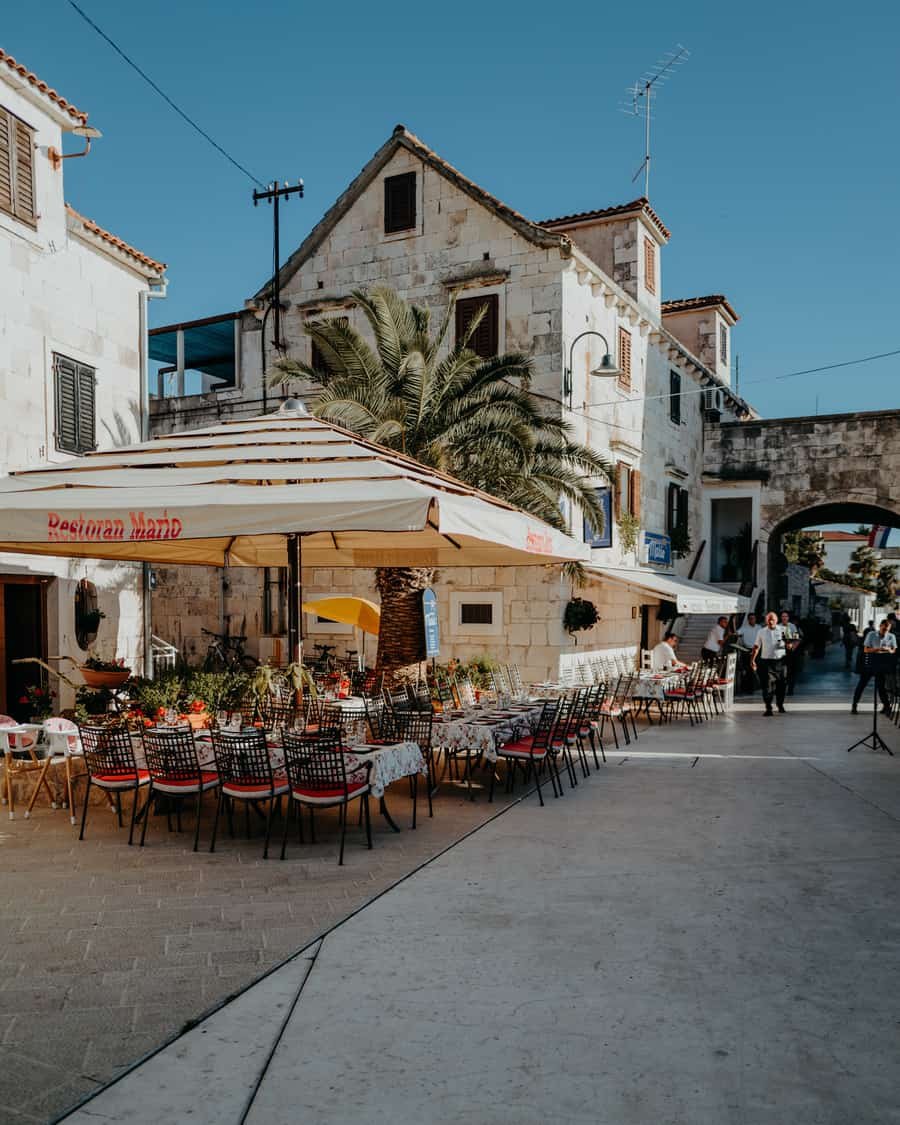
About Mario
On the Dalmatian coast between Split and Šibenik, Mario occupies a spot on Rogoznica's waterfront where the town's fishing-village character is still legible in what ends up on the plate. The address — Hrvatske Mornarice 1 — places it at the edge of the harbour, and the cooking reflects the proximity to boats, nets, and the catch those boats bring in. For a small town that most visitors treat as a marina stopover, Mario makes a reasonable case for a longer stay.
Rogoznica at the Table: What a Harbour Restaurant Actually Means Here
The Dalmatian coast runs roughly 600 kilometres from the Istrian peninsula to the Montenegrin border, and for most of that distance the relationship between the sea and the kitchen is direct in a way that larger city restaurants can only approximate. In Rogoznica, a small town on a peninsula between Split and Šibenik, that relationship is especially compressed. The harbour is not decorative. Boats leave, boats return, and what they bring back determines what restaurants serve. Mario, at Hrvatske Mornarice 1 on the waterfront, sits inside that supply chain rather than at the end of a longer distribution line.
This is the foundational editorial point about places like Mario: in towns this size, ingredient sourcing is not a marketing choice. It is a structural condition. The fish was not driven up from a regional depot. The shellfish did not clear a warehouse. The distance between the catch and the kitchen is measured in minutes and metres, not days and kilometres. Whether that translates into a kitchen with the technical range to match the material is a separate question — but the raw starting position is one that well-resourced restaurants in Zagreb or Dubrovnik spend considerable effort trying to replicate.
Where Rogoznica Sits in Croatia's Dining Spread
Croatia's premium restaurant circuit has become meaningfully concentrated in recent years. Pelegrini in Šibenik (read our Pelegrini review) operates at €€€€ with a modern Mediterranean programme that has drawn consistent critical attention. Restaurant 360 in Dubrovnik occupies a similar price tier with an international, modern-cuisine orientation. Further north, Agli Amici Rovinj brings Italian contemporary technique to the Istrian context. These are the headline addresses that earn Croatia's presence in European fine-dining conversations.
Rogoznica does not compete at that tier, and understanding that distinction matters for setting expectations correctly. The town functions primarily as a nautical waypoint — it has one of the better-protected natural harbours on the mid-Dalmatian coast, and many of its visitors arrive by sea. The dining that follows from that context is less about composed tasting menus and more about the kind of cooking that makes sense when the audience has just come off a boat and wants to eat well without ceremony. Within that frame, Mario's waterfront position gives it a natural logic. For a broader view of where this fits regionally, our full Rogoznica restaurants guide maps the options across the town.
The Ingredient Argument: Dalmatian Seafood at Its Source
Mid-Dalmatian waters produce some of the cleaner, colder-channel fish on the Adriatic. The channel between the mainland and the offshore islands keeps currents moving and water temperatures lower than the more enclosed northern Adriatic bays, which affects the quality and flavour intensity of the fish. Sea bass, dentex, and various bream species are caught locally; the same applies to octopus, which features heavily in Dalmatian cooking both raw in salads and slow-braised under a peka, the cast-iron bell that defines a certain category of Croatian coastal cooking.
The peka preparation is worth understanding as a technique rather than as a specific dish. The food , fish, meat, or vegetables , goes under the bell with aromatics and fat, then coals are piled on leading, and the whole thing cooks in residual heat for an extended period. It is not quick, and it requires ordering in advance. Restaurants that do it properly are committing kitchen time and equipment to a single table's order, which is part of why the format tends to survive better in smaller, owner-operated spots than in high-volume operations.
Across the wider Croatian coast, restaurants that have moved furthest from this local-supply model tend to be the ones that have scaled most aggressively. The contrast is visible when you compare a place like Mario to the more internationally positioned kitchens in Split or Dubrovnik. Krug in Split and Nebo by Deni Srdoč in Rijeka represent kitchens where Croatian ingredients are filtered through a more contemporary technical lens. Mario occupies the opposite end of that axis, where the ingredient's provenance carries more weight than the preparation's sophistication.
Arriving, Eating, Leaving: The Practical Frame
Rogoznica is reachable by road from Split in under an hour (the town is roughly 35 kilometres north along the coast road), or by water if you are sailing the mid-Dalmatian route. The marina is one of the larger on this stretch, and during July and August it operates at capacity, which has a direct effect on restaurant demand. Croatian coastal restaurants at harbours of this size tend to fill quickly in peak summer, particularly those with waterfront tables. Planning ahead is sensible from late June through early September. Outside that window, Rogoznica is significantly quieter, and the restaurants that remain open operate at a different pace.
The address at Hrvatske Mornarice 1 places Mario at the harbour edge. There is no data on booking method, but for a waterfront table in peak season, arriving early or making contact through whatever local booking channel exists is prudent. This is not a situation requiring the three-month forward planning of an urban omakase counter, but the same casual assumption that harbour restaurants absorb all-comers without friction does not always hold in July.
Comparisons Worth Making
For readers whose Croatian restaurant experience runs through the more formally positioned end of the market, some comparison is useful. Boskinac in Novalja on Pag Island is the reference point for how a Croatian island property can combine local-ingredient seriousness with genuine ambition. LD Restaurant in Korčula sits at €€€€ with a Mediterranean programme that positions it alongside the coastal fine-dining tier. Alfred Keller in Mali Lošinj brings a different kind of precision to Kvarner Bay. Mario is not in competition with any of these. What it shares with them is geography's influence on the plate, even if the format, price, and ambition diverge considerably.
Closer to home, Antonijo is the other Rogoznica address worth knowing. The two restaurants reflect the way small Croatian harbour towns often sustain a small cluster of seafood-focused options without the differentiation that larger cities produce. Neither is chasing the same audience as Dubravkin Put in Zagreb or Korak in Jastrebarsko; the context is different and the comparison should account for that.
Frequently Asked Questions
- Is Mario okay with children?
- Rogoznica is a family-friendly harbour town, and a waterfront seafood restaurant at this price level in Croatia is generally a comfortable setting for children , less so if the pace and format skew toward long, multi-course meals.
- How would you describe the vibe at Mario?
- Think mid-Dalmatian harbour rather than fine-dining room. Rogoznica does not produce the kind of refined, ceremony-forward dining you find at awarded addresses elsewhere on the coast; the tone here is informal, outdoor-adjacent, and seafood-led. It sits considerably below the €€€€ tier of Croatia's leading coastal restaurants in both formality and expectation.
- What is the leading thing to order at Mario?
- On the Dalmatian coast, the answer to this question almost always starts with the day's fish. Ask what came in and go from there. If the kitchen does peka, note that it requires advance notice , it is not a dish you can order on arrival and receive in twenty minutes. The same principle applies at most Croatian coastal kitchens with any seriousness about the preparation.
- Do I need a reservation for Mario?
- In July and August, waterfront tables in Rogoznica fill quickly, and a harbour restaurant at this address is not exempt from peak-season pressure. Contact ahead if you are visiting during peak summer. Outside the main season, the town operates at a quieter register and walk-in access is more reliable.
- What kind of fish is typically available in Rogoznica, and does that affect what Mario serves?
- The mid-Dalmatian channel between the mainland and the offshore islands produces sea bass, dentex, and bream as consistent local catches, alongside octopus and shellfish. In a harbour town of Rogoznica's size, restaurants this close to the water tend to reflect the day's catch directly rather than drawing from a broader regional supply network. That proximity is what makes the seafood argument for a stop here, even if the kitchen's technical ambition is not what you would find at a restaurant like Pelegrini in Šibenik or Agli Amici Rovinj.
Related editorial
- Best Fine Dining Restaurants in ParisFrom three-Michelin-star icons to the next generation of Parisian chefs pushing boundaries, these are the restaurants that define fine dining in the world's culinary capital.
- Best Luxury Hotels in RomeFrom rooftop terraces overlooking ancient ruins to Michelin-starred hotel dining, these are the luxury hotels that make Rome unforgettable.
- Best Cocktail Bars in KyotoFrom sleek lounges to hidden speakeasies, Kyoto's cocktail scene blends Japanese precision with global influence in ways you won't find anywhere else.
Save or rate Mario on Pearl
Keep this venue in your Pearl passport, rate it after you visit, and track it alongside every other place you collect.