
Restaurant in Millau, France
Maison Seed
150ptsIn-House Pantry Fusion

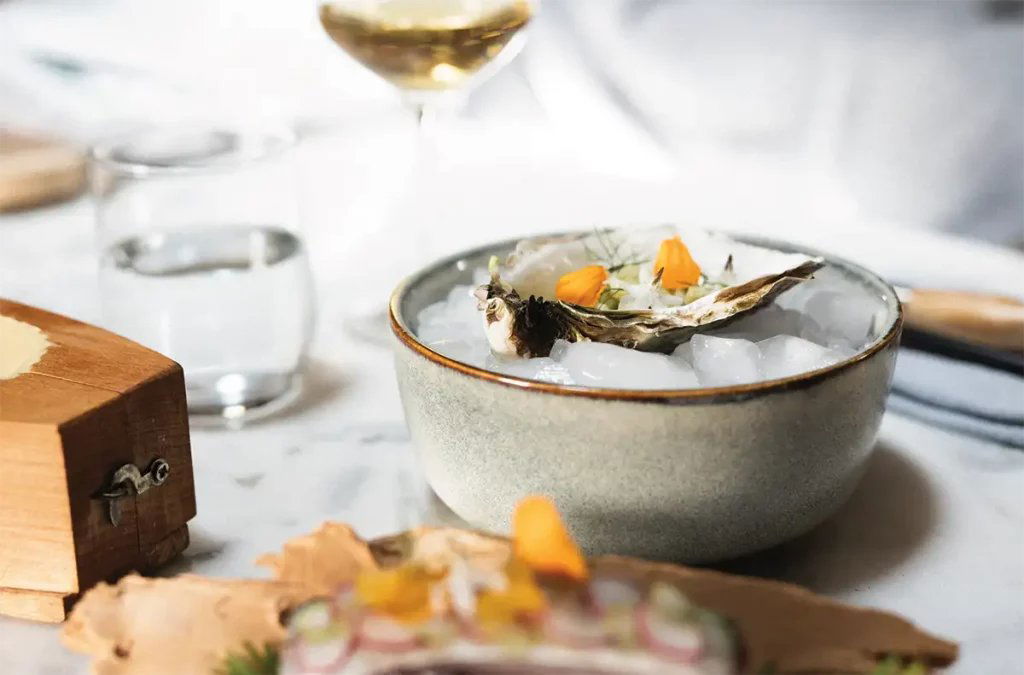
About Maison Seed
On a narrow pedestrian street near the Fontaine du Mandarins, Maison Seed occupies a vaulted dining room where the kitchen produces its own oils, vinegars, and sourdough bread in-house. The menu draws on ingredients and techniques from multiple culinary traditions, and many of the pantry staples are available to take home. Small, eco-conscious, and run by a globe-trotting couple, it sits at the quieter end of Millau's dining options.
A Vaulted Room on a Pedestrian Street
Millau is leading known internationally for its motorway viaduct, the cable-stayed structure that carries the A75 across the Tarn valley. The town below, however, has its own quieter character: medieval lanes, a working leather trade rooted in centuries of glove-making, and a market square that functions as a genuine civic centre rather than a tourist stage. It is in this context that Rue Peyssière makes sense — a narrow pedestrian street close to the Fontaine du Mandarins, where Maison Seed operates from a room with vaulted stone ceilings that the building's age makes entirely unremarkable and entirely appropriate at the same time.
Approaching on foot, as the street more or less insists, you register the scale before you register the signage. This is a small restaurant. The vaulted interior reinforces that intimacy: stone overhead, a modest number of covers, and a format that keeps service personal by necessity. For travellers accustomed to the larger dining rooms of, say, Alléno Paris au Pavillon Ledoyen in Paris or the alpine grandeur of Flocons de Sel in Megève, the shift in register is pronounced. There is no brigade visible, no choreographed procession of courses delivered with practised ceremony. The intimacy here is structural rather than performed.
Where the Ingredients Come From
The kitchen at Maison Seed operates with an unusually self-sufficient pantry. The oils used in cooking are made in-house. So are the vinegars. The sourdough bread served during a meal is produced on the premises, and surplus stock from the kitchen — those same oils, vinegars, and breads , is available for purchase to take home. This is not a novelty proposition: it reflects a coherent philosophy about what constitutes the foundation of a dish and where the flavour variables lie.
House-made vinegars, in particular, represent a level of production commitment that goes well beyond what most restaurants consider their responsibility. Vinegar fermentation requires time, temperature control, and consistency across batches , it is the kind of background work that rarely appears on a menu description but shapes the acid balance of a dressing or sauce in ways that commercially produced alternatives cannot replicate. The decision to make oils in-house operates on similar logic: control over fat quality and flavour profile at the earliest stage of preparation.
This ingredient discipline places Maison Seed in a broader French tradition that takes sourcing seriously without necessarily announcing it loudly. Restaurants like Bras in Laguiole , roughly 60 kilometres north through the Aveyron , have built international reputations on the premise that the Aubrac plateau's specific ingredients are inseparable from the cooking that uses them. Maison Seed operates at a different scale and with a different ambition, but the underlying instinct , that what goes into the dish before it is cooked matters as much as technique , connects them to a regional way of thinking about food.
The cooking itself is described as fusion-style, pulling from multiple culinary traditions rather than anchoring to a single national cuisine. This is a more complicated proposition to execute than it might appear. Fusion cooking in provincial French towns has a patchy record, often defaulting to a kind of generic internationalism that satisfies no particular tradition adequately. The presence of the in-house pantry suggests a different approach: the fusion is grounded in ingredients with a known provenance and a controlled flavour baseline, which gives the kitchen more to work with when combining techniques or flavour references across traditions. The couple running the restaurant describe their cooking as drawing from far and near, which implies that local Aveyron produce sits alongside ingredients or methods encountered during time spent abroad.
Eco-Conscious as Operating Principle
The eco-conscious framing at Maison Seed is not incidental. In-house production of oils, vinegars, and bread reduces dependence on supply chains and gives the kitchen direct oversight of what goes into those staples , which is, among other things, a form of waste reduction and quality control simultaneously. The retail element (taking home the same oils or vinegars used in your meal) extends the kitchen's production logic beyond the dining room, connecting the customer to the sourcing in a tangible way.
This approach sits within a broader shift in French provincial dining, where smaller, owner-operated restaurants have increasingly differentiated themselves through production depth rather than price or prestige. The multi-Michelin rooms , Mirazur in Menton, Troisgros - Le Bois sans Feuilles in Ouches, Auberge de l'Ill in Illhaeusern , operate with kitchen teams and supply networks that smaller restaurants cannot replicate. What a two-person operation can offer instead is the kind of close attention to every input that a larger brigade, by definition, distributes across specialists. At Maison Seed, the person fermenting the vinegar is also the person deciding how to use it in the evening's menu.
Placing Maison Seed in Millau's Dining Scene
Millau is not a dining destination in the way that cities like Lyon or Marseille (where AM par Alexandre Mazzia has redrawn expectations for southern French cooking) attract food-specific travel. The town draws visitors primarily for outdoor pursuits in the Tarn gorge and Grands Causses, and its restaurants reflect that , a mix of brasseries, local Aveyron cuisine built around roquefort and lamb, and a small number of more considered rooms. Maison Seed belongs to the latter group, offering something that sits outside the regional standard without abandoning local grounding entirely.
For visitors planning time in the area, Millau fits logically into a wider Aveyron or southern Massif Central itinerary. The department around it contains some of France's most compelling and undervisited countryside, and the eating tends to reflect that unpretentious character. Maison Seed is worth factoring into a meal plan here precisely because it does something the rest of the town's dining does not: it applies genuine kitchen discipline to a global flavour range while keeping the production local and the format personal. For broader context on what else the town offers, see our full Millau restaurants guide, as well as guides to hotels, bars, wineries, and experiences in Millau.
Planning Your Visit
Maison Seed sits at 2 rue Peyssière in central Millau, on a pedestrian lane close to the Fontaine du Mandarins , which means arrival on foot from the town centre is direct. The vaulted interior and small format suggest that advance booking is advisable, particularly in summer when outdoor tourism in the Tarn gorge region peaks and restaurant demand in the town rises accordingly. Phone and website details are not currently available through standard channels, so booking through a hotel concierge or direct visit to confirm a table is the more reliable approach. Budget travellers and those accustomed to high-end restaurants elsewhere in France , from Assiette Champenoise in Reims to Auberge du Vieux Puits in Fontjoncouse , should note that price range data is not confirmed; expect something closer to a neighbourhood bistro than a grand tasting menu room. The in-house pantry items are available for purchase, making the visit double as a food shopping stop for those self-catering nearby.
Frequently Asked Questions
Can I bring kids to Maison Seed?
The restaurant's small, intimate format is better suited to adults or older children who are comfortable in a quiet dining room. Price and booking details are not publicly confirmed, so it is worth contacting the venue directly to ask about suitability before planning a family visit in Millau.
What is the atmosphere like at Maison Seed?
The dining room occupies a vaulted stone space on a pedestrian street in central Millau , the atmosphere is calm and close, shaped by the building's age and the restaurant's small capacity. Millau itself is a working provincial town rather than a destination resort, and the restaurant reflects that grounded character. There are no confirmed awards or formal accolades publicly attached to the restaurant, but the format and production approach place it in a different register from the standard regional brasserie.
What should I order at Maison Seed?
Kitchen's most distinctive offering is its in-house production: oils, vinegars, and sourdough bread made on the premises. These appear across the menu and are also available to purchase. The cooking draws from multiple culinary traditions with a fusion orientation, so expect dishes that move across flavour references rather than staying within a single cuisine. Specific menu items are not confirmed in available data, so the most practical approach is to ask on arrival what the kitchen is working with that day.
Recognized By

Similar venues by awards
Related editorial
- Best Fine Dining Restaurants in ParisFrom three-Michelin-star icons to the next generation of Parisian chefs pushing boundaries, these are the restaurants that define fine dining in the world's culinary capital.
- Best Luxury Hotels in RomeFrom rooftop terraces overlooking ancient ruins to Michelin-starred hotel dining, these are the luxury hotels that make Rome unforgettable.
- Best Cocktail Bars in KyotoFrom sleek lounges to hidden speakeasies, Kyoto's cocktail scene blends Japanese precision with global influence in ways you won't find anywhere else.
Save or rate Maison Seed on Pearl
Keep this venue in your Pearl passport, rate it after you visit, and track it alongside every other place you collect.