
Restaurant in Pelotas, Brazil
Los Chapas - Complexo Gastronômico
100ptsMulti-Format Southern Table
About Los Chapas - Complexo Gastronômico
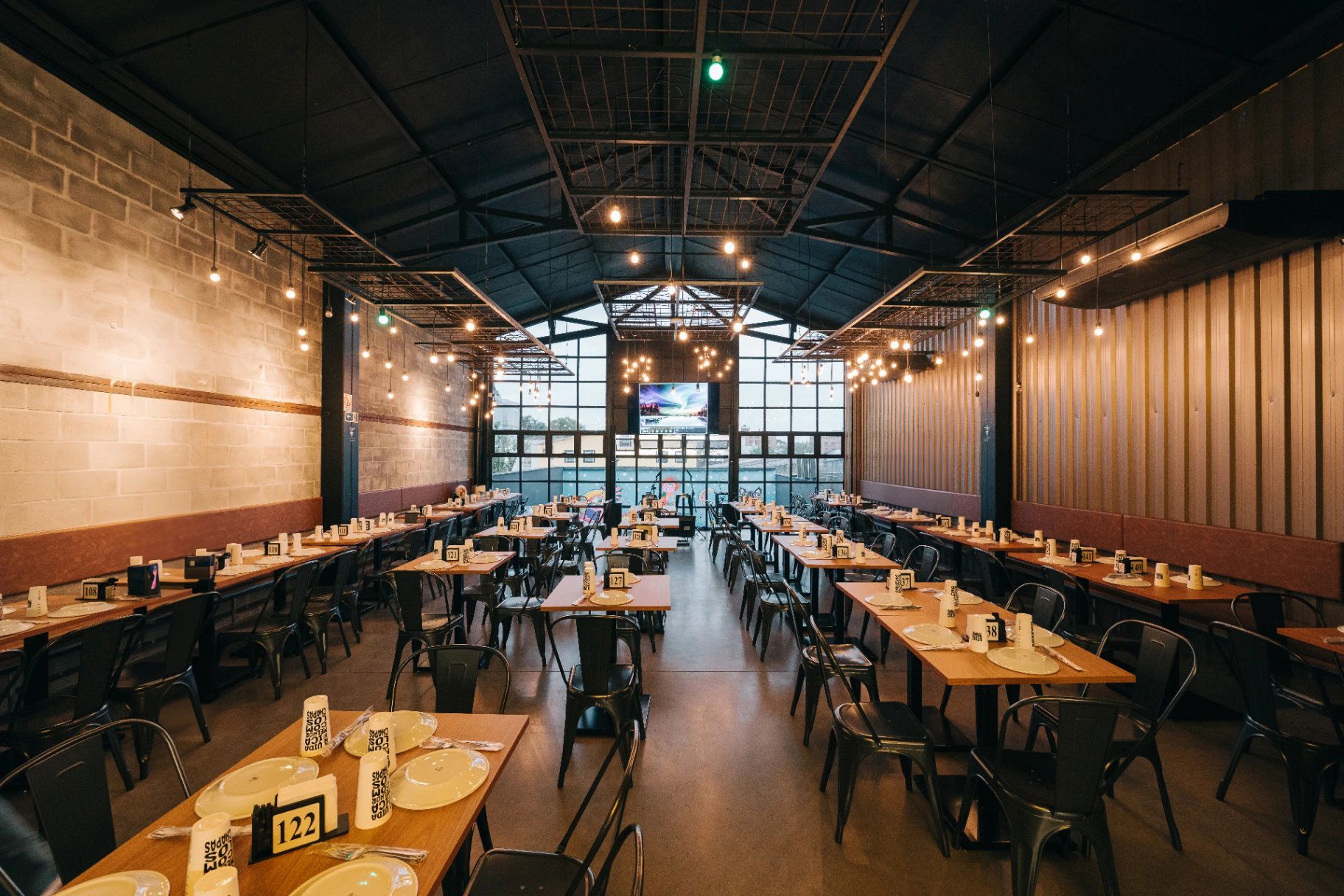
Los Chapas - Complexo Gastronômico occupies a Centro address on Rua Mal. Deodoro in Pelotas, Rio Grande do Sul, placing it inside one of southern Brazil's most underappreciated dining cities. The 'complexo' format signals ambition beyond a single dining room, situating it within a regional scene where gaucho food traditions and European immigrant cooking coexist in ways few Brazilian cities replicate.
Pelotas and the Question of Southern Brazilian Identity
Pelotas is not a city that announces itself. Tucked into Rio Grande do Sul roughly 250 kilometres south of Porto Alegre, it spent the nineteenth century as Brazil's largest producer of charque (dried salted beef) and accumulated enough wealth to build an ornate Centro that still reads, block by block, like a compressed European city. That history left behind something more useful than architecture: it left a food culture shaped by Portuguese, German, and Italian immigrant waves, by gaucho churrasco traditions, and by the particular produce that the Pampas and the Lagoa dos Patos coastal zone supply. The city's doceiras — confectioners whose colonial-era sweet-making traditions earned a place on Brazil's National Immaterial Cultural Heritage register — are the most cited example, but the broader dining scene carries similar layering.
Within that context, a venue positioning itself as a complexo gastronômico is making a specific claim. The term implies more than one format under a single roof: typically a combination of dining rooms, bar programming, and sometimes a market or events space. It is an organisational approach that has gained traction in mid-sized Brazilian cities where a single restaurant concept cannot sustain the investment required to occupy and maintain a substantial historic building. The address on Rua Mal. Deodoro places Los Chapas inside Pelotas's Centro, close to the neoclassical squares and late nineteenth-century mansions that define the neighbourhood's character.
Ingredient Geography: What the Region Puts on the Table
The editorial angle that matters most for any serious Pelotas restaurant is sourcing. Rio Grande do Sul produces a disproportionate share of Brazil's agricultural output relative to its size: it is the country's leading rice producer, a significant source of soy and wheat, and home to the Serra Gaúcha wine region north of Porto Alegre. More locally, the wetlands around the Lagoa dos Patos and the estuaries feeding into it supply freshwater fish , particularly tainha (mullet) and corvina , that are central to the coastal and semi-coastal food identity of Pelotas and Rio Grande. The Pampas, meanwhile, deliver the beef that underpins gaucho churrasco, a cooking tradition with its own grammar of cuts, fire management, and timing.
A complexo gastronômico in this city, operating under a name with Spanish-language inflection (los chapas reads as a nod toward Río de la Plata cultural exchange, reflecting the border proximity to Uruguay and Argentina), sits at the intersection of those traditions. The Spanish-Portuguese borderland quality of far southern Rio Grande do Sul is genuinely distinct from what restaurants in São Paulo or Rio operate within. At [D.O.M. in São Paulo](https://www.enprimeurclub.com/restaurants/dom-so-paulo-restaurant) and [Lasai in Rio de Janeiro](https://www.enprimeurclub.com/restaurants/lasai-rio-de-janeiro-restaurant), the sourcing conversation centres on Amazon and Cerrado ingredients; in Pelotas, the sourcing logic runs south and east, toward the estuary, the Pampas, and across borders that are cultural as much as geographic.
That positioning connects Los Chapas to a regional peer set rather than a national one. For comparison, [Casa Pueblo Restaurante Uruguaio](https://www.enprimeurclub.com/restaurants/casa-pueblo-restaurante-uruguaio-pelotas-restaurant) in Pelotas explicitly foregrounds that cross-border identity, while [Cantinho do Peixe Pronto](https://www.enprimeurclub.com/restaurants/cantinho-do-peixe-pronto-pelotas-restaurant) anchors itself in the local fish tradition. A complexo format could plausibly draw from both registers simultaneously.
The Complexo Format and What It Demands of a Visitor
Multi-format gastronomy spaces require a different kind of visit planning than single-concept restaurants. At venues like this across Brazil, the assumption is that guests arrive with time: time to move between a more casual bar or bistro section and a seated dining format, or to combine a market visit with a meal. The Centro location on Rua Mal. Deodoro is walkable from the main praças and the bus terminal that connects Pelotas to Porto Alegre (the journey by road runs approximately three and a half hours, and regular coach services operate the route). For visitors arriving from further afield, Porto Alegre's Salgado Filho airport is the practical gateway, with onward travel by bus or hire car.
Because specific hours, booking methods, and current programming are not confirmed in available records, contacting the venue directly before visiting is advisable, particularly for groups or evening visits when a complexo's different spaces may operate on separate schedules. The [full Pelotas restaurants guide](https://www.enprimeurclub.com/cities/pelotas) provides additional context for planning a broader stay in the city.
Southern Brazil's Dining Tier and Where Pelotas Fits
Brazil's restaurant conversation defaults to São Paulo and Rio, where the venues with international recognition cluster. [D.O.M.](https://www.enprimeurclub.com/restaurants/dom-so-paulo-restaurant) and [Lasai](https://www.enprimeurclub.com/restaurants/lasai-rio-de-janeiro-restaurant) occupy the top tier of that national conversation. But the mid-sized city tier in the south, from Santa Maria ([Cantina Pozzobon](https://www.enprimeurclub.com/restaurants/cantina-pozzobon-santa-maria-restaurant)) to Passo Fundo ([Fornazzo Pizzaria](https://www.enprimeurclub.com/restaurants/fornazzo-pizzaria-passo-fundo-restaurant)) and Canoas ([Kampeki Sushi](https://www.enprimeurclub.com/restaurants/kampeki-sushi-canoas-restaurant)), shows a regional dining culture that does not replicate the capital-city model. It works from local ingredients, immigrant cooking traditions, and a price register calibrated for local incomes rather than international tourism. Pelotas, with its documented food heritage and its position as one of the larger cities in the far south, sits comfortably within that tier.
Elsewhere in Brazil, complexo-style venues have found traction in cities where historic building stock provides large footprints at lower cost than major metros, and where a mixed-format approach can serve both weekday trade and weekend events. The model is visible from Manaus ([Bistro Fitz Carraldo](https://www.enprimeurclub.com/restaurants/bistro-fitz-carraldo-manaus-restaurant)) to Santos ([Madê](https://www.enprimeurclub.com/restaurants/made-santos-restaurant)), and in Pelotas's case, the heritage architecture of Centro makes it a logical environment for that kind of ambition.
Planning Your Visit
Los Chapas - Complexo Gastronômico is located at Rua Mal. Deodoro, 1262, Centro, Pelotas, RS 96015-560. The Centro position makes it accessible on foot from the city's main historic area, and street parking is available in the surrounding blocks. Because no confirmed website, phone number, or current hours appear in public records, the most reliable approach before visiting is to check for the venue on local aggregators or social media platforms where Brazilian restaurants in this tier typically maintain active listings. Pelotas is warmest and most visited between November and March; winter months bring cooler temperatures typical of the Pampas climate zone, which tends to shift menus toward heavier preparations where that flexibility exists.
Frequently Asked Questions
- Is Los Chapas - Complexo Gastronômico child-friendly?
- No confirmed family policy is on record, but complexo-format venues in Brazilian mid-sized cities generally accommodate families, particularly at lunch , in a city like Pelotas where dining out spans a broad demographic, strict age restrictions are uncommon at this price tier.
- What is the vibe at Los Chapas - Complexo Gastronômico?
- If you respond to Centro heritage settings and prefer a multi-space format over a single dining room, this is likely a good fit; if Pelotas's award-recognised food heritage is the draw and you want a more focused, single-concept experience, venues like Cantinho do Peixe Pronto or Casa Pueblo Restaurante Uruguaio offer that at a comparable price register.
- What dish is Los Chapas - Complexo Gastronômico famous for?
- No confirmed signature dish appears in available records. What can be said is that the cuisine tradition the complexo operates within, shaped by gaucho churrasco, Pampas beef, and the coastal fish supply of the Lagoa dos Patos estuary, tends to foreground grilled proteins and regional freshwater fish at venues across the Pelotas dining scene rather than any single dish category associated with a named chef or award.
- Does Los Chapas operate as a single restaurant or across multiple spaces?
- The 'complexo gastronômico' designation indicates a multi-format operation rather than a conventional single dining room, a model that has become more common across mid-sized Brazilian cities with large heritage building stock. Exact space configuration is not confirmed in current public records, so checking directly with the venue before arrival is the clearest way to understand which formats are operating on a given day.
Related editorial
- How travel will be redefined by 2040By 2040, Travel Will Stop Being a Place You Go and Become a State You Inhabit Thesis: The defining shift in travel by 2040 will not be faster planes or smarter hotels — it will be the collapse of the
- How travel will be redefined by 2040By 2040, Travel Won't Be an Industry — It Will Be Infrastructure My thesis is simple and, I suspect, unfashionable: by 2040 travel will stop behaving like a discretionary consumer category and start
- How travel will be redefined by 2040By 2040, Travel Won't Be a Trip — It Will Be a Stack My thesis is simple and, I think, uncomfortable: by 2040, "travel" will no longer describe a discrete journey from point A to point B.
Save or rate Los Chapas - Complexo Gastronômico on Pearl
Keep this venue in your Pearl passport, rate it after you visit, and track it alongside every other place you collect.