
Restaurant in Fontainebleau, France
L'Orée des Sablons
150ptsForest-Rooted Game Cookery

About L'Orée des Sablons
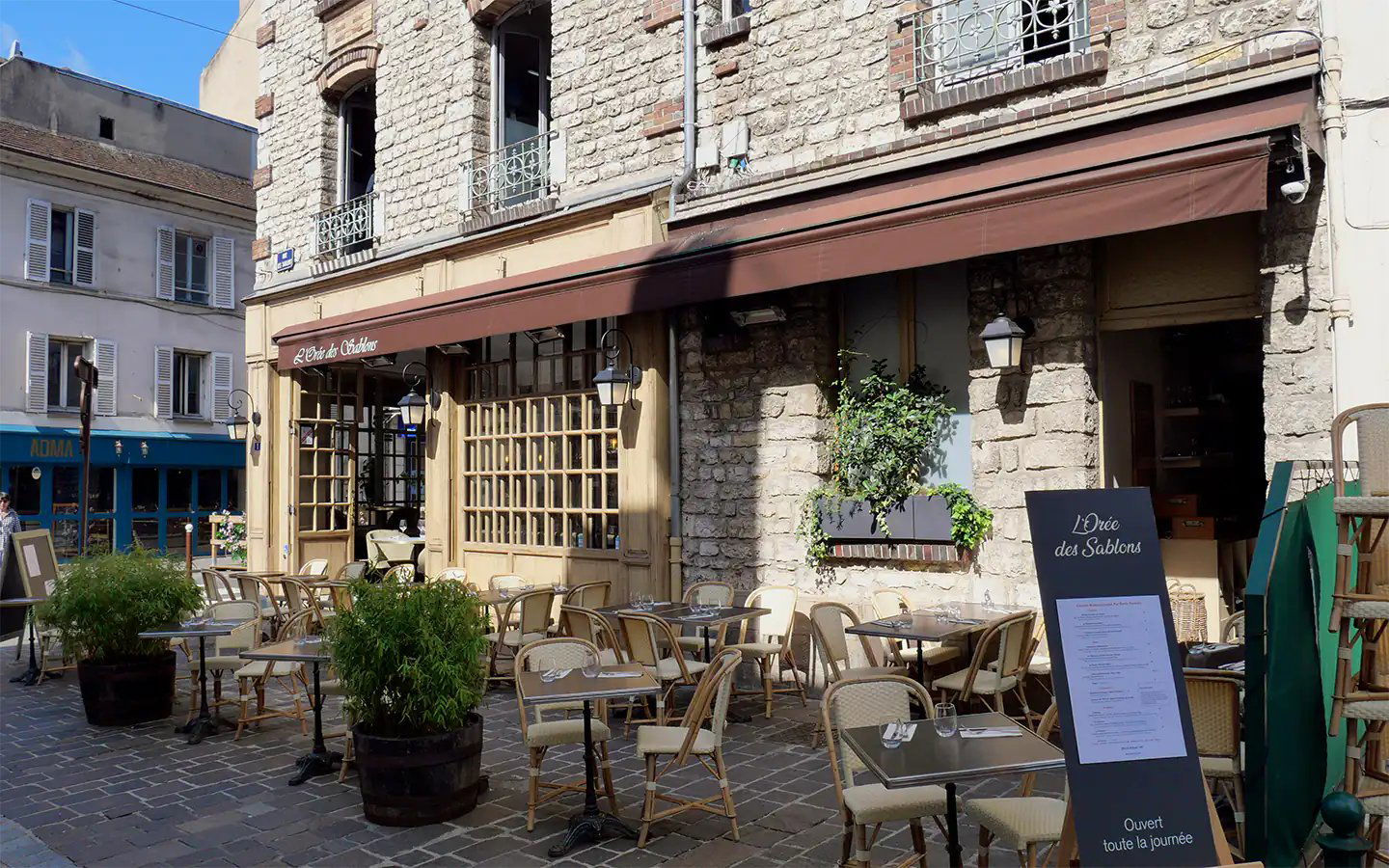
On a pedestrian street in Fontainebleau, L'Orée des Sablons occupies a specific corner of French culinary tradition: hunting-season cookery, competition-grade technique, and an unapologetic commitment to meat. The chef reached the finals of the Lièvre à la Royale Championship and brings that same exacting standard to dishes like oreiller de la belle Aurore and pâté en croûte, with a small terrace for warmer months.
Where the Forest Comes to the Table
Fontainebleau's pedestrian streets have a particular character in autumn: the smell of damp leaves drifting in from the forest edges, shutters pulled half-shut against the chill, and the kind of quietness that makes you aware of how far you are from Paris's arrondissements. It is in this setting that rue des Sablons sits, and L'Orée des Sablons reads the room correctly. The address is unhurried, the terrace small enough to feel deliberate rather than commercial, and the cooking pitched squarely at a tradition that French restaurants in larger cities have largely abandoned: the serious, forest-adjacent cuisine of the hunt.
That tradition has deep roots in this part of the Seine-et-Marne. The Fontainebleau forest has been hunting ground since the Capetian kings, and the cuisine that grew alongside it — hare, game birds, offal, long braises, pastry-encased forcemeats — represents one of the more exacting branches of classical French cookery. L'Orée des Sablons situates itself directly inside that lineage, at a time when most restaurants in the region have moved toward lighter, more internationally legible menus. For diners who want to understand what this part of France actually tastes like at its most historically grounded, that positioning matters.
A Menu Built Around Provenance and the Hunt
The sourcing logic at work here is worth understanding before you look at the menu. Game cookery at this level depends entirely on the quality and handling of the primary ingredient: how the animal was raised or hunted, how quickly it was processed, how long it was aged. A chef who reaches the finals of the Lièvre à la Royale Championship , as this kitchen's chef did , is being evaluated not just on technique but on an entire chain of decisions about ingredient selection and preparation that begins long before any heat is applied. Lièvre à la Royale, the dish that gives that competition its name, is among the most demanding preparations in French cuisine: a whole hare deboned, stuffed with a foie gras and truffle forcemeat, then braised for hours in wine until it collapses into something between a terrine and a sauce. Producing it at competition standard requires sourcing that meets the preparation rather than vice versa.
That sensibility carries through the broader menu. Oreiller de la belle Aurore, another dish rooted in France's grand cuisine tradition, is a pillow-shaped pastry encasing multiple game meats and forcemeats. Like Lièvre à la Royale, it is the kind of preparation that rewards a kitchen with direct relationships to its suppliers rather than those working through intermediaries. The fillet of guinea fowl with grilled green beans, shiso leaf tempura, and offal sauce shows a different register: cleaner, more contemporary in plating logic, but still anchored in the kitchen's confidence with offal and secondary cuts. Shiso tempura in this context is less a nod to Japanese technique than an acknowledgment that textural contrast matters in a menu this weighted toward rich, slow-cooked preparations. For context on how France's most ambitious kitchens handle similar sourcing questions at much higher price points, [Flocons de Sel in Megève](https://www.enprimeurclub.com/restaurants/flocons-de-sel-megeve-restaurant), [Bras in Laguiole](https://www.enprimeurclub.com/restaurants/bras-laguiole-restaurant), and [Mirazur in Menton](https://www.enprimeurclub.com/restaurants/mirazur-menton-restaurant) each represent a different regional answer to the same question of how local terroir shapes what arrives on the plate.
The pâté en croûte programme deserves its own mention. Pâté en croûte has undergone a significant rehabilitation in French culinary circles over the past decade, moving from bistro afterthought to competition-judged discipline with its own dedicated championship. A chef who is both a Lièvre à la Royale finalist and a declared enthusiast of pâté en croûte is working within a specific revival movement in classical French charcuterie, where technique and sourcing are equally on display in every cross-section. These are not convenience preparations; they require precision pastry work, well-sourced forcemeat ingredients, and exact resting and unmoulding. Among broader French dining traditions, [Auberge de l'Ill in Illhaeusern](https://www.enprimeurclub.com/restaurants/auberge-de-lill-illhaeusern-restaurant) and [Troisgros - Le Bois sans Feuilles in Ouches](https://www.enprimeurclub.com/restaurants/troisgros-le-bois-sans-feuilles-ouches-restaurant) offer relevant comparisons for how classical French kitchens treat these inherited preparations at their most serious.
Fontainebleau's Dining Context
Fontainebleau's restaurant scene is compact but more varied than its size might suggest. [L'Axel](https://www.enprimeurclub.com/restaurants/laxel-fontainebleau-restaurant) occupies the modern cuisine tier, with a Franco-Japanese approach that draws visitors from Paris on its own merits. [Fuumi](https://www.enprimeurclub.com/restaurants/fuumi-fontainebleau-restaurant) addresses Japanese cooking in the town directly. L'Orée des Sablons sits in neither of those categories: it represents the town's most coherent expression of the cooking that the surrounding region has historically produced. If you are spending time in Fontainebleau and want one meal that places you inside local culinary tradition rather than alongside it, this address makes the strongest case. For a fuller picture of the town's dining and hospitality options, [our full Fontainebleau restaurants guide](https://www.enprimeurclub.com/restaurants/fontainebleau), [hotels guide](https://www.enprimeurclub.com/hotels/fontainebleau), [bars guide](https://www.enprimeurclub.com/bars/fontainebleau), [wineries guide](https://www.enprimeurclub.com/wineries/fontainebleau), and [experiences guide](https://www.enprimeurclub.com/experiences/fontainebleau) map the full range.
For those building a broader French dining itinerary, the contrast with Paris-based kitchens like [Alléno Paris au Pavillon Ledoyen](https://www.enprimeurclub.com/restaurants/alleno-paris-au-pavillon-ledoyen-paris-restaurant) , where classical French technique meets contemporary creative ambition at the highest price tier , illustrates how much the distance of sixty kilometres can shift the frame of reference. [Paul Bocuse - L'Auberge du Pont de Collonges](https://www.enprimeurclub.com/restaurants/paul-bocuse-lauberge-du-pont-de-collonges-collonges-au-mont-dor-restaurant) and [Assiette Champenoise in Reims](https://www.enprimeurclub.com/restaurants/assiette-champenoise-reims-restaurant) sit at different ends of classical French ambition, both useful reference points for understanding where hunting-tradition cookery sits within the wider French culinary hierarchy.
Practical Notes
L'Orée des Sablons is on rue des Sablons, a pedestrian street in central Fontainebleau, which means arrival on foot from the town centre or the château is direct. The small terrace seats a limited number of covers and is the first to fill during the warmer months, so arriving early or booking in advance carries more weight than at a larger address. The menu's commitment to slow-cooked and competition-calibre preparations suggests a kitchen operating with deliberate pacing rather than high table turnover; plan accordingly. Specific pricing, hours, and booking contact are not confirmed in our current data, so direct verification before visiting is advised.
Frequently Asked Questions
What's the leading thing to order at L'Orée des Sablons?
The kitchen's credentials point clearly toward the game preparations. The chef is a finalist in the Lièvre à la Royale Championship and a confirmed enthusiast of pâté en croûte, both of which are present on the menu in some form. Oreiller de la belle Aurore, another demanding multi-meat pastry preparation from the classical French repertoire, represents the house at its most technically ambitious. These are the dishes that contextualise the chef's competition background, and they are the reason this address holds a distinct position in Fontainebleau's dining options.
How would you describe the vibe at L'Orée des Sablons?
Fontainebleau is a town that wears its proximity to the forest and the château quietly, and L'Orée des Sablons reflects that register. The pedestrian street setting removes the noise of passing traffic; the small terrace keeps the scale intimate. The cooking references competition-level technique and a deep French culinary tradition rather than contemporary fine-dining theatre. Compared to the more architecturally assertive rooms you find at Paris-level addresses , [AM par Alexandre Mazzia in Marseille](https://www.enprimeurclub.com/restaurants/am-par-alexandre-mazzia-marseille-restaurant) or [Le Bernardin in New York](https://www.enprimeurclub.com/restaurants/le-bernardin) , this is a quieter, more regionally embedded proposition.
Is L'Orée des Sablons child-friendly?
The menu's emphasis on game meats, offal sauces, and classical French preparations means the kitchen is not specifically oriented toward younger diners. Fontainebleau itself offers other options, and if price or menu flexibility is a consideration, checking the current menu and format directly with the restaurant before booking with children is the sensible approach.
Can I walk in to L'Orée des Sablons?
Given the small terrace, the limited-cover format implied by a pedestrian-street address, and the nature of preparations like Lièvre à la Royale that require significant advance kitchen preparation, walk-ins carry real risk of finding no availability, particularly in autumn when game season drives demand. A reservation is the practical choice. Current booking contact details should be confirmed directly, as they are not in our verified data.
Recognized By

Similar venues by awards
Related editorial
- Best Fine Dining Restaurants in ParisFrom three-Michelin-star icons to the next generation of Parisian chefs pushing boundaries, these are the restaurants that define fine dining in the world's culinary capital.
- Best Luxury Hotels in RomeFrom rooftop terraces overlooking ancient ruins to Michelin-starred hotel dining, these are the luxury hotels that make Rome unforgettable.
- Best Cocktail Bars in KyotoFrom sleek lounges to hidden speakeasies, Kyoto's cocktail scene blends Japanese precision with global influence in ways you won't find anywhere else.
Save or rate L'Orée des Sablons on Pearl
Keep this venue in your Pearl passport, rate it after you visit, and track it alongside every other place you collect.