
Restaurant in Tokyo, Japan
L`Orangerie Koh-An
125ptsCooking Classics, Chiyoda Precision

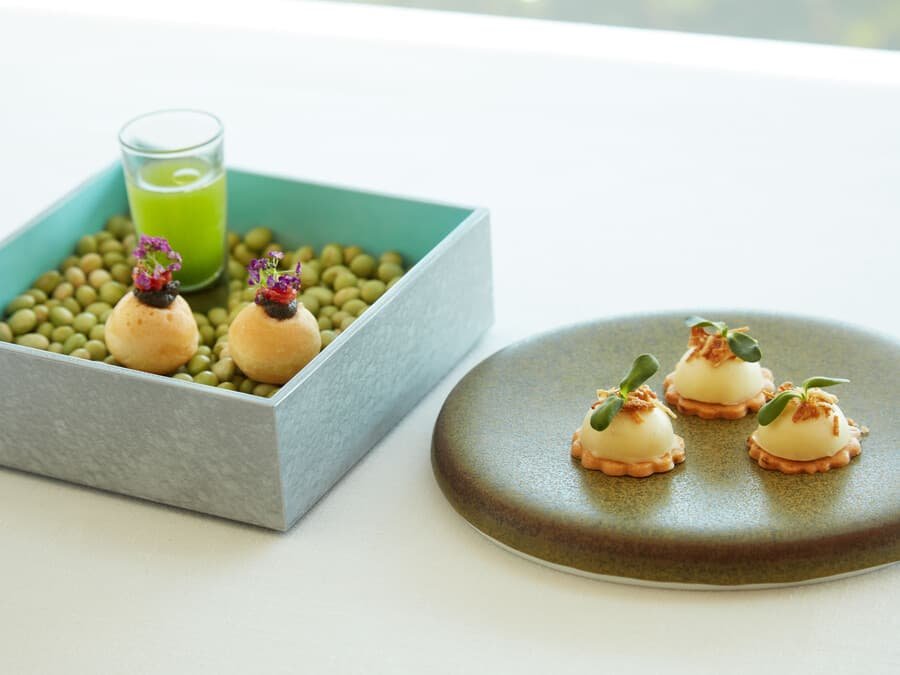
About L`Orangerie Koh-An
L'Orangerie Koh-An occupies a considered position in Tokyo's Chiyoda dining scene, where Chef Takeshi Kamo applies classical Japanese techniques to a format recognised under the EP Club Cooking Classics designation. Situated in Hirakawachō, the restaurant draws from a tradition of metropolitan precision — the kind of cooking Tokyo has long positioned against Kyoto's more ceremonially paced approach. Google reviewers rate it 5.0 from early visits.
Tokyo's Classical Japanese Tradition and Where Koh-An Sits Within It
The argument between Tokyo and Kyoto, as it applies to serious Japanese cooking, has never really been about geography. It is about pace, intention, and the relationship between technique and time. Kyoto's kaiseki tradition — refined over centuries in the proximity of imperial culture and temple cuisine — privileges restraint, seasonal symbolism, and a deliberate formality that is almost liturgical in its structure. Tokyo, by contrast, has always metabolised influences faster, layering foreign techniques over native ones, accelerating the calendar, and producing restaurants that compete on precision and creative tension as much as on seasonal faithfulness. L'Orangerie Koh-An, in Chiyoda's Hirakawachō district, sits firmly within that metropolitan tradition. Its EP Club designation as a Cooking Classics address signals not novelty but a different kind of authority: the sustained execution of Japanese cuisine at a level where the classical framework holds.
Chiyoda is not a dining district in the way Minami-Aoyama or Ginza are. The area's character is administrative and commercial , government buildings, legal offices, the inner moat of the Imperial Palace. Restaurants that succeed here tend to do so on a foundation of regular, informed clientele rather than tourist traffic or social media visibility. That context matters. A Japanese cuisine address earning sustained recognition in Hirakawachō is operating for an audience that eats seriously and returns repeatedly, which creates its own kind of quality pressure. Chef Takeshi Kamo works within that framework.
The Tokyo Approach: Speed, Precision, and What Cooking Classics Means Here
Tokyo's high-end Japanese restaurant scene splits, roughly, into two registers. The first is the kaiseki-adjacent format: multi-course, seasonal, often expensive, and measured against the Kyoto reference whether the kitchen intends it or not. Ryugin, one of the city's three-Michelin-star Japanese houses, operates in that space, applying scientific precision to kaiseki structure and producing cooking that is emphatically Tokyo in its energy even when it honours classical form. The second register is what might be called classical everyday Japanese , restaurants that do not chase the kaiseki framework at all but instead focus on executing a narrower repertoire with depth and consistency. Cooking Classics designations from EP Club tend to cluster around this second type: places where the point is mastery of a defined tradition rather than the construction of a tasting menu narrative.
L'Orangerie Koh-An's Cooking Classics recognition places it in company with a specific tier of Tokyo Japanese restaurants where technical fidelity to classical methods is the primary criterion. Compare this with the kaiseki benchmark set by addresses like Gion Sasaki in Kyoto, where the seasonal calendar and formal progression of courses carry their own institutional weight, and the difference in editorial positioning becomes clear. Koh-An is not trying to be a Kyoto restaurant in Tokyo. It is doing something more specifically metropolitan: applying classical Japanese rigour to a format shaped by the city's own hospitality culture.
For context across Japan's broader Japanese cuisine landscape, the approach here aligns differently from what you encounter at HAJIME in Osaka, where the framing is explicitly innovative, or at akordu in Nara, which works with a completely different cultural register. Within Tokyo itself, the peer group is more instructive. Restaurants like Jigen Do, Kawada, Kizan, and Kashiwade no Tsukasa Suikouan each occupy adjacent positions in the classical Japanese tier, each with a distinct sub-focus, and reading Koh-An against that field gives a more accurate picture than any single-venue description could.
Seasonal Timing and the Question of When to Go
Japanese cuisine at the classical level is inherently seasonal, and Tokyo's kitchens tend to track those shifts with a metropolitan urgency that differs from the more ceremonially paced seasonal transitions in Kyoto or Kanazawa. Autumn in Tokyo sharpens the classical Japanese register considerably: the arrival of matsutake, the transition to richer broth profiles, and the general recalibration of fish toward fattier cold-season species all create a window when classical Japanese cooking is at its most compositionally interesting. Spring brings its own logic, particularly around cherry blossom season, when Tokyo restaurants of every format tend toward bookings weeks in advance and the classical addresses become harder to access. Visiting between late September and November, or in early spring before the peak tourist surge, gives the leading balance of seasonal interest and operational availability.
Hirakawachō's location means access is direct from central Tokyo. The area sits within walking distance of Kojimachi and Hanzōmon stations, and the broader Chiyoda corridor connects easily to the city's main hubs. For those building a wider Tokyo itinerary, Onarimon Haru offers another classical Japanese reference point in the city's portfolio, and the full Tokyo restaurants guide maps the broader field across cuisines and price tiers. The Tokyo hotels guide, bars guide, and experiences guide cover the wider city planning picture for those building a longer stay.
Beyond Tokyo, the classical Japanese tradition reads differently depending on where you encounter it. Mitsuyasu in Kyoto operates within the city's more ceremonially structured version of the same tradition. Beppu Hirokado in Oita draws on the regional ingredients and ryokan-adjacent hospitality culture of Kyushu. Goh in Fukuoka sits closer to the innovative end of the Japanese spectrum. And for those exploring the broader Kanto region, 1000 in Yokohama and 6 in Okinawa extend the picture into the prefecture's coastal and island variants. The Tokyo wineries guide adds a further dimension for those with an interest in Japanese wine alongside their dining.
Planning Your Visit
L'Orangerie Koh-An's address is 2 Chome-16-15 Hirakawachō, Chiyoda City, Tokyo 102-0093. The restaurant's current booking method, hours, and pricing should be confirmed directly, as these details are not publicly listed at time of writing. Given its early review profile , a 5.0 Google rating across eight reviews , it appears to be operating at a level that suggests limited capacity and a repeat-customer base, both of which support early enquiry. Chef Takeshi Kamo's kitchen is working within a classical Japanese framework that rewards visitors who approach it with some familiarity with that tradition, rather than treating it as an introduction to the format.
Frequently Asked Questions
What should I order at L'Orangerie Koh-An?
The kitchen operates within a classical Japanese cuisine framework, which means the menu will be shaped by season and by the chef's interpretation of that tradition rather than a fixed à la carte selection. Chef Takeshi Kamo's Cooking Classics recognition from EP Club points to a kitchen where the depth is in technique and ingredient selection rather than in flashpoint creativity. The practical approach is to follow the chef's recommendation or the set format , in classical Japanese restaurants operating at this level, that is almost always the most coherent way to read what the kitchen is doing. Arriving with knowledge of the seasonal produce calendar, particularly if visiting in autumn or early spring, will sharpen your reading of what arrives at the table.
Should I book L'Orangerie Koh-An in advance?
Yes. The restaurant's early review profile and Chiyoda location suggest a small, regular-clientele operation rather than a high-volume venue. Classical Japanese restaurants at this tier in Tokyo typically operate on reservation-only or near-reservation-only bases, and walk-in availability is not something you should assume. The general rule for serious Tokyo dining in this category is to book at least two to four weeks ahead, and further in advance during peak periods: cherry blossom season (late March to mid-April) and the autumn foliage window (October to November) both compress availability across the city's better classical Japanese addresses. Contact the restaurant directly to confirm current booking procedures.
Recognized By

More restaurants in Tokyo
- SézanneOccupying the seventh floor of the Four Seasons Hotel Tokyo at Marunouchi, Sézanne earned its first Michelin star within months of opening in July 2021 and now holds three. British chef Daniel Calvert applies French technique to Japanese ingredients, producing a prix-fixe format that Tabelog has recognised with Silver awards every year from 2023 through 2026. It ranked 4th in Asia's 50 Best Restaurants in 2025 and 15th globally in 2024.
- SazenkaSazenka is the address for Chinese cuisine in Tokyo at its most technically demanding. Chef Tomoya Kawada's wakon-kansai approach — Japanese seasonal ingredients applied through Chinese culinary technique — has earned consecutive Tabelog Gold Awards from 2019 to 2026, a #71 ranking on the World's 50 Best 2025, and 99 points from La Liste 2026. At JPY 50,000–59,999 per head, it is one of the hardest tables in the city to book and worth the effort.
- NarisawaNarisawa is Tokyo's most credentialled innovative tasting menu restaurant — two Michelin stars, Asia's 50 Best number 12, and a Tabelog Silver award — running at JPY 80,000–99,999 per head. Book for a milestone occasion, confirm vegetarian or vegan needs in advance, and reserve at least two to three months out. With 15 seats and reservation-only access, this is one of Tokyo's hardest tables to secure.
- FlorilègeFlorilège delivers two Michelin stars and an Asia's 50 Best #17 ranking at a dinner price of ¥22,000 — competitive for Tokyo at this level. Chef Hiroyasu Kawate's plant-forward tasting menus around an open-kitchen counter at Azabudai Hills make this the strongest choice for contemporary French dining in Tokyo if theatrical, produce-led cooking is what you want. Book well in advance; availability is near-impossible at short notice.
- MyojakuMyojaku is a 2-Michelin-star, 14-course French-leaning omakase in Nishiazabu holding a 4.47 Tabelog score, Tabelog Silver 2025–2026, and Asia's 50 Best #45 (2025). Chef Hidetoshi Nakamura's water-forward, no-dashi approach shifts meaningfully with the seasons — making timing your reservation as important as getting one. Budget JPY 50,000–59,999 per head plus 10% service charge; reservations only, near-impossible to secure.
- L'EffervescenceL'Effervescence holds three Michelin stars, a Green Star, and a place on Asia's 50 Best at #69 (2025) — and it earns all three. Chef Shinobu Namae's prix fixe menu applies French technique to Japanese seasonal produce with genuine rigour. At 45,000 yen before tax and service, with a wine and sake program worth taking seriously, this is one of Tokyo's most demanding reservations and one of its most rewarding.
Related editorial
- Asia's 50 Best Restaurants 2026: The Chairman and Wing Go 1-2 from the Same BuildingThe Chairman takes No. 1 and Wing climbs to No. 2 at Asia's 50 Best Restaurants 2026. Both operate from the same Hong Kong building. Here's what it means.
- Four Seasons Yachts Debut: 95 Suites, 11 Restaurants, and a March 2026 Maiden VoyageFour Seasons I launches March 20, 2026, with 95 suites, a one-to-one staff ratio, and 11 onboard restaurants. Worth tracking if you want hotel-grade service at sea.
- LA Michelin Guide 2026: Seven New Restaurants from Tlayudas to Uzbek DumplingsMichelin's March 2026 California Guide update adds six LA restaurants and one Montecito newcomer, spanning Oaxacan tlayudas, Uzbek manti, and Korean-Italian pasta.
Save or rate L`Orangerie Koh-An on Pearl
Keep this venue in your Pearl passport, rate it after you visit, and track it alongside every other place you collect.