
Restaurant in London, United Kingdom
Llama Inn
130ptsNew York-Trained Peruvian Technique

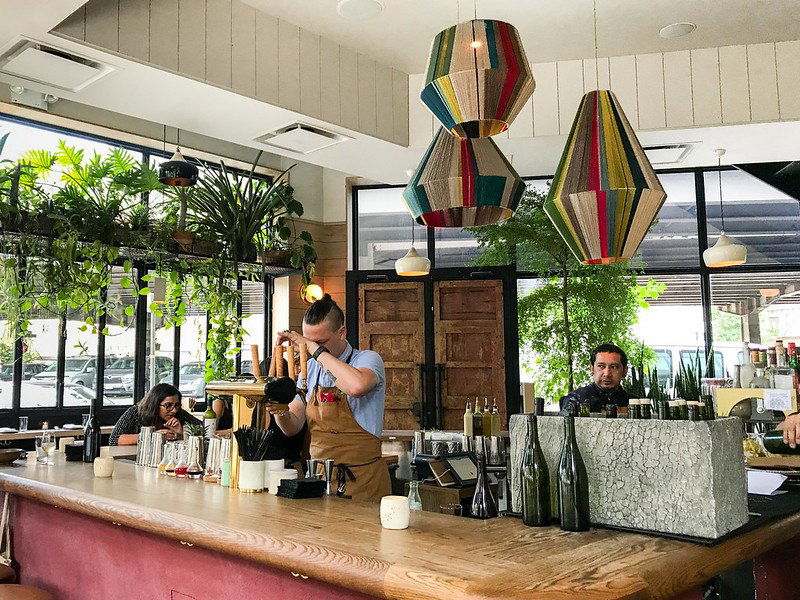
About Llama Inn
Llama Inn brings New York-trained technical precision to Peruvian cooking at a mid-range price point in Shoreditch. Chef Erik Ramirez grounds the menu in Peruvian tradition — ceviche, lomo saltado, escabeche — while adding enough contemporary flair to place it well above the standard South American casual. A 4.4 Google rating across 201 reviews signals consistent delivery rather than occasional brilliance.
Peruvian Cooking in London: Where the City's South American Scene Has Landed
London's Peruvian restaurant count has grown steadily since the early 2010s, when Lima helped establish the cuisine's credibility in the city at a fine-dining price tier. The years since have produced a second wave: kitchens operating at a lower price point but drawing on serious culinary training, often sourced from New York's Peruvian and Latin American restaurant circuit. Llama Inn, at 1 Willow Street in Shoreditch's EC2A postcode, sits in that second wave — a ££ operation with technique imported from a more expensive context.
The Shoreditch address is relevant. East London's restaurant density means Llama Inn competes against a wide cross-section of international cooking, not just a narrow Peruvian peer group. In that environment, the kitchen's ability to hold a 4.4 Google rating across 201 reviews suggests it is performing consistently against a diverse and demanding local audience, not just drawing on novelty.
What New York's Peruvian Kitchens Taught London
The influence of New York's Peruvian dining circuit on London kitchens is worth understanding before reading a menu like Llama Inn's. New York developed one of the most technically ambitious South American dining scenes outside Lima itself, partly because of the city's large Peruvian diaspora and partly because of the competitive pressure that pushes chefs toward precision. Chef Erik Ramirez trained in that environment, and the result is a menu that handles Peruvian tradition — ceviche, escabeche, lomo saltado , with the kind of technical confidence that tends to flatten the gap between street-food formats and plated dining.
That transfer of technique matters in London, where Peruvian cooking has sometimes sat uneasily between casual and fine-dining registers. The city's Peruvian options at the ££ tier don't always display the kitchen discipline that the cuisine's acid-heavy, texture-focused cooking requires. Llama Inn's positioning , informal atmosphere, moderate prices, serious technique , is a more coherent proposition than much of what surrounds it at that price level.
For those curious about how Peruvian cooking translates at higher price tiers across London and the UK, the contrast is instructive. CORE by Clare Smyth, Restaurant Gordon Ramsay, Sketch, The Lecture Room and Library, and The Ledbury all operate in the ££££ bracket where technique is table stakes. Llama Inn's point is that comparable precision is available at a fraction of that cost, in a format that doesn't require formal booking windows or dress considerations.
Reading the Menu as a Document of Peruvian Tradition
Peruvian cuisine is structurally diverse in a way that many non-specialists underestimate. The country's geography , Pacific coast, Andean highlands, Amazonian interior , produces three largely distinct food cultures, and Lima's restaurant scene has spent decades synthesising them. A well-constructed Peruvian menu signals which traditions it's drawing from and how seriously it's treating the source material.
At Llama Inn, the ceviche section is the clearest indicator of that seriousness. Offering both seafood and vegetarian variations is a choice that acknowledges Peru's coastal tradition without treating it as monolithic. The asparagus ceviche is built around a potato leek leche de tigre , a departure from the standard citrus-and-ají base that shows the kitchen is comfortable adapting the format rather than reproducing it wholesale. Leche de tigre, the acidic marinade byproduct of ceviche preparation, is a technical marker: a kitchen that uses it thoughtfully understands the chemistry of the dish, not just the presentation.
The jalapeño tequeños , crispy, cheese-filled pastry , represent a different register of Peruvian cooking, one rooted in the country's street food and snacking culture. Their presence alongside escabeche and lomo saltado reflects the menu's range across registers, which is characteristic of how Lima's better casual restaurants present Peruvian cuisine rather than narrowing it to a single expression.
The pork collar escabeche deserves attention as a dish that travels poorly in lesser kitchens. Escabeche requires acid balance and temperature discipline; a poorly executed version collapses into vinegary flatness. Its placement as a main-course option suggests confidence in the kitchen's execution of preservation-rooted techniques. For groups, the lomo saltado , Peru's canonical stir-fry, with Chinese wok technique absorbed into the national repertoire through nineteenth-century immigration , scales well as a shared dish and functions as a reliable test of whether a kitchen understands the wok heat requirements the dish actually demands.
Drinks at a Peruvian Restaurant: The Case for Taking It Seriously
Editorial angle here is drinks, and at a Peruvian restaurant the relevant question is whether the beverage program treats pisco as seriously as the kitchen treats leche de tigre. Peru and Chile have long contested pisco's origin, but the category of Peruvian pisco , made from specific grape varieties, distilled to proof without dilution, and often aged briefly in neutral vessels , is distinct enough to constitute its own wine-adjacent category. A restaurant with Ramirez's New York background almost certainly carries a considered pisco list, though the specifics are not available in the venue record.
More broadly, the question of wine with Peruvian food is genuinely interesting. The cuisine's acid structures , driven by citrus, ají amarillo, and fermentation , are not always well-served by the full-bodied reds that dominate casual restaurant lists. High-acid whites, skin-contact wines, and lighter reds tend to perform better against ceviche and escabeche. A kitchen with New York training will likely have encountered this pairing logic; whether the floor team at Llama Inn applies it in practice is worth testing on a visit. For those building a broader picture of London's drinks culture, our full London bars guide maps the city's cocktail and spirits programs in more depth.
Llama Inn in the Wider London and UK Context
Shoreditch sits within a London restaurant ecosystem that stretches from the city's most technically ambitious kitchens to its most casual. For readers whose interests extend across that range, our full London restaurants guide provides a mapped view of where Llama Inn sits relative to the city's other options. Those planning broader UK dining itineraries might also consider The Fat Duck in Bray, L'Enclume in Cartmel, Moor Hall in Aughton, Gidleigh Park in Chagford, Hand and Flowers in Marlow, and Le Manoir aux Quat' Saisons in Great Milton , all operating at higher price tiers and representing different expressions of serious kitchen craft.
For those tracking Peruvian cooking specifically across international cities, Causa in Washington, D.C. and ITAMAE in Miami represent North American iterations of the same New York-trained Peruvian diaspora that shaped Ramirez's approach. Comparing how the same culinary tradition adapts across London, D.C., and Miami is a more instructive exercise than reading any single venue in isolation. London's broader hospitality context is covered in our London hotels guide, our London wineries guide, and our London experiences guide.
Llama Inn is at 1 Willow Street, EC2A 4BH, in Shoreditch. The ££ price range places it comfortably within reach for a weeknight dinner without advance planning of the kind required at the city's £££ and ££££ tables. Specific booking details, current hours, and reservation methods are not listed in the venue record and should be confirmed directly before visiting.
FAQ
What's the must-try dish at Llama Inn?
The ceviche variations are the clearest indication of the kitchen's technical intent: the asparagus version with potato leek leche de tigre in particular shows the kind of adaptation that separates a cook who understands the dish from one who is reproducing it. If you're eating with a group, the lomo saltado is the more instructive order , it tests wok technique and seasoning balance simultaneously, and it scales in a way that individual plates don't. The key lime pie is the most frequently cited finish across the venue's documented dishes.
Recognized By

More restaurants in London
- CORE by Clare SmythClare Smyth's three-Michelin-star Notting Hill restaurant is one of London's most credentialled tables, holding La Liste 98pts, World's 50 Best #97, and a 4.7 Google rating across 1,460 reviews. The à la carte runs £195 per head; the Core Classic tasting menu is £255. Book Thursday or Friday lunch for the best chance of a table — dinner is near-impossible without 6–8 weeks' lead time.
- IkoyiTwo Michelin stars, No. 15 on the World's 50 Best in 2025, and a dinner tasting menu at £350 per head before wine: Ikoyi is one of London's hardest bookings and one of its most credentialed. Jeremy Chan's West African spice-led cooking applied to British organic produce is genuinely unlike anything else in the city. The express lunch at £150 is the entry point if the dinner price is the obstacle.
- KOLKOL ranked #17 on the World's 50 Best Restaurants in 2024 and holds a Michelin star — the most compelling case for a progressive Mexican tasting menu in London. Booking opens two months out and sells out almost immediately, so treat it like a ticket release. If the dining room is full, the downstairs Mezcaleria offers serious agave spirits and kitchen-quality small plates as a genuine alternative.
- The Clove ClubHoused in the former Shoreditch Town Hall, The Clove Club holds two Michelin stars and has appeared in the World's 50 Best Restaurants list consistently since 2016. Isaac McHale's tasting menus draw on prime British ingredients — Orkney scallops, Herdwick lamb, Torbay prawns — handled with technical precision and a looseness that keeps the cooking from feeling ceremonial.
- The LedburyThe Ledbury holds three Michelin stars and the #1 Star Wine List ranking in the UK — making it the strongest combined food-and-wine destination in London at the ££££ tier. At £285 per head for the eight-course evening menu, it rewards occasions where both the kitchen and the cellar need to perform. Book months ahead: availability is near impossible, especially at weekends.
- Hélène Darroze at The ConnaughtThree Michelin stars and a La Liste score of 95 points make Hélène Darroze at The Connaught one of London's clearest cases for fine dining at the top price tier. The tasting menu builds intelligently across courses, the redesigned room is warm rather than stiff, and the service is precise without being suffocating. Book months ahead — midweek lunch is your most realistic entry point.
Similar venues by awards
Related editorial
- Best Fine Dining Restaurants in ParisFrom three-Michelin-star icons to the next generation of Parisian chefs pushing boundaries, these are the restaurants that define fine dining in the world's culinary capital.
- Best Luxury Hotels in RomeFrom rooftop terraces overlooking ancient ruins to Michelin-starred hotel dining, these are the luxury hotels that make Rome unforgettable.
- Best Cocktail Bars in KyotoFrom sleek lounges to hidden speakeasies, Kyoto's cocktail scene blends Japanese precision with global influence in ways you won't find anywhere else.
Save or rate Llama Inn on Pearl
Keep this venue in your Pearl passport, rate it after you visit, and track it alongside every other place you collect.