
Restaurant in Guangzhou, China
Leowe
100ptsPearl River Delta Technique

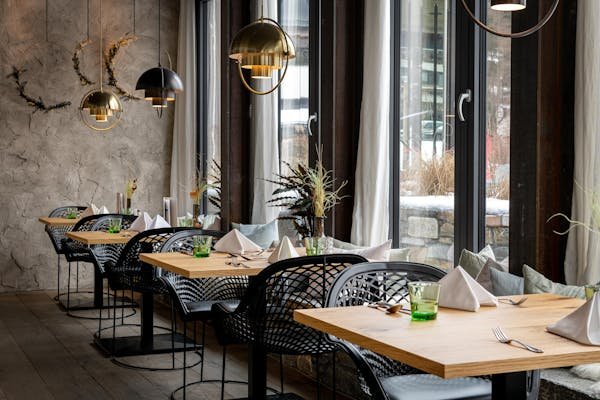
About Leowe
Leowe sits on the third floor of the Mandarin Oriental Guangzhou in Tianhe, where innovative cooking meets the product depth of the Pearl River Delta. A 2025 Michelin Plate recipient, it occupies the upper tier of Guangzhou's contemporary dining scene alongside ¥¥¥¥ peers such as Taian Table. The kitchen positions itself at the intersection of international technique and southern Chinese ingredients.
The Third Floor and What It Signals
Tianhe's restaurant floor at the Mandarin Oriental Guangzhou is a particular kind of address. The district is Guangzhou's financial and commercial core, and the hotel's dining outlets sit within a building that draws business travellers, regional executives, and the city's established upper-middle professional class. That social mix shapes the expectation in the room before a single dish arrives: precision over rusticity, controlled ambition over comfort-food nostalgia. Leowe, on the third floor, is the property's innovative-cuisine offering, and it operates within that expectation rather than against it.
Across Guangzhou's ¥¥¥¥ tier, the operating logic tends toward either strict Cantonese classicism or a broadly European fine-dining grammar imported wholesale. Leowe's Michelin Plate recognition in 2025 places it within a smaller cohort that treats the two not as alternatives but as raw material for a third approach: technique drawn from international kitchens applied to the ingredient vocabulary of the Pearl River Delta and southern Guangdong province. That intersection is where the most interesting cooking in Guangzhou is currently happening, and it is the frame through which Leowe makes the most sense.
Indigenous Ingredients, Imported Methods
The Pearl River Delta produces one of the most concentrated larders in China. Freshwater fish from the tributaries around Zhongshan and Shunde, poultry from the villages that feed Cantonese wet markets, seasonal vegetables with provenance that Cantonese cooks have tracked for generations — this is not a region short of material. What innovative kitchens do with that material is the defining question of Guangzhou's contemporary dining moment.
The approach that earns Michelin recognition in this category typically involves applying techniques associated with European or Japanese fine dining — precise temperature control, sauce construction drawn from classical French method, curing and fermentation borrowed from Nordic or East Asian traditions , to ingredients whose identity remains recognisably southern Chinese. The result, when it works, is cooking that reads as neither fusion nor imitation but as a coherent new grammar. Leowe's classification as innovative cuisine, combined with its price positioning at the leading of the local tier, suggests its kitchen is working in this register.
Guangzhou is a useful city for this kind of project because the ingredient supply chain is genuinely deep. Unlike cities where sourcing local products of serious quality requires constant logistics effort, Guangzhou's proximity to the Pearl River Delta's agricultural and aquaculture zones means the kitchen can source with consistency. The city's Cantonese heritage also creates an informed dining public, one that recognises product quality and can tell the difference between a kitchen that uses premium local ingredients as a marketing claim and one that actually builds its cooking around them.
Where Leowe Sits in the Guangzhou Scene
At ¥¥¥¥, Leowe prices alongside Taian Table, the Guangzhou outpost of Stefan Stiller's modern European operation, which is its most direct structural peer in terms of price tier and the formal dining register. Both occupy the city's leading price band and draw on international culinary reference points, though the cuisine identities differ substantially. Chōwa, classified innovative at ¥¥¥, sits a tier below on pricing, making it a useful reference for what the innovative category looks like at a slightly lower price point in the same city. See the EP Club pages for Chōwa and Chao Yue for a broader sense of the range within Guangzhou's contemporary restaurant market.
The Cantonese fine-dining end of the spectrum is anchored in the city by operations like Imperial Treasure Fine Chinese Cuisine and Jiang by Chef Fei, both of which sit in the ¥¥¥ tier and operate within a distinctly Cantonese framework. Leowe's ¥¥¥¥ positioning places it above that bracket and in a different conversation: one where the kitchen's conceptual framework, not the tradition behind it, is the primary organising principle.
For context on how innovative cuisine is operating in comparable Chinese cities, 102 House in Shanghai and Ru Yuan in Hangzhou both represent the category's more established nodes in mainland China. The Xin Rong Ji (Xinyuan South Road) in Beijing and Xin Rong Ji in Chengdu offer a different angle on high-end Chinese cooking with strong regional product emphasis. In the broader Greater China region, Chef Tam's Seasons in Macau and Dai Yuet Heen in Nanjing extend the peer conversation into adjacent markets. Beyond China, alla prima in Seoul and MAZ in Tokyo show how the innovative-cuisine classification is being applied across East and Southeast Asia's premium restaurant tier.
The Michelin Plate in 2025
A Michelin Plate is the Guide's signal that a restaurant produces cooking of good quality: the inspectors found the food worth acknowledging, even if the full-star criteria were not met. In a city like Guangzhou, where the Guide's presence has expanded the competitive pressure on kitchens across multiple categories, a Plate in the innovative category at ¥¥¥¥ is a meaningful data point. It suggests the kitchen is executing at a level the inspectors found credible, and it places Leowe on the Michelin map for 2025, which matters for the international business-travel audience that moves through Tianhe regularly.
The Plate also signals an entry point in the Michelin hierarchy, which means the kitchen's work is being watched. Innovative restaurants that hold a Plate in a competitive Guide city are typically either consolidating their identity or building toward a star candidacy. Either trajectory tends to produce more focused, more precise cooking over time.
Planning Your Visit
Leowe is located at 389 Tianhe Road, third floor of the Mandarin Oriental Guangzhou, in the Tianhe district. The hotel's address on Tianhe Lu places it within easy reach of Tianhe's subway connections, which puts it accessible from most parts of central Guangzhou without relying on surface traffic. The ¥¥¥¥ price tier positions dinner here as a considered spend, comparable in outlay to the city's other top-tier operations. Booking in advance is advisable given the property's business-travel clientele and the relatively concentrated nature of formal dinner reservations in Guangzhou's premium tier. Phone and online booking details are not listed in the EP Club record; contacting the Mandarin Oriental Guangzhou directly is the most reliable approach. For a broader picture of where Leowe fits within the city's dining options, see our full Guangzhou restaurants guide, as well as our guides to Guangzhou hotels, Guangzhou bars, Guangzhou wineries, and Guangzhou experiences.
What Should I Eat at Leowe?
Leowe holds a 2025 Michelin Plate in the innovative cuisine category, which anchors the kitchen's identity firmly in technique-led cooking rather than traditional Cantonese or regional formats. At ¥¥¥¥, the expectation is a tasting or set-menu format built around the kitchen's current editorial choices rather than a broad à la carte selection. The innovative classification, combined with the Pearl River Delta's ingredient depth, suggests the kitchen's stronger plates will be those that use recognisably southern Chinese products as the primary material while applying precision techniques to them. Dishes that foreground local seafood, freshwater fish, or regionally specific poultry are likely to reflect where the kitchen's sourcing and conceptual strength intersects most directly. For dish-level detail or current menu specifics, contacting the restaurant directly before your visit will yield more accurate information than any third-party source.
Recognized By

Similar venues by awards
Related editorial
- Best Fine Dining Restaurants in ParisFrom three-Michelin-star icons to the next generation of Parisian chefs pushing boundaries, these are the restaurants that define fine dining in the world's culinary capital.
- Best Luxury Hotels in RomeFrom rooftop terraces overlooking ancient ruins to Michelin-starred hotel dining, these are the luxury hotels that make Rome unforgettable.
- Best Cocktail Bars in KyotoFrom sleek lounges to hidden speakeasies, Kyoto's cocktail scene blends Japanese precision with global influence in ways you won't find anywhere else.
Save or rate Leowe on Pearl
Keep this venue in your Pearl passport, rate it after you visit, and track it alongside every other place you collect.