
Restaurant in Paris, France
Le Coq et Fils
100ptsMontmartre Poultry-Led Bistro

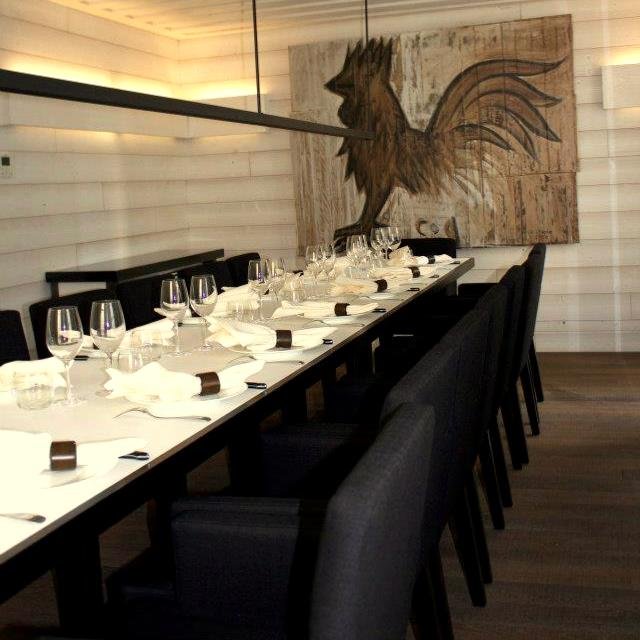
About Le Coq et Fils
On Rue Lepic in Montmartre, Le Coq et Fils occupies the casual end of Paris bistro cooking with a focus that earns it a place in Opinionated About Dining's European recommendations. Chef Thierry Lébé runs a daily lunch and dinner service drawing 1,693 Google reviews at a 4.5 average — numbers that suggest consistent delivery rather than occasional brilliance. A sensible address for those who want the neighbourhood's character without its tourist traps.
Rue Lepic and the Weight of the Bistro Tradition
Montmartre's lower slopes have always occupied an awkward position in Paris dining. The neighbourhood carries enough tourist traffic to depress culinary ambition on its main drags, yet a handful of addresses on and around Rue Lepic have maintained the kind of regulars-first identity that defines the Paris bistro at its most functional. The street itself climbs toward Sacré-Cœur with a density of butchers, fromageries, and wine shops that signals a working food culture rather than a stage set. At number 98, Le Coq et Fils sits within that context: a bistro operating twice-daily service seven days a week, holding a 4.5 average across 1,693 Google reviews and an Opinionated About Dining Casual in Europe recommendation for 2023.
The OAD casual listing is the more telling credential here. Opinionated About Dining's survey methodology weights responses from frequent restaurant-goers rather than general public ratings, which means the casual tier recognition reflects an audience with calibrated expectations and a low tolerance for coasting on neighbourhood charm. Le Coq et Fils earned that recognition under Chef Thierry Lébé, whose name appears on the kitchen without the kind of press biography that tends to precede destination-dining ambition. That absence of noise is, in the context of Paris bistro culture, a form of signal.
The Logic of Structured Bistro Eating
The French bistro's version of the prix fixe — entrée, plat, dessert, with a cheese course often available as an add-on — represents one of the most efficient curation models in Western dining. It asks the kitchen to make decisions that relieve the diner of excessive deliberation, and it prices the experience as a total rather than as a collection of à la carte choices that can spiral unpredictably. At this price tier and format, the bistro meal functions less like a tasting menu and more like a well-edited argument: a beginning, a development, and a close that should feel inevitable in retrospect.
What distinguishes a serious bistro from a formulaic one at this level is the sourcing discipline behind the plat principal. In Paris's better casual houses, the chicken , and at Le Coq et Fils, the name makes the emphasis clear , tends to arrive from named farms in Bresse, the Landes, or the Loire, cooked in ways that prioritise texture over spectacle. Roasting, braising, and the occasional pan-sauce reduction are the grammar of this kitchen register. The point is not innovation but execution: producing something that a Parisian diner of forty years' experience would recognise as correct.
This approach positions Le Coq et Fils within a broader cohort of Paris bistros that have resisted the neo-bistro pivot toward small plates, natural wine maximalism, and blackboard menus that change daily on the whims of whatever arrived from the market that morning. Those addresses, represented in Paris by a generation of cooks trained under the influence of figures like Yves Camdeborde at La Régalade, have carved their own credible niche. Le Coq et Fils occupies a different lane: the conservative, classical bistro that takes a centrist position on the spectrum running from the grande brasserie to the corner zinc.
Placing Le Coq et Fils in the Paris Dining Tier Map
Paris's restaurant market stratifies sharply. At the upper end, creative houses like Alléno Paris au Pavillon Ledoyen operate at price points and with tasting menu formats that presuppose a different kind of commitment from the diner. Le Coq et Fils sits several tiers below that, in the segment where the dining proposition is daily rather than occasional. The relevant peer set for this address includes Au Bascou in the 3rd, which brings a Basque accent to traditional bistro formats, and Chez Georges near the Bourse, whose classical French cooking has held consistent critical regard for decades. Ma Bourgogne on Place des Vosges and Repaire de Cartouche on the Boulevard des Filles du Calvaire represent further points on the same axis: traditional French cooking at accessible price points, with identities shaped more by continuity than reinvention.
What separates the addresses that earn OAD Casual recognition from the ones that merely fill seats is typically the consistency of the kitchen through service, the quality of sourcing visible on the plate, and a front-of-house rhythm that treats regulars and newcomers with equal competence. The 1,693 Google reviews averaging 4.5 suggest that Le Coq et Fils manages the latter reliably. At this scale of review volume, statistical noise irons out: the rating reflects a genuine pattern of experience rather than a lucky run of enthusiastic first-timers.
For context on how France's more celebrated addresses anchor the country's culinary reputation, the comparison is instructive. Houses like Mirazur in Menton, Troisgros in Ouches, Bras in Laguiole, Auberge de l'Ill in Illhaeusern, Flocons de Sel in Megève, and Paul Bocuse at Collonges-au-Mont-d'Or operate at the far end of France's culinary ambition. The bistro model at Le Coq et Fils makes no claim on that territory and is stronger for the honesty of that positioning. Across Europe, the same bistro format finds strong expressions in addresses like Bistro Boheme in Copenhagen and Sacha Botilleria y Fogon in Madrid , each city's answer to the question of what a serious casual lunch looks like when the kitchen has convictions.
Montmartre Timing and Practical Orientation
Rue Lepic rewards earlier visits. The street's market character is most active in the morning hours before noon, and arriving at Le Coq et Fils for the first lunch seating at 12pm allows for a pre-meal circuit of the surrounding shops that adds useful context to the cooking. The dinner service runs until 11:30pm, later than most comparably positioned Paris bistros, which extends the address's usefulness to visitors arriving on evening trains or spending the afternoon in the neighbourhood. The seven-day schedule , identical hours Monday through Sunday , removes the logistical hazard of a Monday closure that catches travellers at many Paris restaurants.
The Lamarck-Caulaincourt and Abbesses metro stops serve the upper and lower ends of the Rue Lepic climb respectively; the walk from Abbesses is the more direct approach for most visitors arriving from central Paris. For broader planning, see our full Paris restaurants guide, our Paris hotels guide, our Paris bars guide, our Paris wineries guide, and our Paris experiences guide.
Quick reference: Le Coq et Fils, 98 Rue Lepic, 75018 Paris. Open daily 12–3pm and 7–11:30pm. OAD Casual in Europe Recommended 2023. Google: 4.5 (1,693 reviews).
What to Order at Le Coq et Fils
The restaurant's name foregrounds poultry, and that focus shapes the most coherent path through the menu. In the French bistro tradition, a classic roast or braised chicken dish anchors the plat course, and ordering around that anchor , a seasonal starter followed by a poultry main and a composed dessert , follows the internal logic of how this kitchen is designed to work. The multi-course structure, rather than cherry-picking à la carte, tends to produce a more coherent meal at addresses where the kitchen has calibrated its courses to function as a sequence. The OAD Casual recognition and the Google review volume together confirm that the kitchen delivers consistently across both the lunch and dinner services, so the format choice matters more than the specific session. Given that this is an address shaped by classical bistro convictions rather than by seasonal menu rotation as a marketing tool, ordering the most traditional-sounding options on a given day's menu is the approach most likely to reveal what the kitchen does with authority.
Hours
- Monday
- 12–3 pm, 7–11:30 pm
- Tuesday
- 12–3 pm, 7–11:30 pm
- Wednesday
- 12–3 pm, 7–11:30 pm
- Thursday
- 12–3 pm, 7–11:30 pm
- Friday
- 12–3 pm, 7–11:30 pm
- Saturday
- 12–3 pm, 7–11:30 pm
- Sunday
- 12–3 pm, 7–11:30 pm
Recognized By

More restaurants in Paris
- ArpègeArpège is the strongest case in Paris for a milestone dinner built around vegetables. Alain Passard's three-Michelin-star kitchen sources daily from three biodynamic farms, and the menu shifts with the seasons — meaning no two visits are identical. At €€€€, it is worth booking if this specific philosophy excites you; if you need protein at the centre of the plate, look elsewhere.
- La GrenouillèreLa Grenouillère is a destination, not a Paris dinner option — two hours north in the Pas-de-Calais, Alexandre Gauthier runs a 2-Michelin-Star, Green Star kitchen ranked #77 on the World's 50 Best in 2024. Book well in advance, plan to stay overnight, and go if creative, place-rooted French cooking is your priority. If you need €€€€ ambition in the city, look elsewhere.
- Pierre GagnairePierre Gagnaire holds three Michelin stars and a La Liste score of 98 points (2026), making it one of Paris's most decorated creative French restaurants. At €€€€ and near-impossible to book, it is best reserved for milestone occasions or high-stakes business meals. Plan four to six weeks ahead minimum and contact the restaurant directly.
- Le TailleventLe Taillevent holds two Michelin stars, a La Liste score of 94 points, and one of Europe's deepest wine cellars — 3,800 selections across 40,000 bottles. Book 4–6 weeks out minimum; the restaurant closes weekends and availability is tight. The wine list is the deciding factor: engage with it fully and the $$$$-per-head spend is justified. Skip it and you're paying grande table prices for food alone.
- Guy SavoyGuy Savoy scores 99 points on La Liste 2026 and holds two Michelin stars, making it one of Paris's most decorated classical French kitchens. Dinner-only, Wednesday through Sunday, with a 34,000-bottle wine cellar and a Seine-side address on the Quai de Conti. Book six to eight weeks out at minimum — ideally three months for weekend dates.
- PlénitudePlénitude at Cheval Blanc Paris holds three Michelin stars, 99 points from La Liste, and the #1 ranking in Opinionated About Dining's Classical Europe list for 2025. Chef Arnaud Donckele's sauce-centred tasting menu, paired with Maxime Frédéric's award-winning pastry work and a dining room overlooking the Seine, makes it one of the strongest cases for a splurge meal in Paris — if you can secure the near-impossible reservation.
Related editorial
- How travel will be redefined by 2040By 2040, Travel Won't Be an Industry — It Will Be Infrastructure My thesis is simple and, I suspect, unfashionable: by 2040 travel will stop behaving like a discretionary consumer category and start
- How travel will be redefined by 2040By 2040, Travel Won't Be a Trip — It Will Be a Stack My thesis is simple and, I think, uncomfortable: by 2040, "travel" will no longer describe a discrete journey from point A to point B.
- How travel will be redefined by 2040The Death of Tourism as We Know It: Why 2040 Will Demand a Completely Different Kind of Traveler Let me be direct: the version of travel most of us grew up dreaming about — cheap flights, crowded lan
Save or rate Le Coq et Fils on Pearl
Keep this venue in your Pearl passport, rate it after you visit, and track it alongside every other place you collect.