
Restaurant in Onet-le-Château, France
Le Clos - Château de Labro
100ptsAveyron Terroir Cooking

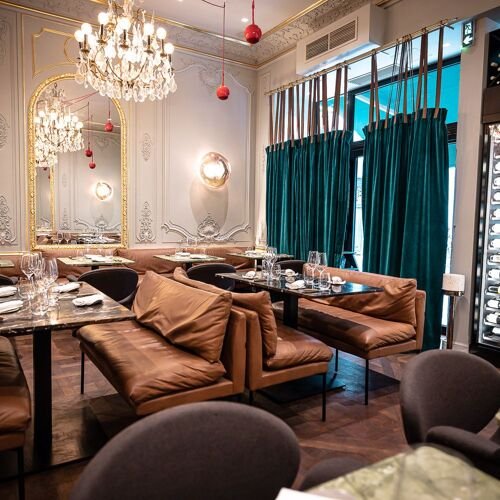
About Le Clos - Château de Labro
A Michelin Plate-recognised modern cuisine restaurant set within the historic Château de Labro estate near Rodez, Le Clos earns a 4.5 Google rating across 637 reviews and positions itself at the serious mid-tier of Aveyron dining. The setting — a working château in the Lot valley countryside — places it in a distinct category among the region's farm-to-table practitioners, where local sourcing is both geography and philosophy.
Aveyron's Countryside Table: What Le Clos at Château de Labro Represents
There is a particular kind of French country restaurant that resists easy categorisation — too polished for a simple auberge, too rooted in its territory to court the urban fine-dining circuit. Le Clos, set within the grounds of Château de Labro on the edge of Onet-le-Château, belongs to that category. The Lot valley countryside that surrounds the estate does real work here: it is not a backdrop but a supply chain, informing what arrives on the plate in the way that Aveyron's agricultural identity has informed its cooking culture for generations. A Michelin Plate recognition in 2025 places Le Clos formally within a peer set of restaurants that cook with technical intent, even if they operate well outside the starred circuit. For the region, that credential matters.
Aveyron sits at an unusual intersection in French gastronomy. It produces some of France's most respected raw ingredients — Laguiole cheese, Aubrac beef, Roquefort , and yet its restaurant scene has historically been overshadowed by the starred concentrations of the Lot, Lyon, and the Mediterranean south. What has emerged instead is a quieter, ingredients-forward dining culture, where quality of sourcing tends to outpace theatrical presentation. Le Clos operates within that tradition. The estate's château setting, with its stone architecture and rural approach roads, signals immediately that the meal will be grounded in place rather than performance. That grounding is a meaningful choice in modern cuisine terms, separating this from destination restaurants in Paris or the Alpine resort belt, such as Flocons de Sel in Megève, where the environment is as much a selling point as the kitchen.
Sourcing in the Aveyron: Why Geography Is the Menu
The Michelin Plate designation, introduced to recognise kitchens that cook with quality and care below the starred tier, carries a specific implication: the inspectors found food worth eating here. In Aveyron, that finding connects directly to the sourcing context. The department is home to a density of protected-designation producers that few French regions match per square kilometre. Aubrac cattle, raised on the volcanic plateau roughly an hour south, represent one of France's oldest and most traceable beef lineages. Roquefort, produced in the limestone caves of Combalou, sits within the same regional orbit. What a kitchen in this location does with those ingredients , how it chooses to handle, transform, or leave alone what the land produces , is the real question that a visit to Le Clos poses.
Modern cuisine, as a category, can mean anything from hyperlocal minimalism to technically complex international hybrids. At this price tier (€€ on a scale where Parisian starred counterparts like Alléno Paris au Pavillon Ledoyen operate at €€€€), the expectation is not elaborate tasting menus but considered, ingredient-led cooking at accessible price points. Elsewhere in provincial France, that mid-tier positioning has produced some of the country's more interesting meals , the kind that Auberge du Vieux Puits in Fontjoncouse demonstrated was possible when a kitchen commits fully to its terroir over decades. Le Clos operates at a different scale and with different ambitions, but the structural logic is similar: territory first, technique in service of ingredient.
Where Le Clos Fits in the French Regional Dining Picture
The broader conversation about French regional cooking has shifted considerably in the past decade. Restaurants with deep provincial roots and Michelin recognition below the starred tier have gained critical attention as an antidote to the concentration of culinary prestige in Paris and a handful of resort destinations. Bras in Laguiole, operating at three-star level a short distance from Onet-le-Château, remains the defining example of what fully committed Aveyron-rooted modern cooking looks like at its apex. Le Clos does not compete in that tier, nor does it try to. Its peer set is the Michelin Plate and Bib Gourmand circuit of south-central France: restaurants that serve the travelling visitor, the local professional, and the food-interested passer-through with equal confidence, and that have earned inspector recognition without restructuring their format around the starred experience.
A Google rating of 4.5 across 637 reviews tells a further part of the story. That volume of responses, for a restaurant in a village-scale commune, indicates a reliable draw for both local residents and visitors to the wider Rodez area. Consistent high ratings at that sample size suggest the kitchen delivers without sharp variance , which, for mid-tier modern cuisine, is the actual challenge. The restaurant does not appear to rely on spectacle or novelty to hold its audience. For the traveller arriving from outside the region, that consistency is the relevant data point.
Those planning a broader circuit of the south-central Aveyron and Lot regions will find Le Clos a logical anchor for the Rodez side of that itinerary, with Bras in Laguiole accessible as a longer excursion. Readers building a wider French regional programme might reference Troisgros in Ouches or Mirazur in Menton for how French provincial modern cuisine operates at its most recognised , though the comparison is less about competition and more about understanding the spectrum. For bars, accommodation, and other dining options in the area, see our full Onet-le-Château Village restaurants guide, our hotels guide, our bars guide, our wineries guide, and our experiences guide.
Planning a Visit
Le Clos is located at the Château de Labro estate in Onet-le-Château, approximately five kilometres from the centre of Rodez , close enough to anchor a broader visit to the city and the Musée Soulages, which draws its own cultural traffic. The €€ price range makes this accessible for multi-course lunches or dinners without the booking pressure that applies to starred addresses. Visitors arriving by road from Rodez will follow the Lot valley corridor; the approach through agricultural land is consistent with what the kitchen represents. Booking ahead is advisable for weekend service, particularly in summer when the region draws higher visitor volumes. The estate setting lends itself to the kind of long lunch that mid-afternoon Aveyron light invites. For a more complete read on comparable French addresses in the modern cuisine register, the AM par Alexandre Mazzia in Marseille and Assiette Champenoise in Reims offer useful reference points for what Michelin-recognised modern cuisine looks like across the country's regions.
Frequently Asked Questions
Is Le Clos - Château de Labro okay with children?
At a €€ price point in a rural château setting in Onet-le-Château, Le Clos is generally accommodating for families with children, though the formal estate environment suggests a quieter, table-service experience rather than an informal family bistro.
Is Le Clos - Château de Labro formal or casual?
If you arrive in smart-casual clothing, you will be appropriately dressed. The 2025 Michelin Plate recognition confirms serious cooking intent, but at €€ pricing in a mid-sized regional commune, the format is unlikely to demand black-tie formality. Think of it as the register common to good provincial French restaurants: a step above everyday casual, but without the studied ceremony of a starred dining room.
What should I order at Le Clos - Château de Labro?
Follow the Aveyron ingredient logic and prioritise whatever reflects the region's production strengths on any given menu. The Michelin Plate signals that the kitchen works with quality ingredients and technical care , at a modern cuisine address in this specific territory, dishes built around Aubrac beef or locally sourced produce are the ones most likely to demonstrate what makes the address worth the detour. Avoid the default of ordering to familiar international reference points; the regional specificity is the case for being here.
Recognized By

Similar venues by awards
Related editorial
- Best Fine Dining Restaurants in ParisFrom three-Michelin-star icons to the next generation of Parisian chefs pushing boundaries, these are the restaurants that define fine dining in the world's culinary capital.
- Best Luxury Hotels in RomeFrom rooftop terraces overlooking ancient ruins to Michelin-starred hotel dining, these are the luxury hotels that make Rome unforgettable.
- Best Cocktail Bars in KyotoFrom sleek lounges to hidden speakeasies, Kyoto's cocktail scene blends Japanese precision with global influence in ways you won't find anywhere else.
Save or rate Le Clos - Château de Labro on Pearl
Keep this venue in your Pearl passport, rate it after you visit, and track it alongside every other place you collect.