
Restaurant in Aigues-Mortes, France
Le Bistrot Paiou
100ptsCamargue-Rooted Bistrot
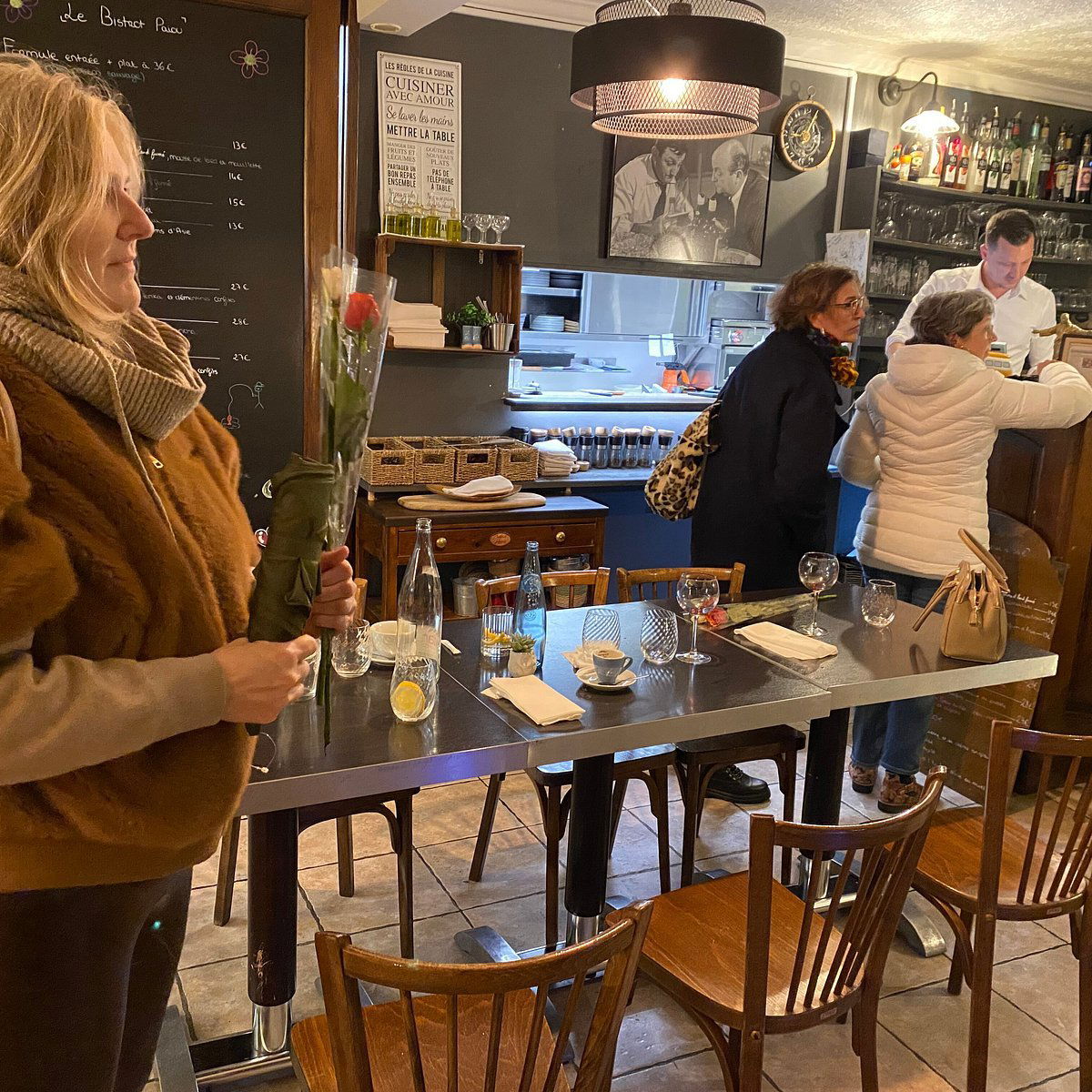
About Le Bistrot Paiou
A friendly bistro on a pedestrian street.
The Medieval Walls and What They Protect
Aigues-Mortes is one of the few places in southern France where the medieval fabric is not a reconstruction or a pedestrianised theme. The ramparts that Louis IX commissioned in the thirteenth century still enclose a working town, and Rue du 4 Septembre sits inside that circuit, close enough to the Tour de Constance to feel its presence without performing for it. This is the address of Le Bistrot Paiou, a restaurant that occupies a position in the old town's dining scene that mirrors the town itself: small in scale, specific in character, and shaped by geography rather than ambition for a broader audience.
Approaching from the main square, the streets narrow and the stone absorbs the afternoon heat in a way that Mediterranean limestone does. The Camargue is minutes away in every direction, and that proximity is not incidental to what ends up on the table. This is a delta region, bracketed by the Petit Rhône and the Grand Rhône, where the land shifts between salt marsh, rice paddy, and pasture depending on the season. The ingredient story of this corner of Languedoc is determined by water, salinity, and a short agricultural calendar that concentrates flavour in specific windows.
Sourcing from a Delta Region
The Camargue produces ingredients that carry a geographical stamp few parts of France can match. Camargue red rice, one of only two rice varieties in France to hold an IGP designation, grows in fields that are seasonally flooded with brackish water. The resulting grain has a nuttiness and firmness that mass-produced rice cannot replicate, and it appears on menus throughout the region as both a staple and a marker of local allegiance. Camargue salt, harvested at Aigues-Mortes itself by the Salins du Midi operation, is another product that carries this territory's character directly onto the plate.
Wild Camargue bulls, raised on the marsh without intensive farming, produce beef with a different texture and fat composition from pen-reared animals. The breed has AOC protection, and its meat sits alongside fleur de sel and red rice as one of the three products that define what serious cooking in this area means at the ingredient level. Gardians, the horseback herders of the Camargue, have worked these animals for centuries, and the continuity of that practice is what keeps the supply chain intact for restaurants that choose to source from it. Flamingos aside, this is an agricultural territory, and a bistrot that works within it rather than importing from outside it is making a consequential choice.
Restaurants in Aigues-Mortes range from tourist-facing crêperies near the north gate to addresses that treat the surrounding produce with more seriousness. Le Bistrot Paiou sits on the more considered end of that range, at an address in the old town where the walk-in tourist trade is thinner and the room reflects a more local rhythm. Compared to the densely awarded tables of the French Mediterranean, such as Mirazur in Menton or AM par Alexandre Mazzia in Marseille, or the long-standing institutional weight of houses like Auberge de l'Ill in Illhaeusern and Bras in Laguiole, Le Bistrot Paiou operates at a register that is deliberately and appropriately local. That is not a limitation; in a town this size, it is the correct ambition.
Where Le Bistrot Paiou Sits in the Local Scene
Aigues-Mortes has a small but coherent restaurant ecosystem. Boem and L'Atelier de Nicolas occupy the contemporary end of the local offer, with the latter leaning into modern cuisine format. Le Bistrot Paiou reads as a more traditional bistrot proposition, which in this context means a shorter menu, a closer relationship to the surrounding produce, and a price point that keeps the room accessible to residents as well as visitors. For a fuller overview of how the dining scene within the walls distributes itself, the complete Aigues-Mortes restaurants guide maps the options by format and character.
The bistrot format, when done well in France, functions as a delivery mechanism for seasonal sourcing without the structural overhead of a tasting menu operation. At the awarded end of the French spectrum, houses like Troisgros - Le Bois sans Feuilles in Ouches, Paul Bocuse's Auberge du Pont de Collonges, or Flocons de Sel in Megève have built careers around sourcing discipline articulated through elaborate structure. The bistrot collapses that structure into something more direct: a few dishes, a clear product focus, a room without ceremony. What matters is whether the product at the centre of the plate earns its place. In Aigues-Mortes, with the Camargue's IGP-designated materials available locally, the answer to that question is largely a matter of whether the kitchen chooses to use them.
Planning a Visit
Le Bistrot Paiou is at 1 Rue du 4 Septembre in the old town, inside the medieval walls. Aigues-Mortes is accessible from Montpellier by road in under an hour and sits on the edge of the Petite Camargue, which makes it a logical stop on a longer circuit through the Gard or Hérault. The town is compact enough that every address within the walls is walkable from the main gate. Pricing and hours are leading confirmed directly with the restaurant before visiting, as specific details are not published in available sources. The summer season brings a significant visitor surge, and the old town fills between July and August; a visit in May, June, or September gives more room and a more local atmosphere without sacrificing the warmth of the southern spring or early autumn.
For reference, comparable intensity of culinary offer in the broader French south extends to addresses such as Auberge du Vieux Puits in Fontjoncouse, Christopher Coutanceau in La Rochelle, and Assiette Champenoise in Reims. For those travelling with broader European or transatlantic dining itineraries, Alléno Paris au Pavillon Ledoyen, Au Crocodile in Strasbourg, Georges Blanc in Vonnas, Le Bernardin in New York City, and Atomix in New York City represent the upper tier of the award register that Le Bistrot Paiou does not compete in or aspire to, which is precisely the point.
Frequently Asked Questions
Is Le Bistrot Paiou okay with children?
Bistrot-format restaurants in small French towns, particularly those inside medieval old towns where the local population dines regularly, generally accommodate families without friction. Aigues-Mortes has a visitor economy that includes families year-round, and the relatively accessible price positioning of a bistrot suggests the format is not calibrated exclusively for adult dining occasions. That said, specific policies on high chairs or children's menus should be confirmed with the restaurant directly, as no published detail is available on this point.
What should I expect atmosphere-wise at Le Bistrot Paiou?
Aigues-Mortes is a walled medieval town with a settled, unhurried character that operates at a different pace from coastal resort towns nearby. A bistrot at this address, without tasting menu structure or significant awards recognition, will read as a neighbourhood room: compact, unceremoniou, and shaped by the rhythms of the old town rather than the visitor surge. Summer evenings inside the walls carry warmth long after sunset, and the scale of the streets around Rue du 4 Septembre reinforces the sense of being inside a functional medieval place rather than a preserved monument.
What do people recommend at Le Bistrot Paiou?
Specific dish recommendations require direct sourcing that is not available in this record. What the setting and format strongly suggest is that Camargue-sourced ingredients, including local red rice, fleur de sel, and potentially bull meat or freshwater fish from the delta, are the materials most worth ordering around when they appear. In bistrot kitchens in this region, the menu follows the season and the supply; asking the kitchen what has arrived most recently tends to produce a better answer than working from a fixed preference.
Is Le Bistrot Paiou a good option for visitors coming specifically for the Camargue food tradition?
Aigues-Mortes sits at the northern edge of the Camargue and is one of the most accessible entry points for visitors wanting to engage with the region's IGP-designated ingredients, including Camargue red rice and fleur de sel harvested at the Salins du Midi operation within the town itself. A bistrot at this address, by virtue of its proximity to those supply chains, is a reasonable base for exploring that food tradition at an accessible price point. The town's broader dining scene, mapped in the Aigues-Mortes restaurants guide, offers additional context for calibrating the visit.
Related editorial
- Asia's 50 Best Restaurants 2026: The Chairman and Wing Go 1-2 from the Same BuildingThe Chairman takes No. 1 and Wing climbs to No. 2 at Asia's 50 Best Restaurants 2026. Both operate from the same Hong Kong building. Here's what it means.
- Four Seasons Yachts Debut: 95 Suites, 11 Restaurants, and a March 2026 Maiden VoyageFour Seasons I launches March 20, 2026, with 95 suites, a one-to-one staff ratio, and 11 onboard restaurants. Worth tracking if you want hotel-grade service at sea.
- LA Michelin Guide 2026: Seven New Restaurants from Tlayudas to Uzbek DumplingsMichelin's March 2026 California Guide update adds six LA restaurants and one Montecito newcomer, spanning Oaxacan tlayudas, Uzbek manti, and Korean-Italian pasta.
Save or rate Le Bistrot Paiou on Pearl
Keep this venue in your Pearl passport, rate it after you visit, and track it alongside every other place you collect.