
Restaurant in Tamuning, Guam
L.A. Tofu & Galbi
100ptsKorean Home-Style Counter
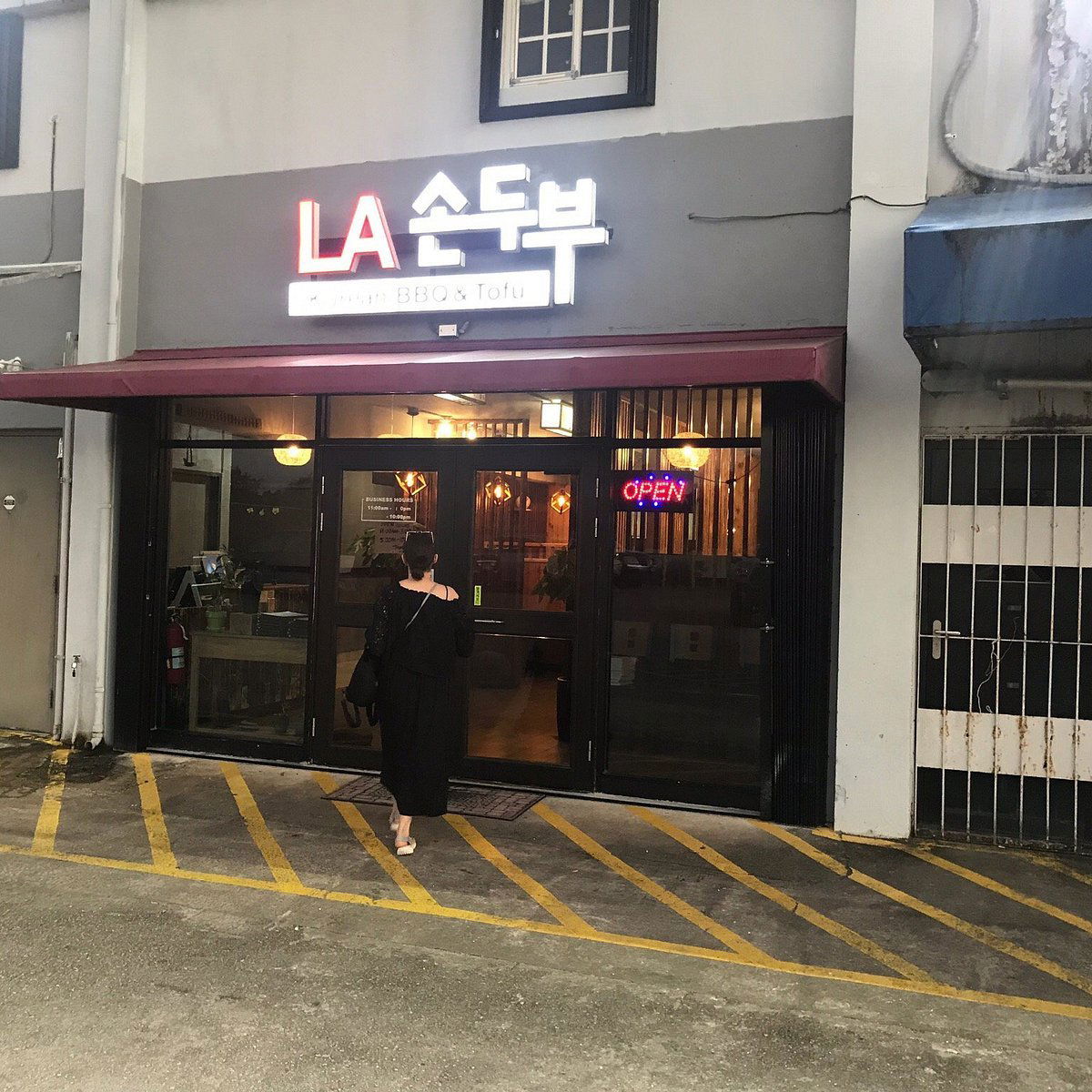
About L.A. Tofu & Galbi
L.A. Tofu & Galbi brings Korean comfort cooking to Tamuning's Chalan San Antonio corridor, where tofu stews and grilled short ribs define a category of everyday dining that Guam's Korean community has sustained for decades. The address in the Villo Trust Building places it within reach of the island's main commercial strip, making it a practical reference point for anyone mapping Korean food across the island.
Korean Comfort Cooking on Chalan San Antonio
Tamuning's main commercial corridor, Chalan San Antonio, reads like a cross-section of Guam's food culture: Japanese ramen shops, Southeast Asian canteens, and Korean kitchens occupy the same blocks, each serving a different slice of the island's layered immigrant food history. L.A. Tofu & Galbi sits inside the Villo Trust Building at number 378, contributing to a stretch of dining that rewards walking rather than destination-targeting. The Korean segment of this strip has always been driven less by fine-dining ambition and more by the kind of cooking that sustains a community — soft tofu stews finished at the table, galbi cut to a familiar thickness, banchan that arrives without being ordered.
That model of cooking, centered on soybean-based dishes and grilled short ribs, carries a specific sourcing logic. Dubu, or Korean tofu, has historically been produced fresh and locally wherever Korean populations settled, because the texture window between freshly pressed and refrigerated tofu is narrow and consequential. The name itself signals a menu built around two load-bearing pillars: the tofu formats common to sundubu jjigae and doenjang-based preparations, and the galbi tradition that Korean barbecue culture exported globally from Los Angeles in the 1970s and 1980s before it became a worldwide phenomenon. The L.A. in the name almost certainly references that lineage — the LA-style galbi cut, in which flanken-style short ribs are sliced thinly across the bone, allows faster marinade penetration and a shorter grill time than the traditional Korean thick-cut version.
The Sourcing Logic Behind Tofu and Galbi
Guam's position in the Western Pacific shapes how its Korean restaurants source differently from their counterparts on the US mainland. Supply chains running through Honolulu and Tokyo converge on the island, meaning that Korean pantry staples , gochugaru, doenjang, ganjang , often arrive via Japanese wholesale infrastructure rather than the Korean-American distribution networks that mainland restaurants depend on. This gives Guam's Korean kitchens a subtly different pantry reality, one that intersects with the island's own fermentation traditions and the Japanese food culture that has shaped local tastes for generations.
Soft tofu, the ingredient that anchors one half of L.A. Tofu & Galbi's menu identity, is among the more logistically demanding proteins in Korean cooking. Unlike firm tofu, which tolerates handling and transport, silken and soft varieties are structurally fragile and degrade quickly. Restaurants that commit to soft tofu formats as a menu centerpiece are making an implicit sourcing commitment , the dish only works if the base ingredient is handled carefully through the supply chain. In the context of an island like Guam, that's a more deliberate operational choice than it might appear on the mainland.
The galbi side of the equation has its own sourcing dimension. Beef short ribs require a reliable supply of a specific primal cut, and in a market as geographically isolated as Guam, consistency of supply matters more than it does in a city with multiple daily wholesale deliveries. Korean restaurants on the island that maintain galbi on their menus are generally operating with a degree of supply-chain discipline that keeps them closer to the commodity end of the beef market.
Where This Fits in Tamuning's Korean Dining Pattern
Tamuning's Korean food scene doesn't map neatly onto the concentrated Koreatown model that defines Korean dining in Los Angeles or New York. Instead, Korean restaurants distribute themselves across the island's main commercial zones, with Tamuning carrying a higher density than most other villages. The Chalan San Antonio address puts L.A. Tofu & Galbi in proximity to a cluster of Asian-focused dining options that includes [Cham's Thai Cuisine](https://www.enprimeurclub.com/restaurants/chams-thai-cuisine-tamuning-restaurant), [Ez-Kaya By Jimmy](https://www.enprimeurclub.com/restaurants/ezkaya-by-jimmy-tamuning-restaurant), [Men Kui Noodle House](https://www.enprimeurclub.com/restaurants/men-kui-noodle-house-tamuning-restaurant), and [Tokyo Mart](https://www.enprimeurclub.com/restaurants/tokyo-mart-tamuning-restaurant), forming an informal circuit for anyone working through the neighborhood's range.
For Korean dining elsewhere on the island, [Jin Mi in Harmon](https://www.enprimeurclub.com/restaurants/jin-mi-harmon-restaurant) covers a comparable comfort-cooking register in a different village, while the broader picture of casual Asian dining across Guam includes options like [Onigiri Seven in Tumon](https://www.enprimeurclub.com/restaurants/onigiri-seven-tumon-restaurant) and [Pepper Lunch in Dededo](https://www.enprimeurclub.com/restaurants/pepper-lunch-dededo-restaurant). Anyone building a more complete itinerary can consult our [full Tamuning restaurants guide](https://www.enprimeurclub.com/cities/tamuning) or cross-reference with [Coffee Club Guam in Barrigada](https://www.enprimeurclub.com/restaurants/coffee-club-guam-barrigada-restaurant) for a different register entirely.
At the opposite end of the formality spectrum, the same week that includes L.A. Tofu & Galbi might be bracketed by visits to [Atomix in New York City](https://www.enprimeurclub.com/restaurants/atomix), which operates at the apex of contemporary Korean fine dining, or [Le Bernardin in New York City](https://www.enprimeurclub.com/restaurants/le-bernardin) for a counterpoint in classical French seafood. The contrast is useful: it clarifies exactly what category L.A. Tofu & Galbi occupies , everyday Korean cooking executed with the consistency that defines neighborhood institutions rather than destination restaurants. Other reference points at the high end of the global dining spectrum include [Alain Ducasse at Louis XV in Monte Carlo](https://www.enprimeurclub.com/restaurants/alain-ducasse-louis-xv-monte-carlo-restaurant), [Alinea in Chicago](https://www.enprimeurclub.com/restaurants/alinea), [Alléno Paris au Pavillon Ledoyen in Paris](https://www.enprimeurclub.com/restaurants/allno-paris-au-pavillon-ledoyen-paris-restaurant), [Amber in Hong Kong](https://www.enprimeurclub.com/restaurants/amber-hong-kong-restaurant), [8 1/2 Otto e Mezzo Bombana in Hong Kong](https://www.enprimeurclub.com/restaurants/8-12-otto-e-mezzo-bombana-hong-kong-restaurant), [Emeril's in New Orleans](https://www.enprimeurclub.com/restaurants/emerils-new-orleans-restaurant), and [Lazy Bear in San Francisco](https://www.enprimeurclub.com/restaurants/lazy-bear) , all operating in a different tier and serving a different purpose, but useful context for where neighborhood Korean dining sits in the broader hierarchy of food experiences.
Planning Your Visit
L.A. Tofu & Galbi is located at 378 Chalan San Antonio inside the Villo Trust Building in Tamuning. No website or booking system is listed in available records, which is consistent with walk-in Korean restaurants in this category across Guam , the format typically assumes no reservations. Current hours, phone contact, and pricing are not confirmed in available data; checking locally before visiting is advisable, particularly given how frequently smaller restaurants on the island adjust operating hours seasonally or in response to staffing. The Chalan San Antonio corridor is accessible by car from most of Tamuning's main hotel zone in under ten minutes, and street-level parking is generally available along the building's approach.
Frequently Asked Questions
- Can I bring kids to L.A. Tofu & Galbi?
- Korean comfort-food restaurants in Tamuning generally operate at price points and in formats that accommodate families , the dishes that anchor this menu category, including tofu stews and grilled short ribs, tend to be communal and shareable. Guam's Korean dining scene as a whole skews toward casual, family-frequented settings rather than adult-only environments. Specific seating or children's menu details are not confirmed in available records, so contacting the restaurant directly before visiting with young children is the practical approach.
- What's the overall feel of L.A. Tofu & Galbi?
- The Chalan San Antonio address and the Villo Trust Building context position this as a working neighborhood Korean restaurant rather than a destination venue. Korean comfort kitchens in Tamuning at this address tier typically run with a no-frills interior, counter or booth seating, and an atmosphere driven more by the regulars at adjacent tables than by design intent. No awards or ratings are recorded in available data, which places it outside the recognized tier of Guam's more formally assessed dining options , the draw is the food format and consistency, not critical recognition.
- What's the must-try dish at L.A. Tofu & Galbi?
- The name directs attention to two categories: soft tofu preparations and galbi. In Korean restaurants built around these pillars, sundubu jjigae (soft tofu stew) is typically the dish that tests kitchen quality most directly, because it requires precise heat management and a well-developed broth base. The LA-cut galbi format, if available, is a useful reference point for the kitchen's approach to the grilled-meat side of the menu. Specific dish availability is not confirmed in current records.
- Is L.A. Tofu & Galbi a good option for Korean food on Guam specifically because of its address in Tamuning?
- Tamuning concentrates more of Guam's Korean and broader Asian dining options than most other villages on the island, which makes the Chalan San Antonio address a practical one for anyone eating through multiple cuisines in a single outing. The Villo Trust Building location at number 378 sits within the main commercial zone rather than on a peripheral stretch, giving it logistical convenience relative to the cluster of nearby Asian restaurants. For a broader picture of what the neighborhood offers, our [full Tamuning restaurants guide](https://www.enprimeurclub.com/cities/tamuning) maps the surrounding options in detail.
Related editorial
- Best Fine Dining Restaurants in ParisFrom three-Michelin-star icons to the next generation of Parisian chefs pushing boundaries, these are the restaurants that define fine dining in the world's culinary capital.
- Best Luxury Hotels in RomeFrom rooftop terraces overlooking ancient ruins to Michelin-starred hotel dining, these are the luxury hotels that make Rome unforgettable.
- Best Cocktail Bars in KyotoFrom sleek lounges to hidden speakeasies, Kyoto's cocktail scene blends Japanese precision with global influence in ways you won't find anywhere else.
Save or rate L.A. Tofu & Galbi on Pearl
Keep this venue in your Pearl passport, rate it after you visit, and track it alongside every other place you collect.