
Restaurant in Granollers, Spain
La Clandestina Restaurant
100ptsVallès Local Counter
About La Clandestina Restaurant
Off the Main Circuit: Dining in Granollers Granollers sits roughly 30 kilometres north of Barcelona, far enough from the city's dining circuit that visitors rarely find it on their own. The town is known principally as a commercial hub for the...
Off the Main Circuit: Dining in Granollers
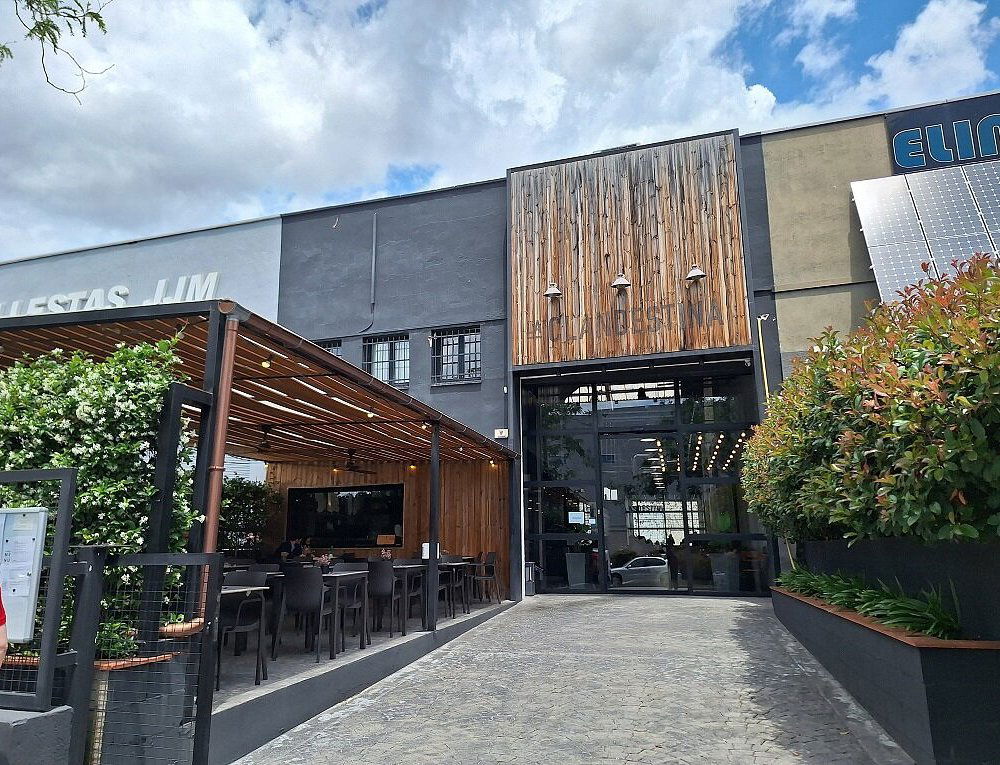
Granollers sits roughly 30 kilometres north of Barcelona, far enough from the city's dining circuit that visitors rarely find it on their own. The town is known principally as a commercial hub for the Vallès Oriental comarca, and its restaurant culture reflects that: a working local scene with little of the self-promotion that Barcelona's most profile-conscious kitchens deploy. Avinguda d'Europa, the address where La Clandestina operates, is a wide arterial road that runs through the town's outer commercial ring. Approaching from the street, there is none of the theatrical staging that defines premium Barcelona dining rooms. What that absence signals, in a town like Granollers, is a kitchen focused on the plate rather than the room.
That positioning places La Clandestina within a recognisable pattern across Catalonia's secondary cities: restaurants that trade on local credibility and ingredient sourcing rather than design budgets or media visibility. The name itself, translating loosely as "the clandestine one," carries a tone of deliberate understatement common to this format.
Ingredient Sourcing and the Vallès Oriental Context
Catalonia's food identity has always been grounded in territory. The region produces a range of protected-designation products, from Osona sausages in the pre-Pyrenean belt to the olive oils of Les Garrigues and the seafood supply chain running up from the Costa Brava. Restaurants operating in the Vallès Oriental have direct access to market infrastructure that Barcelona kitchens have to negotiate more carefully: the daily wholesale markets at Granollers itself serve the comarca's produce trade, and proximity to smaller producers in the surrounding municipalities means shorter supply chains than a Barcelona address would allow.
This sourcing geography matters to how any serious kitchen in the area should be understood. The question for a restaurant on Avinguda d'Europa is not whether local supply is available, but whether it is being used with enough precision to differentiate the cooking. Among Granollers' more discussed addresses, [A Vocados Granollers](https://www.enprimeurclub.com/restaurants/a-vocados-granollers-granollers-restaurant) and [Mint (Contemporary)](https://www.enprimeurclub.com/restaurants/mint-granollers-restaurant) have each established a presence partly through decisions about what they source and how they frame it. [Cellarius](https://www.enprimeurclub.com/restaurants/cellarius-granollers-restaurant) and [Espai Kodama](https://www.enprimeurclub.com/restaurants/espai-kodama-granollers-restaurant) represent the range of formats the town now sustains, from wine-led to Japanese-influenced. La Clandestina belongs in that evolving local map, though its specific sourcing commitments and menu focus are not on record in verified sources and should be assessed directly on a visit.
How Granollers Fits the Wider Catalan Dining Pattern
Understanding a restaurant in Granollers requires understanding where Catalonia positions itself nationally. Spain's high-end dining scene runs through a handful of concentrated nodes: San Sebastián and the Basque coast, where [Arzak](https://www.enprimeurclub.com/restaurants/arzak-san-sebastin-restaurant), [Azurmendi](https://www.enprimeurclub.com/restaurants/azurmendi-larrabetzu-restaurant), [Martin Berasategui](https://www.enprimeurclub.com/restaurants/martin-berasategui-lasarte-oria-restaurant), and [Mugaritz](https://www.enprimeurclub.com/restaurants/mugaritz-errenteria-restaurant) anchor the prestige tier; the Valencian coast, represented by [Quique Dacosta](https://www.enprimeurclub.com/restaurants/quique-dacosta-dnia-restaurant) and [Ricard Camarena](https://www.enprimeurclub.com/restaurants/ricard-camarena-valncia-restaurant); Madrid, where [DiverXO](https://www.enprimeurclub.com/restaurants/diverxo-madrid-restaurant) and Extremadura's [Atrio](https://www.enprimeurclub.com/restaurants/atrio-cceres-restaurant) claim different kinds of authority; and Barcelona, where [Cocina Hermanos Torres](https://www.enprimeurclub.com/restaurants/cocina-hermanos-torres-barcelona-restaurant) and [El Celler de Can Roca](https://www.enprimeurclub.com/restaurants/el-celler-de-can-roca-girona-restaurant) in nearby Girona anchor Catalan prestige cooking. Further afield, [Aponiente](https://www.enprimeurclub.com/restaurants/aponiente-el-puerto-de-santa-mara-restaurant) in El Puerto de Santa María has made Atlantic seafood its critical argument. Even internationally, reference points like [Le Bernardin](https://www.enprimeurclub.com/restaurants/le-bernardin) in New York and [Atomix](https://www.enprimeurclub.com/restaurants/atomix) demonstrate how ingredient discipline and sourcing rigour underpin sustained critical recognition across different culinary traditions.
The towns in Catalonia's commuter belt, Granollers included, operate at a different altitude from these benchmark addresses. But that is precisely the context in which a restaurant like La Clandestina is leading understood: not as a destination competing against Girona's celebrated rooms, but as part of a local dining culture that Barcelona's growth has not absorbed. Granollers' residents are well-travelled, often commuting into Barcelona's professional sector, which raises the expectations any kitchen in the town must meet. See our [full Granollers restaurants guide](https://www.enprimeurclub.com/cities/granollers) for a broader map of what the town's dining scene now offers.
What the Format Suggests
A name like La Clandestina in a secondary Catalan town typically signals one of two formats: a neighbourhood restaurant with a local regulars base, or a more deliberately curated room with ambitions above its surroundings. Without verified data on seat count, tasting menu structure, or price range, it is not possible to position La Clandestina precisely against either model. What the address on Avinguda d'Europa, combined with the name's deliberate quietness, suggests is a kitchen that operates without the self-promotional apparatus of destination dining. In Catalonia, that can be a strength: some of the region's most interesting cooking happens in rooms that do not seek out coverage.
For visiting diners, the practical implication is that direct contact with the restaurant before visiting is advisable. Booking procedures, current menus, and operating hours are leading confirmed through the restaurant itself, as none of these details are available in verified public records at this time.
Planning a Visit
Granollers is accessible from Barcelona via the R2 and R3 Rodalies lines from Barcelona Sants and Passeig de Gràcia, with journey times of roughly 40 to 50 minutes, making it a practical half-day or evening excursion from the city. Avinguda d'Europa is within walking distance of the Granollers Centre station, and parking is available along the avenue's commercial strip. For diners combining La Clandestina with other Granollers addresses, the town's compact centre allows for a walking sequence between the main dining and drinking options. The Vallès Oriental is warmest and most active in spring and early autumn, when the surrounding agricultural calendar also means local produce variety tends to peak.
Frequently Asked Questions
Is La Clandestina Restaurant suitable for children?
Granollers' mid-range restaurant scene, where La Clandestina appears to operate, is generally accommodating of family dining. Without confirmed details on price positioning or specific format, the practical advice is to contact the restaurant directly before visiting with young children. If the kitchen runs a more formally structured menu at higher price points, a neighbourhood-format alternative from the [Granollers dining scene](https://www.enprimeurclub.com/cities/granollers) may be a better fit for mixed-age groups.
How would you describe the atmosphere at La Clandestina Restaurant?
The name and Avinguda d'Europa address place it within Granollers' lower-profile, locally oriented dining culture rather than the more visible end of Catalan dining. Compared with the theatricality of Barcelona's prestige rooms or the destination-circuit energy of award-tracked kitchens, La Clandestina appears to operate on neighbourhood terms: a room where the regulars know the format and newcomers arrive without press-generated expectations. No verified data on decor or seating arrangement is available.
What is the signature dish at La Clandestina Restaurant?
No verified menu or dish information is available in public records. Given the sourcing geography of the Vallès Oriental, Catalan kitchens in this area typically anchor around seasonal market produce and regional proteins, but attributing a specific dish to La Clandestina without a verified source would be inaccurate. The kitchen's current focus is leading established by consulting the restaurant directly or checking recent local food coverage.
What is the leading way to book La Clandestina Restaurant?
No confirmed booking platform, phone number, or website is on record for La Clandestina. For a Granollers restaurant without a major digital footprint, the most reliable approach is to visit in person or search for current contact details through local Catalan business directories. If the kitchen operates at an award-level or higher price point, advance reservation would be advisable, particularly at weekends when the Vallès Oriental dining scene draws visitors from Barcelona.
What distinguishes La Clandestina from other Granollers restaurants?
Within a Granollers dining scene that now includes Japanese-influenced formats at [Espai Kodama](https://www.enprimeurclub.com/restaurants/espai-kodama-granollers-restaurant), contemporary cooking at [Mint](https://www.enprimeurclub.com/restaurants/mint-granollers-restaurant), and wine-led dining at [Cellarius](https://www.enprimeurclub.com/restaurants/cellarius-granollers-restaurant), La Clandestina's identity appears rooted in deliberate understatement. The name, the address on a commercial avenue rather than the town's historic centre, and the absence of a prominent digital presence all point to a kitchen that builds its audience through word-of-mouth within the local community rather than through external marketing. That positioning, in a town 30 kilometres from Barcelona, is an editorial choice as much as a commercial one.
Is La Clandestina connected to the broader Catalan food sourcing tradition?
Any serious kitchen operating in the Vallès Oriental has proximity to the comarca's agricultural output and Granollers' own wholesale market infrastructure. Catalan cuisine at its most grounded relies on exactly this kind of short supply chain, a principle visible at much higher price points in kitchens like [El Celler de Can Roca](https://www.enprimeurclub.com/restaurants/el-celler-de-can-roca-girona-restaurant) in Girona. Whether La Clandestina draws explicitly on that sourcing tradition in a structured way is not confirmed in available records, but the geographic conditions for it are in place.
Related editorial
- Best Fine Dining Restaurants in ParisFrom three-Michelin-star icons to the next generation of Parisian chefs pushing boundaries, these are the restaurants that define fine dining in the world's culinary capital.
- Best Luxury Hotels in RomeFrom rooftop terraces overlooking ancient ruins to Michelin-starred hotel dining, these are the luxury hotels that make Rome unforgettable.
- Best Cocktail Bars in KyotoFrom sleek lounges to hidden speakeasies, Kyoto's cocktail scene blends Japanese precision with global influence in ways you won't find anywhere else.
Save or rate La Clandestina Restaurant on Pearl
Keep this venue in your Pearl passport, rate it after you visit, and track it alongside every other place you collect.