
Restaurant in San Gimignano, Italy
La Buca di Montauto
100ptsSienese Hill-Kitchen Tradition
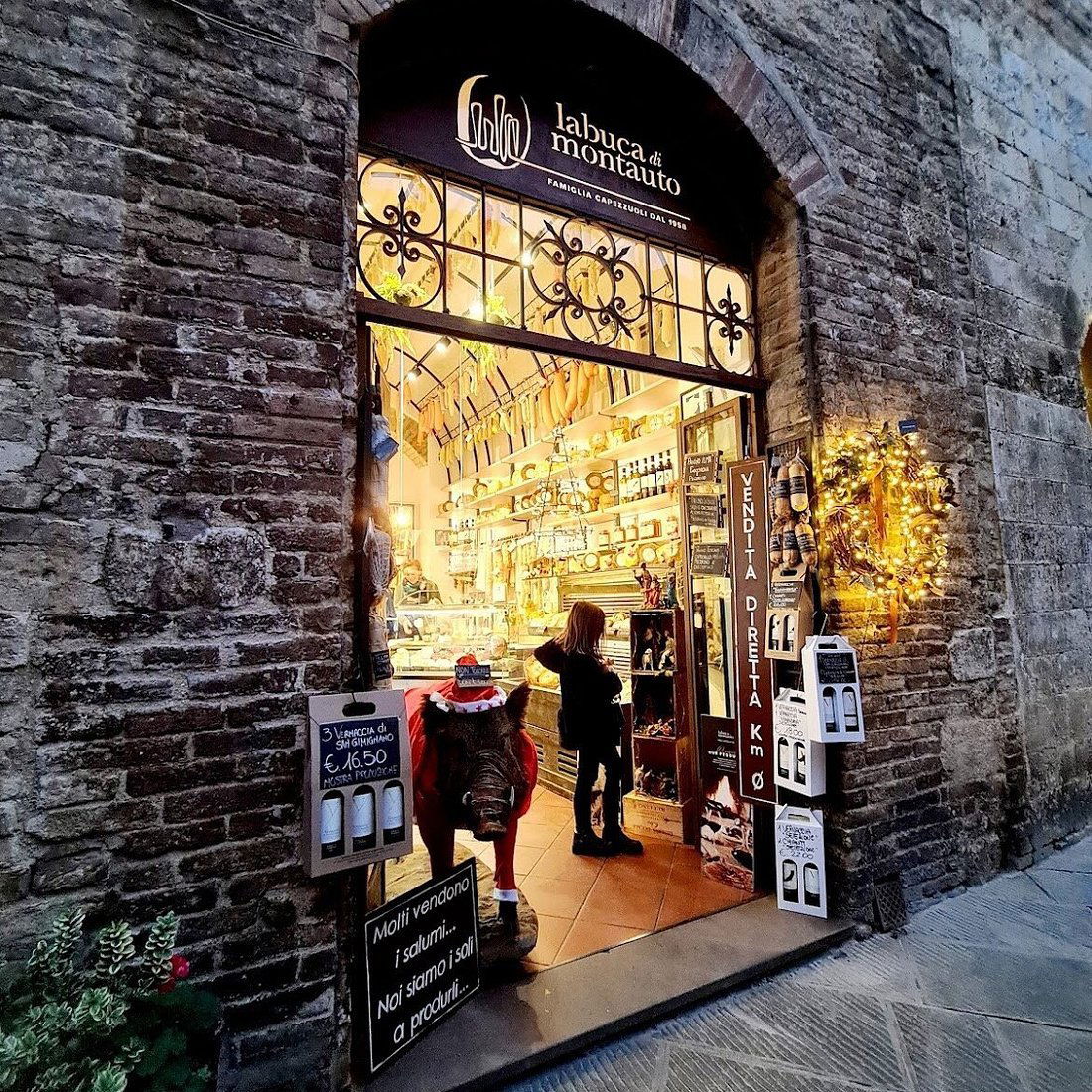
About La Buca di Montauto
On one of San Gimignano's most-walked medieval streets, La Buca di Montauto occupies the kind of address where the stone walls do as much atmospheric work as the kitchen. The cooking draws from the agricultural traditions of the Sienese hills, placing it in the trattoria tier that defines honest Tuscan eating at its most grounded. For visitors arriving via the Via San Giovanni, it reads as a natural stop rather than a destination engineered for tourists.
What Via San Giovanni Asks of Its Restaurants
Via San Giovanni is the spine of San Gimignano's old town, a street so heavily trafficked by visitors that most of its ground-floor addresses long ago traded serious cooking for volume. The restaurants that survive that pressure with their integrity intact tend to do so by anchoring to something the tourist current cannot easily replicate: a relationship with local producers, a menu vocabulary drawn from the Sienese countryside, and a room that feels inhabited rather than dressed. La Buca di Montauto sits at number 16 on that street, and its position on the Via San Giovanni is as much a challenge as it is a commercial advantage.
San Gimignano's dining options have split, broadly, into three tiers. At the leading, creative kitchens like Linfa operate with a contemporary register and pricing to match. At the base, tourist-facing trattorie trade largely on location. In the middle sits a smaller, more interesting group, including San Martino 26 with its country cooking approach, and the more plainly Tuscan Da Pode, where the cooking stays close to the Sienese agricultural calendar. La Buca di Montauto reads as a participant in that middle register: not reinventing the tradition, but not abandoning it for convenience either. See the full picture at our San Gimignano restaurants guide.
The Logic of Sienese Ingredient Sourcing
Tuscan cuisine at this latitude, between the Elsa valley and the Chianti hills, has always been shaped more by what the land provides seasonally than by the chef's ambition to transcend it. The Sienese tradition is agricultural before it is gastronomic. Cinghiale from the surrounding macchia, white truffles from the San Miniato area in autumn, Cinta Senese pork from heritage herds, locally pressed olive oil, and Vernaccia di San Gimignano from vineyards within walking distance of the walls: these are the raw materials that define what Sienese cooking is when it is done without shortcuts.
That sourcing logic matters because it determines the menu's credibility. A kitchen drawing from local producers is subject to seasonal constraint and to the quality signals that come with short supply chains. The result, in practice, is a menu that reflects what is actually available in the Sienese hills at a given moment rather than what the broadest possible customer base expects to find year-round. This is the same principle that gives weight to the sourcing philosophy at celebrated Italian addresses like Dal Pescatore in Runate or Atelier Moessmer Norbert Niederkofler in Brunico, where the relationship between kitchen and territory is the defining editorial statement. At a different scale and price point, the same logic applies to a trattoria working with Sienese producers.
The Room and What It Communicates
The physical character of a medieval ground-floor space in San Gimignano is not neutral. Stone walls, low ceilings, and the kind of ambient cool that persists even in August shape how a meal feels before the food arrives. These spaces carry a legibility that newer, designed interiors often work hard to manufacture. The approach at La Buca di Montauto, occupying a Via San Giovanni address with the structural bones of a centuries-old building, places it in a category of Italian dining rooms where the architecture is a given and the kitchen's job is to be worthy of it.
This is not unusual in Tuscany. Some of Italy's most seriously regarded restaurants operate in similarly unassuming physical formats. Osteria Francescana in Modena trades on an understated room; Reale in Castel di Sangro converted a former convent. The physical container communicates seriousness without spectacle. In San Gimignano, at street level on Via San Giovanni, a room that does not perform for the tourist is already making an argument.
Where La Buca di Montauto Sits Against Italian Fine Dining
For context on how San Gimignano's trattoria tier relates to the broader Italian dining conversation, it helps to map the distance. The Michelin-starred kitchens that define Italy's upper register, from Enoteca Pinchiorri in Florence to Piazza Duomo in Alba and Le Calandre in Rubano, operate in a different competitive tier entirely. So do the internationally recognised addresses like Uliassi in Senigallia, Quattro Passi in Marina del Cantone, Enrico Bartolini in Milan, Da Vittorio in Brusaporto, and Casa Perbellini 12 Apostoli in Verona. Even internationally, the technical ambition at Le Bernardin in New York or the communal theatre of Lazy Bear in San Francisco exist in a separate register from what a Sienese trattoria is attempting.
La Buca di Montauto is not in competition with any of those rooms. What it is competing with is the standard set by the honest, produce-led trattorias of Tuscany, and the question worth asking is whether it holds its position in that more local peer set.
Planning a Visit
San Gimignano draws its heaviest visitor numbers between May and September, when the towers and the Vernaccia vineyards attract coach tours and independent travellers in roughly equal measure. Restaurants on Via San Giovanni feel that pressure most directly. Arriving outside peak hours, either for a late lunch or an early dinner sitting, typically means less competition for tables and a kitchen operating at a steadier rhythm. The address at Via S. Giovanni, 16 places the restaurant within the old walls, reachable on foot from the main gates and close to the central piazza.
Given the volume of visitors the town receives in summer, and the relatively small scale that characterises the better trattorias in this tier, advance planning is worth the effort even for a casual lunch. The town's off-season months, October through March, offer quieter conditions and a menu vocabulary that shifts toward the heavier, truffle-forward and braised dishes that the Sienese winter traditionally demands.
Frequently Asked Questions
Is La Buca di Montauto good for families?
San Gimignano's trattoria tier is generally accommodating for families, and the Tuscan cooking tradition at this price register tends toward shareable, accessible dishes. The more relevant consideration is timing: Via San Giovanni restaurants are busiest mid-afternoon during peak summer months, so a lunch reservation on arrival or an early dinner sitting is a more practical choice with children than walking in at peak hours.
Is La Buca di Montauto formal or casual?
San Gimignano's honest mid-range restaurants operate without formal dress requirements. The town's character, and the trattoria format generally, favour clean and comfortable rather than dressed up. Compare this to Florence's fine dining tier, where Enoteca Pinchiorri carries different expectations. At Via S. Giovanni, 16, the room's medieval bones set the tone, and that tone is relaxed without being careless.
What should I eat at La Buca di Montauto?
The Sienese kitchen at this tier is most persuasive when it stays close to the agricultural tradition of the surrounding hills: handmade pasta with wild boar, seasonal antipasti drawing on local cured meats, and dishes built around Cinta Senese pork or locally sourced vegetables. Vernaccia di San Gimignano, the town's own white wine, is the natural pairing. Specific current menu items should be confirmed directly at the time of booking, as the seasonal calendar shapes what is actually available.
How far ahead should I plan for La Buca di Montauto?
San Gimignano's mid-range restaurants do not typically require the weeks-in-advance booking that a Michelin-starred room demands, but during the May-to-September peak, a reservation at least a few days ahead is prudent for any restaurant on Via San Giovanni. The town's visitor volume is concentrated into a short window, and the better trattorias fill faster than their casual appearance suggests. Off-season, walk-in availability is considerably more likely.
Does La Buca di Montauto serve Vernaccia di San Gimignano by the glass?
Any restaurant of this type operating within San Gimignano's walls would be unusual if it did not offer Vernaccia di San Gimignano, the town's DOCG white wine and one of Tuscany's oldest documented varieties. It is the natural house wine of the area and the expected pairing for the local antipasti and pasta dishes that anchor a trattoria menu at this level. Confirm the current wine list directly with the restaurant, as by-the-glass offerings vary by season and supplier.
Related editorial
- Best Fine Dining Restaurants in ParisFrom three-Michelin-star icons to the next generation of Parisian chefs pushing boundaries, these are the restaurants that define fine dining in the world's culinary capital.
- Best Luxury Hotels in RomeFrom rooftop terraces overlooking ancient ruins to Michelin-starred hotel dining, these are the luxury hotels that make Rome unforgettable.
- Best Cocktail Bars in KyotoFrom sleek lounges to hidden speakeasies, Kyoto's cocktail scene blends Japanese precision with global influence in ways you won't find anywhere else.
Save or rate La Buca di Montauto on Pearl
Keep this venue in your Pearl passport, rate it after you visit, and track it alongside every other place you collect.