
Restaurant in Saint-Cyprien, France
L' Île de la Lagune Thalasso & Spa
125ptsLagoon-Set Thalasso Retreat

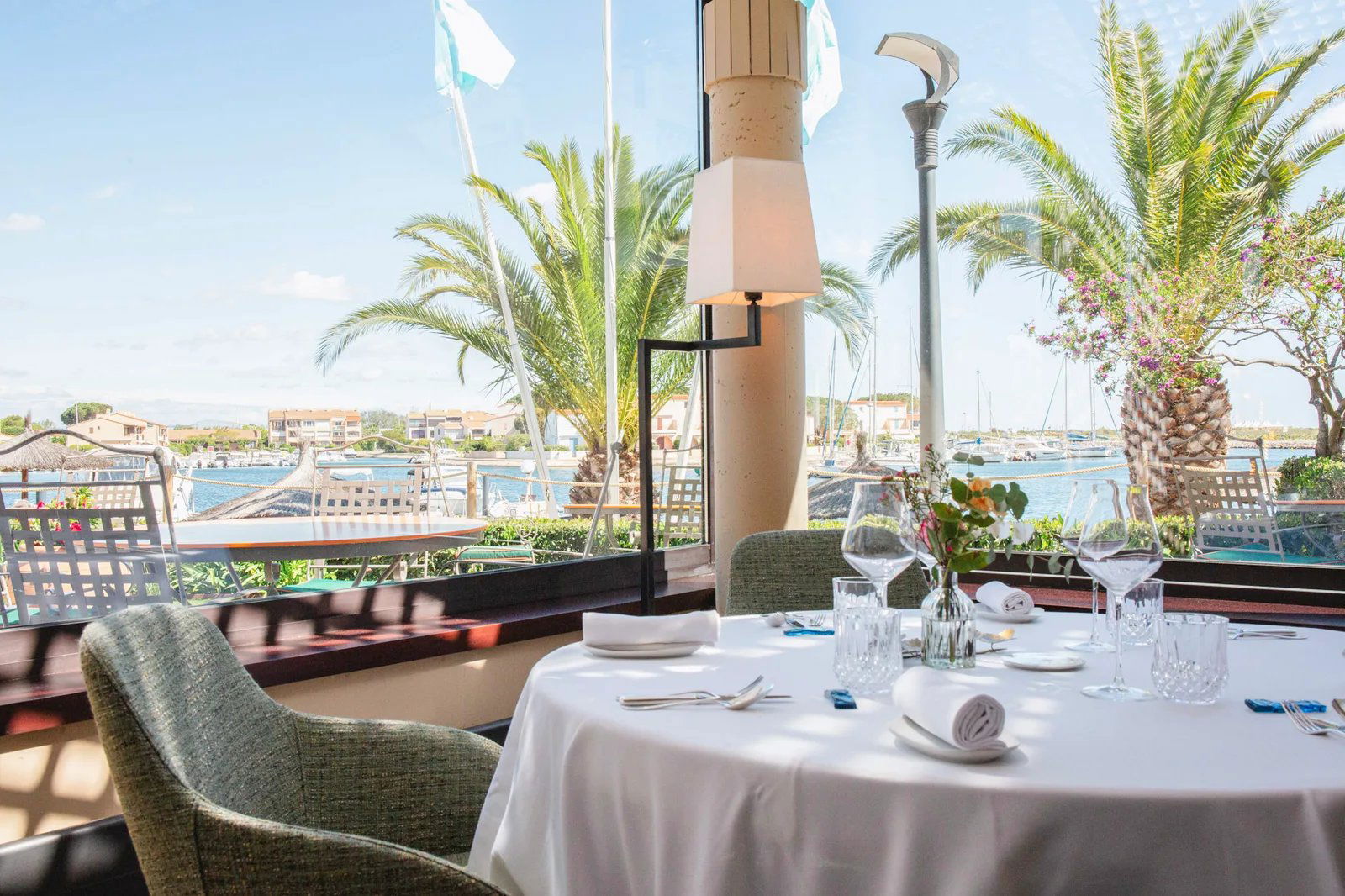
About L' Île de la Lagune Thalasso & Spa
On a private island between Saint-Cyprien's lagoon and the Mediterranean, L'Île de la Lagune is a Relais & Châteaux thalassotherapy retreat where the Roussillon terroir reaches the table as directly as the sea air reaches the spa. Rated 4.5 across more than a thousand Google reviews, it occupies a category of its own on this stretch of the Catalan coast.
Where the Lagoon Meets the Plate
The approach to L'Île de la Lagune sets the culinary register before you reach the dining room. A causeway crosses the still water of the Saint-Cyprien lagoon, the Albères massif visible to the west and the open Mediterranean a few hundred metres to the east. The building sits between two bodies of water, which means the kitchen operates in a zone where Atlantic-influenced mountain produce and Mediterranean coastal ingredients overlap. In the Roussillon, that overlap is not incidental — it is the defining condition of the local table.
This is Catalan country in the geographic and gastronomic sense. The plains between the Pyrenees and the sea produce some of France's most distinctive terroir signals: anchois de Collioure cured in the old port town twenty kilometres south, AOC wines from Banyuls and Rivesaltes, wild thyme and juniper from the Corbières, and a market tradition in Perpignan that has supplied the region's kitchens for centuries. A restaurant positioned on the water's edge in Saint-Cyprien draws on all of that, and the degree to which it does so is the clearest measure of its ambition.
L'Île de la Lagune holds Relais & Châteaux membership, a designation that carries specific obligations around table quality, local identity, and hospitality standard. Among France's Mediterranean coast properties, R&C; membership places a venue in a peer set that includes properties like Mirazur in Menton, where the relationship between coastline and kitchen has attracted consistent three-Michelin-star recognition. Saint-Cyprien operates at a different scale and atmosphere than Menton, but the underlying editorial logic — that a restaurant on the French Mediterranean coast earns its standing through provenance specificity , applies here as much as anywhere on the arc from Collioure to Nice.
Terroir on the Table: What Roussillon Cooking Looks Like
French regional cuisine has undergone sustained critical reassessment over the past two decades. The dominance of Parisian fine dining , represented by the multi-starred ambition of Alléno Paris au Pavillon Ledoyen or the classic formalism of Paul Bocuse's Auberge du Pont de Collonges , has gradually ceded ground to a critical appreciation of place-specific cooking. Properties like Bras in Laguiole built their reputations on the argument that the Aubrac plateau was itself a sufficient subject for serious cuisine. Flocons de Sel in Megève made a parallel case for the alpine larder. In both instances, the restaurant's identity is inseparable from its geography.
Roussillon French cooking operates under similar logic, but with a distinctly Catalan inflection. The border with Spain runs through the terroir here, and the cuisine reflects that , in the use of olive oil over butter, in the prominence of grilled fish and shellfish from the Gulf of Lion, in the anchovy preparations that appear across both sides of the Pyrenees. A kitchen at the edge of the Saint-Cyprien lagoon has direct access to that tradition, and terroir-driven French cuisine in this context is not simply a matter of sourcing local vegetables. It means engaging with a food culture that predates the French administrative map.
The comparison set for a property of this type on the Mediterranean coast extends further when you consider the broader ambition of R&C; members operating in coastal Southern France. AM par Alexandre Mazzia in Marseille has pushed Mediterranean ingredient logic into three-star territory, demonstrating that the southern French coast can sustain the same level of critical engagement applied to Alsatian kitchens like Au Crocodile in Strasbourg or Auberge de l'Ill in Illhaeusern. The benchmark is not proximity to Paris but depth of territorial commitment.
The Thalassotherapy Dimension
Thalassotherapy , seawater-based treatment that draws on the mineral content and temperature of the Mediterranean , is a specific and serious wellness tradition, distinct from generic spa programming. On the French Mediterranean coast, accredited thalassotherapy centres operate under professional medical frameworks, often requiring a minimum stay of three to five days for full treatment protocols. The combination of a dedicated thalasso facility with a Relais & Châteaux dining standard is a relatively concentrated offer on this stretch of coast; most properties prioritise one or the other.
At L'Île de la Lagune, the two functions sit within the same island footprint, which means the guest experience moves between water-based treatment and a dining room where the same seascape frames the meal. That physical continuity between spa and table is not common in the R&C; portfolio and shapes how the property should be understood: less as a restaurant with rooms, more as an integrated retreat where the Mediterranean is both treatment medium and culinary reference point.
Saint-Cyprien in Context
Saint-Cyprien sits roughly thirty kilometres south of Perpignan, close enough to the Spanish border that Catalan identity is a lived reality rather than a branding exercise. The town's marina is one of the largest on the French Mediterranean coast, and the wider commune encompasses both a beach resort and a more permanent residential character that separates it from purely seasonal destinations. The lagoon that gives the property its name is a protected body of water, ecologically distinct from the open sea and historically important to the fishing and salt-working traditions of the Catalan littoral.
For the dining context, Saint-Cyprien's position matters because it sits within reach of several significant production zones. Banyuls and Collioure are a short drive south; Perpignan's markets are accessible for daily sourcing; the Corbières wine country begins within forty kilometres to the north. The table at L'Almandin, the main restaurant within the property, operates within that geographic advantage. For a fuller picture of the local dining scene, our full Saint-Cyprien restaurants guide maps the broader options in the area.
Planning a Visit
L'Île de la Lagune is a Relais & Châteaux member reachable via the address at Boulevard de l'Almandin, 66750 Saint-Cyprien. Contact is available through ile-lagune@relaischateaux.com or by telephone at +33 (0)4 68 21 01 02, with fuller information at hotel-ile-lagune.com. Given the property's thalassotherapy focus and limited island footprint, advance booking is the practical baseline for both rooms and dining, particularly across the summer months when the Roussillon coast operates at capacity. The property holds a 4.5 rating across more than a thousand Google reviews, which reflects sustained guest satisfaction rather than a single season's performance.
Perpignan-Rivesaltes airport provides the closest air access; TGV connections from Paris reach Perpignan in approximately five hours. For broader context on what the area offers beyond this property, the EP Club guides for Saint-Cyprien hotels, bars, wineries, and experiences cover the full territory.
For those who want to benchmark this property against what French coastal fine dining looks like at its most decorated, Mirazur in Menton and AM par Alexandre Mazzia in Marseille represent the upper end of the Mediterranean spectrum. Further afield, the terroir-first philosophy that animates the leading regional French tables is documented across the EP Club network, from Troisgros in Ouches to Assiette Champenoise in Reims and, for a sense of how French terroir logic travels internationally, L'Effervescence in Tokyo.
Frequently Asked Questions
- What should I eat at L'Île de la Lagune Thalasso & Spa?
- The editorial logic of the property points toward dishes that engage directly with the Roussillon terroir: seafood from the Gulf of Lion, produce from the Catalan markets of Perpignan, and preparations that reflect the Spanish-French borderland tradition. The kitchen at L'Almandin, the on-site restaurant, operates within the Relais & Châteaux framework, which sets a defined standard for table quality and regional identity. For specific current menu details, contact the property directly via ile-lagune@relaischateaux.com.
- How far ahead should I plan for L'Île de la Lagune Thalasso & Spa?
- The Roussillon coast runs at high occupancy from late June through August. As a small-footprint island property with both a thalassotherapy programme and a Relais & Châteaux dining room, availability tightens earlier than at larger resort hotels in the area. Booking two to three months ahead is the practical approach for summer stays; shoulder season visits in May, early June, September, and October offer more flexibility and the advantage of a less crowded coastline.
- What's the defining dish or idea at L'Île de la Lagune Thalasso & Spa?
- The defining idea is the convergence of the Mediterranean and the Pyrenean foothills on a single plate. The Roussillon sits at a culinary intersection , Catalan traditions, mountain produce from the Albères, and coastal fish and shellfish from the lagoon and the open sea , that gives a kitchen here a more complex regional palette than most single-region French addresses. The Relais & Châteaux membership signals that the property takes that palette seriously as an editorial and gastronomic commitment, not merely a geographic coincidence.
Recognized By

Related editorial
- Best Fine Dining Restaurants in ParisFrom three-Michelin-star icons to the next generation of Parisian chefs pushing boundaries, these are the restaurants that define fine dining in the world's culinary capital.
- Best Luxury Hotels in RomeFrom rooftop terraces overlooking ancient ruins to Michelin-starred hotel dining, these are the luxury hotels that make Rome unforgettable.
- Best Cocktail Bars in KyotoFrom sleek lounges to hidden speakeasies, Kyoto's cocktail scene blends Japanese precision with global influence in ways you won't find anywhere else.
Save or rate L' Île de la Lagune Thalasso & Spa on Pearl
Keep this venue in your Pearl passport, rate it after you visit, and track it alongside every other place you collect.