
Restaurant in Longview, United States
KPOT Korean BBQ & Hot Pot
100ptsDual-Format Tabletop Dining
About KPOT Korean BBQ & Hot Pot
KPOT Korean BBQ & Hot Pot on Tuttle Boulevard brings the dual-format Korean tabletop tradition to Longview, Texas, combining charcoal-grilled meats with customizable hot pot broths at the same sitting. The format is participatory and social, placing the cooking process in the hands of the diner. It occupies a distinct lane in the Longview dining scene, where interactive Asian dining of this type remains relatively rare.
Where the Table Does the Cooking
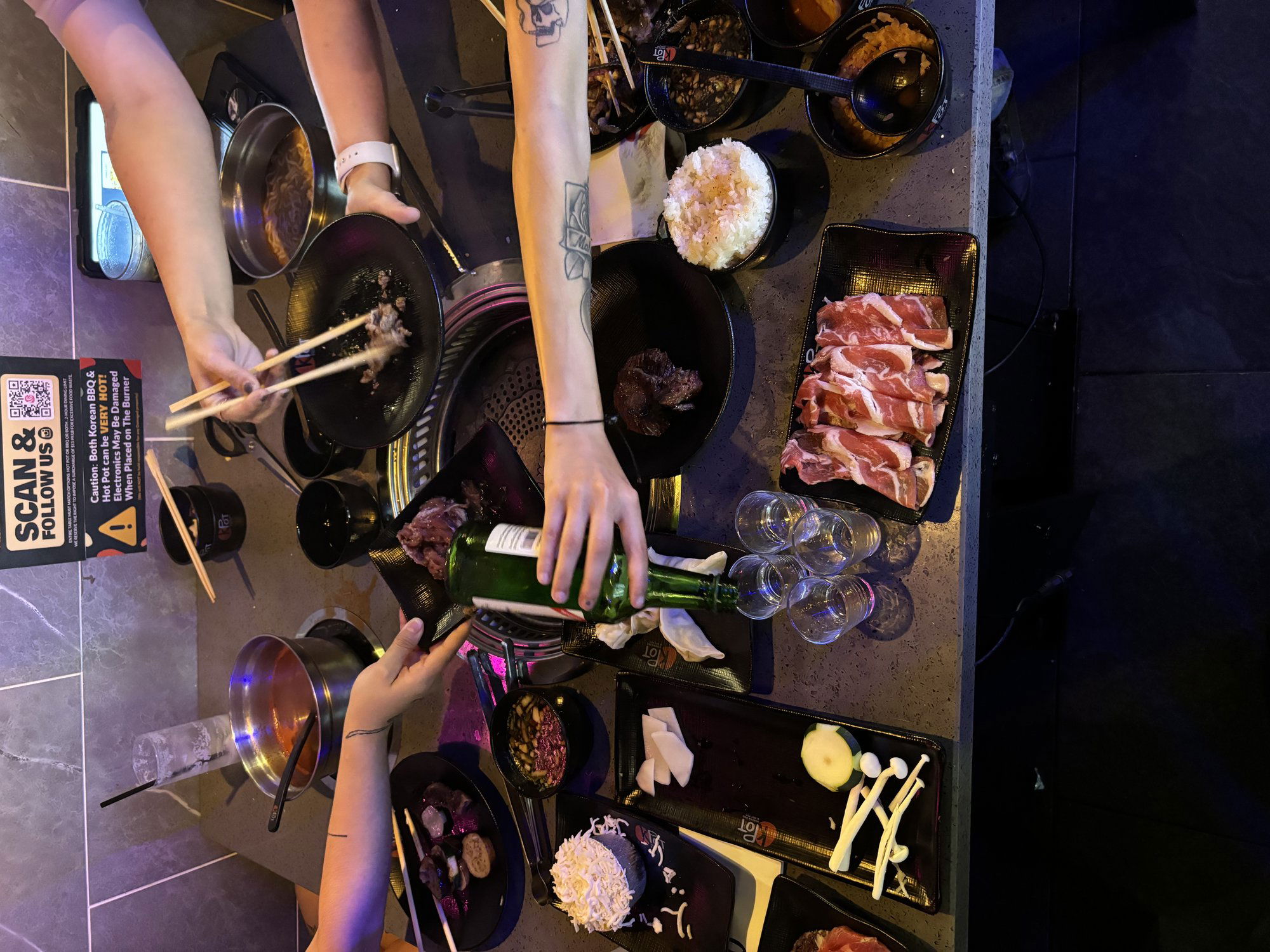
Walk into a Korean BBQ and hot pot hybrid and the first thing you register is heat, in both senses. Smoke rises from ventilation hoods mounted above each table; broth simmers at the center of the setup; raw proteins arrive cold and leave sizzling on grates or in pots that the diner controls entirely. This is a format built around participation, not passivity, and KPOT Korean BBQ & Hot Pot at 2802 Tuttle Boulevard in Longview, Texas, operates squarely within that tradition. The room functions less like a conventional restaurant and more like a series of individual cooking stations that happen to share a roof.
In most American cities, Korean BBQ and hot pot have historically occupied separate venues, each format demanding its own infrastructure and service rhythm. The combined model, where a single table offers both a grill surface and a simmering broth vessel, is less common outside of major metro areas with large Korean-American communities. That makes KPOT's presence in East Texas an interesting data point about how the format is spreading into mid-sized regional markets, following a chain expansion model that has placed similar venues in dozens of cities across the South and Midwest. For Longview specifically, which is covered in more depth in our full Longview restaurants guide, this kind of interactive tabletop format fills a gap that few other local venues address.
The Sourcing Logic Behind the Format
Korean BBQ's core appeal is inseparable from the quality and cut of the proteins it features. The format originated as a way to maximize flavor from relatively lean or secondary cuts through high-heat, direct contact cooking, where the diner controls doneness precisely. Marinated short rib (galbi), thinly sliced beef belly (chadolbaegi), pork shoulder, and various marinated preparations all depend on the same principle: thin cuts, high heat, brief contact. The sourcing decisions embedded in that tradition matter more than they might seem. A cut that works for braising will not perform the same way over a grill grate, and the marinade balance, soy-forward, sesame-accented, sometimes gochujang-spiked, is calibrated to how the protein will behave under direct flame.
Hot pot broth is an equally ingredient-driven proposition. The base, whether a clear anchovy-kelp stock, a spicy gochugaru broth, or a milky bone broth, determines the flavor trajectory of everything cooked in it. Vegetables, tofu, noodles, and proteins all absorb the broth character over the cooking period, which means the starting liquid is as important as any single ingredient added to it. Venues that treat the broth as a commodity product tend to produce flat, one-dimensional results; venues that build it from scratch or from concentrated proprietary bases produce something more layered. This is the sourcing question that matters most in the hot pot half of the format, and it is one diners can assess quickly once the broth arrives at the table.
Formats like this sit at a useful remove from the tasting-menu world represented by venues such as Atomix in New York City, where modern Korean cuisine is recontextualized through a fine-dining lens at the $$$$ price tier. KPOT operates in an entirely different register, one that is closer to the communal, family-style Korean dining tradition than to the chef-driven interpretation of Korean ingredients you might find in a tasting room. That distinction is not a criticism; it reflects two genuinely different things that Korean cuisine does well, and both are worth understanding on their own terms.
How the Format Works in Practice
The participatory structure of Korean BBQ and hot pot means that service at venues like KPOT is organized differently from a conventional restaurant. Servers function primarily as ingredient runners and grill monitors rather than as guides through a sequence of courses. Proteins, vegetables, and accompaniments (banchan, in the Korean tradition) arrive at the table for the diner to manage. The pacing is self-directed. This is a format that rewards diners who understand the sequence, which cuts to cook first, which to hold back, how to use the broth to finish items that came off the grill slightly underdone, and penalizes those expecting a conventional service rhythm.
For groups, particularly those with varying appetites and preferences, the format offers practical advantages that fixed-menu restaurants cannot. Different proteins and vegetables can be cooked simultaneously, and the table controls the pace. For solo diners, the experience is less natural; the format scales upward with group size.
Longview's dining scene includes a range of casual and mid-tier options, and nearby on the casual end you can also find places like COFFEE Mill for a contrasting daytime experience. KPOT occupies a different part of the evening, offering something dinner-focused and participatory that the local market does not have in abundance.
The Broader American Spread of Korean Tabletop Dining
Korean BBQ reached mainstream American awareness in cities like Los Angeles and New York, where large Korean-American communities sustained the format for decades before it crossed into wider dining consciousness. What happened next follows a recognizable pattern in American food culture: a format with deep community roots gets adopted by chain operators who systematize the sourcing, standardize the table equipment, and carry it into secondary and tertiary markets. That process strips some specificity but extends access significantly.
The resulting venues are not the same as a family-run Korean BBQ in Koreatown Los Angeles, nor do they claim to be. They sit in a different competitive tier, priced and formatted for broad accessibility rather than cultural authenticity. For diners in Longview without easy access to a major metro, they represent a reasonable point of entry into a format that would otherwise require significant travel. Venues operating at the far end of the fine-dining spectrum, such as Le Bernardin in New York City, The French Laundry in Napa, or Blue Hill at Stone Barns in Tarrytown, address sourcing and ingredient provenance in entirely different ways and at entirely different price points. The Korean tabletop format, even in its chain iteration, asks a different set of questions about where food comes from and who controls its preparation, questions that the diner answers in real time at the table.
Other American restaurants across the country have pushed ingredient sourcing into the foreground in ways that have reshaped dining expectations: Single Thread Farm in Healdsburg, Bacchanalia in Atlanta, and Addison in San Diego all use sourcing as a defining editorial statement. Korean BBQ's sourcing story is less visible but no less real: it lives in the cut specification, the marinade formulation, and the broth base, all of which shape the outcome as directly as any farm-to-table sourcing chain.
Planning Your Visit
KPOT Korean BBQ & Hot Pot is located at 2802 Tuttle Boulevard in Longview, Texas. The format works leading with groups of three or more, where the range of proteins and vegetables across the table creates variety and the social element of shared cooking is fully activated. First-time visitors benefit from arriving with some familiarity with the format, knowing that galbi typically goes on the grill before more delicate cuts, and that the broth will intensify in flavor as the meal progresses. Current hours, pricing, and any reservation options are leading confirmed directly with the venue before visiting, as these details are not centrally maintained in third-party directories.
Frequently Asked Questions
- Is KPOT Korean BBQ & Hot Pot okay with children?
- The format can work well for families with older children who are comfortable at an active table with open flames and hot liquids. The participatory structure keeps the experience engaging, but the grill and broth vessels require adult supervision throughout. In Longview, where family-style dining options are common, KPOT's interactive setup offers something different from standard casual dining, though the table-level heat sources require attentive management with younger children present.
- What is the overall feel of KPOT Korean BBQ & Hot Pot?
- The atmosphere is social and active rather than quiet or formal. Tables are equipped for cooking, which means noise, steam, and smoke are part of the experience by design. In Longview's mid-tier dining scene, KPOT occupies an interactive, group-friendly position that has no direct local equivalent. There are no awards on record for this location, and the experience does not position itself against fine-dining benchmarks; it operates in a distinct casual-to-mid-casual tier where the format itself is the draw.
- What dish is KPOT Korean BBQ & Hot Pot famous for?
- The dual-format combination of Korean BBQ and hot pot at a single table is the defining feature rather than any single dish. Marinated proteins cooked on the grill and ingredients simmered in hot pot broth represent the two cooking modes that define the format. No specific signature dish is documented for this Longview location, and no chef-driven tasting menu or award-recognized preparation appears in the public record for the venue.
- Does KPOT in Longview offer both BBQ grilling and hot pot at the same table?
- Yes, the KPOT format is specifically built around the combination of tabletop grilling and hot pot broth at a single session, which is the concept's distinguishing feature in the American market. This dual-format approach, less common in Texas outside major metro areas, is what separates KPOT from single-format Korean BBQ or hot pot venues. Diners can use one or both cooking methods during the same meal, making it a flexible option for groups with different preferences. Confirming the current menu structure and any all-you-can-eat pricing directly with the Longview location before visiting is advisable.
Related editorial
- Best Fine Dining Restaurants in ParisFrom three-Michelin-star icons to the next generation of Parisian chefs pushing boundaries, these are the restaurants that define fine dining in the world's culinary capital.
- Best Luxury Hotels in RomeFrom rooftop terraces overlooking ancient ruins to Michelin-starred hotel dining, these are the luxury hotels that make Rome unforgettable.
- Best Cocktail Bars in KyotoFrom sleek lounges to hidden speakeasies, Kyoto's cocktail scene blends Japanese precision with global influence in ways you won't find anywhere else.
Save or rate KPOT Korean BBQ & Hot Pot on Pearl
Keep this venue in your Pearl passport, rate it after you visit, and track it alongside every other place you collect.