
Restaurant in Atlantic City, United States
Knife and Fork Inn
100ptsPre-Casino Atlantic City Dining
About Knife and Fork Inn
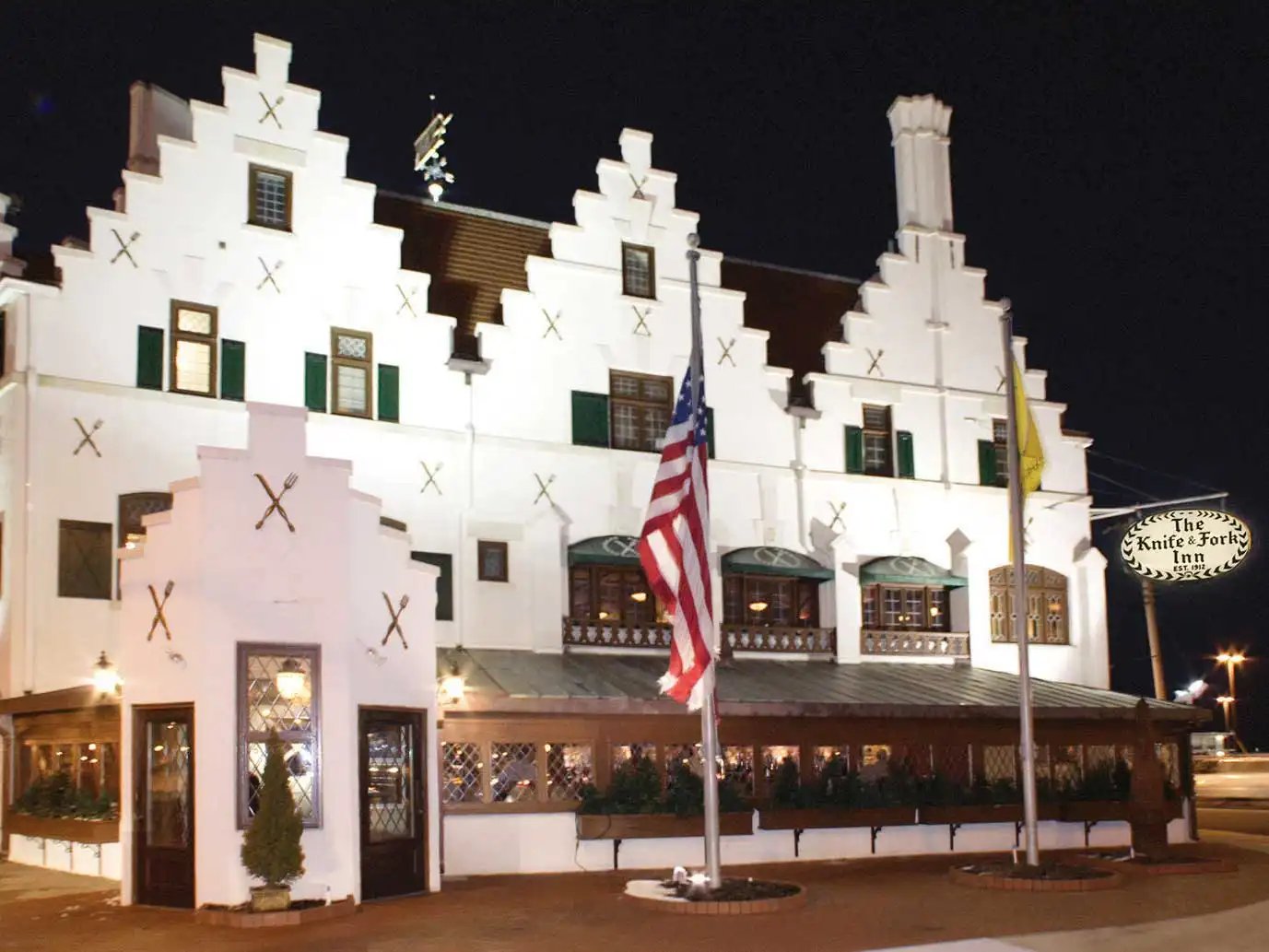
The Knife and Fork Inn at 3600 Atlantic Ave is one of Atlantic City's most historically significant dining addresses, a century-old building that predates the casino era and has shaped the city's fine-dining expectations. It sits in a category apart from the boardwalk restaurants and casino buffets, representing a quieter, older strand of Atlantic City hospitality that rewards visitors who look beyond the gaming floor.
A Building That Predates the Neon
Atlantic City's dining scene divides cleanly between the casino floor and everything outside it. The casino-adjacent restaurants follow predictable logic: celebrity chef names, large formats, volume-oriented menus calibrated to feed thousands of visitors a week. The other strand, smaller and harder to find, belongs to the pre-casino city — the Atlantic City that existed before 1978, when the first legal casino opened and reoriented the entire local economy around gaming revenue. The Knife and Fork Inn at 3600 Atlantic Ave belongs to that older strand. The building itself is a period piece, a Tudor Revival structure that has occupied its corner long enough to have watched the boardwalk economy transform several times over. In a city where most addresses either serve the casino apparatus or fold under the commercial pressure it generates, longevity of that scale carries its own authority.
For context on how Atlantic City's dining scene is structured, our full Atlantic City restaurants guide maps the full range from boardwalk grab-and-go to white-tablecloth dining, showing where the Knife and Fork Inn sits relative to the rest of the market.
The Cultural Weight of Old Atlantic City Dining
American coastal dining in the early twentieth century had a distinct character that is mostly lost now. The venues that survived that era, and continue operating in their original buildings, carry a documentary function alongside their commercial one. They tell you what the city valued before casino money restructured everything. Atlantic City in its pre-casino decades was a serious leisure destination for the East Coast middle and upper-middle class, and its dining rooms reflected that: formal service, seafood-forward menus built around the local catch, long wine lists, and an expectation that dinner was an event rather than a convenience stop.
That tradition has close relatives elsewhere on the East Coast. Dock's Oyster House is the most direct local comparison, another Atlantic City institution with genuine historical depth that operates in the same cultural register. Both venues represent what Atlantic City dining looked like before the casino model introduced a different set of incentives. Elsewhere in the city, the comparison set includes Cafe 2825 and Chef Vola's, which also operate outside the casino ecosystem, though with different formats and price points. Angeloni's Club Madrid offers another angle on the city's longer dining history, while the Borgata Buffet represents the opposite end of the spectrum entirely.
Where the Knife and Fork Inn Fits in the National Picture
Nationally, the category of historically significant American fine-dining institution is well represented but geographically uneven. The Northeast and mid-Atlantic have the densest concentration of venues that predate the postwar restaurant boom. The Knife and Fork Inn sits in that tradition, though it operates at a different scale and in a different market context than, say, The Inn at Little Washington, which has used its regional heritage as a foundation for serious culinary ambition, or Emeril's in New Orleans, where the cultural roots of the cuisine are inseparable from the restaurant's identity.
The comparison with high-investment contemporary American dining formats, such as Le Bernardin in New York City, Smyth in Chicago, or Blue Hill at Stone Barns in Tarrytown, clarifies the distinction. Those venues operate in a mode of continuous culinary reinvention, where the awards cycle and critical conversation drive menu evolution. A venue like the Knife and Fork Inn operates in a different register entirely, where continuity and setting are themselves the proposition. The same contrast applies when you consider the tasting-menu tier represented by The French Laundry in Napa, Lazy Bear in San Francisco, Single Thread Farm in Healdsburg, Providence in Los Angeles, Addison in San Diego, or Atomix in New York City. These venues compete on the basis of culinary innovation and formal recognition. The Knife and Fork Inn competes on different terms: place, history, and the specific atmosphere that a century-old building in a resort city generates.
For international comparison, venues like Atelier Moessmer Norbert Niederkofler in Brunico show how historical settings can anchor contemporary culinary ambition. The structural question for any venue operating in a heritage building is how much the setting defines the offer versus how much the kitchen does the work.
Planning Your Visit
The Knife and Fork Inn is at 3600 Atlantic Ave, outside the main casino corridor, which means it draws a different kind of visitor than the boardwalk properties. The address is accessible by car with parking available in the area, and it is reachable from the Atlantic City Expressway without requiring a pass through the casino district. The venue's position in the independent dining category, away from the casino ecosystem, means booking is worth approaching with some advance planning, particularly on weekends when Atlantic City's visitor traffic peaks in summer. Current hours, reservation availability, and pricing are leading confirmed directly with the venue before visiting, as this information changes seasonally and the venue database record does not carry confirmed current details.
Frequently Asked Questions
Would Knife and Fork Inn be comfortable with kids?
Given the venue's price positioning within Atlantic City's dining market and its historical fine-dining character, it sits toward the formal end of the spectrum, where younger children would be out of place. Families with older children who are comfortable in a table-service setting would be a better fit than those with toddlers or young children accustomed to casual formats.
Is Knife and Fork Inn formal or casual?
If Atlantic City's casino-adjacent restaurants and the wider New Jersey Shore dining market are your reference point, the Knife and Fork Inn reads as formal. The Tudor Revival building sets an expectation before you walk in, and the venue's positioning in the independent fine-dining tier of the city means smart dress is appropriate. Without confirmed current dress code data in our records, the practical answer is: dress as you would for a white-tablecloth dinner in any East Coast city, and you will be fine.
What should I eat at Knife and Fork Inn?
The venue's cultural roots in Atlantic City's pre-casino dining tradition point toward seafood, the category that defined East Coast resort dining in the early and mid-twentieth century and remains the logical anchor for any venue in this setting. Without confirmed current menu data in our records, we recommend reviewing the current menu directly with the venue before visiting rather than relying on outdated dish references.
Do I need a reservation for Knife and Fork Inn?
Make a reservation. The venue occupies a specific niche in Atlantic City's independent dining market, with no casino parent organization managing overflow capacity. Weekend evenings in summer, when the city's visitor volume peaks, are the periods where walk-in availability is least predictable. Contact the venue directly to confirm current booking procedures.
How does the Knife and Fork Inn's building history affect the dining experience?
The Tudor Revival structure at 3600 Atlantic Ave is one of the few pre-casino-era dining buildings in Atlantic City still operating in its original function. In a city where the built environment has been extensively redeveloped around gaming and resort infrastructure since 1978, that continuity gives the venue a physical character that newer addresses cannot replicate. The room itself — its proportions, materials, and period detail , functions as context for the meal in a way that is specific to genuinely old buildings, not renovated approximations of them.
Related editorial
- Asia's 50 Best Restaurants 2026: The Chairman and Wing Go 1-2 from the Same BuildingThe Chairman takes No. 1 and Wing climbs to No. 2 at Asia's 50 Best Restaurants 2026. Both operate from the same Hong Kong building. Here's what it means.
- Four Seasons Yachts Debut: 95 Suites, 11 Restaurants, and a March 2026 Maiden VoyageFour Seasons I launches March 20, 2026, with 95 suites, a one-to-one staff ratio, and 11 onboard restaurants. Worth tracking if you want hotel-grade service at sea.
- LA Michelin Guide 2026: Seven New Restaurants from Tlayudas to Uzbek DumplingsMichelin's March 2026 California Guide update adds six LA restaurants and one Montecito newcomer, spanning Oaxacan tlayudas, Uzbek manti, and Korean-Italian pasta.
Save or rate Knife and Fork Inn on Pearl
Keep this venue in your Pearl passport, rate it after you visit, and track it alongside every other place you collect.