
Restaurant in Gurugram, India
Karim's Mughlai Food
100ptsSlow-Cooked Mughal Tradition
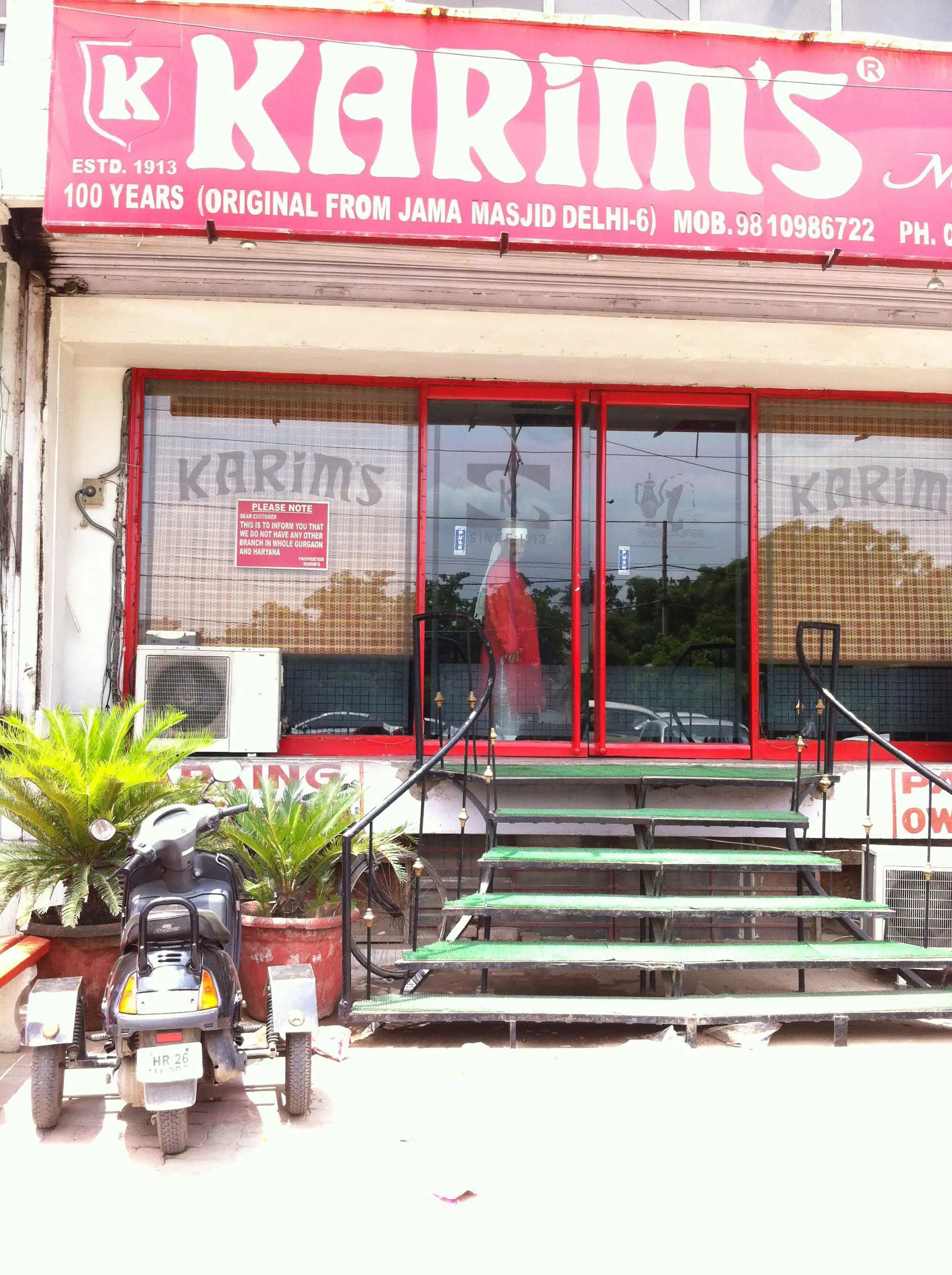
About Karim's Mughlai Food
Karim's Mughlai Food operates from Sector 14 in Gurugram, placing classic Mughlai cooking inside one of Haryana's fastest-growing urban corridors. The kitchen works within a tradition that traces its lineage to the Mughal imperial court, producing the slow-cooked, spice-layered dishes that define North India's most historically significant culinary school. For residents and visitors in the satellite city, it offers a direct line to that tradition without the commute to Delhi.
Mughlai Cooking in a Satellite City
Gurugram's dining scene has expanded rapidly over the past decade, adding modern Indian formats, international chains, and chef-driven concepts that compete for space in the glass towers lining the Golf Course Road corridor. Within that expansion, a quieter category persists: neighbourhood restaurants serving regional Indian cooking that predate the corporate boom, occupying older commercial strips along Delhi Road and in areas like Sector 14. Karim's Mughlai Food sits in that category, in Prem Nagar, where the built environment is older and less curated than the showroom-restaurant clusters further south.
The address matters in context. Sector 14 is among Gurugram's longer-established residential and commercial zones, closer in character to the working-city grain than to the polished dining parks of Sectors 29 or 53. For Mughlai food specifically, that proximity to older urban fabric is not incidental. This is a cuisine that historically took root in the dense, laneway-level markets of North India's Mughal cities, and restaurants serving it authentically have tended to operate outside premium real estate rather than within it. For broader context on where Karim's Mughlai Food sits within the city's dining options, see our full Gurugram restaurants guide.
The Mughlai Tradition: What the Category Means
Mughlai cuisine is one of the most historically documented cooking traditions on the Indian subcontinent. It emerged from the kitchens of the Mughal Empire between the sixteenth and eighteenth centuries, integrating Persian, Central Asian, and Subcontinental techniques into a set of preparations defined by slow cooking, aromatic whole spices, and the use of dairy, nuts, and dried fruit as structural flavour agents rather than garnishes. Dishes like biryani, qorma, nihari, and haleem carry precise culinary genealogies, and the differences between regional interpretations, Delhi versus Lucknow versus Hyderabad, are matters of historical record, not marketing distinction.
The Delhi school of Mughlai cooking, which informs most restaurants operating in the National Capital Region including Gurugram, traces its most direct modern lineage to the areas around Jama Masjid in Old Delhi. The original Karim's in Jama Masjid, established in 1913, became the reference point for that lineage and has been cited repeatedly in food journalism and culinary histories as a foundational institution for Delhi-style Mughlai cooking. Whether the Gurugram restaurant operates under the same family or brand ownership as that original establishment is a detail absent from available records, but the name's association with that tradition is the primary frame through which diners in this city approach it.
Across India, the Mughlai category covers a wide quality range, from hotel banquet adaptations at properties like Adaa at Falaknuma Palace in Hyderabad to neighbourhood restaurants like this one. At the upper end of the hotel-dining tier, the tradition is interpreted through tasting formats and modernised presentation. Dum Pukht in Delhi, for instance, specialises in the sealed-pot slow-cooking method that represents one of Mughlai cuisine's most technically demanding preparations. Karim's operates in a different register entirely, closer to the everyday-institution model than to the formal dining category.
What the Cooking Tradition Produces
The defining technique of Mughlai cooking is time. Proteins are marinated in spiced dairy, then cooked low and slow until the fat separates and the aromatics integrate into the base rather than sitting above it. The result in a well-executed qorma or rogan josh is a sauce of some depth, with residual heat arriving late rather than upfront. Breads, particularly roomali roti and naan from a tandoor, are structural companions rather than afterthoughts, used to move the braised preparations from plate to hand in the way the cuisine was historically designed to be eaten.
Biryani in the Delhi Mughlai tradition differs from the Hyderabadi version primarily in the ratio of meat to rice and the degree of spice brightness. Delhi preparations tend toward a more restrained, whole-spice profile, where saffron and rose water read as background notes rather than forward flavour. These are broad generalisations across a large culinary tradition, but they orient a first-time visitor toward what to expect versus what the Deccan or Coastal schools might offer. For those exploring how regional Indian cuisines differ across the subcontinent, contrasting a meal here against, for instance, Kappa Chakka Kandhari in Chennai or Leela Kerala Terrace in Trivandrum illustrates how structurally different the country's regional traditions remain.
Planning a Visit
Karim's Mughlai Food is located at Delhi Road, Prem Nagar, Sector 14, Gurugram, a direct address in one of the city's older residential sectors. The area is accessible by road from central Gurugram and from the Delhi-Gurgaon corridor, though specific travel times depend on traffic conditions along the NH-48. No booking platform, phone number, or website appears in the available public record for this restaurant, which is consistent with the neighbourhood-institution model common to this category across North India: walk-in service is the assumed format, and reservations, where available, are typically handled by phone at the counter. Visiting during lunch hours, when Mughlai restaurants across the region tend to draw their most regular trade, is a reasonable approach for those making a first visit. Pricing in the neighbourhood-Mughlai category in Gurugram is generally moderate relative to hotel-dining or chef-driven formats in the city.
Those visiting Gurugram for its dining specifically may find it useful to frame Karim's alongside the range of what the city offers at different tiers. At the casual-dining level, Haldiram's at Vatika Business Park covers the snack and sweets category that runs parallel to Mughlai cooking in North Indian food culture. At the other end of the scale, da Susy represents the city's international dining segment. For those building a wider India itinerary, the country's most discussed chef-driven formats can be found at addresses like Farmlore in Bangalore, Inja in New Delhi, or further afield at Naar in Kasauli, Bomras in Anjuna, Dining Tent in Jaisalmer, Neel in Patiala, Palaash in Yavatmal, Ran Baas The Palace in Qila Mubarak, The Malabar House in Fort Cochin, and Americano in Mumbai. For a sense of how ambitious formal dining operates in entirely different culinary traditions, Le Bernardin in New York City and Lazy Bear in San Francisco offer useful international counterpoints.
Frequently Asked Questions
- Would Karim's Mughlai Food be comfortable with kids?
- Mughlai restaurants at this price tier in Gurugram are generally family-friendly by default, with no dress code or formal dining format to navigate.
- What's the overall feel of Karim's Mughlai Food?
- The feel is consistent with the neighbourhood-institution model common across North India's Mughlai category: functional, informal, and oriented toward regular local trade rather than the curated dining-out experience that characterises Gurugram's newer restaurant formats.
- What's the signature dish at Karim's Mughlai Food?
- No specific dish is confirmed in available records, but the broader Mughlai tradition that the restaurant's name references is built around slow-cooked meat preparations, biryani, and tandoor breads. Those three categories define the kitchen wherever the tradition is practised.
- Do I need a reservation for Karim's Mughlai Food?
- No booking platform or reservation system is identified in available records. If you are visiting at a peak mealtime, a walk-in approach is likely the standard, though calling ahead is advisable for larger groups.
- What's the standout thing about Karim's Mughlai Food?
- The restaurant operates within one of North India's most historically significant cooking traditions, the Delhi-school Mughlai lineage, in a neighbourhood setting that keeps it closer to the original context of that cuisine than hotel-dining adaptations of the same food.
- Is Karim's Mughlai Food in Gurugram connected to the original Karim's in Old Delhi?
- The connection between the Gurugram restaurant and the Karim's established in 1913 near Jama Masjid in Old Delhi is not confirmed in available records. The name carries the association with that lineage, which is one of the most cited in Delhi Mughlai cooking, but diners should treat any assumed affiliation as unverified without direct confirmation from the restaurant.
Related editorial
- Asia's 50 Best Restaurants 2026: The Chairman and Wing Go 1-2 from the Same BuildingThe Chairman takes No. 1 and Wing climbs to No. 2 at Asia's 50 Best Restaurants 2026. Both operate from the same Hong Kong building. Here's what it means.
- Four Seasons Yachts Debut: 95 Suites, 11 Restaurants, and a March 2026 Maiden VoyageFour Seasons I launches March 20, 2026, with 95 suites, a one-to-one staff ratio, and 11 onboard restaurants. Worth tracking if you want hotel-grade service at sea.
- LA Michelin Guide 2026: Seven New Restaurants from Tlayudas to Uzbek DumplingsMichelin's March 2026 California Guide update adds six LA restaurants and one Montecito newcomer, spanning Oaxacan tlayudas, Uzbek manti, and Korean-Italian pasta.
Save or rate Karim's Mughlai Food on Pearl
Keep this venue in your Pearl passport, rate it after you visit, and track it alongside every other place you collect.