
Restaurant in Northbrook, United States
Kamehachi
100ptsSuburban Japanese Tradition
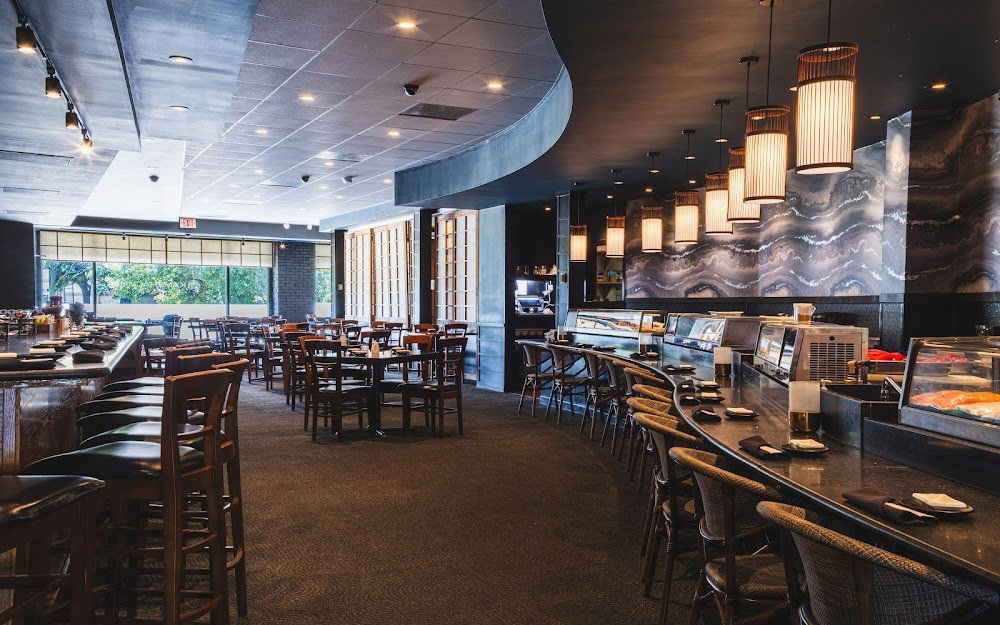
About Kamehachi
Kamehachi at 1320 Shermer Road occupies a distinct position among Northbrook's dining options, bringing Japanese culinary tradition to Chicago's northern suburbs at a moment when the area's restaurant scene continues to mature. Positioned alongside neighbours like Di Pescara and Prairie Grass Cafe, it represents a different current in suburban dining — one oriented toward precision and restraint rather than comfort-food familiarity.
Suburban Chicago and the Japanese Table
The northern suburbs of Chicago have, over the past two decades, developed a dining scene that operates on its own logic. Northbrook sits roughly 25 miles north of the Loop, and the restaurants that hold ground here — from the seafood-focused Di Pescara to the farm-driven Prairie Grass Cafe — tend to serve a local population that eats out frequently and expects consistency over novelty. Into that environment, Kamehachi at 1320 Shermer Road brings Japanese culinary tradition: a different register altogether from the steakhouses and Italian kitchens that anchor much of the area's restaurant identity.
Japanese cuisine in the American suburbs has historically followed one of two paths. The first is the broadly accessible, Americanised sushi bar , California rolls, hibachi grills, and the visual theatre of chef-at-table preparation. The second is the more austere, technique-forward model that draws from the kaiseki and omakase traditions and asks guests to trust the kitchen rather than customise it. Kamehachi's positioning in Northbrook places it in a market where diners shuttle between both expectations, and where the better Japanese kitchens differentiate themselves by depth of product rather than spectacle.
For context on where Northbrook dining sits relative to the broader metropolitan area, it helps to consider the tier occupied by restaurants like Alinea in Chicago , a three-Michelin-star operation that represents the apex of the city's dining ambition. Kamehachi in Northbrook is not competing in that register; it is serving a neighbourhood that has its own demands, its own rhythms, and its own definition of a considered meal. That is not a limitation so much as a specific brief, and suburban Japanese restaurants that succeed tend to do so by meeting that brief with consistency.
What Shermer Road Tells You About the Neighbourhood
Location on Shermer Road places Kamehachi within Northbrook's commercial corridor rather than its more residential or retail-dense stretches. This part of town draws locals who drive rather than walk, who tend to book rather than browse, and who are generally returning to a place they already trust rather than discovering something new. The dynamics here differ significantly from Chicago's Wicker Park or River North, where foot traffic sustains a culture of spontaneous dining decisions.
That suburban specificity matters when reading a Japanese restaurant's role in its community. In a city neighbourhood, a sushi counter might draw from a broad base of diners at different stages of Japanese cuisine literacy. In Northbrook, a restaurant like Kamehachi serves a more defined population , one that has likely made a deliberate choice to come here, often as a repeat visit, and that holds expectations shaped by previous meals rather than by trend coverage or social media discovery. This produces a different kind of reliability pressure: the kitchen must perform to a known standard rather than impress on first encounter.
Neighbouring restaurants on the Northbrook dining circuit include House 406 and Landmark on the Hill, both of which serve a clientele with broadly similar profiles. Within that peer set, a Japanese kitchen occupies a distinct culinary niche , one that requires different sourcing networks, different staff training, and a different kind of guest communication around the menu. The restaurants that manage this well in suburban markets tend to become reliable institutions rather than flash-in-the-pan openings.
Japanese Dining in the American Midwest: A Broader Frame
The Midwest has a more developed Japanese dining tradition than outsiders often assume. Chicago itself has produced serious omakase counters and izakaya-format rooms that hold their own against coastal peers. That broader context gives suburban operators access to supply chains, trained staff, and a guest population that has encountered Japanese cuisine in the city before arriving at a neighbourhood version of it. The question that suburban Japanese kitchens consistently face is how much of the city's technical ambition to carry into a lower-footfall, regular-guest environment.
Nationally, the conversation around Japanese cuisine in America has been shaped by destinations like Atomix in New York City , a two-Michelin-star Korean-Japanese hybrid that represents the high end of Asian fine dining on the East Coast , and, at the other end of the geographic spectrum, operations that demonstrate the viability of serious Japanese cooking outside of dense urban cores. The lesson from the American restaurant scene more broadly, from Single Thread Farm in Healdsburg to Blue Hill at Stone Barns in Tarrytown, is that location outside a major city does not preclude seriousness , it just requires a different kind of institutional commitment.
For diners who want to benchmark Kamehachi against major-city Japanese and fine-dining experiences , from Le Bernardin in New York City to Providence in Los Angeles or The French Laundry in Napa , the framing needs adjustment. A Northbrook Japanese restaurant is not in competition with that tier. It serves a different function: consistent, accessible quality in a neighbourhood that values reliability, and a Japanese culinary perspective in a dining market where that perspective remains relatively rare.
Planning Your Visit
Kamehachi is located at 1320 Shermer Road, Northbrook, IL 60062, accessible by car from central Chicago in under 40 minutes outside peak commute hours. For a full picture of what the Northbrook dining circuit offers alongside this kitchen, the EP Club Northbrook restaurants guide maps the area's options across cuisine types and price points.
Given the suburban context, it is advisable to book ahead rather than rely on walk-in availability, particularly on weekend evenings when Northbrook's restaurant capacity is under more pressure. Arriving without a reservation at a well-regarded suburban Japanese kitchen on a Friday or Saturday is a different proposition from the same move at a downtown spot with higher seat turnover and later-night traffic.
Frequently Asked Questions
- What is the signature dish at Kamehachi?
- Specific menu details and signature dishes are not confirmed in our current data for the Northbrook location. Japanese restaurants of this type in the suburban Chicago area commonly anchor their menus around quality sushi and traditional Japanese preparations. For the most accurate current menu information, contacting the restaurant directly at 1320 Shermer Road, Northbrook, is the most reliable approach. Readers interested in how Japanese cuisine operates at the fine-dining level nationally can reference our coverage of Atomix in New York City.
- Do they take walk-ins at Kamehachi?
- Walk-in policy is not confirmed in our current data. In suburban North Shore markets like Northbrook, Japanese restaurants of standing tend to fill weekend evening sittings through reservations rather than door traffic, given the lower spontaneous footfall compared to urban neighbourhoods. If visiting during the week or at off-peak times, the probability of walk-in availability is generally higher. For certainty, a reservation made in advance is the more reliable approach, and the restaurant's address at 1320 Shermer Road, Northbrook, provides a direct contact point. Comparable suburban fine-dining operations like Bacchanalia in Atlanta demonstrate how neighbourhood-rooted restaurants tend to operate on similar advance-booking expectations.
- Is Kamehachi in Northbrook connected to the original Chicago Kamehachi?
- Kamehachi has a documented history as a Chicago-area Japanese restaurant name with roots on the North Side, giving the Northbrook address a connection to one of the longer-standing Japanese dining presences in the metropolitan area. This kind of institutional lineage is relatively uncommon in suburban Japanese dining and positions the Northbrook location within an established culinary identity rather than as a standalone opening. Diners familiar with the broader Chicago restaurant scene or with Japanese dining in the metro area will find the name carries a specific reference point. For a full overview of how Kamehachi fits within Northbrook's dining options, see our Northbrook restaurants guide.
Related editorial
- Best Fine Dining Restaurants in ParisFrom three-Michelin-star icons to the next generation of Parisian chefs pushing boundaries, these are the restaurants that define fine dining in the world's culinary capital.
- Best Luxury Hotels in RomeFrom rooftop terraces overlooking ancient ruins to Michelin-starred hotel dining, these are the luxury hotels that make Rome unforgettable.
- Best Cocktail Bars in KyotoFrom sleek lounges to hidden speakeasies, Kyoto's cocktail scene blends Japanese precision with global influence in ways you won't find anywhere else.
Save or rate Kamehachi on Pearl
Keep this venue in your Pearl passport, rate it after you visit, and track it alongside every other place you collect.