
Restaurant in Växjö, Sweden
Kafé de luxe
100ptsHeritage-Framed Green Sourcing

About Kafé de luxe
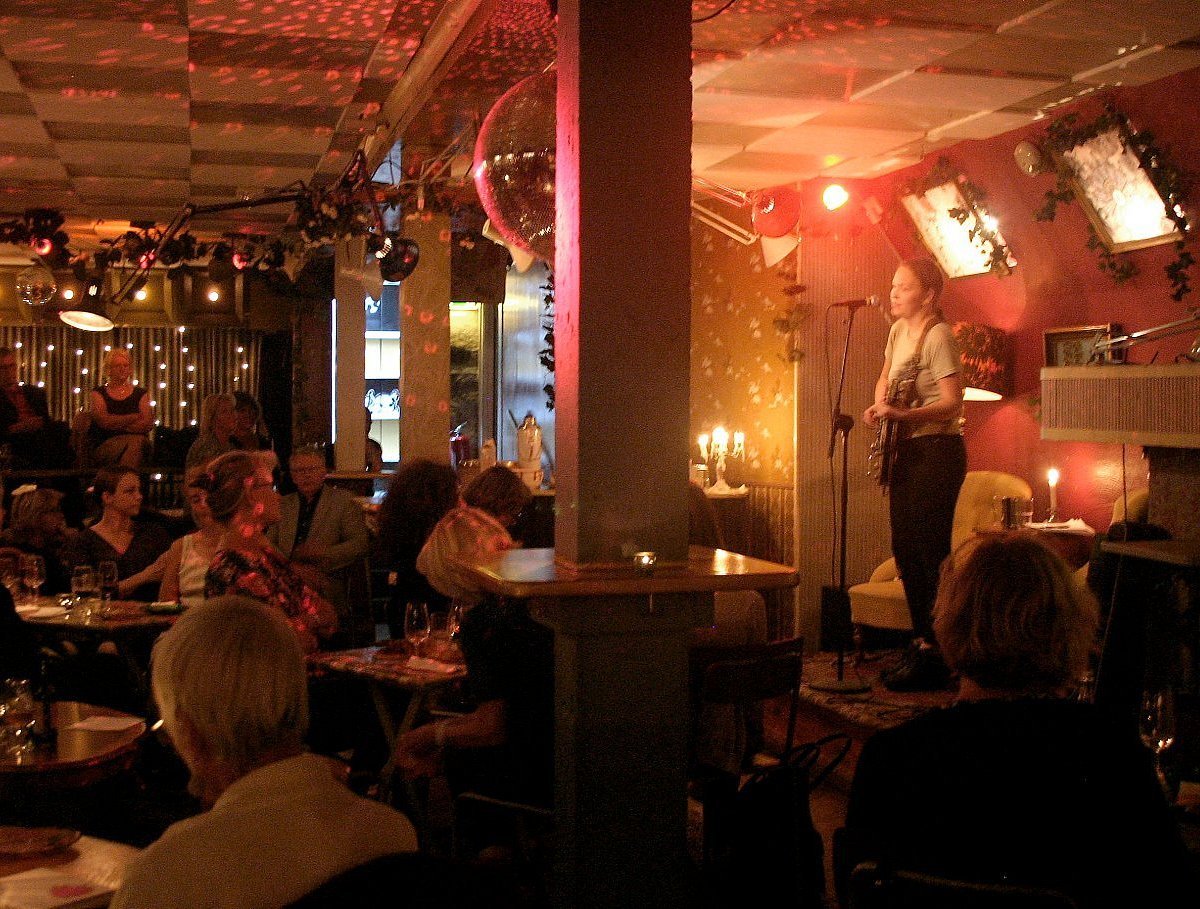
In an 18th-century building on Sandgärdsgatan, Kafé de luxe operates as both café and full-service restaurant, with a menu built around locally sourced ingredients and a clear green focus. The setting in central Växjö makes it one of the more atmospheric addresses in a city that has spent two decades positioning itself as Sweden's most committed green municipality. It is the kind of place that earns its reputation through what ends up on the plate and where it comes from.
Where the Building Sets the Terms
Sandgärdsgatan 19 is one of those addresses where the physical envelope does real editorial work before you have ordered anything. The 18th-century building in central Växjö carries the particular character of old Swedish town architecture: proportions that feel human-scaled, materials that have aged rather than been designed to look aged, and a quietness that resists the pressure to announce itself. Approaching on foot from the city centre, the effect is of finding something that predates the question of whether a restaurant needs a concept.
That setting matters beyond atmosphere. Kafé de luxe operates at the intersection of two formats that often sit awkwardly together — café and full restaurant — and the building gives both functions enough room to coexist without either feeling like an afterthought. The result is a room that works across different parts of the day and different expectations from the people sitting in it.
Sourcing as a Point of View
Växjö has spent more than twenty years building a municipal identity around environmental commitment, becoming the first city in the world to take systematic steps toward fossil-fuel-free status back in the 1990s. That civic project has gradually shaped the culture of how local businesses present themselves, and it has created a context in which a restaurant's sourcing choices carry weight beyond the menu. Kafé de luxe sits inside that context. The kitchen's green focus and locally sourced ingredients are not a trend layer applied over an otherwise conventional operation , they reflect the wider logic of a city that has made sustainability a governing principle rather than a marketing position.
In practical terms, locally sourced cooking in Småland means working with producers in a region that has historically fed itself through forest, lake, and farm. The inland counties around Växjö are not the same pantry as coastal Skåne or the archipelago around Stockholm, and what ends up on the plate here tends to reflect that difference: produce that is less cosmopolitan and more tied to a specific patch of Swedish land. For diners familiar with the New Nordic framework that restaurants like Vollmers in Malmö and VYN in Simrishamn have developed at the high end, Kafé de luxe operates in a register that is less tasting-menu formal and more embedded in daily life , which is a different kind of editorial position, and arguably a more durable one.
The green focus also places Kafé de luxe in a broader national conversation about where Swedish cooking is heading. Restaurants like ÄNG in Tvååker and Knystaforsen in Rydöbruk have demonstrated that ingredient-led, ecologically conscious cooking can operate at serious technical levels outside the major cities. Kafé de luxe does not sit in that fine-dining tier, but it draws on the same underlying logic: that where food comes from is as important as what is done to it in the kitchen.
Position in the Växjö Dining Scene
Växjö's restaurant scene is smaller than its regional ambitions might suggest, but it contains a handful of addresses that punch at a level above what the city's population would predict. PM & Vänner, with its Nordic-creative format and consistent recognition, represents the most visible end of the local offer. Kafé de luxe occupies a different register , more accessible in format, more grounded in the café tradition, but no less considered in its sourcing logic. The two venues are not in direct competition; they serve different occasions and different expectations.
The broader Swedish dining context is worth holding in mind. At the leading of the national hierarchy, restaurants like Frantzén in Stockholm and Signum in Mölnlycke set a benchmark that only a handful of kitchens can approach. Below that tier, the most interesting work in Sweden is often happening in smaller cities and towns, where rent structures and community relationships allow for a different kind of cooking economy. Kafé de luxe belongs to that middle layer , not competing on prestige, but contributing to a local food culture that is more considered than Växjö's size would automatically produce.
For context on what else the city offers, the full Växjö restaurants guide covers the range of options across price points and formats. The Villa & Trädgård de luxe shares branding DNA and represents an adjacent dimension of the same operation. Beyond eating, the Växjö bars guide, hotels guide, wineries guide, and experiences guide map the rest of the city's offer for visitors planning a longer stay.
The international frame is a useful calibration tool. At places like Le Bernardin in New York City or Emeril's in New Orleans, sourcing narratives operate inside a high-production dining format where the ingredient story is one layer among many. At Kafé de luxe, the sourcing logic is closer to the surface , less mediated by technique, more visible in what arrives at the table. That is not a criticism; it is a description of a different set of priorities. Restaurants like 28+ in Gothenburg, Fyr in Halmstad, and Hotell Borgholm in Borgholm demonstrate how that philosophy scales across different Swedish contexts.
Planning Your Visit
Kafé de luxe is at Sandgärdsgatan 19, 352 30 Växjö, in the central part of the city, close enough to walk from most of the city's hotels. The 18th-century building is findable without much difficulty. Because the venue operates as both café and restaurant, the booking logic differs across the day: coffee-hour visits are generally walkable, while dinner-format visits benefit from a reservation, particularly on weekends when the room's limited capacity fills earlier than a casual café might. Specific hours, current pricing, and booking contact details are leading confirmed directly with the venue, as that information was not available at the time of writing.
Frequently Asked Questions
- What is the leading thing to order at Kafé de luxe?
- The kitchen's green focus and locally sourced approach mean the menu is built around what regional Småland producers are supplying at any given time. Rather than a fixed signature, the most reliable approach is to ask what is driving the current menu , the answer will generally point toward whatever the kitchen is working with most closely that season. For comparable ingredient-led thinking at higher price points, PM & Vänner and Vollmers in Malmö offer reference points for how the New Nordic sourcing model operates at a more formal level.
- Can I walk in to Kafé de luxe?
- For café visits during the day, walking in is generally workable. The restaurant format , particularly in the evenings , operates in a smaller room where demand can exceed capacity, especially at weekends. Växjö is not a city with an over-saturated dining scene, but Kafé de luxe has enough of a local following that it is worth checking availability before arriving with dinner expectations. The address on Sandgärdsgatan is central enough to be accessible without planning, but the booking question is worth resolving in advance.
- What is the defining idea at Kafé de luxe?
- The defining idea is the conjunction of a historically significant setting with a kitchen that takes its sourcing responsibilities seriously within a city that has made environmental commitment part of its civic identity. It is not a tasting-menu destination in the manner of VYN in Simrishamn or ÄNG in Tvååker. What it offers is a more everyday version of the same underlying argument: that what you eat, and where it comes from, matters , and that an 18th-century room in central Växjö is as good a place as any to make that point.
Recognized By

Similar venues by awards
Related editorial
- Best Fine Dining Restaurants in ParisFrom three-Michelin-star icons to the next generation of Parisian chefs pushing boundaries, these are the restaurants that define fine dining in the world's culinary capital.
- Best Luxury Hotels in RomeFrom rooftop terraces overlooking ancient ruins to Michelin-starred hotel dining, these are the luxury hotels that make Rome unforgettable.
- Best Cocktail Bars in KyotoFrom sleek lounges to hidden speakeasies, Kyoto's cocktail scene blends Japanese precision with global influence in ways you won't find anywhere else.
Save or rate Kafé de luxe on Pearl
Keep this venue in your Pearl passport, rate it after you visit, and track it alongside every other place you collect.