
Restaurant in Newcastle, Australia
Hungry Wolfs Italian Restaurant
100ptsSuburban Italian Anchor
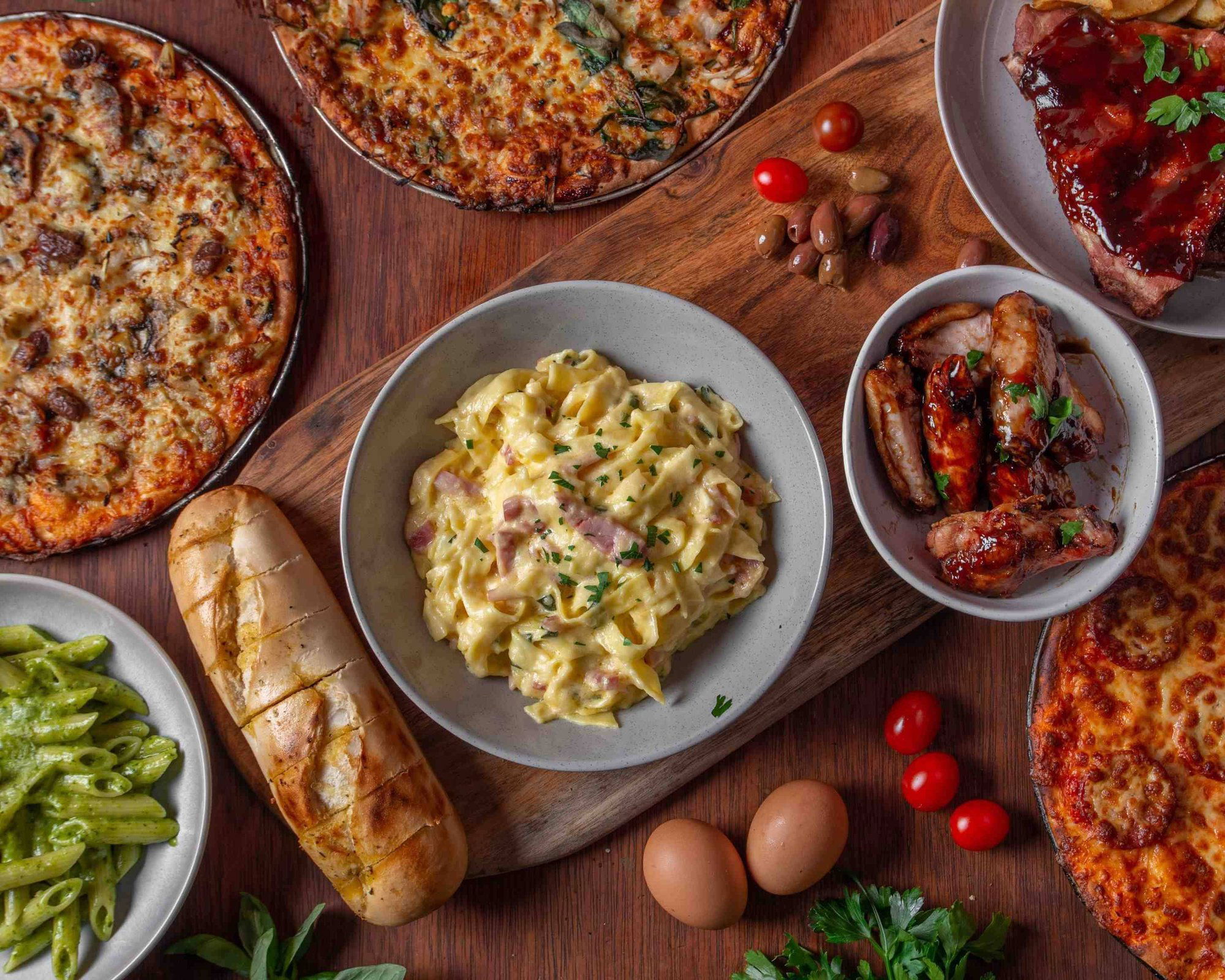
About Hungry Wolfs Italian Restaurant
Islington's Italian Anchor Maitland Road runs through Islington as one of Newcastle's more workmanlike suburban corridors, a strip where Vietnamese grocers, mechanic workshops, and corner pubs sit in unassuming succession. It is precisely this...
Islington's Italian Anchor
Maitland Road runs through Islington as one of Newcastle's more workmanlike suburban corridors, a strip where Vietnamese grocers, mechanic workshops, and corner pubs sit in unassuming succession. It is precisely this kind of neighbourhood, removed from the polished waterfront dining precincts that tend to attract food media, where a certain type of restaurant finds its footing: one that earns its audience through repetition and word of mouth rather than opening-week coverage. Hungry Wolfs Italian Restaurant at 98 Maitland Road operates in that register. The setting is suburban Newcastle rather than the Hunter Valley resort belt, which places it in a different conversation from the region's more scenically positioned dining rooms.
Italian cooking in Australian cities has undergone a long renegotiation over the past two decades. The red-sauce trattoria model, built on bulk-import pantry staples and adapted to suburban Australian tastes, has given way in many places to a more origin-conscious approach: shorter pasta shapes matched to specific regional traditions, imported DOP ingredients cited on menus, and sourcing relationships with Australian producers who grow Italian varieties. Newcastle's Italian dining scene reflects this shift unevenly, with some operators still anchored to the older model and others pushing closer to the sourcing specificity you find at reference points like Rockpool in Sydney or, at the farm-to-table extreme, Brae in Birregurra. Where Hungry Wolfs sits on that spectrum is worth understanding before you go.
The Ingredient Question
Italian cooking is, at its structural core, an argument about sourcing. The cuisine's most enduring dishes, cacio e pepe, bistecca alla Fiorentina, pasta al pomodoro, are exercises in restraint that only hold up when the underlying ingredients carry weight. A San Marzano tomato, a properly aged Parmigiano Reggiano, a cold-pressed Sicilian olive oil: these are not interchangeable with generic supermarket equivalents, and the gap between the two is audible in the finished dish. This is why sourcing, more than technique, separates the Italian restaurants worth returning to from those that are merely convenient.
In a regional Australian city like Newcastle, the sourcing equation involves particular trade-offs. The Hunter Valley's agricultural output, wine grapes obviously but also stone fruit, olives, and heritage grain projects, sits within reach. Sydney's wholesale networks, through which imported Italian staples flow into the New South Wales market, are two hours south. The operators who take sourcing seriously in this part of the country are not working from the same supply infrastructure as their Sydney counterparts; they are making deliberate choices about what to import, what to source locally, and what to produce in-house. That combination, when it works, produces a distinctly Australian-Italian table rather than a replica of something from Rome or Palermo. Comparison venues in Newcastle's broader immigrant-cuisine scene, among them Kings Valley Egyptian Cuisine Newcastle and Spice Affairs Kapoor's Authentic Indian Restaurant, show the same pattern: restaurants that work hardest on ingredient fidelity tend to build the most durable local followings.
Newcastle's Dining Coordinates
Newcastle has spent much of the past decade redefining what its restaurant scene can carry. The post-industrial waterfront renewal brought hospitality investment to the city centre and the beach strip, but the more interesting neighbourhood dining has tended to emerge in areas like Islington, Hamilton, and Adamstown, where lower rents allow operators to focus capital on food rather than fit-out. This geography matters for how you read any particular venue. A restaurant on Beaumont Street in Hamilton is operating in a known dining corridor with foot traffic and comparison shopping available; a restaurant on Maitland Road in Islington is asking guests to make a more deliberate journey, which tends to self-select for a committed regular clientele.
For the full picture of what Newcastle's restaurants offer across cuisines and price points, the EP Club Newcastle restaurants guide maps the scene across neighbourhoods. Within the Italian category specifically, 3 Sicilians Ristorante represents the regional-specific end of Newcastle's Italian offer, with a Sicilian focus that narrows its sourcing and menu logic to one of Italy's most distinctive culinary traditions. Arno Deli operates in the adjacent deli-and-cafe format, where the sourcing argument is made through the pantry on display as much as through the kitchen. OHMYPAPA occupies a different register again, illustrating how Newcastle's mid-range dining has diversified across cuisines without a single dominant category taking over.
The reference points that frame serious Italian cooking at the leading of the Australian market, Attica in Melbourne for its localist sourcing rigour, or technically demanding programs like Atomix in New York City and Le Bernardin in New York City at the fine-dining end, are relevant not as direct comparisons but as benchmarks for what ingredient intentionality looks like when fully realised. Most neighbourhood Italian restaurants in regional Australian cities are not competing in that tier, nor should they be evaluated against it. The more useful comparison set is the neighbourhood Italian that balances honest sourcing with suburban accessibility, which is where Islington-level operators tend to find their audience.
Planning Your Visit
Hungry Wolfs Italian Restaurant is located at 98 Maitland Road, Islington, which places it in an inner-suburb of Newcastle roughly equidistant from the city centre and the Hamilton dining strip. For visitors arriving from Sydney, Islington is accessible by rail to Newcastle Interchange and then a short cab or rideshare north. The Maitland Road address has on-street parking along the corridor, which is a practical consideration for those driving from the Hunter Valley wine country to the northwest. Current hours and booking availability are leading confirmed directly with the venue, as neighbourhood Italian restaurants in this category frequently adjust service across days of the week. For broader context on getting around Newcastle's dining precincts, the EP Club Newcastle guide covers logistics across the city's key areas.
Beyond Newcastle, those building a longer New South Wales itinerary might cross-reference Bayly's Bistro in Kirribilli, Johnny Bird in Crows Nest, or bills in Bondi Beach for the Sydney end of a regional loop. Further afield, Kulcha Restaurant Wollongong and Jaani Street Food in Ballarat illustrate the same neighbourhood-restaurant-in-a-regional-city model that Hungry Wolfs represents, each building local authority in a market that rewards consistency over spectacle. For cafe and deli comparisons in a different city register, Barry Cafe in Northcote and Bar Carolina in South Yarra show how Melbourne handles the same neighbourhood-dining proposition.
FAQ
- What's the must-try dish at Hungry Wolfs Italian Restaurant?
- Without verified menu data, naming a specific dish would be speculative. Italian restaurants in this neighbourhood tier typically anchor their menus around pasta and shared plates where the sourcing of key ingredients, pasta flour, olive oil, cured meats, does the most work. Arriving with that framework in mind, and asking what the kitchen is making most of on the day, is a reliable approach at restaurants like this. For sourcing-forward Italian comparisons in Newcastle, 3 Sicilians Ristorante offers a useful regional benchmark.
- Do I need a reservation for Hungry Wolfs Italian Restaurant?
- Neighbourhood Italian restaurants on quieter suburban strips in Australian cities vary considerably in how far in advance they fill. If you are visiting on a Friday or Saturday evening, or during a Newcastle event period, a reservation is worth making. The venue's booking policy is leading confirmed directly, as published hours and walk-in availability can shift seasonally. Newcastle's dining scene has grown enough that even non-central venues see meaningful weekend pressure.
- What's the defining dish or idea at Hungry Wolfs Italian Restaurant?
- The defining idea at an Italian restaurant operating in the Islington neighbourhood context is accessibility without compromise on core Italian pantry standards. The cuisine's logic rewards operators who understand that the gap between a credible Italian meal and a forgettable one is almost always traced back to the quality of four or five staple ingredients rather than to technique. For the broader Italian-dining argument in Newcastle, Arno Deli and 3 Sicilians Ristorante represent adjacent points on the same spectrum.
- How does Hungry Wolfs Italian Restaurant fit into Islington's local dining scene compared to Newcastle's central restaurant precincts?
- Islington sits outside Newcastle's headline dining corridors, which means restaurants there tend to develop through neighbourhood loyalty rather than tourist or visitor traffic. At 98 Maitland Road, Hungry Wolfs is positioned for a local-regular model where consistency across multiple visits matters more than a single high-impact occasion. This is a different value proposition from the waterfront or Hamilton strip, and one that tends to reward repeat visits over one-off dining. The EP Club Newcastle guide maps how different precincts serve different dining intentions across the city.
Related editorial
- Best Fine Dining Restaurants in ParisFrom three-Michelin-star icons to the next generation of Parisian chefs pushing boundaries, these are the restaurants that define fine dining in the world's culinary capital.
- Best Luxury Hotels in RomeFrom rooftop terraces overlooking ancient ruins to Michelin-starred hotel dining, these are the luxury hotels that make Rome unforgettable.
- Best Cocktail Bars in KyotoFrom sleek lounges to hidden speakeasies, Kyoto's cocktail scene blends Japanese precision with global influence in ways you won't find anywhere else.
Save or rate Hungry Wolfs Italian Restaurant on Pearl
Keep this venue in your Pearl passport, rate it after you visit, and track it alongside every other place you collect.