
Restaurant in Pigeon Forge, United States
Huck Finn's Catfish
100ptsCornmeal-Crusted Southern Tradition
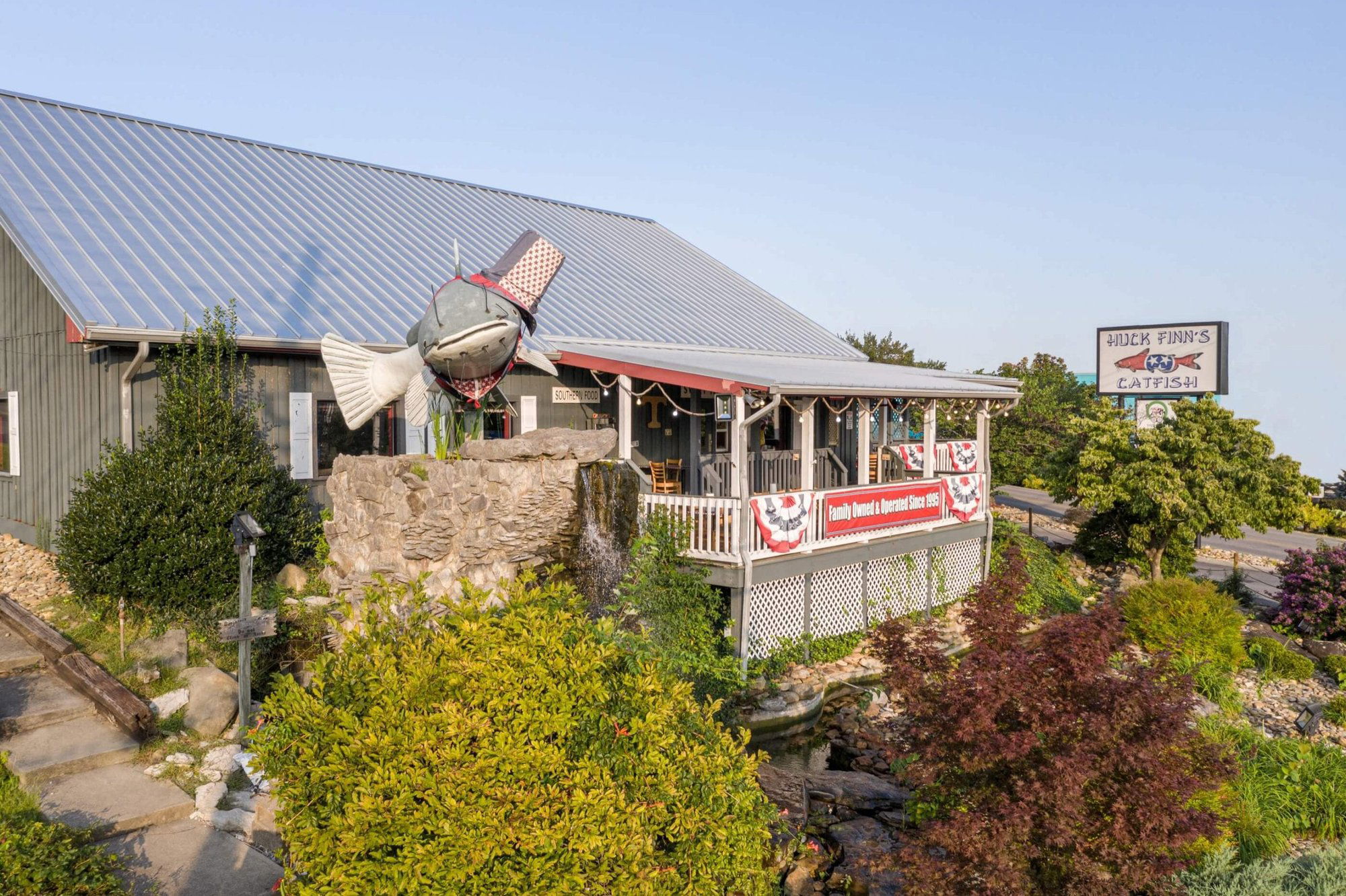
About Huck Finn's Catfish
Huck Finn's Catfish sits on Pigeon Forge's main Parkway strip, representing the regional tradition of Southern fried catfish that has anchored Smoky Mountain dining for generations. The restaurant draws visitors and locals alike into a meal format rooted in Appalachian riverside cooking — straightforward, generous, and built around fish as the centerpiece. For travelers moving through Pigeon Forge, it functions as one of the more direct entry points into Tennessee's freshwater fish culture.
Where the Smokies Meet the Skillet
The Parkway through Pigeon Forge is a corridor of competing visual noise — theaters, pancake houses, go-kart tracks, and souvenir barns stacked end to end for miles. Within that stretch, certain restaurants anchor themselves not through spectacle but through specificity: they serve one thing, they've always served it, and the surrounding crowd knows exactly why they're there. Huck Finn's Catfish, sitting at 3330 Parkway, operates inside that logic. The name itself signals the dining ritual before you've touched a menu: this is a catfish restaurant in the tradition of the American South, where the fish arrives fried and the meal is structured around the rhythm of the table rather than the ambition of the kitchen.
That ritual matters more in Tennessee than in most states. Freshwater fish — particularly catfish, crappie, and bass , have defined inland Southern dining for well over a century. Unlike the haute seafood counter format you'd find at Le Bernardin in New York City or the hyper-precise sourcing programs at Providence in Los Angeles, the Southern catfish tradition operates on a different register entirely: communal, unpretentious, and structured around the expectation that the fish will be properly seasoned, properly fried, and served hot. The cultural weight of that expectation is real.
The Ritual of the Southern Fish Supper
Dining at a catfish house follows a pacing that fine-dining tasting menus don't replicate and don't try to. The meal opens with sides , hushpuppies, coleslaw, and beans are the typical Southern bracket , and the catfish arrives in quantity rather than in architectural presentation. The custom is to eat while it's hot, to pass dishes around the table, and to order more when the basket empties. There is no tasting progression in the European sense, no sommelier-paced reveal. The ritual is about abundance and directness.
This positions Huck Finn's Catfish in a category that sits entirely apart from the format-driven American dining experiments that have shaped the national conversation over the past two decades. Restaurants like Alinea in Chicago or Lazy Bear in San Francisco have pushed the American meal into self-conscious theatrical territory, where the format is as deliberate as the food. The Southern fish supper is the photographic negative of that approach: format is inherited, not invented, and deviation from it would register as a failure of understanding rather than creative ambition.
In Pigeon Forge specifically, where tourism volume peaks hard in summer and again in fall foliage season, restaurants in the catfish-and-comfort-food tier tend to move quickly and serve large groups. The Parkway environment is not conducive to slow, reflective meals. That cultural tempo is part of what shapes the experience here , the dining ritual is compressed into something efficient and warm rather than leisurely and contemplative.
Catfish in Its American Context
Southern fried catfish is a dish with a documented history stretching back through the antebellum South and into Indigenous foodways along the Mississippi and Tennessee river systems. The preparation that became standard , a cornmeal-based coating, deep-fried in oil, served with acidic accompaniments like pickles or slaw to cut the fat , reflects generations of practical Southern cooking logic. The fish is forgiving, available, affordable, and receptive to seasoning in ways that more delicate species are not.
Tennessee sits in the heart of that tradition. The state's river systems have supplied catfish to local tables for generations, and the restaurants that built their identity around the dish carry a cultural legitimacy that a more varied menu cannot replicate. Compare that specificity to the broader Southern and American programs at Calhoun's Pigeon Forge or the New American format at Local Goat New American Restaurant, both of which cover more ground but operate with less category focus. Huck Finn's occupies the narrower end of the Pigeon Forge dining spectrum , a deliberate choice that reflects the original catfish-house model rather than a diversified tourist menu.
For travelers who have spent time at precision-driven American restaurants , the farm-to-table architecture of Blue Hill at Stone Barns in Tarrytown or the wine-country formalism of Single Thread Farm in Healdsburg , the catfish house format requires a deliberate recalibration of expectations. The gap is not a quality gap; it is a category gap. Applying fine-dining metrics to a Southern fish supper misreads what the meal is trying to do.
Pigeon Forge's Dining Character and Where Huck Finn's Fits
Pigeon Forge's restaurant scene divides roughly between tourist-volume operations serving broad, familiar American menus, and the handful of more focused venues that have carved a clearer identity. On the seafood and fish side, Harpoon Harry's Crab House occupies the coastal shellfish tier, while Azul Cantina and Song and Hearth: A Southern Eatery pull in different directions entirely. Huck Finn's Catfish is one of the few restaurants in town whose identity is anchored in the inland freshwater tradition specific to this part of Tennessee.
That positioning matters for visitors trying to understand what the Smokies dining scene actually reflects about regional culture, as opposed to what it has imported for tourist convenience. The Parkway has no shortage of the latter , chain concepts, broad-menu family restaurants, and novelty dining formats designed to compete for attention alongside Dollywood and the mountain coasters. Restaurants that hold to a regional identity operate against that current, and the catfish-house model is one of the more durable forms that identity takes in this corridor.
For a fuller map of where Huck Finn's Catfish sits within the broader Pigeon Forge dining context, the full Pigeon Forge restaurants guide covers the competitive range across price tiers and cuisine formats.
Planning Your Visit
Huck Finn's Catfish sits at 3330 Parkway, which places it squarely within the main tourist corridor and accessible by car without any particular difficulty. The Parkway itself slows significantly during peak summer weekends and during fall foliage season in October, when the Smokies draw substantial traffic from across the Southeast. Visiting midweek or arriving at off-peak hours within the meal window reduces the friction of the surrounding area considerably. For a restaurant operating in the catfish-house tradition, the meal itself is structured to move at a reasonable pace , this is not a category where long waits at the table are built into the format. Families and larger groups are the typical composition at this type of venue, and the format accommodates that without difficulty. No booking details are available in the current record; arriving with some flexibility in timing is the pragmatic approach given the Parkway's variable traffic patterns.
Frequently Asked Questions
What dish is Huck Finn's Catfish famous for?
The name is the answer: fried catfish is the defining dish, prepared in the Southern tradition with a cornmeal coating that has been the regional standard for generations. Tennessee's inland freshwater fish culture makes catfish the default centerpiece rather than a secondary menu item, and the restaurant's identity is built specifically around that tradition rather than a broader comfort-food program. Venues across the Pigeon Forge Parkway cover a wide range of American cuisines, but the catfish-house format is a more specific regional category that Huck Finn's occupies directly.
How hard is it to get a table at Huck Finn's Catfish?
Catfish-house dining in the Southern tradition is not a reservation-driven format in the way that tasting-menu restaurants like The French Laundry in Napa or Atomix in New York City operate. The practical challenge at Huck Finn's is less about securing a booking and more about managing the Parkway's seasonal traffic, which peaks hard in summer and during October's fall foliage period. Arriving outside peak meal hours on a weekday reduces wait time at the most practical level. No formal booking infrastructure is confirmed in available data, so walk-in readiness is the sensible approach.
Is Huck Finn's Catfish suitable for large groups visiting Pigeon Forge?
The catfish-house format is historically a group and family dining tradition , communal serving, shared sides, and a meal structure that doesn't depend on synchronized tasting courses the way restaurants like The Inn at Little Washington or Addison in San Diego do. Pigeon Forge as a destination draws heavily family and multi-generational visitor groups, and a restaurant anchored in the Southern fish-supper tradition is structurally well-suited to that composition. Groups should account for the Parkway's seasonal congestion when timing their arrival, particularly on summer weekends and during the October peak.
Related editorial
- Asia's 50 Best Restaurants 2026: The Chairman and Wing Go 1-2 from the Same BuildingThe Chairman takes No. 1 and Wing climbs to No. 2 at Asia's 50 Best Restaurants 2026. Both operate from the same Hong Kong building. Here's what it means.
- Four Seasons Yachts Debut: 95 Suites, 11 Restaurants, and a March 2026 Maiden VoyageFour Seasons I launches March 20, 2026, with 95 suites, a one-to-one staff ratio, and 11 onboard restaurants. Worth tracking if you want hotel-grade service at sea.
- LA Michelin Guide 2026: Seven New Restaurants from Tlayudas to Uzbek DumplingsMichelin's March 2026 California Guide update adds six LA restaurants and one Montecito newcomer, spanning Oaxacan tlayudas, Uzbek manti, and Korean-Italian pasta.
Save or rate Huck Finn's Catfish on Pearl
Keep this venue in your Pearl passport, rate it after you visit, and track it alongside every other place you collect.