
Restaurant in Zell am Ziller, Austria
HeLeni
100ptsTyrolean Altitude Cooking
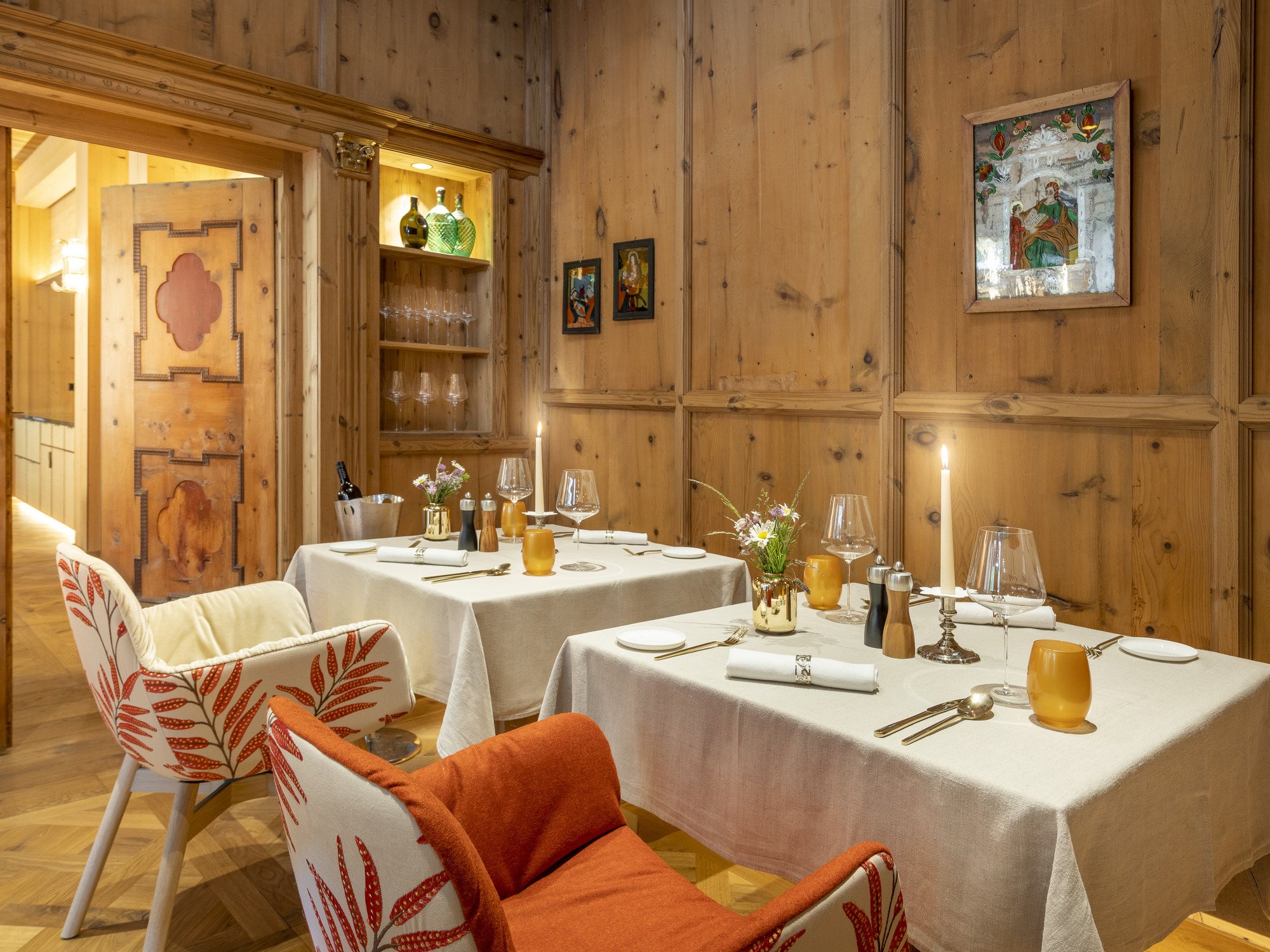
About HeLeni
Where the Zillertal Valley Sets the Table The road into Zell am Ziller follows the river through a valley that narrows and deepens as the Tyrolean Alps press in from both sides. By the time you reach Rohrerstraße, the mountains are close enough...
Where the Zillertal Valley Sets the Table
The road into Zell am Ziller follows the river through a valley that narrows and deepens as the Tyrolean Alps press in from both sides. By the time you reach Rohrerstraße, the mountains are close enough that the afternoon light cuts out early, leaving the village in a particular Alpine dusk that belongs only to this corridor of the eastern Tirol. It is the kind of setting that imposes a logic on how and what you eat: proximity, season, and altitude dictate the menu more reliably than any kitchen philosophy could.
HeLeni operates inside that logic. The address — Rohrerstraße 5, 6280 Zell am Ziller — places it within a small town that sits at roughly 580 metres elevation, surrounded by high pasture, dairy farms, and the forested slopes of the Zillertal Alps. In this part of Austria, the ingredients that reach a kitchen travel short distances vertically as much as horizontally: cattle graze above the treeline in summer and descend in autumn, the milk changes character with the season, and wild herbs grow in elevations that shift their flavour profile week by week.
The Ingredient Geography of the Zillertal
Austrian alpine cooking has always been defined by what survives at altitude. Across the broader region, the restaurants that have built lasting reputations , from Döllerer in Golling an der Salzach to Kräuterreich by Vitus Winkler in Sankt Veit im Pongau , have drawn their distinctiveness not from imported luxury produce but from an almost forensic attention to what their specific geography produces. The Zillertal sits in that same tradition: a valley system with its own microclimate, its own grazing patterns, and its own seasonal rhythm.
What this means in practice is that kitchens in Zell am Ziller are working with ingredients that carry genuine provenance rather than a regional marketing label. Alpine dairy at this elevation has a measurable fat and protein composition that changes between June, when the herds move up, and October, when they come down. Wild plants , sorrel, gentian, alpine clover , grow in the meadows between Zell and the higher reaches of the valley and have been used in Tyrolean cooking for centuries. For a restaurant positioned on this supply chain, the season is the menu: what is available, at what point in its annual cycle, shapes what is served.
This approach aligns HeLeni with a generation of Austrian restaurants that have moved away from the heavy, cream-and-breadcrumb register of mid-century alpine cooking toward something lighter and more ingredient-specific. That shift is visible across the country's serious tables: Steirereck im Stadtpark in Vienna has built a reputation on Austrian ingredients treated with technical precision, while Obauer in Werfen has spent decades demonstrating what Salzburg-region produce can sustain at the highest level. In Tirol specifically, Gourmetrestaurant Tannenhof in Sankt Anton am Arlberg and Griggeler Stuba in Lech represent the upper register of what alpine ingredient sourcing can produce when kitchen technique is applied seriously.
Zell am Ziller at the Table
The Zillertal valley draws significant visitor numbers through its ski season and summer hiking calendar, which creates a particular commercial pressure on local restaurants. Many kitchens in ski-resort towns default to crowd-pleasing formats: large portions, short menus, and a focus on throughput. The restaurants that resist that pressure tend to do so by anchoring their identity to something the volume operators cannot replicate , in this case, a genuine connection to local supply and a kitchen discipline that scales with the seasons rather than the ski lift queues.
Within Zell am Ziller's dining options, HeLeni occupies a position alongside DieMarie and Wilde Kräuterküche as part of a small group of addresses worth planning a meal around rather than simply happening upon. For a broader picture of what the town's dining offers across price points and formats, our full Zell am Ziller restaurants guide maps the options in detail.
The wider Austrian alpine dining circuit , which also includes Schwarzer Adler in Hall in Tirol, Stüva in Ischgl, and Restaurant 141 by Joachim Jaud in Mieming , shows how consistently the leading Tyrolean tables tie their identity to geography. That pattern holds at HeLeni's address and elevation.
Planning Your Visit
Zell am Ziller is accessible by train from Innsbruck via the Zillertal Railway, a regional line that connects the valley towns and runs on a seasonal schedule aligned with the tourist calendar. The drive from Innsbruck takes approximately 45 minutes under normal conditions; from Salzburg, allow around two hours. The valley's peak periods , Christmas through March for ski season, July and August for summer hiking , bring the highest visitor volume, which affects both availability and the overall pace of the town. Shoulder seasons, particularly May-June and September-October, offer the valley at a quieter register and often correspond to the most interesting points in the local ingredient calendar, when summer alpine produce is either just arriving or reaching its last weeks.
For restaurants of this character across Austria and beyond , from Taubenkobel in Schützen am Gebirge to Landhaus Bacher in Mautern an der Donau and Ois in Neufelden , advance planning pays. The same is true at destination tables far outside Austria: Ikarus in Salzburg books weeks ahead during peak season, as do internationally recognised addresses like Le Bernardin in New York City and Atomix in New York City. For HeLeni, contacting the restaurant directly with lead time , particularly during ski season and the summer high weeks , is the advisable approach.
Frequently Asked Questions
What's the leading thing to order at HeLeni?
Given the restaurant's position in the Zillertal and the broader Tyrolean tradition of alpine ingredient sourcing, the most considered approach is to follow what the kitchen is drawing on seasonally. In a valley at this elevation, alpine dairy, locally grazed meat, and foraged mountain herbs carry the strongest provenance signal. Ask what has arrived most recently from the surrounding farms and meadows , that question tends to unlock a kitchen's real agenda better than scanning a fixed menu.
How far ahead should I plan for HeLeni?
Zell am Ziller's visitor calendar is heavily front-loaded toward ski season (December through March) and the summer hiking peak (July and August). If your visit falls in either of those windows, treat HeLeni as a reservation rather than a walk-in and contact the restaurant at least two to three weeks in advance. Shoulder season visits in May, June, September, or October offer more flexibility, but the restaurant's positioning in a small town means capacity is finite regardless of the time of year.
What's the defining dish or idea at HeLeni?
The defining idea, which the address and setting make concrete, is that alpine geography is the kitchen's primary collaborator. The Zillertal produces high-pasture dairy, seasonal game, and wild plants that change character across the year. A kitchen working with that supply chain is not choosing from a universal ingredient list , it is working within a specific ecological calendar. That constraint, for kitchens that take it seriously, is what produces a sense of place on the plate rather than a regional theme applied to imported produce.
Is HeLeni appropriate for a special occasion dinner in the Zillertal?
Among the dining addresses in Zell am Ziller, HeLeni at Rohrerstraße 5 occupies a position suited to a deliberate, sit-down meal rather than a casual stop. The valley's broader culinary character, shaped by alpine tradition and serious local sourcing, makes it a reasonable anchor for an evening built around the meal itself. For visitors already exploring Tyrolean alpine dining , whether based in Zell or moving through the valley , it represents the kind of address that rewards arriving with time and appetite rather than a tight schedule.
Related editorial
- Best Fine Dining Restaurants in ParisFrom three-Michelin-star icons to the next generation of Parisian chefs pushing boundaries, these are the restaurants that define fine dining in the world's culinary capital.
- Best Luxury Hotels in RomeFrom rooftop terraces overlooking ancient ruins to Michelin-starred hotel dining, these are the luxury hotels that make Rome unforgettable.
- Best Cocktail Bars in KyotoFrom sleek lounges to hidden speakeasies, Kyoto's cocktail scene blends Japanese precision with global influence in ways you won't find anywhere else.
Save or rate HeLeni on Pearl
Keep this venue in your Pearl passport, rate it after you visit, and track it alongside every other place you collect.