
Restaurant in Cuzco, Peru
Hanz Gastronomique
100ptsAndean Altitude Gastronomy
About Hanz Gastronomique
Dining on the Plaza: What a Gastronomique Address Signals in Cusco Portal de Carnes 216 is not a side-street address. It sits on the Plaza de Armas, the colonial centrepiece of Cusco, where the stone arcades that once framed Inca ceremony now...
Dining on the Plaza: What a Gastronomique Address Signals in Cusco
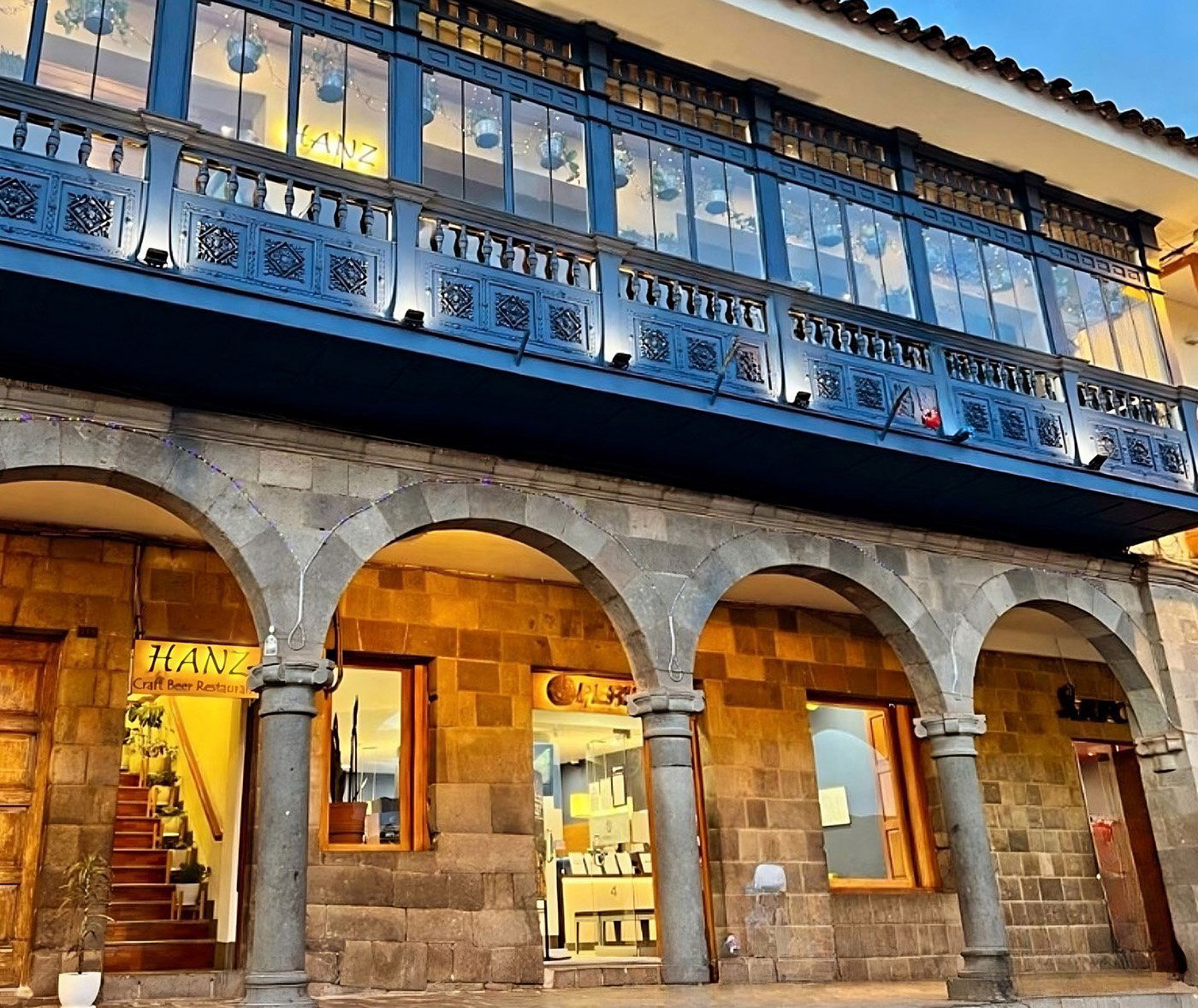
Portal de Carnes 216 is not a side-street address. It sits on the Plaza de Armas, the colonial centrepiece of Cusco, where the stone arcades that once framed Inca ceremony now shelter restaurants at varying price points and ambitions. In most South American cities, a plaza-facing address correlates with tourist volume over culinary intent. Cusco has complicated that assumption. A cluster of restaurants along the portal have pushed toward more considered cooking, and Hanz Gastronomique occupies one of those covered archways, positioning itself in the upper tier of what is, by any measure, a competitive dining strip.
The physical context matters here. Arriving through the arcade, you move from the altitude-thinned air and the constant low hum of the square into an interior that carries the architectural weight of a colonial building: thick walls, proportions that predate the logic of modern construction, light that arrives at angles that shift through the day. At 3,400 metres above sea level, Cusco imposes its own pacing on visitors, and the better restaurants along the plaza have learned to work with that rhythm rather than against it. A meal here is rarely rushed, partly because the altitude discourages it.
The Ritual of Eating at Altitude
The dining customs in Cusco's upper-tier restaurants have developed their own cadence, shaped by the city's dual identity as a highland Andean centre and a high-traffic international destination. Menus in this tier tend to open with lighter, broth-based preparations, a practical concession to acclimatisation, before moving through heavier proteins and starches. The native potato, in its dozens of highland varieties, appears at multiple points across a meal rather than as a single side. Quinoa and chuño, the freeze-dried potato that has been an Andean staple for centuries, arrive in preparations that range from rustic to technically considered.
What distinguishes a gastronomique approach within this tradition is the pacing of the service rather than a departure from local ingredients. Where canteens and market stalls operate at their own compressed speed, a restaurant with this kind of positioning slows the sequence: courses arrive with deliberate spacing, and the kitchen's relationship to Andean produce is presented as something to be read course by course rather than absorbed all at once. This is the dining ritual that Cusco's more ambitious restaurants, from Chicha Cusco to Campo Cocina Andina, have developed alongside the broader Peruvian fine-dining movement that Central Restaurante in Lima placed on the global map.
Where Hanz Gastronomique Sits in the Cusco Dining Tier
Cusco's restaurant market has stratified clearly over the past decade. At the base, there is a large volume of tourist-facing menus built around familiar versions of lomo saltado and ceviche. Above that sits a middle tier of regionally informed restaurants, including Intillay Peruvian Fusion Food and KUSHKA Restaurant, where kitchen ambition is evident but the format remains accessible. The upper tier, which is where the gastronomique designation places Hanz, is smaller and carries the expectation of a more composed, multi-course structure that treats Andean ingredients with the same seriousness that a European tasting menu applies to its regional larder.
That comparison is useful because it frames what a visitor is actually paying for. Elsewhere in Peru, Mil Centro in Moray, the satellite project of the Lima restaurant world, makes the connection between altitude, terroir, and ingredient identity explicit. In Cusco itself, the challenge for any restaurant operating at this level is making that same argument convincingly without the same research infrastructure. The word gastronomique in the name signals formal ambition: a French-derived term applied to Andean cooking carries an implicit promise that the kitchen is operating with technique alongside tradition.
Peer restaurants in the city that occupy a similar position, including Casa Cusqueña and LIMO Cocina Peruana & Pisco Bar in Cusco, have each found different answers to that question. LIMO leans into the pisco bar format, making the drinks programme as central as the food. Casa Cusqueña works within a traditional Cusqueño register. Hanz, by its name and address, signals a different orientation: more European in its framing, more formal in its structure.
The Andean Larder and What It Demands of a Kitchen
Any restaurant making a serious claim on Andean cooking in Cusco is working with an ingredient set that rewards restraint. The highland varieties of potato, the dried grains, the river trout from Andean lakes, the slow-cooked meats that define regional celebratory cooking: these are not ingredients that respond well to over-elaboration. The most considered kitchens in this tradition, from the Sacred Valley to Arequipa, where La Nueva Palomino in Yanahuara District has built a reputation on exactly this kind of restraint, understand that technique should clarify rather than complicate what the ingredient already offers.
A gastronomique format applied to this larder works leading when the pacing of the meal allows each ingredient to be understood in context. This is not the same model as a European tasting menu built around small bites and rapid succession. At altitude, in a city where the visitor's palate and body are already adjusting, a slower build across fewer, more composed courses tends to serve both the cuisine and the diner better. Restaurants further afield in Peru that have found this balance, like Mapacho Craft Beer Restaurant in Urubamba at a more casual register, demonstrate that regional identity reads most clearly when it is not diluted by excess.
Planning a Meal at Hanz Gastronomique
The Plaza de Armas address makes Hanz direct to reach from most of Cusco's central accommodation. For visitors arriving from outside the immediate historic centre, the square is the city's primary orientation point. The practical question at this level of restaurant, in a city where table availability at serious kitchens can be constrained on busy visitor days, is whether to book ahead. Given the plaza location and the positioning of the name, arriving without a reservation during peak Cusco season (roughly May through October, when the dry season draws the largest number of visitors to Machu Picchu itineraries) carries more risk than at lower-traffic establishments. Confirming directly with the restaurant before arrival is the cleaner approach.
For visitors calibrating Cusco dining within a wider Peru itinerary, the city's upper-tier restaurants offer a different argument from Lima. Where Insumo Rooftop in Miraflores or the tasting rooms of coastal Lima represent one version of Peruvian fine dining, the highland register is a separate conversation about altitude, Inca agricultural heritage, and ingredients that have no equivalent at sea level. Our full Cuzco restaurants guide maps this range in more detail.
Frequently Asked Questions
- What dish is Hanz Gastronomique famous for?
- The restaurant's name signals a formal, technique-led approach to Andean cooking, which in Cusco typically means Andean staples, native potato varieties, highland grains, and regional proteins, prepared with European structural discipline. Without confirmed dish-level data, specific signatures cannot be attributed, but the gastronomique framing points toward composed, multi-element plates rather than single-ingredient simplicity. Contact the restaurant directly for current menu specifics.
- Do I need a reservation for Hanz Gastronomique?
- At a plaza-facing restaurant with a gastronomique positioning in Cusco, booking ahead is the lower-risk approach, particularly during the May-to-October dry season when visitor volume across the city peaks. A restaurant at this level operating on the Plaza de Armas will see demand from both international visitors and local diners. Securing a table in advance avoids the uncertainty of walk-in availability on busy evenings.
- What is the defining dish or idea at Hanz Gastronomique?
- The defining idea, as communicated by the name and address, is a formal Andean-European dialogue: Cusco's highland larder, including its native potatoes, quinoa, and regional proteins, interpreted with the pacing and structure of continental fine dining. This is the same tension that drives the broader Peruvian gastronomic movement, though in Cusco it carries an additional layer of altitude and Inca culinary heritage that Lima-based restaurants like Central Restaurante engage with from a different geographic vantage point.
- Can Hanz Gastronomique handle vegetarian requests?
- Cusco's Andean cooking tradition is substantially plant-based at its root: native potatoes, quinoa, chuño, and highland vegetables have been dietary staples at altitude for centuries. Most serious restaurants in the city accommodate vegetarian preferences as a function of that tradition rather than as a special concession. For specific dietary requirements, contacting the restaurant directly before arrival is advisable, as menu composition at this level can shift seasonally.
- Is Hanz Gastronomique overpriced or worth every penny?
- Value at a gastronomique-positioned restaurant in Cusco should be assessed against what the format is actually offering: composed Andean cooking in a formal setting on the Plaza de Armas, not a market lunch or a casual tourist menu. Compared to peer restaurants in Lima such as Central Restaurante, or internationally to the tasting-menu tier at places like Le Bernardin in New York City or Atomix in New York City, the Cusco upper tier remains considerably more accessible. The relevant comparison is the quality of the kitchen's argument about Andean ingredients relative to what you pay, not an abstract global benchmark.
- How does Hanz Gastronomique fit into a broader Sacred Valley and highlands dining itinerary?
- For visitors structuring a highland Peru dining itinerary, Hanz Gastronomique functions as the formal, urban counterpart to more site-specific experiences further along the valley, such as Mil Centro in Moray or a casual stop at Inti House in Aguas Calientes. A meal in Cusco at this level, before or after time in the Sacred Valley, anchors the gastronomic argument about Andean ingredients in an urban context where technique and tradition are in explicit dialogue. The plaza address also makes it a practical starting or closing point for a day in the historic centre.
Related editorial
- How travel will be redefined by 2040By 2040, Travel Won't Be an Industry — It Will Be Infrastructure My thesis is simple and, I suspect, unfashionable: by 2040 travel will stop behaving like a discretionary consumer category and start
- How travel will be redefined by 2040By 2040, Travel Won't Be a Trip — It Will Be a Stack My thesis is simple and, I think, uncomfortable: by 2040, "travel" will no longer describe a discrete journey from point A to point B.
- How travel will be redefined by 2040The Death of Tourism as We Know It: Why 2040 Will Demand a Completely Different Kind of Traveler Let me be direct: the version of travel most of us grew up dreaming about — cheap flights, crowded lan
Save or rate Hanz Gastronomique on Pearl
Keep this venue in your Pearl passport, rate it after you visit, and track it alongside every other place you collect.