
Restaurant in London, United Kingdom
Hans' Bar & Grill
125ptsTerroir-Driven Seafood Counter

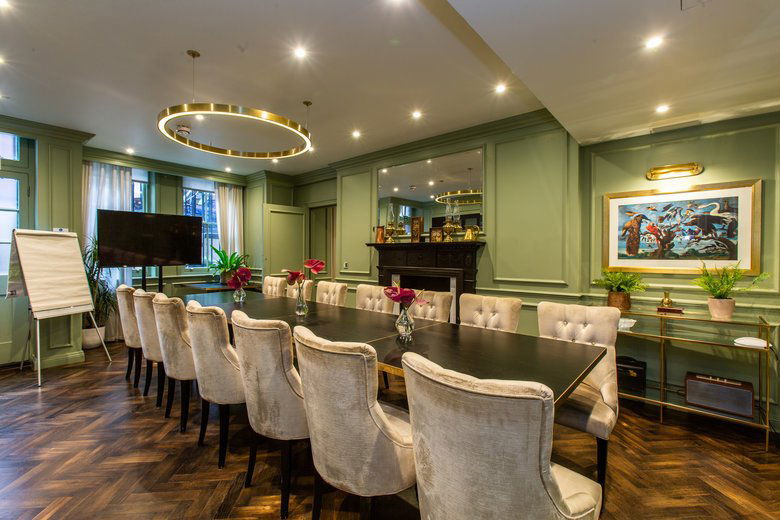
About Hans' Bar & Grill
On a quiet Chelsea side street, Hans' Bar & Grill brings British seafood into a neighbourhood better known for its proximity to Sloane Square's more formal dining rooms. Under chef Rowen Babe, the kitchen has earned recognition for expressing the terroir of British waters, placing this address within a smaller cohort of London restaurants treating domestic seafood as seriously as the continent treats its own.
Chelsea's Seafood Character, and Where Hans' Fits
Pavilion Road SW1X occupies a peculiar position in London's dining geography. The street sits close enough to Sloane Square to attract a well-heeled Chelsea crowd, yet its scale keeps it removed from the more theatrical dining rooms that line the King's Road or populate Mayfair a short distance north. The buildings are low, the pace slower than the main thoroughfare, and the restaurant population here tends toward the convivial rather than the ceremonial. Within that context, a serious seafood operation with a declared commitment to terroir expression reads as a deliberate positioning choice rather than a function of real estate availability.
British seafood restaurants occupy a specific tier within London's broader dining structure. The city has never lacked for fish and shellfish on menus, but kitchens that treat British coastal waters as a defined provenance argument — that frame Cornish day boats, Scottish langoustine, or Channel bivalves as the point of the plate rather than a sourcing footnote — remain a smaller, more considered cohort. Hans' Bar & Grill, with its kitchen under chef Rowen Babe and its EP Club recognition for Expression of the Terroir, plants itself in that group.
The Case for British Terroir in Seafood
The concept of terroir has moved well beyond wine. Cheese, vegetables, and increasingly seafood have adopted the framework: the idea that where something comes from shapes what it tastes like in ways that cooking should amplify rather than obscure. For British seafood, the argument is particularly persuasive. The waters around the British Isles , the cold, nutrient-dense currents of the North Sea, the Atlantic-facing Cornish coastline, the tidal estuaries of Essex and Kent , produce shellfish and finfish with flavour profiles distinct from their Mediterranean or Nordic counterparts. A Carlingford oyster carries different mineral registers than a Gillardeau. A Cornish crab has different sweetness ratios than a Breton one. Kitchens that understand these distinctions work differently than those that treat provenance as a box to tick on a menu header.
This is the tradition that EP Club's Expression of the Terroir recognition identifies. The award signals that the cooking is doing something demonstrable with its sourcing rather than decorating a menu with coastal postcodes. Within the London seafood scene, that places Hans' in a specific conversation: not the white-tablecloth French fish institution, of which London has several, but a more grounded, British-first approach where the provenance of the ingredient carries more narrative weight than the technique applied to it.
For comparison, London's Michelin-holding rooms that treat British produce as a central argument , CORE by Clare Smyth, or Dinner by Heston Blumenthal , do so within tasting menu formats and at price points that place them in a different category of evening entirely. The Ledbury, Restaurant Gordon Ramsay, and Sketch, The Lecture Room and Library each operate at three Michelin stars with corresponding formality. Hans' bar-and-grill format signals something more accessible in mode, where the cooking seriousness is not signalled by ceremony.
The Bar-and-Grill Format as a Seafood Delivery Mechanism
The bar-and-grill format has a long track record with seafood precisely because it permits the kind of directness that fish cooking rewards. A whole grilled turbot, a cold plateau of shellfish, a simply dressed crab on toast: these dishes lose nothing from being served without elaborate plating and gain credibility from an environment that doesn't ask them to perform beyond their own quality. The format also supports the kind of ordering behaviour that British seafood suits , small shared plates alongside a main, an oyster or two at the bar before sitting, a glass of English sparkling wine or a bone-dry Muscadet alongside whatever the kitchen has sourced that week.
The bar component matters too. London's better seafood bars have increasingly built their reputations on standing-room or bar-counter shellfish service, treating a half-dozen oysters and a glass of wine as a complete and sufficient occasion rather than an amuse before a longer meal. Whether Hans' operates in this mode is worth clarifying at time of booking, but the format name suggests the option exists.
Internationally, the model of a focused, quality-led seafood grill has strong comparators. Lord's in New York City takes a similar British-seafood-in-a-grill-room approach, while Le Bernardin, also in New York, represents the formal French fish institution end of the same spectrum. The contrast clarifies what a bar-and-grill format is not trying to be.
How Hans' Sits Within British Regional Seafood
The broader context for serious British seafood cooking stretches well beyond London. Hide and Fox in Saltwood, Kent, operates with Kentish coastal sourcing as a defining principle. Moor Hall in Aughton and L'Enclume in Cartmel draw from northern English waters and inland produce with similar terroir discipline. The Fat Duck in Bray and Hand and Flowers in Marlow represent the Thames Valley end of serious British kitchens, while Gidleigh Park in Chagford sits deep in Dartmoor with Devonian coastal access. Each operates in a different price tier and format, but all share a commitment to the argument that British produce, handled with understanding and restraint, does not require continental framing to justify itself.
Hans' participation in that argument, expressed through a Chelsea address and a bar-and-grill format, makes it one of London's more accessible entry points into the conversation. A Google rating of 3.9 across 329 reviews suggests the room is genuinely used rather than reserved for occasions , the kind of score that comes from a regular neighbourhood audience rather than a destination-dining crowd marking special events.
Planning Your Visit
Hans' Bar & Grill is located at 164 Pavilion Road, London SW1X 0AW, in Chelsea. Chef Rowen Babe leads the kitchen. The restaurant holds EP Club recognition for Expression of the Terroir. Pavilion Road is a short walk from Sloane Square station (District and Circle lines). For current opening hours, booking availability, and menu details, contact the restaurant directly or check their current listings. The address's residential character means parking is limited; public transport or a short taxi from the station is the practical approach.
For a fuller picture of London dining, see our full London restaurants guide. For hotels, bars, wineries, and experiences in the city, visit our London hotels guide, London bars guide, London wineries guide, and London experiences guide.
Quick reference: 164 Pavilion Road, London SW1X 0AW. Chef: Rowen Babe. Cuisine: British Seafood. EP Club award: Expression of the Terroir. Nearest tube: Sloane Square.
Frequently Asked Questions
- What's the leading thing to order at Hans' Bar & Grill?
- The kitchen's EP Club recognition for Expression of the Terroir points toward dishes where the sourcing does the clearest work. In a British seafood context, that typically means seasonal shellfish and day-boat fish presented with enough restraint to let the provenance register. On any given visit, the most instructive order is whatever reflects the British coastal catch of the current week: oysters from named beds, crab or lobster in season, or the fish the kitchen has sourced from the nearest relevant coastline. Chef Rowen Babe's approach, as signalled by the award, frames British waters as the argument rather than the background , so the dishes that honour that most directly are the ones worth prioritising.
Recognized By

More restaurants in London
- CORE by Clare SmythClare Smyth's three-Michelin-star Notting Hill restaurant is one of London's most credentialled tables, holding La Liste 98pts, World's 50 Best #97, and a 4.7 Google rating across 1,460 reviews. The à la carte runs £195 per head; the Core Classic tasting menu is £255. Book Thursday or Friday lunch for the best chance of a table — dinner is near-impossible without 6–8 weeks' lead time.
- IkoyiTwo Michelin stars, No. 15 on the World's 50 Best in 2025, and a dinner tasting menu at £350 per head before wine: Ikoyi is one of London's hardest bookings and one of its most credentialed. Jeremy Chan's West African spice-led cooking applied to British organic produce is genuinely unlike anything else in the city. The express lunch at £150 is the entry point if the dinner price is the obstacle.
- KOLKOL ranked #17 on the World's 50 Best Restaurants in 2024 and holds a Michelin star — the most compelling case for a progressive Mexican tasting menu in London. Booking opens two months out and sells out almost immediately, so treat it like a ticket release. If the dining room is full, the downstairs Mezcaleria offers serious agave spirits and kitchen-quality small plates as a genuine alternative.
- The Clove ClubHoused in the former Shoreditch Town Hall, The Clove Club holds two Michelin stars and has appeared in the World's 50 Best Restaurants list consistently since 2016. Isaac McHale's tasting menus draw on prime British ingredients — Orkney scallops, Herdwick lamb, Torbay prawns — handled with technical precision and a looseness that keeps the cooking from feeling ceremonial.
- The LedburyThe Ledbury holds three Michelin stars and the #1 Star Wine List ranking in the UK — making it the strongest combined food-and-wine destination in London at the ££££ tier. At £285 per head for the eight-course evening menu, it rewards occasions where both the kitchen and the cellar need to perform. Book months ahead: availability is near impossible, especially at weekends.
- Hélène Darroze at The ConnaughtThree Michelin stars and a La Liste score of 95 points make Hélène Darroze at The Connaught one of London's clearest cases for fine dining at the top price tier. The tasting menu builds intelligently across courses, the redesigned room is warm rather than stiff, and the service is precise without being suffocating. Book months ahead — midweek lunch is your most realistic entry point.
Related editorial
- Best Fine Dining Restaurants in ParisFrom three-Michelin-star icons to the next generation of Parisian chefs pushing boundaries, these are the restaurants that define fine dining in the world's culinary capital.
- Best Luxury Hotels in RomeFrom rooftop terraces overlooking ancient ruins to Michelin-starred hotel dining, these are the luxury hotels that make Rome unforgettable.
- Best Cocktail Bars in KyotoFrom sleek lounges to hidden speakeasies, Kyoto's cocktail scene blends Japanese precision with global influence in ways you won't find anywhere else.
Save or rate Hans' Bar & Grill on Pearl
Keep this venue in your Pearl passport, rate it after you visit, and track it alongside every other place you collect.