
Restaurant in Tainan, Taiwan
(Gui Tian Hotel) capitalists Japanese garden restaurant
100ptsGarden-Enclosed Japanese Dining
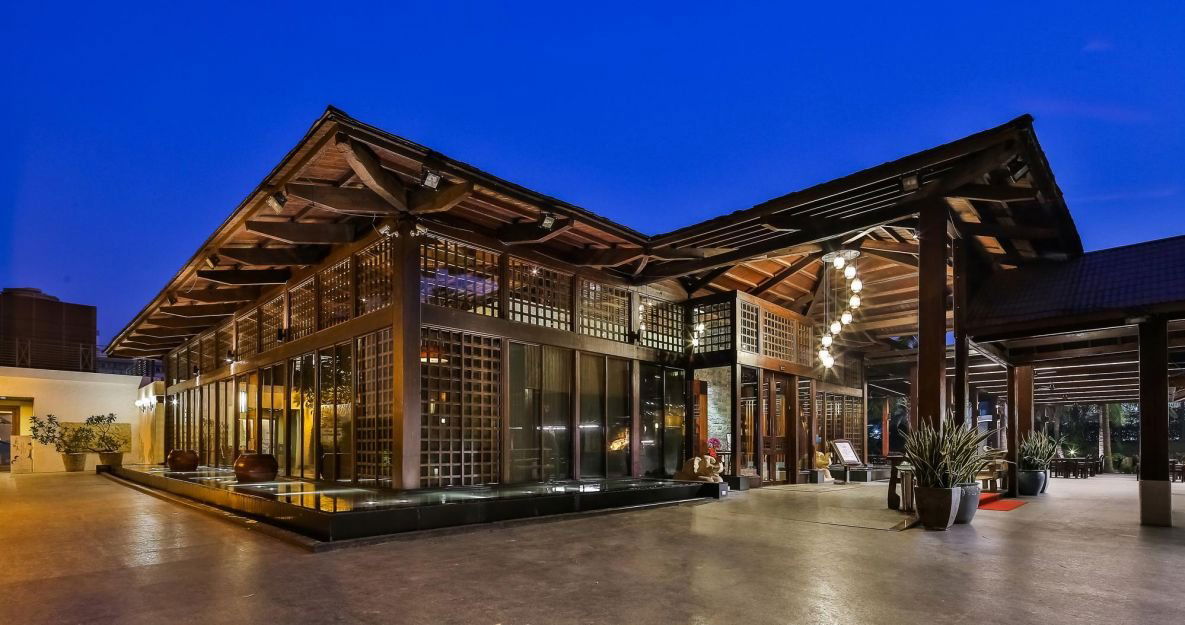
About (Gui Tian Hotel) capitalists Japanese garden restaurant
A Japanese Garden in Yongkang: Where Tainan's Dining Scene Turns Inward Tainan is a city that wears its food culture on the street. The most discussed meals happen at pavement stools, inside narrow storefronts, or under fluorescent lights at...
A Japanese Garden in Yongkang: Where Tainan's Dining Scene Turns Inward
Tainan is a city that wears its food culture on the street. The most discussed meals happen at pavement stools, inside narrow storefronts, or under fluorescent lights at stalls that have operated for generations. That context makes the Japanese garden restaurant at Gui Tian Hotel in Yongkang District all the more worth understanding: it represents a deliberate counterpoint to that tradition, a format where the physical environment is designed to slow the dining experience down rather than accelerate it. The address on Yong'an 1st Street places it in Yongkang District, a quieter residential and commercial corridor south of Tainan's historic core, where the density of heritage snack culture is lower and the pace shifts accordingly.
Japanese garden-style restaurant settings operate through a specific design grammar: controlled greenery, the presence of water or stone, screened sightlines that create the impression of enclosure even within an open structure, and a suppression of ambient urban noise. When that format is embedded inside a hotel property, as it is here, it tends to attract a different rhythm of diner than the city's small-eats circuit. Guests are often extending a stay rather than making a point visit, which shapes the pace of service and the expectations of the room.
The Sensory Register of a Garden Setting
The appeal of a Japanese garden restaurant lies less in any single design element than in the relationship between elements. Light filtered through canopy, the soft presence of water features, the deliberate use of natural materials: these work together to produce a sensory atmosphere that is distinct from both the casual open-air formats of Tainan's street scene and the closed, climate-controlled rooms of the city's more formal restaurants. Garden settings are inherently transitional spaces, positioned between interior and exterior, between the built and the natural.
In Taiwan's subtropical climate, that positioning carries seasonal weight. The late spring and early autumn periods, when temperatures allow extended time in outdoor or semi-outdoor settings without discomfort, tend to bring garden-format restaurants into sharper focus. Summer heat compresses the window for genuine outdoor dining considerably, while winter in Tainan is mild enough that a garden setting can function comfortably through to the new year period. Diners considering a visit around Taiwan's national holidays or the Lunar New Year season, when Tainan draws significant domestic travel, will find the garden atmosphere particularly in demand.
Japanese Cuisine in Tainan's Broader Dining Context
Japanese influence on Taiwanese cuisine runs deep, a legacy of the colonial period that extended from 1895 to 1945, and Tainan's dining scene reflects that history in various registers. At the street level, that influence appears in flavour sensibilities and certain ingredient traditions. At the restaurant level, Japanese cuisine in Taiwan has split into broadly distinct tiers: budget katsu and ramen operations, mid-range set-menu formats with strong bento traditions, and higher-end omakase and kaiseki-adjacent dining that competes with analogous formats in Taipei and Taichung.
Taiwan's premium Japanese dining scene has received international attention in recent years. logy in Taipei and JL Studio in Taichung represent how Taiwanese chefs have engaged with Japanese technique at the highest tier, while GEN in Kaohsiung demonstrates that premium Japanese formats are not confined to the capital. Tainan's own Japanese restaurant scene has grown more considered in recent years, in part because the city's rising profile as a food destination has attracted more experimental operators. A hotel-based Japanese garden format sits within that broader trend toward experience-led dining, where setting and atmosphere carry part of the value proposition alongside the food itself.
For comparison with other garden-concept restaurant projects in Taiwan, GARDENh in Yonghe District offers a useful reference for how the garden-dining format operates at the premium end of the market in a different regional context.
Tainan's Dining Character and Where This Restaurant Fits
The city's food identity is built around small formats and democratic access. The venues that define Tainan's reputation nationally and internationally are places like A Cun Beef Soup, A Hai Taiwanese Oden, and A Wen Rice Cake, operations where the food is the entire proposition and the environment is secondary by design. A Hsing Congee and A Ming Zhu Xing belong to the same tradition: food-first, setting minimal.
A Japanese garden restaurant in a hotel property occupies a different coordinate entirely. It trades in occasion dining, in a version of the meal where the surroundings are part of what the guest is paying for. That is not a lesser ambition than the street-food tradition, just a different one, aimed at a different decision: the business dinner, the family celebration, the visitor staying in the hotel who wants a composed experience rather than a tour of the city's stalls. Within Tainan's dining options, it represents a distinct tier, comparable in format function to a place like L'herbe at the European Contemporary end of the market, where setting and format coherence are part of the offer.
For visitors building a broader picture of where this restaurant sits relative to the full range of options in the city, our full Tainan restaurants guide maps the scene across price tiers and cuisine types.
Planning a Visit
The restaurant sits within Gui Tian Hotel at No. 99, Yong'an 1st Street in Yongkang District, Tainan. Yongkang is accessible from central Tainan by taxi or rideshare in under twenty minutes depending on traffic, and the district is a practical base for visitors who prefer a quieter setting outside the historic core. Because the restaurant operates within a hotel, it tends to draw both hotel guests and local diners looking for the specific atmosphere a garden-format venue provides. Visitors travelling from other parts of Taiwan, where refined Japanese dining formats like Volcanic Rock in Zhubei City or operations in Taichung such as this Taichung restaurant set the reference point, will find the Tainan offering worth assessing on its own terms. Given the absence of published booking details, contacting the hotel directly is the practical route to reservations. As with most hotel restaurants in this format tier, earlier contact is advisable during holiday periods when Tainan's domestic visitor numbers peak.
Frequently Asked Questions
Is Gui Tian Hotel capitalists Japanese garden restaurant a family-friendly restaurant?
In Tainan, a city where family dining typically happens at casual street-food venues at a fraction of the price, a garden-setting hotel restaurant occupies a more occasion-specific position. Families do use hotel restaurants for milestone meals, but the format and setting here are oriented more toward composed dining than toward the informal energy of a family outing.
What's the overall feel of the restaurant?
If you are coming from Tainan's street-food circuit, the register is entirely different: slower, more enclosed, designed around environment as much as food. If the venue carries recognised awards or accolades, those would signal where it sits in the quality tier; without published award data, the garden-hotel format itself is the primary indicator of the experience's character and price positioning.
What do regulars order at Gui Tian Hotel capitalists Japanese garden restaurant?
Without verified menu data, this cannot be answered specifically. As a Japanese cuisine restaurant in Taiwan's mid-to-premium hotel segment, set-menu formats and seasonal preparations are common structural choices. Consulting the venue directly will give the most accurate current picture of the offering.
Is the restaurant worth visiting if you are already eating your way through Tainan's famous small-eats scene?
The Japanese garden restaurant at Gui Tian Hotel addresses a different need than the street-food and small-eats circuit that defines Tainan's food reputation. Venues like A Cun Beef Soup and A Hai Taiwanese Oden are the essential reference points for what makes Tainan distinct nationally; this restaurant offers a composed, atmosphere-led alternative for one meal in a longer Tainan stay. The two approaches complement rather than compete, and for visitors spending multiple nights in the city, the contrast between them is part of what makes Tainan's dining range worth exploring. No published awards data is available to assess the kitchen's standing within the regional Japanese dining tier.
Related editorial
- Asia's 50 Best Restaurants 2026: The Chairman and Wing Go 1-2 from the Same BuildingThe Chairman takes No. 1 and Wing climbs to No. 2 at Asia's 50 Best Restaurants 2026. Both operate from the same Hong Kong building. Here's what it means.
- Four Seasons Yachts Debut: 95 Suites, 11 Restaurants, and a March 2026 Maiden VoyageFour Seasons I launches March 20, 2026, with 95 suites, a one-to-one staff ratio, and 11 onboard restaurants. Worth tracking if you want hotel-grade service at sea.
- LA Michelin Guide 2026: Seven New Restaurants from Tlayudas to Uzbek DumplingsMichelin's March 2026 California Guide update adds six LA restaurants and one Montecito newcomer, spanning Oaxacan tlayudas, Uzbek manti, and Korean-Italian pasta.
Save or rate (Gui Tian Hotel) capitalists Japanese garden restaurant on Pearl
Keep this venue in your Pearl passport, rate it after you visit, and track it alongside every other place you collect.