
Restaurant in Nagano, Japan
Grill The Butcher Nagano (グリル ザ ブッチャー 長野)
100ptsShinshu Highland Grilling
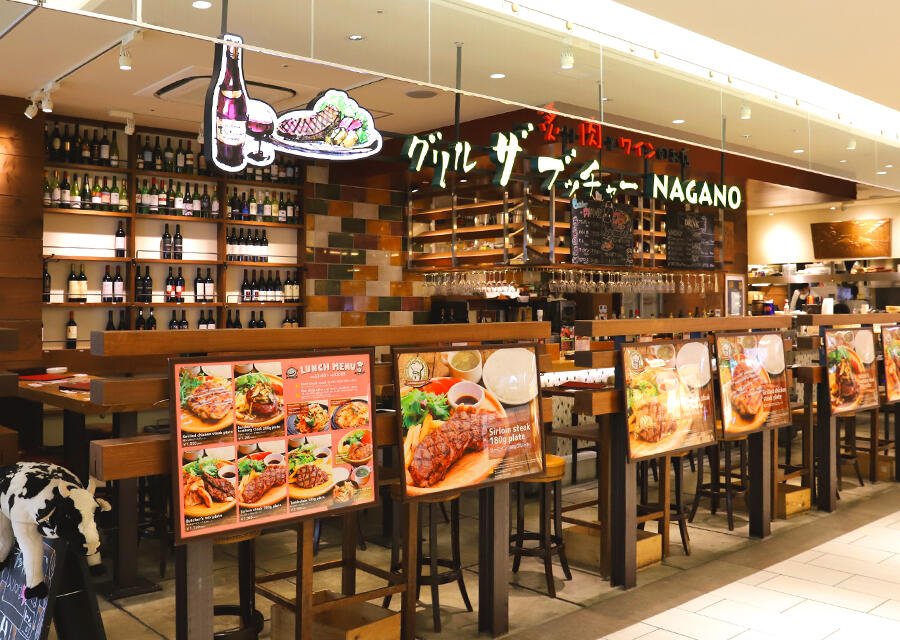
About Grill The Butcher Nagano (グリル ザ ブッチャー 長野)
Located on the third floor of MIDORI Nagano, Grill The Butcher sits within a city that takes its highland agriculture seriously. The restaurant's name signals a direct relationship with meat sourcing, placing it inside Nagano's broader tradition of mountain-raised livestock and precision grilling. For visitors exploring Nagano's dining scene beyond kaiseki, it offers a focused, protein-forward alternative with clear regional roots.
Meat, Mountains, and the Logic of Sourcing in Nagano
Nagano Prefecture has built a credible agricultural identity over decades, and that identity now shapes how the city's restaurants position themselves. The prefecture's altitude, cool summers, and clean water systems have made it a consistent source of quality livestock, including Shinshu beef, Shinshu pork, and locally raised poultry. Restaurants that lean into that supply chain are not simply marketing a regional badge; they are operating within a genuinely distinct product environment compared to lowland counterparts. Grill The Butcher Nagano, on the third floor of the MIDORI Nagano building in the Minami-Chiyoda district, sits inside this tradition by framing the restaurant's identity around the butcher relationship, a positioning that prioritises sourcing transparency over chef-celebrity theatrics.
That framing matters in a city where the dining conversation is often dominated by kaiseki houses and ryokan cuisine. Nagano has strong representation in the washoku tradition through venues like Aoitou, and destination-level resort dining at properties such as Bleston Court Yukawatan, which anchors the high end of the local scene. A grill-focused restaurant built around butcher-direct sourcing occupies a different register: less ceremony, more contact with the product itself.
The Sourcing Argument for Highland Protein
The case for Shinshu beef specifically rests on conditions that are hard to replicate at lower altitudes. Cattle raised in Nagano's mountain pastures develop at a slower pace than those in warmer, lower-lying regions, which affects marbling distribution and fat composition. Shinshu beef carries recognition under Japan's system of branded regional meats, placing it alongside better-known designations such as Wagyu from Kobe or Omi, though it remains far less exported and therefore far less commodified. A restaurant that anchors its identity in the butcher relationship is, by extension, making a claim about cut selection, handling, and minimal processing between farm and flame, which is where the sourcing argument either holds or collapses depending on execution.
Japan's broader grill culture is worth contextualising here. The country's yakiniku tradition is well-documented, but Western-style grilling, where a single cut is presented whole or in large format and cooked to a specified temperature, occupies a distinct and growing niche, particularly in cities with a strong agricultural hinterland. Nagano, with its access to highland livestock and a dining population that has grown more familiar with Western technique through tourism from the 1998 Winter Olympics onward, is a plausible environment for that format to take hold. Grill The Butcher's name suggests alignment with that Western grill tradition rather than the tabletop yakiniku model.
Where It Sits in Nagano's Dining Spread
The MIDORI Nagano building, attached to Nagano Station, is a logical anchor point for visitors arriving by Shinkansen from Tokyo, a journey of roughly 80 minutes on the Hokuriku Shinkansen. The third-floor location places the restaurant within a commercial food and retail environment, which signals a mid-market accessibility rather than the destination-dining positioning of venues that require a separate journey into the countryside or up into resort territory.
That accessibility is not a diminishment. Within Nagano's dining spread, there is a clear need for restaurants that serve the city's working population and transit visitors without requiring the commitment of a kaiseki booking or a resort stay. ca'enne and Fogliolina della Porta Fortuna serve the Italian-leaning segment of that accessible mid-range; Chinese Sai Muen covers the Chinese and Sichuan bracket at a price point of roughly JPY 3,000 to JPY 4,999. A butcher-focused grill occupies a protein-specialist position that none of those venues directly address.
For a broader sense of how Nagano's restaurants compare across cuisine type and price tier, the full Nagano restaurants guide maps the scene in more detail. Nagano does not carry the density of Michelin recognition found in Tokyo or Osaka, where restaurants like HAJIME in Osaka or Harutaka in Tokyo anchor the top tier, but it has a coherent mid-range that rewards methodical exploration. Gion Sasaki in Kyoto and akordu in Nara illustrate how regional Japanese cities outside the major metros have developed serious, award-tracked dining scenes; Nagano is a step behind that trajectory but moving in a comparable direction.
What to Expect, and What to Consider
The available data on Grill The Butcher Nagano is limited to its address and building context; specific menu details, pricing, hours, and booking methods are not confirmed in verified sources at the time of writing. What the name and location do indicate: a grill-format restaurant with a butcher-origin positioning, operating from a station-adjacent commercial building, in a city where highland meat sourcing carries genuine provenance value.
For visitors building a Nagano itinerary, the practical read is direct. The MIDORI Nagano location means it is reachable without additional transport from the Shinkansen platform, which suits the city's increasingly common role as a day-trip or short-stay destination from Tokyo. Travellers spending longer in the prefecture, moving between Nagano city, the Togakushi area, or further into the Japanese Alps, will find it a sensible urban anchor point for a meal that connects to the region's agricultural character without the formality of a kaiseki setting.
Comparable grill-and-meat-focused formats elsewhere in Japan, from Goh in Fukuoka to destination dining in smaller regional cities, increasingly treat the sourcing narrative as a primary differentiator rather than a secondary selling point. That shift reflects a broader change in how Japanese diners and international visitors evaluate a restaurant's claim to regional identity. The butcher relationship, when it is substantive rather than decorative, is now treated as a credential in its own right.
Frequently Asked Questions
What should I eat at Grill The Butcher Nagano?
Specific menu items are not confirmed in available data, so individual dish recommendations cannot be made responsibly. The restaurant's name and positioning suggest that meat cuts, likely from regional Nagano sources including Shinshu beef, form the core of the menu. When visiting, asking staff about the current sourcing provenance is a reasonable way to understand what the kitchen is prioritising in any given season.
How hard is it to get a table at Grill The Butcher Nagano?
Booking difficulty varies significantly by venue type and recognition level. Grill The Butcher Nagano does not carry confirmed award recognition in available records, which typically means demand is more predictable than at Michelin-tracked venues. Its station-adjacent location within MIDORI Nagano suggests it is designed for relatively accessible footfall. For comparison, high-recognition venues in similar regional Japanese cities often require one to two months' advance booking; this restaurant's profile does not suggest that level of constraint, though confirming current availability directly is advisable given the absence of verified booking data.
What is Grill The Butcher Nagano known for?
The restaurant's identity, as signalled by its name and location in a prefecture with a documented highland livestock tradition, centres on the butcher-to-grill relationship. Nagano's Shinshu beef designation gives restaurants in the prefecture a credible regional sourcing anchor, and a grill-format venue that foregrounds that connection occupies a distinct position within the city's dining options, which lean more heavily toward Japanese traditional and Italian formats.
Is Grill The Butcher Nagano a good option for visitors arriving by Shinkansen from Tokyo?
Its location on the third floor of MIDORI Nagano, which is directly connected to Nagano Station, makes it one of the most transit-convenient dining options in the city. The Hokuriku Shinkansen connects Nagano to Tokyo in approximately 80 minutes, and travellers on tighter schedules or day visits will find the station-adjacent positioning removes the need for additional transport. That convenience, combined with a regional meat-sourcing focus, gives it a practical role in a Nagano itinerary that other, more remote venues cannot match.
Related editorial
- Asia's 50 Best Restaurants 2026: The Chairman and Wing Go 1-2 from the Same BuildingThe Chairman takes No. 1 and Wing climbs to No. 2 at Asia's 50 Best Restaurants 2026. Both operate from the same Hong Kong building. Here's what it means.
- Four Seasons Yachts Debut: 95 Suites, 11 Restaurants, and a March 2026 Maiden VoyageFour Seasons I launches March 20, 2026, with 95 suites, a one-to-one staff ratio, and 11 onboard restaurants. Worth tracking if you want hotel-grade service at sea.
- LA Michelin Guide 2026: Seven New Restaurants from Tlayudas to Uzbek DumplingsMichelin's March 2026 California Guide update adds six LA restaurants and one Montecito newcomer, spanning Oaxacan tlayudas, Uzbek manti, and Korean-Italian pasta.
Save or rate Grill The Butcher Nagano (グリル ザ ブッチャー 長野) on Pearl
Keep this venue in your Pearl passport, rate it after you visit, and track it alongside every other place you collect.