
Restaurant in West Hollywood, United States
Gracias Madre
100ptsOrganic Mexican Technique
About Gracias Madre
On Melrose Avenue in West Hollywood, Gracias Madre has spent years defining what plant-based Mexican cooking looks like at a serious restaurant level. The menu draws from organic, California-grown ingredients and frames them through traditional Mexican technique, producing food that reads less as a health proposition and more as a regional cuisine argument. The dining room draws a consistent, design-conscious crowd to one of WeHo's more recognizable addresses.
Where Plant-Based Mexican Cooking Became a Serious Proposition
Melrose Avenue has always functioned as a barometer for what West Hollywood's dining culture is willing to take seriously. For years, the plant-based end of that spectrum occupied a niche defined more by exclusion than by craft — what a dish didn't contain mattered more than what it did. Gracias Madre, at 8905 Melrose Ave, shifted that framing when it arrived on the street. The argument here is not wellness or restriction; it is that Mexican culinary tradition, built on masa, dried chiles, fermented ingredients, and centuries of agricultural knowledge, has always contained enough complexity to anchor a full-service, design-forward restaurant without a single piece of animal protein on the menu.
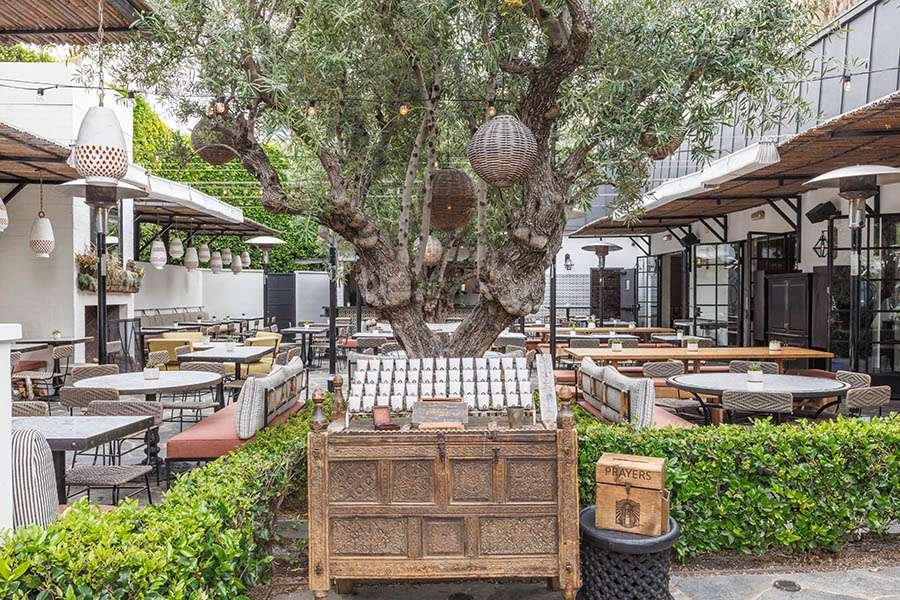
That repositioning matters for how you read the room when you arrive. The space carries the warmth of a hacienda without the kitsch — exposed materials, candlelight, and an outdoor patio that becomes the most-contested real estate on the block as evening progresses. West Hollywood's crowd is notoriously hard to read: it can run from industry power lunches to first-date dinners within the same service. Gracias Madre draws from both ends without performing for either. You sit down because the food is the point, and the room is comfortable enough to let you concentrate on it.
How the Menu Is Structured , and What That Tells You
The menu at Gracias Madre operates as a deliberate argument about what plant-based Mexican cooking can accomplish when it is organized around technique rather than substitution. This is the distinction that separates the kitchen's approach from the broader category of vegan restaurants that treat the absence of meat as a selling point rather than a starting condition.
The structure follows a loose Mexican vernacular: small plates and shared starters built around masa preparations, tacos and larger composed dishes as the middle register, and a cocktail program that takes the organic agave category seriously. That last point is worth noting because it reflects how the whole menu is assembled. Mezcal and tequila selection at this level is not decorative; it signals a genuine engagement with Mexican agricultural tradition that runs parallel to the kitchen's sourcing decisions on the food side.
Masa-based preparations are central to understanding what the kitchen prioritizes. Corn , sourced from organic California farms and, in some cases, heirloom varieties , is the ingredient that most honestly represents what the restaurant is trying to do. When masa is made well, it carries flavor rather than simply providing structure. That principle extends to how the kitchen treats dried chiles, herbs, and fermented preparations: these are the building blocks that create depth in Mexican cooking, and they function here without meat stock or lard as a backstop.
Across the menu, the compositions tend toward restraint rather than complexity-for-its-own-sake. This is the right call for plant-based cooking at a serious level: the temptation to overload dishes to compensate for missing animal fat is a category-wide problem that Gracias Madre largely avoids. The result is food that reads as Mexican first, plant-based second , which, depending on what you came in expecting, can be either a surprise or exactly the point.
Gracias Madre on Melrose Avenue: Context and Peers
On Melrose itself, the restaurant sits in a corridor that includes everything from salon culture (the nearby Andy LeCompte Salon and Blushington represent the beauty-and-style end of the street's identity) to more casual dining formats like Astro Burger and Basix Cafe. Gracias Madre operates in a different register from all of them: it is a full-service dinner restaurant with a bar program and a crowd that stays late, which puts it in a different competitive conversation than its immediate neighbors.
The more relevant peer set is the wider Los Angeles restaurant scene, where plant-based fine dining has expanded considerably in the past decade. Gracias Madre predates much of that expansion and helped establish the expectation that a vegetable-forward restaurant could hold a room the way a conventional dining destination does. For broader context on how serious American restaurants approach sourcing-driven, produce-led menus, the comparisons worth drawing are places like Blue Hill at Stone Barns in Tarrytown and Single Thread Farm in Healdsburg, both of which place agricultural sourcing at the center of their editorial identity. Gracias Madre operates in a different price tier and with a different culinary tradition, but the underlying commitment to ingredient origin as a defining menu argument puts it in that broader category conversation.
Elsewhere across the country, the restaurants that have most successfully argued for a specific regional cuisine as sufficient unto itself , without leaning on luxury proteins or tasting-menu formalism , include Atomix in New York City, which makes a comparable argument through Korean tradition, and Providence in Los Angeles, which treats California's Pacific seafood supply as its organizing principle. Gracias Madre makes the same structural move through Mexican culinary heritage. For high-end tasting formats where technique and tradition intersect at the fine-dining register, The French Laundry in Napa, Le Bernardin in New York City, Lazy Bear in San Francisco, Smyth in Chicago, Emeril's in New Orleans, Addison in San Diego, The Inn at Little Washington, Atelier Moessmer Norbert Niederkofler in Brunico, and Arden represent the upper register of cuisine-as-argument dining across their respective cities.
Planning Your Visit
Gracias Madre is located at 8905 Melrose Ave in West Hollywood, in one of the denser blocks of the Melrose corridor. Street parking on this stretch is competitive from early evening onward; valet or a nearby structure is the practical choice for dinner. The patio fills first on warm evenings, so arriving at opening is the most reliable way to secure outdoor seating without a specific reservation for that section. For the full West Hollywood dining context, including how the neighborhood's restaurant scene is organized by block and format, see our full West Hollywood restaurants guide.
Frequently Asked Questions
What dish is Gracias Madre famous for?
Gracias Madre is most associated with its masa-based preparations, particularly its tacos and enchiladas built on organic, California-sourced corn. The kitchen's approach to dried chiles and house-made preparations has drawn consistent recognition from Los Angeles food media as a credible expression of Mexican culinary tradition rather than a vegan approximation of it.
What is the defining idea at Gracias Madre?
The restaurant's central argument is that Mexican cuisine , rooted in masa, fermentation, chiles, and organic produce , is complex enough to anchor a full-service dining experience without animal products. That proposition, when executed at this level, moves the restaurant out of the wellness-dining category and into a conversation about regional culinary tradition.
What is the leading way to book Gracias Madre?
Gracias Madre handles reservations through standard online booking platforms; same-day availability at the bar is typically more accessible than prime dinner tables on weekends. Given its position on one of West Hollywood's busier dining blocks, weekday evenings offer the most predictable access, particularly if the patio is a priority.
Is Gracias Madre suitable for guests who are not plant-based eaters?
The restaurant has built a consistent following that extends well beyond dedicated plant-based diners, which reflects how the menu is positioned: as a Mexican restaurant that happens to use no animal products, rather than a vegan restaurant serving Mexican-inspired food. Guests who approach it through the lens of cuisine rather than dietary category tend to find the most to engage with, particularly on the agave cocktail side, where the selection reflects serious engagement with mezcal and tequila production traditions.
Related editorial
- Hwaro NYC Tasting Menu: $295, 22 Seats, Hidden Inside a SteakhouseChef Sungchul Shim's 22-seat Korean fine dining counter inside Gui is one of NYC's most personal — and most carefully considered — tasting menus at $295.
- Asia's 50 Best Restaurants 2026: The Chairman and Wing Go 1-2 from the Same BuildingThe Chairman takes No. 1 and Wing climbs to No. 2 at Asia's 50 Best Restaurants 2026. Both operate from the same Hong Kong building. Here's what it means.
- Four Seasons Yachts Debut: 95 Suites, 11 Restaurants, and a March 2026 Maiden VoyageFour Seasons I launches March 20, 2026, with 95 suites, a one-to-one staff ratio, and 11 onboard restaurants. Worth tracking if you want hotel-grade service at sea.
Save or rate Gracias Madre on Pearl
Keep this venue in your Pearl passport, rate it after you visit, and track it alongside every other place you collect.