
Restaurant in Hvar, Croatia
Gojava
100ptsSkaline Side-Street Cooking
About Gojava
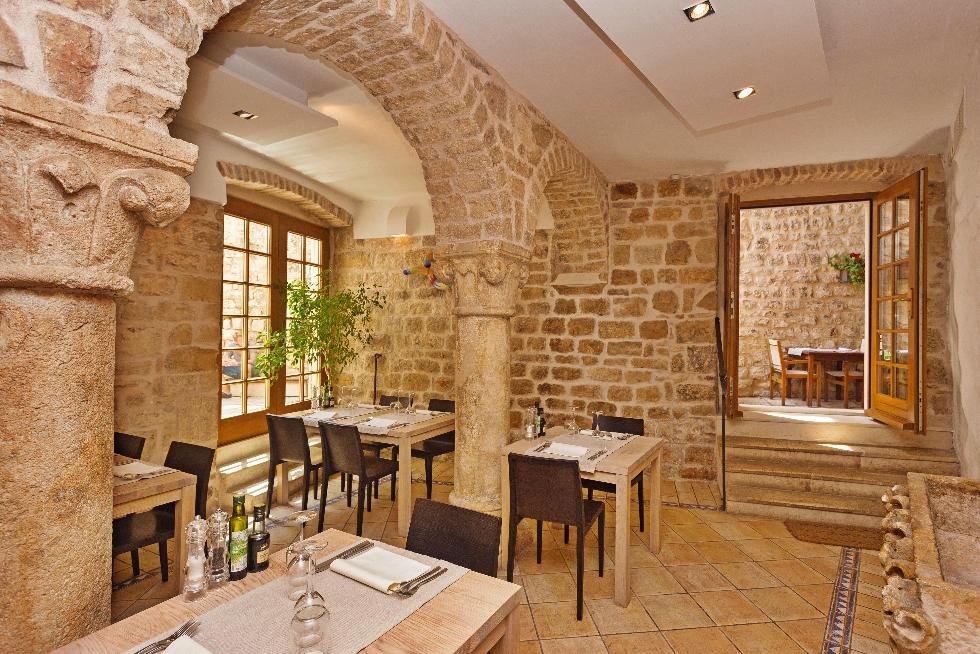
Gojava sits on a stone staircase lane in Hvar's old town, representing the quieter, neighbourhood-facing side of an island better known for marina-front spectacle. The address alone — Skaline od Gojave 11 — signals a restaurant that rewards those who leave the harbour promenade behind. Expect the Dalmatian cooking tradition in a setting shaped by the town's medieval street pattern.
Above the Harbour, Below the Fortress
Hvar divides its dining scene fairly cleanly between two registers. Along the Riva and around the main piazza, restaurants compete on position: a terrace table with harbour views, proximity to the yacht berths, a wine list weighted toward imported labels. A short climb into the lanes behind the cathedral shifts the logic entirely. Here, the address is the statement. Skaline od Gojave — a staircase street that threads between stone houses and fig trees — is the kind of location that filters out the crowd rather than capturing it. Gojava sits at number 11 on that lane, and the physical approach tells you something important before you order a thing.
This pattern repeats across Dalmatia's older island towns. The waterfront captures volume; the lanes capture character. Dalmatino operates in a similarly embedded old-town position, and the same logic applies at places like LD Restaurant in Korčula, where the leading cooking tends to happen one street removed from the view. Gojava belongs to that category: a restaurant whose geography is an editorial choice as much as a practical one.
What the Menu Architecture Reveals
In Croatian coastal cooking, the structure of a menu is a reliable indicator of a kitchen's priorities. Restaurants oriented toward tourist throughput tend to flatten the menu into an international register , grilled fish, pasta, risotto , where each dish is safe and legible to someone who arrived by ferry that morning. Restaurants with a more considered position in the local dining order tend to preserve the stratigraphic logic of Dalmatian eating: something cold and cured or marinated, something slow-cooked, something that depends on what came off a local boat or out of a local garden that day.
The address at Skaline od Gojave suggests the latter orientation. The staircase lane context , away from the high-rotation terrace trade , tends to correlate with kitchens that have the freedom to run shorter menus and change them more often, because their clientele is composed of people who sought them out rather than people who were passing. This is a meaningful distinction in a town where July and August bring a volume of visitors that can flatten even well-intentioned kitchens into assembly-line mode. A restaurant in this position on Hvar can, in principle, hold to a more seasonal, market-driven approach precisely because it is not trying to turn covers at the rate the harbour restaurants must.
The Dalmatian pantry at its most honest is a short list: olive oil from the island's own groves, lamb from the Dalmatian hinterland, fish from the Adriatic caught close to shore, local wine from varieties like Plavac Mali or Pošip that rarely appear on international lists. A kitchen working within that framework does not need a long menu. What it needs is discipline and sourcing relationships , the kind of operation that looks modest from the outside and delivers something more specific than the harbour restaurants can.
Hvar in Culinary Context
Hvar's dining scene has expanded significantly over the past decade, driven by the island's profile as one of the Adriatic's most visited summer destinations. That growth has produced a wide range of outcomes. Some restaurants have scaled into reliable, well-run operations serving Mediterranean cooking at a competent level. Others have chased the premium end of the market, competing on wine list ambition and terrace design. Gariful has long occupied the harbour-front fine dining position, while Grande Luna and Dionis each represent different points on the quality-to-setting spectrum. Antonio - Patak brings its own approach to the island's eating options.
Against this backdrop, the lane-restaurant category , less visible, harder to find, less driven by peak-season volume , represents a particular value proposition. The cooking tends to be more personal, the room smaller, the menu shorter. Croatia's most credentialed kitchens are mostly on the mainland or on other islands: Agli Amici Rovinj in Rovinj, Pelegrini in Sibenik, Nebo by Deni Srdoč in Rijeka, and Korak in Jastrebarsko hold the formal award recognition in the Croatian dining system. On Hvar specifically, the quality ceiling is set more by context and execution than by institutional recognition. Gojava's position in the old-town lane network places it in the part of the market where that execution-over-recognition logic operates most clearly.
For broader orientation across the country's dining scene, Alfred Keller in Mali Lošinj, Boskinac in Novalja, and Dubravkin Put in Zagreb each illustrate how Croatian restaurants outside the capital have built credibility through regional specificity rather than international mimicry. Krug in Split and Restaurant 360 in Dubrovnik show what the format-upgrade version of Dalmatian dining looks like at its most ambitious. Gojava, by contrast, operates in a quieter register , the neighbourhood restaurant that a visiting critic notices, not the one that a press release announces.
Planning a Visit
The lane address means Gojava is a short walk from Hvar's main square but far enough removed that you will want to navigate to it deliberately rather than stumble across it. In high season , July and August particularly , Hvar's old town operates at near-capacity, and any restaurant with a fixed number of tables will fill on short notice. Arriving without a reservation during peak weeks is a risk. The shoulder months of May, June, and September bring more manageable volumes and, typically, more consistent kitchen focus. For context on how Hvar's dining options sit relative to each other across the year, our full Hvar restaurants guide covers the range from harbour-front to old-town. Gojava does not have a listed website or phone number in current records, so initial contact is leading attempted in person or through local accommodation concierge networks. The staircase setting is not suited to large groups, and the atmosphere at a restaurant of this type rewards guests who are willing to eat at the kitchen's pace rather than on a tight schedule. Given the positioning, this is a place for a dinner that extends past the sunset, not one that needs to be concluded before a boat departure.
Frequently Asked Questions
- Can I bring kids to Gojava?
- The staircase lane setting and likely small room format make Gojava more comfortable for adults and older children than for young families with strollers or high-chair requirements. Hvar's price range at this type of old-town restaurant tends to sit in the mid-to-upper tier relative to the island's broader dining options, which also makes it a less casual fit for family groups with young children. If a family meal is the priority, the harbour-level restaurants with more space and standard layouts are a more practical choice in Hvar.
- What's the overall feel of Gojava?
- Gojava occupies the quieter, more local-facing end of Hvar's dining spectrum. The lane address and the stone-staircase approach set an expectation of intimate, unhurried eating rather than the high-energy terrace atmosphere that defines the harbour-front options. In a town where the dominant dining mood in summer is spectacle and visibility, this part of the old town operates by different rules: smaller rooms, slower pace, cooking that does not need a view to justify itself.
- What should I eat at Gojava?
- Specific menu details are not available in current records, so naming individual dishes would be speculation. What the Dalmatian cooking tradition at a restaurant of this type typically emphasises is local seafood, slow-cooked meat preparations, and ingredients tied to the island's agricultural calendar. The lane-restaurant format on Hvar tends to support shorter, more seasonal menus than the harbour operations. Ordering according to what the kitchen is running that day, rather than defaulting to the most recognisable dishes, is the approach most likely to reflect what the kitchen is actually doing well.
- Do I need a reservation for Gojava?
- In Hvar's high season, a restaurant in this position , small room, fixed tables, no walk-in overflow capacity , will fill consistently, particularly for dinner. Arriving without a reservation in July or August is a meaningful risk. In the shoulder months, the same room operates with more flexibility, but the principle of booking ahead applies throughout the season for any restaurant not built around rapid table turnover. Given that Gojava has no listed website or phone in current records, reservation logistics are leading handled through your accommodation or by visiting in person earlier in the day.
- Is Gojava the kind of place that attracts a local crowd rather than tourists?
- The address on Skaline od Gojave , a staircase lane rather than a harbour-front position , signals a restaurant that selects its guests through geography. In Hvar, locals and returning visitors who know the old town well tend to gravitate toward this part of the island's dining map, while first-time visitors default to the Riva. This is a pattern seen across Dalmatian island towns: the lane-restaurant category retains a more mixed, year-round clientele than the terrace operations that depend almost entirely on summer traffic. Croatia's more credentialed kitchens, from Pelegrini in Sibenik to Agli Amici Rovinj, share this quality of being places that regulars return to rather than simply pass through.
For a broader view of where Gojava sits within Hvar's full dining range, see our complete Hvar restaurants guide.
Related editorial
- Best Fine Dining Restaurants in ParisFrom three-Michelin-star icons to the next generation of Parisian chefs pushing boundaries, these are the restaurants that define fine dining in the world's culinary capital.
- Best Luxury Hotels in RomeFrom rooftop terraces overlooking ancient ruins to Michelin-starred hotel dining, these are the luxury hotels that make Rome unforgettable.
- Best Cocktail Bars in KyotoFrom sleek lounges to hidden speakeasies, Kyoto's cocktail scene blends Japanese precision with global influence in ways you won't find anywhere else.
Save or rate Gojava on Pearl
Keep this venue in your Pearl passport, rate it after you visit, and track it alongside every other place you collect.