
Restaurant in Newark, United States
Fornos of Spain
100ptsIronbound Iberian Tradition
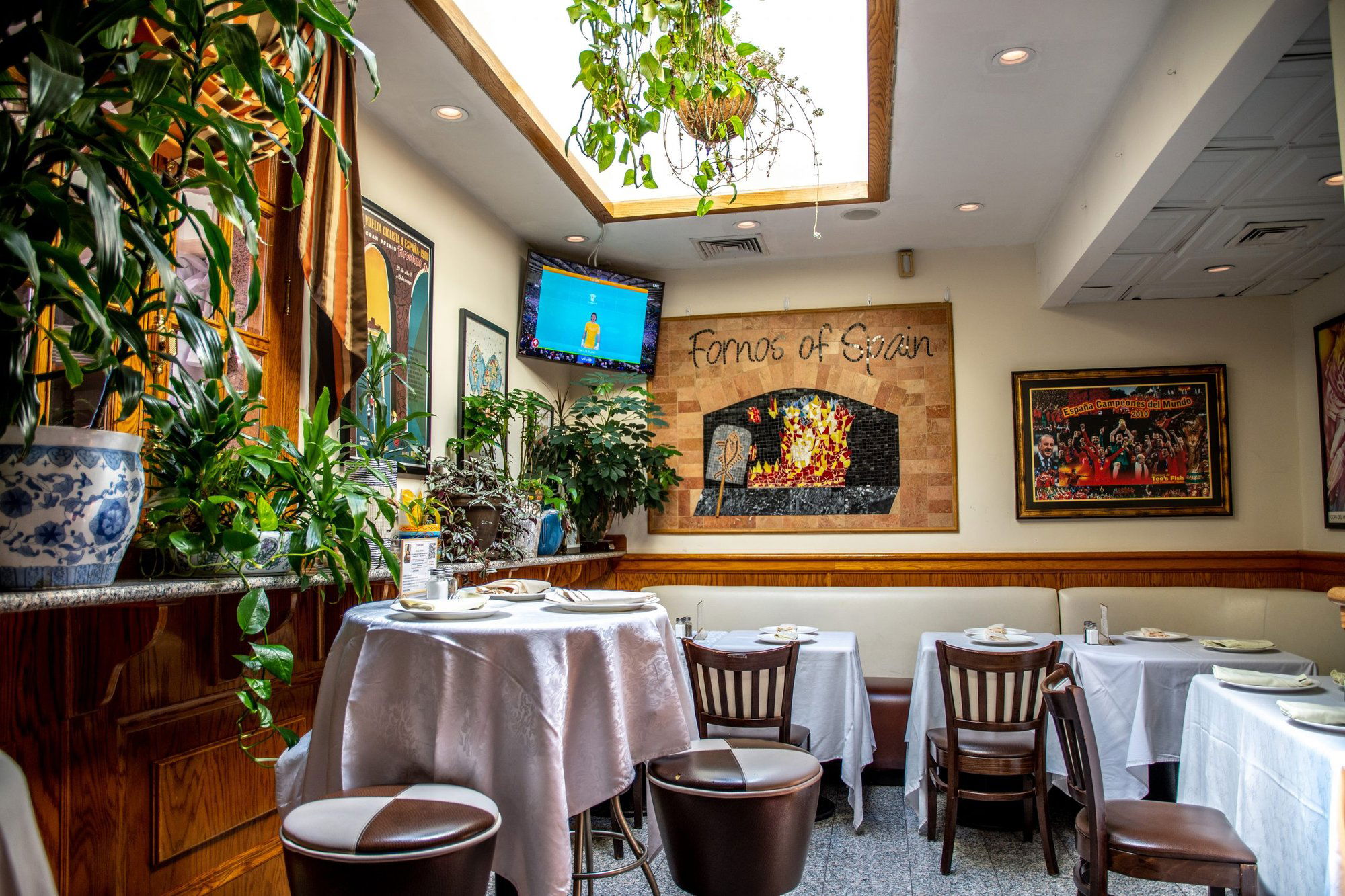
About Fornos of Spain
On Ferry Street in Newark's Ironbound district, Fornos of Spain has anchored the neighbourhood's Iberian dining tradition for decades. The kitchen draws on Spanish culinary conventions in a corridor where Portuguese and Spanish cooking exist side by side, making it a reliable reference point for the area's old-world character. Fornos sits at the heart of one of the most concentrated Iberian dining corridors on the East Coast.
The Ironbound and Its Iberian Table
Ferry Street in Newark's Ironbound neighbourhood operates as one of the most concentrated corridors of Iberian cooking on the eastern seaboard. The blocks between Penn Station Newark and the Passaic River hold Portuguese tascas, Spanish seafood houses, and decades-old dining rooms that have outlasted trends in New York City just ten miles west. Fornos of Spain at 47 Ferry Street sits inside this tradition, a Spanish address in a stretch where Spanish and Portuguese kitchens have competed for the same tables since the mid-twentieth century.
The Ironbound's character comes from immigration patterns that predate the current wave of food-media interest in Newark. Spanish and Portuguese communities settled this neighbourhood in large numbers through the 1950s and 1960s, and the restaurant corridor they built never fully assimilated into the homogenised dining culture that reshaped other American ethnic enclaves. What remains is a dining district that functions more like a southern European neighbourhood than a theme park version of one: practical, consistent, and oriented toward regular custom rather than tourist capture. Fornos occupies that world.
How the Menu Speaks
Spanish restaurant menus in the Ironbound tend to follow a structure that differs sharply from the small-plates format that defines Spanish dining in New York City. Where Manhattan's Iberian rooms have largely adopted the tapas-and-sharing format, Ferry Street's Spanish kitchens have maintained a more traditional full-service architecture: appetisers, soups, mains with sides, and the kind of portion discipline that signals a restaurant built around regular diners eating full meals rather than grazing professionals ordering strategically. This structural choice is itself an editorial statement about who the restaurant serves and how.
Spanish cooking at this tier in the Ironbound tends to anchor around proteins: whole fish preparations, roasted meats, shellfish, and rice dishes that draw on Valencian and Galician traditions rather than the Catalan-inflected menus that dominate more fashion-conscious Spanish rooms. The menu architecture at a restaurant like Fornos reflects a culinary lineage that treats the main course as the centrepiece and the rest of the meal as frame rather than feature. That conservatism is not a weakness in this context. It is the point.
Compared to the broader Newark dining scene, which has diversified considerably in recent years with arrivals like Konoz Restaurant and Seoul Tofu House extending the neighbourhood's culinary range, the Ferry Street Iberian corridor holds a different position: it is the original layer, the founding sediment beneath newer arrivals. Fornos and its peers, including Campino Restaurant and Don Pepe Restaurant, operate within a tradition rather than against one.
Positioning in the Peer Set
Within the Ironbound specifically, Spanish restaurants occupy a narrower competitive band than the Portuguese houses. The Portuguese dining tradition runs deeper numerically on Ferry Street, with more establishments and a stronger claim on the neighbourhood's culinary identity in terms of sheer volume. Spanish rooms like Fornos function as the minority voice within an Iberian chorus, which gives them a slightly different character: they tend to draw a more deliberately chosen clientele, diners who have made a specific choice rather than defaulting to the dominant local option.
That positioning places Fornos in a peer set with other established Newark dining institutions rather than with the city's newer arrivals or with its sports-adjacent restaurant traffic around the Prudential Center. Venues like Jack's Restaurant and Bar represent a different register of Newark dining, one oriented toward a broader bar-and-grill format. Fornos operates at a different frequency: specifically Iberian, specifically rooted, and less interested in performing accessibility for a general audience.
For context at the far end of the American fine dining spectrum, rooms like Le Bernardin in New York City, The French Laundry in Napa, or Atomix in New York City represent a completely separate category of dining ambition, one oriented toward tasting menus, critical validation, and international positioning. The Ironbound's Spanish rooms including Smyth in Chicago or Blue Hill at Stone Barns in Tarrytown as reference points would be a category error. Fornos belongs to a tradition of community-anchored dining where consistency over time is the primary credential, not critical acclaim or tasting-menu innovation.
Getting There and Planning Your Visit
The Ironbound is accessible by rail via Newark Penn Station, which sits within walking distance of Ferry Street and connects directly to New York Penn Station via NJ Transit in under twenty minutes. That proximity to Manhattan makes the neighbourhood genuinely practical for a dining excursion, particularly given the price differential between Ironbound dining and equivalent-quality Spanish cooking in New York City. The corridor's restaurants draw a mixed audience of local regulars, New Jersey suburban diners, and cross-river visitors who have made the calculation that the travel is worthwhile.
Timing matters on Ferry Street. Weekend evenings bring the highest volume across the corridor, and the most established rooms fill through regular custom rather than reservation systems built for incoming traffic. Arriving earlier in the evening, or opting for a weekday visit, gives a more settled experience of what these rooms actually are rather than what they become under peak-night pressure. For a fuller picture of Newark's dining options beyond the Ironbound, our full Newark restaurants guide maps the city's broader dining patterns.
Travellers comparing the Ironbound to Spanish dining in other American cities will find that the New Jersey corridor occupies a genuinely different position from Spanish rooms in Los Angeles (see Providence for a sense of the LA fine dining register) or San Francisco (where Lazy Bear represents a distinctly California-inflected approach to serious dining). The Ironbound does not attempt what those cities do. It does something older and less mediated.
For those drawn to the international reference point, European dining rooms with similar community-anchored longevity include addresses like Atelier Moessmer Norbert Niederkofler in Brunico, though the culinary ambition and price tier differ considerably. The comparison is structural, not qualitative: both represent restaurants that have earned their position through duration and local relationship rather than through critical machinery. Additional American reference points with different dining registers include Emeril's in New Orleans, Addison in San Diego, Single Thread Farm in Healdsburg, and The Inn at Little Washington in Washington, all of which operate in a register of critical ambition that Ferry Street's Iberian corridor does not seek.
Frequently Asked Questions
What's the leading thing to order at Fornos of Spain?
Spanish restaurants in the Ironbound tradition build their menus around proteins and rice-based dishes drawn from Valencian and Galician cooking. Whole fish preparations and shellfish tend to be the structural centrepieces of menus in this tradition, with seafood quality reflecting the kitchen's priorities. Without confirmed current menu data, the safest approach is to ask what the kitchen is emphasising on a given evening, which in long-established Iberian rooms is often a more reliable signal than the printed card.
How far ahead should I plan for Fornos of Spain?
The Ironbound operates differently from the reservation-dependent dining culture of Manhattan. Ferry Street's most established rooms, including the Spanish addresses, tend to function on a combination of walk-in capacity and regular-customer priority rather than weeks-out booking windows. Weekend evenings are the highest-pressure time across the corridor. If the visit is time-sensitive or involves a larger group, contacting the restaurant directly before arriving is prudent, particularly for a Friday or Saturday dinner when the neighbourhood draws its highest volume of cross-river traffic from New York.
What makes Fornos of Spain worth seeking out?
The case for Fornos rests on what the restaurant represents within its specific context rather than on critical credentials. Spanish cooking with this degree of neighbourhood embeddedness is genuinely scarce in the northeastern United States. The Ironbound corridor as a whole is one of the few places on the East Coast where Iberian dining operates at scale within a living community rather than as a transplanted concept, and Fornos is among the addresses that have held that ground across decades. For diners interested in Spanish cooking as a tradition rather than a trend, that longevity functions as its own credential.
Is Fornos of Spain the right choice for a first visit to the Ironbound?
Ironbound's Spanish and Portuguese rooms each offer a distinct entry point into the corridor's Iberian tradition, and first-time visitors benefit from understanding that distinction before choosing. Spanish rooms like Fornos tend to be the minority option within a predominantly Portuguese dining corridor, which means they draw a more specifically motivated clientele. For visitors wanting to compare both traditions side by side, pairing a meal at Fornos with a visit to a Portuguese address like Campino Restaurant gives a clearer picture of what makes each kitchen distinct within the same neighbourhood block.
Related editorial
- Best Fine Dining Restaurants in ParisFrom three-Michelin-star icons to the next generation of Parisian chefs pushing boundaries, these are the restaurants that define fine dining in the world's culinary capital.
- Best Luxury Hotels in RomeFrom rooftop terraces overlooking ancient ruins to Michelin-starred hotel dining, these are the luxury hotels that make Rome unforgettable.
- Best Cocktail Bars in KyotoFrom sleek lounges to hidden speakeasies, Kyoto's cocktail scene blends Japanese precision with global influence in ways you won't find anywhere else.
Save or rate Fornos of Spain on Pearl
Keep this venue in your Pearl passport, rate it after you visit, and track it alongside every other place you collect.