
Restaurant in Sant Julià de Ramis, Spain
Fontané
100ptsMatriarchal Catalan Revival

About Fontané
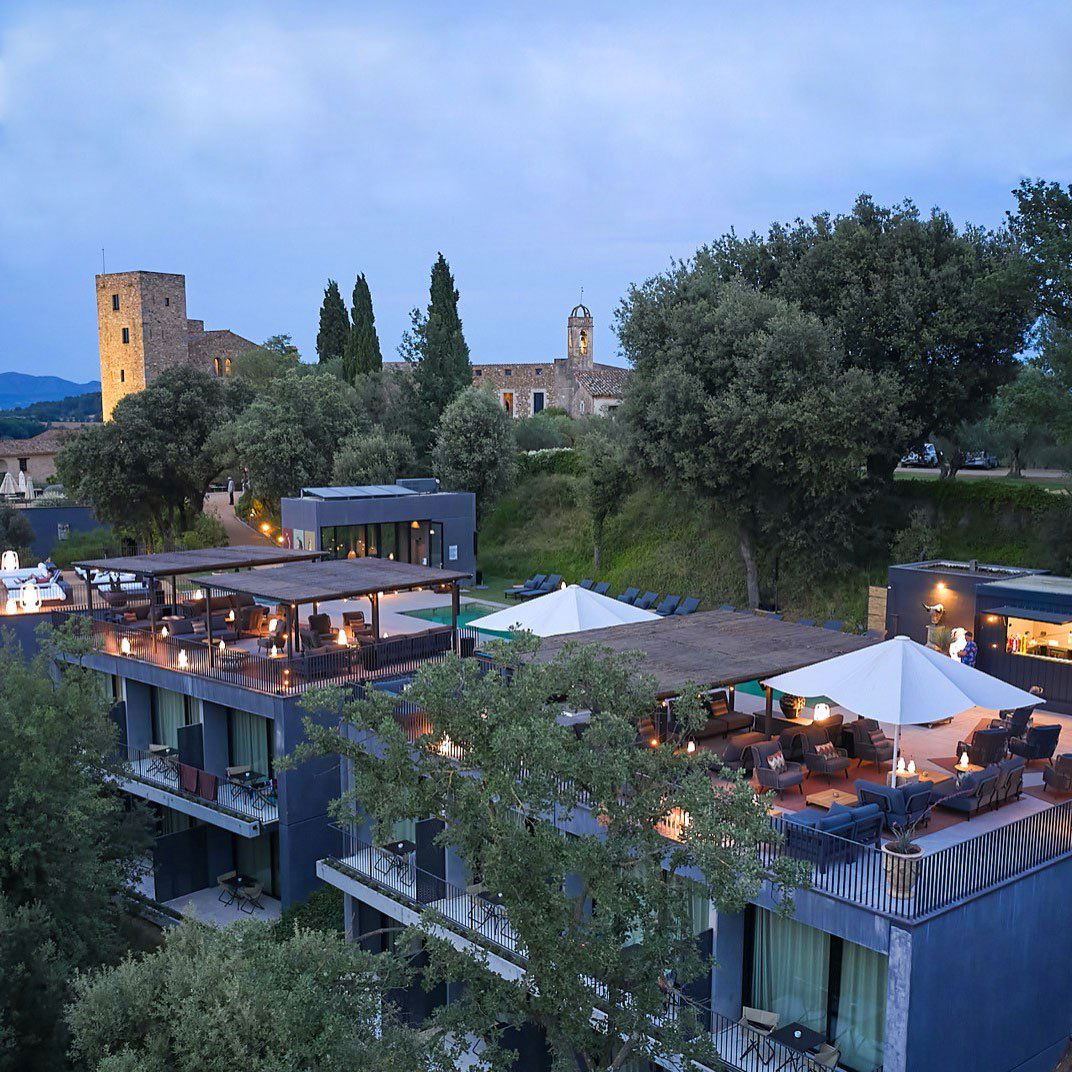
Set on the summit of the Sants Metges mountain within the Castillo de Sant Julià de Ramis, Fontané is the Roca brothers' tribute to their mother Montserrat Fontané and her traditional Catalan cooking. The restaurant sits inside Hotel Esperit Roca, pairing a wooden-deck dining room with far-reaching views and a menu that revisits the home dishes of Can Roca's origins through a contemporary lens.
Between the Mountain and the Table
The approach to Sant Julià de Ramis already signals a shift in register. The road climbs above the Ter river plain, and by the time the Castillo comes into view, the surrounding Empordà terrain has replaced Girona's urban density with open sky and worked agricultural land. Fontané occupies the summit of the Sants Metges mountain within the Castillo complex — in the restaurant's own framing, the site sits between heaven and earth — and the dining room's wooden deck reinforces that elevation, framing views that stretch well beyond the immediate hillside. Before a dish arrives, the physical setting has already made a claim about the kind of meal this is meant to be: deliberate, rooted, unhurried.
That atmosphere is not incidental. It is the argument. Fontané exists as a counterpoint to Esperit Roca (Creative), the avant-garde project that shares the Hotel Esperit Roca address. Where Esperit Roca operates in the experimental register that Spain's leading creative kitchens , El Celler de Can Roca in Girona, DiverXO in Madrid, Mugaritz in Errenteria , have made their international reputations on, Fontané holds a different brief entirely. Its subject is Catalan domestic cooking, traced through the dishes that Montserrat Fontané, the Roca brothers' mother, cooked at the family's original Can Roca restaurant in Girona.
The Weight of Catalan Domestic Tradition
Catalan cuisine carries a longer continuous record of documented recipes and technique than almost any other regional kitchen in Europe. Its foundations , sofregit, picada, romesco, the slow-built fish stews known as suquet , predate the modernist turn by centuries, and the domestic transmission of that knowledge, from mother to kitchen, has historically been as important as any professional lineage. What Fontané proposes is a self-conscious return to that domestic register, filtered through three chefs who built their professional reputations on doing almost anything but.
The Roca brothers' career trajectory runs through Michelin recognition, ranked-list prominence, and the kind of technical ambition that connects Spain's post-Adrià generation to peers like Arzak in San Sebastián, Azurmendi in Larrabetzu, and Martin Berasategui in Lasarte-Oria. Against that backdrop, a project centred on recreating a mother's home cooking is a deliberate displacement , not a retreat from craft, but a reorientation of what craft is for. The modern twist the kitchen applies to Montserrat Fontané's recipes is less about transformation than about precision: bringing the same technical attention that produces tasting-menu theatre to the dishes that sustained a family and a neighbourhood restaurant for decades.
This places Fontané in a tradition that has become increasingly legible at the high end of Spanish dining. Projects like Quique Dacosta in Dénia and Ricard Camarena in València have each found ways to treat regional identity as the primary creative material rather than a starting point to be discarded. Fontané takes that logic further by grounding it in a specific person and a specific domestic kitchen, making the cultural reference as personal as it is geographic.
Suquet, Sofregit, and the Logic of the Menu
The suquet de cabracho , a scorpionfish stew , provides a useful example of how Fontané handles its source material. The suquet is one of the foundational preparations of Catalan coastal cooking: a fisherman's stew built on tomato, potato, and picada, slow-cooked to extract maximum depth from whole fish. Fontané's version reworks the base, using a tomato tartare in place of the cooked foundation that tradition dictates. The result preserves the flavour logic of the dish while altering its texture and temperature register. That is not a small change. It represents a clear editorial decision to honour a dish's architecture while acknowledging that the kitchen's tools and context are different from those of the original.
This approach to heritage cooking has parallels in kitchens well beyond Spain. The question it raises , how far can a dish be reinterpreted before it becomes something else entirely , is one that Aponiente in El Puerto de Santa María asks of Andalusian seafood, and that Cocina Hermanos Torres in Barcelona asks of Catalan market cooking. Fontané's answer, in the suquet, is to hold the cultural memory intact while replacing one technical layer. The dish remains recognisable; what has changed is the precision of its execution.
The menu's broader focus on Catalan domestic recipes means that dishes arrive carrying a specific weight of regional reference. This is cooking that rewards a diner who knows what a sofregit should taste like after forty minutes on low heat, or what the correct textural contract is in a proper escudella. It is also cooking that works as an introduction to that tradition, because the kitchen is evidently teaching as well as executing.
The Hotel Esperit Roca Setting
Fontané operates within the Hotel Esperit Roca, which occupies the Castillo de Sant Julià de Ramis complex on the mountain summit. The hotel itself is the Roca family's most direct step into hospitality infrastructure beyond the restaurant, and the building's historic fabric provides a different kind of frame from the glass-and-steel contexts that often surround Spain's high-profile dining projects. For visitors planning around the full Roca ecosystem, the property allows a stay that encompasses both the heritage register of Fontané and the creative ambition of Esperit Roca without requiring a return trip to Girona between them.
Sant Julià de Ramis sits a short distance north of Girona, accessible by road. For those combining the visit with a broader look at what the region offers, our full Sant Julià de Ramis restaurants guide covers the dining options in more detail, and the Sant Julià de Ramis hotels guide maps the accommodation picture. The bars guide, wineries guide, and experiences guide round out what the area has to offer beyond the table.
Planning Your Visit
Bookings for Fontané are handled through the Hotel Esperit Roca, and given the Roca family's profile , El Celler de Can Roca has held three Michelin stars and appeared repeatedly at the leading of international restaurant rankings , demand across all properties in the complex runs ahead of available seats. Arriving without a reservation is not a reliable strategy, particularly at weekends and during the summer season when the terrace's views are at their most compelling. The address is Carrer Major, s/n, Entrada 1, 17481 Sant Julià de Ramis, Girona. Specific pricing, current hours, and booking contacts are leading confirmed directly with the hotel, as these details are subject to seasonal adjustment.
Frequently Asked Questions
What should I order at Fontané?
The menu draws directly from the traditional Catalan dishes associated with Montserrat Fontané, the Roca brothers' mother. The suquet de cabracho , scorpionfish stew prepared here with a tomato tartare base rather than the conventional cooked tomato foundation , represents the kitchen's approach clearly: a recognisable Catalan preparation handled with contemporary technical precision. More broadly, any dish rooted in the Catalan coastal and domestic repertoire will show the same logic. The kitchen is working through heritage recipes, so ordering according to what feels most representative of that tradition is a sound approach.
Do I need a reservation for Fontané?
Given that Fontané sits within the Hotel Esperit Roca complex and carries the Roca family name , the same family behind El Celler de Can Roca, one of Spain's most internationally recognised restaurants , seats are not reliably available on a walk-in basis. Demand at the property reflects the profile of the wider Roca operation. Booking in advance is the practical course, and for weekend visits or peak season travel to the Girona region, advance planning of several weeks is sensible. Confirmation of current booking channels is leading sourced directly from the hotel. For international comparisons on reservation planning at high-profile restaurants, the experience at venues like Le Bernardin in New York City or Atomix in New York City offers a useful frame: name recognition drives demand that consistently outpaces capacity, and Fontané operates in that same dynamic.
Recognized By

Similar venues by awards
Related editorial
- Asia's 50 Best Restaurants 2026: The Chairman and Wing Go 1-2 from the Same BuildingThe Chairman takes No. 1 and Wing climbs to No. 2 at Asia's 50 Best Restaurants 2026. Both operate from the same Hong Kong building. Here's what it means.
- Four Seasons Yachts Debut: 95 Suites, 11 Restaurants, and a March 2026 Maiden VoyageFour Seasons I launches March 20, 2026, with 95 suites, a one-to-one staff ratio, and 11 onboard restaurants. Worth tracking if you want hotel-grade service at sea.
- LA Michelin Guide 2026: Seven New Restaurants from Tlayudas to Uzbek DumplingsMichelin's March 2026 California Guide update adds six LA restaurants and one Montecito newcomer, spanning Oaxacan tlayudas, Uzbek manti, and Korean-Italian pasta.
Save or rate Fontané on Pearl
Keep this venue in your Pearl passport, rate it after you visit, and track it alongside every other place you collect.