
Restaurant in Saint Laurent, Canada
Elounda
100ptsAegean Sourcing, Montreal West
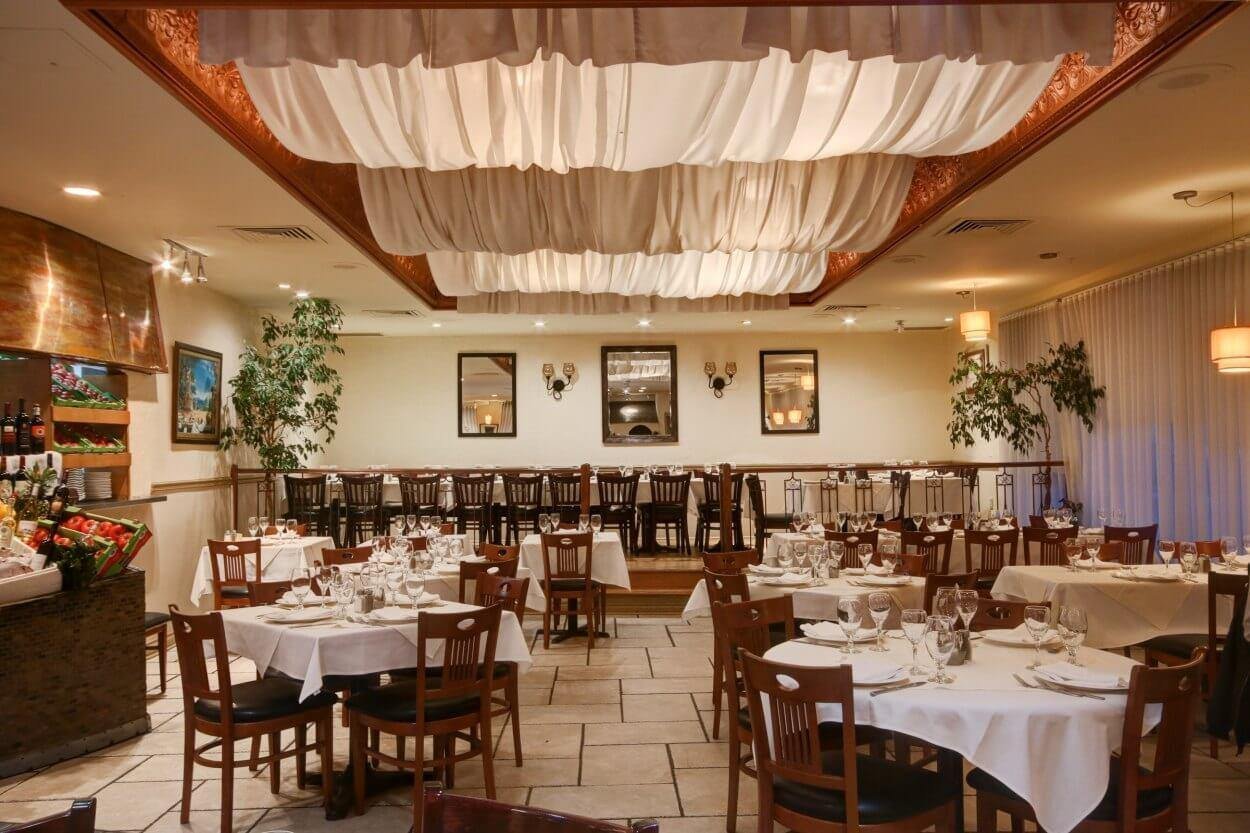
About Elounda
Elounda sits on Boulevard Côte-Vertu Ouest in Saint-Laurent, a borough where Greek culinary traditions have taken quiet root amid Montreal's broader dining sprawl. The address places it firmly outside the tourist circuit, drawing a neighbourhood crowd that returns for the kind of sourcing-conscious cooking that rarely makes headlines but earns consistent loyalty. For anyone mapping the borough's dining options, it belongs on the shortlist.
Saint-Laurent and the Question of Where the Food Comes From
Saint-Laurent occupies a curious position in Montreal's dining geography. The borough sits west of the city's more celebrated restaurant corridors, away from the Mile End's ferment and the Plateau's density, and that distance has historically meant less editorial attention rather than less interesting cooking. What has developed along streets like Boulevard Côte-Vertu Ouest is a dining scene shaped less by trend cycles and more by the communities that actually live there, including a Greek presence that has influenced the area's relationship with ingredient-forward cooking for decades.
Greek culinary tradition, at its core, is a sourcing tradition. The emphasis on olive oil provenance, on the quality of the fish rather than the complexity of its preparation, on legumes and vegetables treated as protagonists rather than accompaniments, predates the farm-to-table framing that North American restaurants now apply liberally. When that tradition takes hold outside Greece, the leading results come from kitchens that hold to the same hierarchy: ingredient first, technique in service of it. That's the frame through which Elounda, at 1818 Boulevard Côte-Vertu Ouest, is worth examining.
The Approach on Boulevard Côte-Vertu Ouest
The address itself signals something about the restaurant's orientation. Côte-Vertu is a working arterial road, lined with the kind of commercial pragmatism that discourages performative dining rooms. Restaurants that survive here do so on repeat business, and repeat business in this part of Saint-Laurent is earned through consistency and value rather than spectacle. The physical approach to Elounda is characteristic of the neighbourhood: functional exterior, no marquee signage designed for social media, and an interior logic that prioritises the people already inside over the impression made on passersby.
That neighbourhood context matters when thinking about what kind of restaurant Elounda is. It operates within a local ecosystem rather than positioning itself against the $$$$ contemporary tasting-menu tier represented by places like Alo in Toronto or the kaiseki-influenced formats found at the upper end of Canadian fine dining. The comparison set is closer to the neighbourhood Greek institution, measured against its own tradition rather than against the broader fine-dining conversation.
Sourcing as the Central Argument
Greek cooking's sourcing logic differs from, say, the hyper-local Quebec terroir argument made by restaurants like Tanière³ in Quebec City or the ingredient-obsessed tasting menus at Restaurant Pearl Morissette in Lincoln. Where those kitchens build their identity around the specific geography of their ingredients, Greek culinary sourcing has traditionally been about category quality: the right olive oil, the right fish, the right cheese, sourced from producers whose methods align with the cuisine's expectations rather than necessarily from a specific postal code.
In a Montreal context, that creates an interesting challenge. The cold-water fish available in Quebec, the dairy producers accessible to kitchens in the metropolitan area, and the olive oil that arrives from Greek producers all have to find a coherent relationship on the plate. The kitchens that handle this well in the Greek diaspora cooking tradition tend to be the ones that resist the temptation to over-localise, recognising that some ingredients are worth sourcing from their origin rather than substituting with a closer alternative. This is the argument that runs beneath the better Greek restaurants in North America, and it's the lens through which a restaurant like Elounda deserves to be evaluated.
For broader context on how Quebec's ingredient-conscious dining scene has developed, the work being done at places like Narval in Rimouski and the ethos of Eigensinn Farm in Singhampton illustrates how seriously Canadian kitchens have taken sourcing as a philosophical position. Greek cooking arrives at similar conclusions through a different cultural route.
Saint-Laurent's Dining Cohort
The borough's restaurant scene skews toward cuisines that reflect its residential demographics rather than its proximity to Montreal's tourism infrastructure. That means North African, Middle Eastern, and Greek establishments operate alongside each other, often without the kind of critical infrastructure, reviews in national publications, awards recognition, that would draw visitors from outside the borough. The comparison to how Firegrill Ville St-Laurent positions itself in the same neighbourhood is instructive: both are working within a local frame, building audiences through consistency rather than profile.
That insularity has a cost in terms of visibility and a benefit in terms of what actually ends up on the plate. Kitchens cooking for their own communities tend to maintain a tighter relationship with the expectations of that community, including sourcing habits, preparation methods, and the specific dishes that matter to the people who grew up eating them. The tourist-facing version of Greek food in North America, the saganaki flambé and the predictable mezze spread, is less likely to appear in a restaurant where the regulars know what good looks like.
For a broader mapping of where Elounda fits within the Saint-Laurent dining context, our full Saint Laurent restaurants guide covers the borough's range in more detail. Internationally, the sourcing conversation in seafood-forward cooking reaches its most developed form at places like Le Bernardin in New York City, where ingredient hierarchy is explicitly the kitchen's governing principle, and at coastal Canadian institutions like Catch22 Lobster Bar in Moncton and Chafe's Landing Restaurant, which demonstrate how regional seafood sourcing can define a restaurant's entire identity.
Planning Your Visit
Elounda is located at 1818 Boulevard Côte-Vertu Ouest in Saint-Laurent, Quebec, H4L 2A6. The address is accessible by public transit from central Montreal, with the Côte-Vertu metro station on the Orange Line serving as the practical entry point for visitors coming from downtown. The surrounding neighbourhood is primarily residential and commercial, without the pedestrian dining-strip character of areas like the Plateau, so arriving with a specific destination in mind is the sensible approach. For current hours, reservation policy, and menu details, contacting the restaurant directly or checking for updated listings is advisable, as the venue's operational information was not confirmed at time of writing. The restaurant's positioning in Saint-Laurent's mid-range neighbourhood tier suggests pricing in line with the borough's general expectations rather than the tasting-menu brackets occupied by AnnaLena in Vancouver or Jérôme Ferrer - Europea in Montreal.
Frequently Asked Questions
- Is Elounda suitable for children?
- Saint-Laurent's neighbourhood dining scene tends toward inclusive, family-oriented formats at mid-range price points, and Greek cuisine's emphasis on shared dishes and varied mezze-style offerings generally accommodates mixed-age groups comfortably. If the restaurant follows the conventions of its cuisine and borough context, families should find the format accessible. Confirming directly with the restaurant is advisable for specific seating or menu needs.
- What kind of setting is Elounda?
- Based on its address on Boulevard Côte-Vertu Ouest and its position within Saint-Laurent's neighbourhood dining cohort, Elounda operates in a functional, community-oriented register rather than a formal or high-design one. The borough's dining culture favours restaurants that earn loyalty through consistency rather than atmosphere-led experiences. It sits well outside the awards-circuit and fine-dining tiers found in central Montreal.
- What do regulars order at Elounda?
- The venue database does not confirm specific dishes. In the Greek cooking tradition broadly, the orders that earn repeat loyalty tend to be the ones where sourcing decisions are most visible: grilled fish, lamb preparations, and vegetable dishes where ingredient quality carries the plate rather than sauce complexity. What regulars return for in a neighbourhood Greek restaurant is typically the consistency of those core preparations rather than seasonal menu innovation.
- Do I need a reservation for Elounda?
- Booking policy is not confirmed in the available data. Neighbourhood restaurants in Saint-Laurent at mid-range price points generally accommodate walk-ins more readily than reservation-heavy fine-dining addresses in central Montreal. That said, contacting the restaurant in advance is the sensible approach, particularly on weekend evenings when local demand tends to peak.
- What is Elounda leading at?
- Without confirmed menu or awards data, the most honest answer sits at the category level: Greek cuisine's structural strengths lie in preparations where ingredient quality is the primary variable, particularly seafood and grilled proteins. A neighbourhood Greek restaurant that maintains that sourcing discipline, as the tradition demands, will outperform on those dishes relative to anything requiring elaborate technique. The cuisine rewards kitchens that resist over-complication.
- How does Elounda compare to other Greek restaurants in the Montreal area?
- Saint-Laurent's position outside Montreal's central dining corridors means Elounda operates in a less competitive but also less visible market than Greek restaurants closer to downtown. The borough's community-oriented dining culture, combined with Greek cuisine's sourcing-first logic, places it in a category alongside other neighbourhood institutions that build their reputation over years of repeat business rather than through critical recognition. For those mapping Montreal-area dining more broadly, it represents the neighbourhood end of the spectrum, a distinct register from the tasting-menu and awards-circuit restaurants covered elsewhere on this platform.
Related editorial
- Asia's 50 Best Restaurants 2026: The Chairman and Wing Go 1-2 from the Same BuildingThe Chairman takes No. 1 and Wing climbs to No. 2 at Asia's 50 Best Restaurants 2026. Both operate from the same Hong Kong building. Here's what it means.
- Four Seasons Yachts Debut: 95 Suites, 11 Restaurants, and a March 2026 Maiden VoyageFour Seasons I launches March 20, 2026, with 95 suites, a one-to-one staff ratio, and 11 onboard restaurants. Worth tracking if you want hotel-grade service at sea.
- LA Michelin Guide 2026: Seven New Restaurants from Tlayudas to Uzbek DumplingsMichelin's March 2026 California Guide update adds six LA restaurants and one Montecito newcomer, spanning Oaxacan tlayudas, Uzbek manti, and Korean-Italian pasta.
Save or rate Elounda on Pearl
Keep this venue in your Pearl passport, rate it after you visit, and track it alongside every other place you collect.