
Restaurant in Mexico City, Mexico
El Bajio
100ptsRegional Mexican Orthodoxy
About El Bajio
El Bajio occupies a specific register in Polanco's dining scene: a address where traditional Mexican cooking holds its ground against the neighbourhood's modernist momentum. Located on Alejandro Dumas 7, it draws diners looking for occasion meals rooted in regional technique rather than avant-garde reinterpretation. For celebrations that call for depth over spectacle, it sits in a distinct tier of its own.
Polanco and the Occasion Meal
Polanco has become shorthand for a certain kind of Mexico City dining ambition: the neighbourhood that houses Pujol, Quintonil, and a rotating cast of internationally watched tables. Within that context, the occasion meal in this part of the city tends to split into two registers. One is the modernist tasting menu, where Mexican ingredients are filtered through contemporary technique and the experience is deliberately structured as a progression. The other is the traditional register: longer, louder, more communal, anchored in regional recipes that reward familiarity rather than surprise. El Bajio, at Alejandro Dumas 7, sits firmly in the second category.
That positioning matters more than it might appear. In a city where the conversation around Mexican cuisine is often dominated by what Em or Sud 777 are doing with native ingredients and new formats, El Bajio holds a different kind of authority. It represents the argument that the most sophisticated version of Mexican cooking is not always the most transformed version. The cooking here is a case for depth over novelty, which makes it a particular kind of choice for a meal that needs to carry weight.
What the Room Communicates
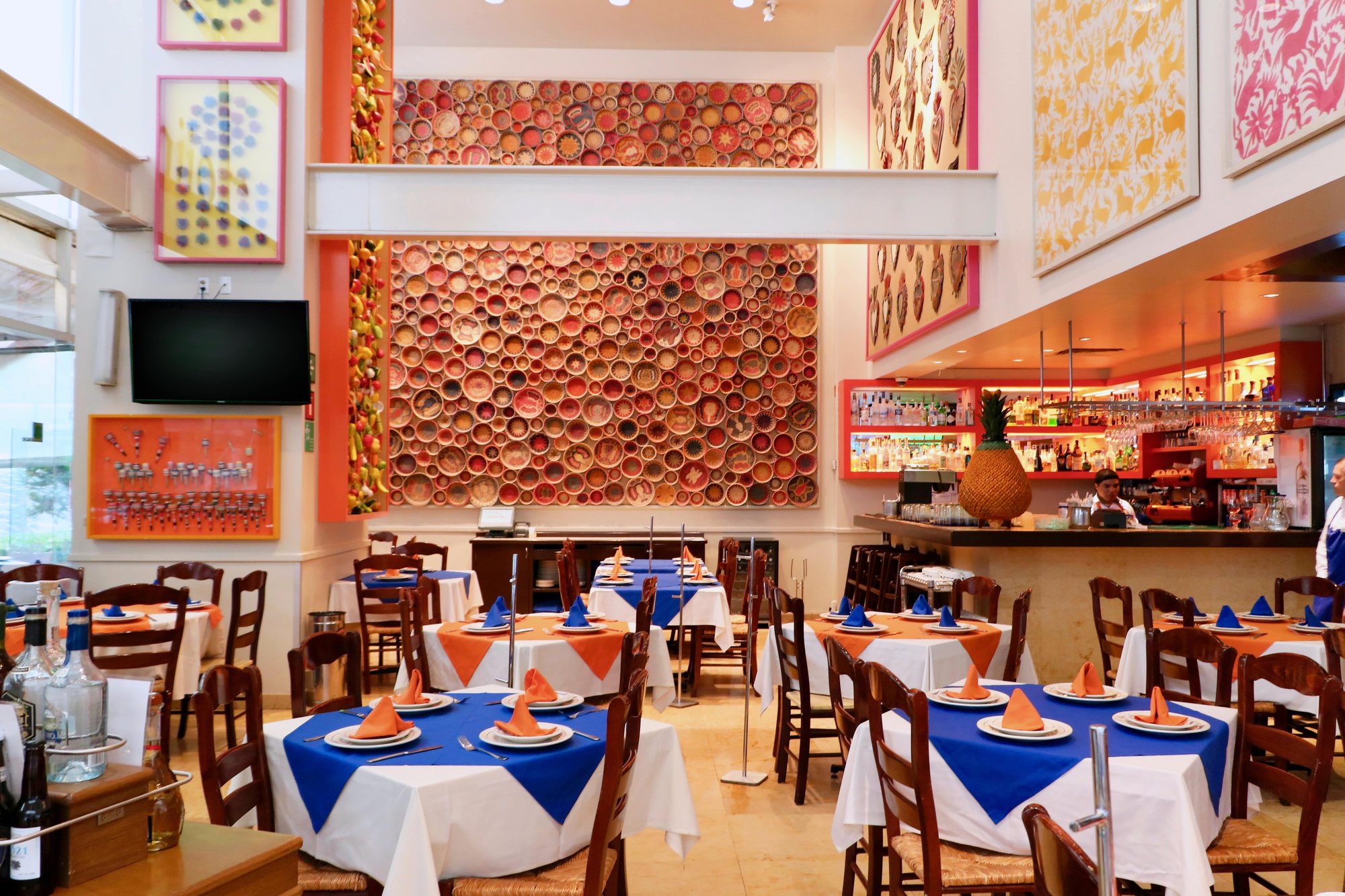
Approaching El Bajio on a weekday afternoon, the first signal is volume in the leading sense: the sound of a full dining room mid-service. Polanco's streets carry a measured quiet, but the room inside is animated in the way that Mexican family-style dining historically has been, where the meal is the occasion and conversation is part of the format. The physical environment reads as deliberate comfort rather than designed restraint. This is not the studied minimalism of the city's higher modernist tables. It is a room that expects you to stay longer than you planned.
For groups marking an anniversary, a birthday, or a professional milestone, that atmosphere is precisely the point. The occasion-dining calculus in Mexico City increasingly favours tables that can accommodate multiple generations at the same sitting. El Bajio's format is built for that. The comparison to, say, Rosetta in Roma Norte is instructive: both occupy the mid-to-upper tier of their respective neighbourhoods, but Rosetta skews intimate and European in register, while El Bajio skews communal and emphatically Mexican.
The Cooking as Context
Traditional Mexican regional cooking has its own hierarchy of difficulty, and El Bajio works within that hierarchy seriously. The canon of central Mexican cuisine, with its complex mole preparations, slow-cooked proteins, and masa-based foundations, demands a kind of institutional memory that is harder to maintain at scale than innovation is. Getting a mole negro right across hundreds of covers is a different problem from developing a new dish for a ten-seat tasting counter.
That institutional dimension is part of what gives El Bajio its authority in a city that has no shortage of options across every price point. Across Mexico, traditional-register restaurants of this type have had to contend with the gravitational pull of modernist recognition. The Michelin expansion into Mexico City, which brought international attention to tables like Pujol and Quintonil, implicitly repositioned traditional cooking as the lesser conversation. El Bajio resists that framing by simply continuing to do what it does with consistency.
For broader context on how Mexico's dining scene extends beyond the capital, the range is considerable: from Animalón in Valle de Guadalupe to Le Chique in Puerto Morelos, from KOLI Cocina de Origen in Monterrey to Levadura de Olla Restaurante in Oaxaca. Each of those addresses anchors a different regional tradition. El Bajio's Polanco location places it at the intersection of traditional technique and one of the city's highest-spending neighbourhoods, a combination that shapes both its clientele and its pricing expectations.
Planning the Meal
El Bajio is located at Alejandro Dumas 7 in the Polanco IV Secc section of Miguel Hidalgo, postal code 11550. The address puts it within walking distance of the neighbourhood's main commercial corridor and a short distance from the Parque Lincoln side of Polanco, which is the quieter residential end of the district. For visitors staying in Polanco or arriving from other parts of the city, the location is accessible via the Polanco metro station on Line 7.
Because the venue database does not carry current hours, pricing, or booking method details, direct contact or a current reservation platform check is the appropriate route for planning. Polanco restaurants in this category do tend to fill at weekends, particularly for the 2pm to 4pm lunch window that remains the primary occasion-dining slot in Mexico City. For celebrations involving larger groups, advance coordination is advisable regardless of any formal booking requirement.
For those building a wider Mexico City itinerary, our full Mexico City restaurants guide covers the spectrum from traditional to contemporary. Further afield, addresses worth noting include Lunario in El Porvenir, HA' in Playa del Carmen, Pangea in San Pedro Garza Garcia, Olivea Farm to Table in Ensenada, Alcalde in Guadalajara, and Arca in Tulum. For international reference points in the occasion-dining tier, Le Bernardin in New York City and Lazy Bear in San Francisco represent how different cities calibrate the special-occasion format.
At a Glance: El Bajio vs. Polanco Peers
| Venue | Register | Price Tier | Format |
|---|---|---|---|
| El Bajio | Traditional Mexican | Not confirmed | Full-service, communal |
| Pujol | Contemporary Mexican | $$$$ | Tasting menu |
| Quintonil | Modern Mexican | $$$$ | Tasting menu / à la carte |
| Em | Mexican | $$$ | À la carte |
| Rosetta | Italian, Creative | $$ | À la carte |
Frequently Asked Questions
What's the leading thing to order at El Bajio?
Detailed menu data for El Bajio is not confirmed in our current records. For traditional Mexican restaurants in this register, the central preparations to seek out are typically the mole-based dishes, which require the most accumulated technique, and masa-based starters, which signal the kitchen's approach to the fundamentals. Contact the restaurant directly or check a current review source for specific dish recommendations before your visit.
How hard is it to get a table at El Bajio?
Without current booking data, a definitive answer is not possible. In Polanco broadly, tables at established traditional restaurants fill faster at weekends and during Mexico's extended holiday periods, including Semana Santa and Día de Muertos season. If you are planning around a specific occasion date, it is worth reaching out well in advance. The Polanco dining scene is competitive enough that spontaneous weekend walk-ins at popular addresses often don't succeed.
What's El Bajio leading at?
El Bajio's positioning in the Polanco scene is anchored in traditional regional Mexican cooking, which places it in a different competitive set from the neighbourhood's modernist tasting-menu tables. Its authority lies in depth of preparation and consistency across classic dishes rather than innovation. For diners whose occasion calls for something rooted in Mexican culinary tradition rather than its contemporary reinterpretation, that is precisely the point of the address.
Can El Bajio handle vegetarian requests?
Traditional central Mexican cooking does include a significant range of vegetable and masa-based preparations that are naturally meat-free, though the kitchen's specific approach to dietary requests is not confirmed in our data. The safest route is to contact El Bajio directly before booking. For Mexico City vegetarian considerations more broadly, the city's traditional cooking canon offers more flexibility than its reputation sometimes suggests.
Is eating at El Bajio worth the cost?
Current pricing is not confirmed in the venue database, so a direct cost-to-value assessment is not possible here. As a frame of reference, traditional-register restaurants in Polanco typically price below the neighbourhood's modernist tasting-menu tables, which run at the $$$$ tier. The value question for occasion dining always turns on whether the format matches the moment. For a celebration that calls for a communal, traditionally grounded Mexican meal in one of the city's most established dining neighbourhoods, El Bajio's positioning addresses that specific need.
How does El Bajio fit into Mexico City's broader tradition of preserving regional Mexican recipes?
Mexico City has long functioned as a consolidation point for regional Mexican cooking traditions, with restaurants from each state maintaining outposts in the capital. El Bajio, in Polanco, participates in that tradition by anchoring central Mexican preparations in a neighbourhood otherwise dominated by modernist and international formats. This makes it a reference point within a distinct category of Mexico City dining: addresses where the goal is preservation and depth of execution rather than reinterpretation. For visitors building an understanding of Mexican cuisine across its range, addresses like Levadura de Olla in Oaxaca and KOLI in Monterrey represent the same instinct in different regional contexts.
More restaurants in Mexico City
- QuintonilQuintonil is Mexico City's strongest argument for a special occasion table, with two Michelin stars, a #7 World's 50 Best ranking in 2024, and the 2025 Best Restaurant in North America title. Book lunch for value and calm; book dinner for the full celebration arc. Reservations are Near Impossible — start early or you will miss it.
- PujolPujol is Mexico City's most credentialed restaurant: two Michelin stars, a sustained World's 50 Best ranking since 2011, and a tasting menu format built around indigenous Mexican ingredients and serious technique. Book it for a special occasion in Polanco, but plan well ahead — this is one of the hardest reservations in Latin America.
- RosettaA Michelin-starred, World's 50 Best Top 35 restaurant at $$ pricing — Rosetta is the most compelling value proposition among Mexico City's serious restaurants. Chef Elena Reygadas' plant-forward reinterpretations of Mexican classics in a Roma Norte mansion justify the near-impossible booking difficulty. Plan four to six weeks ahead for dinner, closed Sundays.
Related editorial
- Best Fine Dining Restaurants in ParisFrom three-Michelin-star icons to the next generation of Parisian chefs pushing boundaries, these are the restaurants that define fine dining in the world's culinary capital.
- Best Luxury Hotels in RomeFrom rooftop terraces overlooking ancient ruins to Michelin-starred hotel dining, these are the luxury hotels that make Rome unforgettable.
- Best Cocktail Bars in KyotoFrom sleek lounges to hidden speakeasies, Kyoto's cocktail scene blends Japanese precision with global influence in ways you won't find anywhere else.
Save or rate El Bajio on Pearl
Keep this venue in your Pearl passport, rate it after you visit, and track it alongside every other place you collect.