
Restaurant in Mittelberg, Austria
Das Naturhotel Chesa Valisa
100ptsAlpine Naturhotel Seclusion
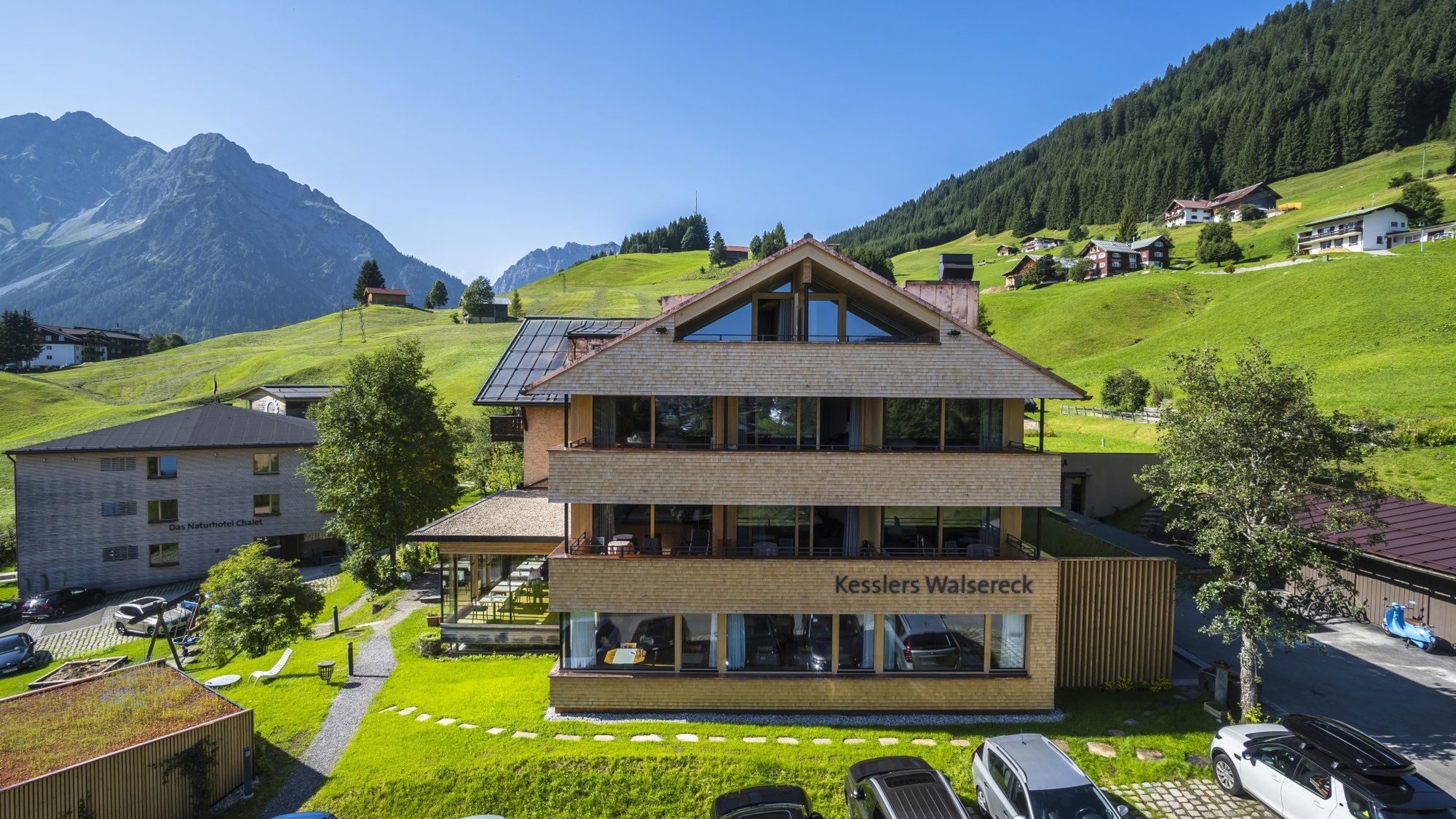
About Das Naturhotel Chesa Valisa
Guests enjoy organic food prepared with care.
Alpine Quiet as a Design Principle: The Kleinwalsertal Hotel Tradition
The Kleinwalsertal valley in the Vorarlberg Alps sits in one of those geographic anomalies that quietly shapes everything around it. Mittelberg and its sister villages — Hirschegg, Riezlern, Mittelberg proper — form a valley accessible by road only from Germany, yet politically part of Austria, operating inside a customs-free zone that for decades drew visitors who came less for spectacle and more for the texture of the place itself: the spruce forests, the compressed-light afternoons, the architecture that reads as village first and resort second. Das Naturhotel Chesa Valisa sits within this tradition, on Gerbeweg 18 in Hirschegg, positioned as the valley's nature-hotel representative in a region where the distinction between a wellness retreat and a mountain lodge has long been contested terrain.
The "Naturhotel" designation in German-speaking Europe carries specific weight. It signals not just proximity to nature but an operational philosophy: materials sourcing, energy approach, food provenance, a deliberate friction with the mass-market alpine resort model. In Austria and southern Germany, this category has grown considerably since the early 2000s, as a subset of travellers began pushing back against the infrastructure-heavy ski resort formula. The Chesa Valisa name itself gestures toward Rhaeto-Romanic linguistic heritage , "chesa" meaning house in Romansh , a cultural echo of the broader alpine corridor that connects Vorarlberg to Graubünden across the Swiss border.
Where Hirschegg Sits in the Mittelberg Dining Scene
Dining in the Kleinwalsertal follows a pattern common to compact Austrian alpine valleys: a cluster of restaurants serving the valley's core villages, differentiated more by register than by geography. In Mittelberg, Haller's (Classic Cuisine) operates in the classic cuisine bracket at the €€ price point, while Carnozet, Kesslers Walsereck, and Sonnenstüble round out a dining scene that is village-scaled rather than resort-scaled. The full picture of how these venues relate to one another is covered in our full Mittelberg restaurants guide.
Hotel dining in this context tends to serve a dual function: anchoring in-house guests who may not venture out after a day on the mountain, while also functioning as a neighbourhood table for locals and repeat visitors with longer seasonal relationships to the valley. The naturhotel format often amplifies this by building menus around regional and organic sourcing , a structural choice that connects the dining experience to the same values that drew guests to the property in the first place.
Austrian Alpine Cuisine in Context
The culinary tradition of the Austrian alpine west , Vorarlberg, Tyrol, Salzburgerland , has a different character from the wine-country cooking of the east. Here the reference points are Alm dairy culture, Walser farming heritage, lake fish from the Bodensee corridor, and a pantry shaped by altitude and seasonality. Dishes built around Bergkäse, Käsespätzle, and river trout reflect a larder logic that predates the tourist economy. The better alpine hotel restaurants in this tradition hold these references seriously rather than treating them as decor.
For context on how Austria's dining scene operates at its upper registers, it is worth noting the range the country produces: from Steirereck im Stadtpark in Vienna and Landhaus Bacher in Mautern an der Donau in the east, through Obauer in Werfen and Döllerer in Golling an der Salzach in Salzburgerland, to alpine-format properties like Gourmetrestaurant Tannenhof in Sankt Anton am Arlberg and Stüva in Ischgl further east in Tyrol. Each of these represents a distinct inflection of Austrian alpine cooking. Schwarzer Adler in Hall in Tirol and Restaurant 141 by Joachim Jaud in Mieming extend that range further. The herb-focused approach seen at Kräuterreich by Vitus Winkler in Sankt Veit im Pongau and the wine-country sensibility of Taubenkobel in Schützen am Gebirge anchor the eastern end of the Austrian culinary spectrum. Meanwhile, Ois in Neufelden shows how contemporary Austrian cooking is pushing into less obvious regional centres.
Within this broader geography, Vorarlberg hotel dining occupies a particular niche: the clientele is often repeat, the seasons are compressed around winter skiing and summer hiking, and the leading kitchens tend to frame local produce as the editorial point rather than a supporting note. Internationally, the community-driven tasting format seen at venues like Lazy Bear in San Francisco and the provenance-led precision of Le Bernardin in New York City reflect a wider shift toward sourcing transparency that alpine naturhotel kitchens in the German-speaking world have been practicing, in quieter form, for considerably longer.
Planning a Visit
Das Naturhotel Chesa Valisa is located at Gerbeweg 18 in Hirschegg, within the Kleinwalsertal. The valley is reached by road from Oberstdorf in Bavaria , there is no direct road access from the Austrian side , making it practically oriented toward guests arriving from southern Germany as well as Austrian and Swiss travellers who approach via Oberstdorf. The customs-free status of the valley historically made it an attractive destination for cross-border visitors, a logistical quirk that still shapes the guest mix today. Specific pricing, booking methods, and seasonal hours are not currently listed in verified form; prospective guests should contact the property directly to confirm availability and any seasonal closures, which are common in alpine properties during the shoulder periods between winter and summer seasons.
Frequently Asked Questions
What's the must-try dish at Das Naturhotel Chesa Valisa?
Specific menu details are not available in verified form for Das Naturhotel Chesa Valisa at this time. However, naturhotel kitchens in the Vorarlberg region typically build menus around Alm dairy products, regional mountain herbs, and seasonal game , categories that reflect the valley's farming and foraging heritage rather than imported culinary frameworks. For the broader Mittelberg dining scene, venues like Haller's (Classic Cuisine) offer a documented classic cuisine benchmark against which to calibrate expectations.
What's the leading way to book Das Naturhotel Chesa Valisa?
Verified booking details are not currently listed in the EP Club database for this property. Given the valley's geography and the seasonal compression of the Kleinwalsertal calendar, the Mittelberg and Hirschegg accommodation market tends to fill quickly around the winter ski season and the summer hiking period. Contacting the hotel directly ahead of peak season is advisable. The Austrian alpine hotel category generally , including properties across Vorarlberg and Tyrol , rewards early planning, particularly for stays coinciding with school holiday windows in Germany, Austria, and Switzerland.
What's the defining dish or idea at Das Naturhotel Chesa Valisa?
Without verified menu data, the defining culinary idea at Das Naturhotel Chesa Valisa can be approached through the naturhotel framework the property operates within. That category, in Austrian and German alpine hospitality, signals a kitchen oriented around organic and regional sourcing, reduced food miles, and seasonal menus tied to what the surrounding landscape produces. This is a structural commitment rather than a marketing position, and it distinguishes naturhotel dining from the broader alpine hotel category.
What makes the Kleinwalsertal location of Das Naturhotel Chesa Valisa unusual for an Austrian property?
The Kleinwalsertal is an Austrian exclave that can only be reached by road from Germany, through Oberstdorf in Bavaria. Despite being legally and administratively Austrian, the valley operates within a customs-free zone and is oriented toward the German road network, which shapes both its guest profile and its everyday commercial relationships. For a naturhotel positioned around regional identity, this geographic anomaly is worth understanding: "regional" in the Kleinwalsertal context means the broader Allgäu-Vorarlberg alpine corridor rather than any single national culinary tradition.
Related editorial
- Best Fine Dining Restaurants in ParisFrom three-Michelin-star icons to the next generation of Parisian chefs pushing boundaries, these are the restaurants that define fine dining in the world's culinary capital.
- Best Luxury Hotels in RomeFrom rooftop terraces overlooking ancient ruins to Michelin-starred hotel dining, these are the luxury hotels that make Rome unforgettable.
- Best Cocktail Bars in KyotoFrom sleek lounges to hidden speakeasies, Kyoto's cocktail scene blends Japanese precision with global influence in ways you won't find anywhere else.
Save or rate Das Naturhotel Chesa Valisa on Pearl
Keep this venue in your Pearl passport, rate it after you visit, and track it alongside every other place you collect.