
Restaurant in Padua, Italy
Crazy Tuna Tropical sushi
100ptsTropical-Inflected Roll Counter
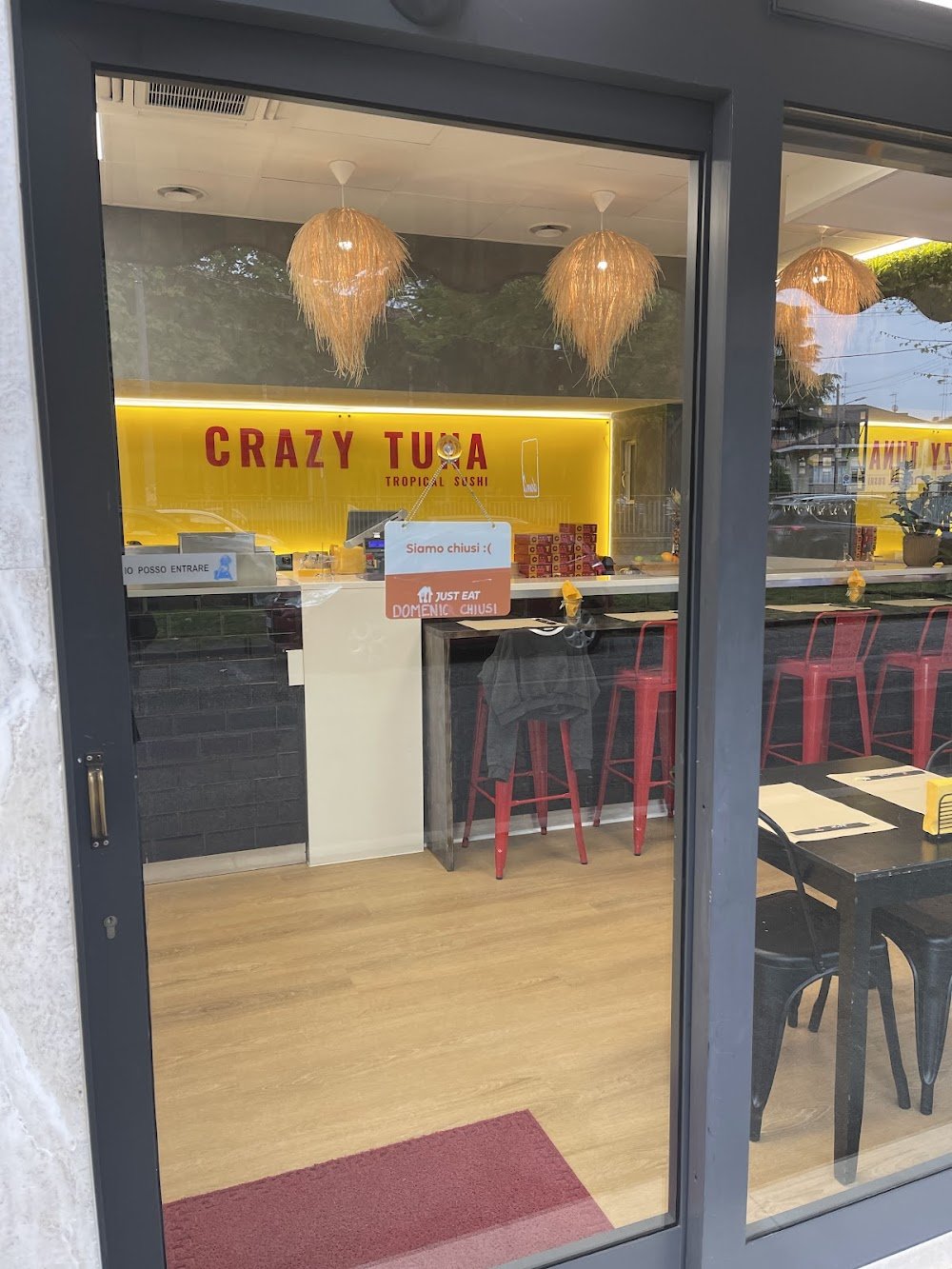
About Crazy Tuna Tropical sushi
Crazy Tuna Tropical Sushi brings Japanese-style raw fish dining to Viale S. Giovanni Bosco in Padua, a city whose restaurant scene has gradually expanded beyond its Veneto roots to absorb global formats. Within a local dining culture that still privileges slow, course-driven meals, a tropical-inflected sushi address represents a distinct shift in pace and ritual.
Raw Fish in a Risotto City
Padua's dining identity is built on slow meals: wine poured early, bread arriving without ceremony, and courses that arrive with deliberate spacing. The city's trattorias and mid-range bistros, places like Ai Porteghi Bistrot and Belle Parti, still follow this northern Italian rhythm, where the meal is structured around a sequence of decisions rather than a single plate placed in front of you. Against that backdrop, the arrival of Japanese-adjacent sushi formats in mid-sized Italian cities represents something worth examining: not as novelty, but as a genuine shift in how a younger urban dining public thinks about sitting down to eat.
Crazy Tuna Tropical Sushi occupies an address on Viale S. Giovanni Bosco, a stretch that sits within the broader residential and commercial fabric south of Padua's historic centre. The name signals its angle immediately: tropical inflections layered onto a sushi base, the kind of format that has proliferated across European cities where the appetite for Japanese technique meets local preferences for bolder, fruitier flavour profiles. This is not the austere, counter-service omakase tradition of Tokyo or the hyper-technical precision programs you'd find at places like Le Bernardin in New York City. The register is different, the pacing looser, and the expectation is that the meal moves at a rhythm the diner controls.
The Ritual of Eating Sushi in a Non-Sushi City
Part of what defines the sushi experience in Italian cities is how the dining customs of both cultures negotiate with each other. In Japan, omakase counters operate on strict sequencing, each piece timed and temperature-managed, the chef dictating the pace entirely. In Italy, the meal is collaborative: you order, you wait, you reorder. The experience at a tropical sushi address in Padua likely sits somewhere between those poles, closer to the Italian model of individual agency over the meal's structure, but shaped by the shared-plate logic that sushi formats naturally encourage.
That negotiation between cultures produces a particular kind of meal. Diners at this type of venue tend to graze across a table of rolls and nigiri, sharing pieces in a way that has more in common with the Italian cicchetti tradition, small bites passed around a table with wine or spritz, than with the solitary, contemplative counter experience. Enotavola Pino, Padua's more established seafood address, handles raw and cooked fish within a recognisably Italian framework. A tropical sushi format handles it within a hybrid one, and that distinction shapes everything from how you order to how long you stay.
Where Padua's Casual Dining Tier Sits
Padua's restaurant ecosystem is not uniform. At the higher end, Le Calandre in Rubano, just outside the city, operates at three-Michelin-star level, setting a ceiling that defines the region's ambitions. Italy more broadly has produced dining institutions of the stature of Osteria Francescana in Modena, Dal Pescatore in Runate, and Reale in Castel di Sangro, each defining a version of serious Italian cuisine. Crazy Tuna Tropical Sushi operates in an entirely different register, the casual-to-mid-tier bracket that functions on footfall, repeat local custom, and approachable price points rather than on tasting-menu prestige.
Within that casual tier, Padua has a range of options. Ai Navigli and Casa Barozzi represent local formats rooted in Italian ingredients and preparations. A tropical sushi spot serves a different appetite: diners who want raw fish, a setting that feels somewhere between casual and designed, and a meal that doesn't require a reservation made weeks in advance or a commitment to a three-hour sequence of courses.
Sushi's Trajectory Across Northern Italy
The spread of sushi restaurants across northern Italian cities in the past fifteen years tracks a familiar European pattern. First came Japanese-owned, technically serious addresses in Milan and Turin. Then came the broader proliferation: Chinese-owned Japanese-format restaurants, Brazilian-Japanese fusion chains, and eventually the tropical or fusion-inflected independents that occupy the category Crazy Tuna represents. Cities like Padua, Verona, and Vicenza absorbed this wave later than Milan, and with less of the quality-differentiation pressure that operates in larger urban markets.
That context matters for how you read any sushi address in a city like Padua. The comparison set is local and regional rather than international. The question is not how the fish compares to what you'd find at Atelier Moessmer Norbert Niederkofler or Uliassi in Senigallia, where the technical standards and sourcing networks are built around decades of seafood expertise. The question is whether the experience delivers on its own terms: fresh product, honest pricing, and a dining room that gives you the meal it promises.
Planning a Visit
Crazy Tuna Tropical Sushi is located at Viale S. Giovanni Bosco 8c in Padua, placing it away from the tourist concentration around the Prato della Valle and the Basilica di Sant'Antonio. That address suggests it operates as a neighbourhood restaurant drawing regular local trade rather than as a destination for visitors staying in the centro storico. For contact details, current hours, and booking options, checking directly via search or maps is the practical approach, as no website or phone number is currently listed through EP Club's records.
For those building a broader Padua dining itinerary, the city's mid-range offers range from the contemporary bistro format at Ai Porteghi Bistrot to the seafood-led approach at Enotavola Pino. A full survey of options across price tiers and cuisine types is available in our full Padua restaurants guide. Italy's serious dining at the higher end, from Piazza Duomo in Alba to Enoteca Pinchiorri in Florence and Enrico Bartolini in Milan, operates in a different category entirely, but knowing where that ceiling sits helps calibrate expectations for every other address in the region.
Frequently Asked Questions
- What's the must-try dish at Crazy Tuna Tropical Sushi?
- EP Club does not currently hold verified menu data for Crazy Tuna Tropical Sushi, so naming a specific dish would be speculation. Given the venue's tropical-inflected sushi positioning, the likely emphasis is on rolls combining raw fish with fruit-forward or spiced elements, the format that defines this style of Japanese-adjacent restaurant across European markets. Checking the current menu directly before visiting is the most reliable approach.
- How hard is it to get a table at Crazy Tuna Tropical Sushi?
- In a city the size of Padua, casual sushi addresses at this price tier typically operate without the booking pressure of destination restaurants. If the venue follows the pattern of comparable European sushi spots in mid-sized Italian cities, walk-ins are generally possible outside peak dinner hours on weekdays, with weekend evenings requiring more forward planning. No booking data is confirmed in EP Club's records, so contacting the venue directly is advisable.
- What's the signature at Crazy Tuna Tropical Sushi?
- The name itself points to the venue's positioning: tuna, handled with tropical inflections, likely forms the backbone of the offer. In the tropical sushi format common across European markets, this typically means fish paired with mango, passion fruit, or chilli-lime preparations rather than the restrained soy-and-wasabi presentation of more classically Japanese addresses. Specific dish details are not confirmed in EP Club's records.
- Is Crazy Tuna Tropical Sushi a good option for diners unfamiliar with Japanese dining customs?
- The tropical sushi format is generally among the most accessible entry points into raw fish dining in European cities. Unlike formal omakase counters, where the chef controls the sequence and pace, this style of restaurant in Padua follows the shared-plate logic familiar to Italian diners: order broadly, share across the table, and set your own pace. That structure makes it a practical choice for groups with mixed familiarity with Japanese food conventions.
Related editorial
- Asia's 50 Best Restaurants 2026: The Chairman and Wing Go 1-2 from the Same BuildingThe Chairman takes No. 1 and Wing climbs to No. 2 at Asia's 50 Best Restaurants 2026. Both operate from the same Hong Kong building. Here's what it means.
- Four Seasons Yachts Debut: 95 Suites, 11 Restaurants, and a March 2026 Maiden VoyageFour Seasons I launches March 20, 2026, with 95 suites, a one-to-one staff ratio, and 11 onboard restaurants. Worth tracking if you want hotel-grade service at sea.
- LA Michelin Guide 2026: Seven New Restaurants from Tlayudas to Uzbek DumplingsMichelin's March 2026 California Guide update adds six LA restaurants and one Montecito newcomer, spanning Oaxacan tlayudas, Uzbek manti, and Korean-Italian pasta.
Save or rate Crazy Tuna Tropical sushi on Pearl
Keep this venue in your Pearl passport, rate it after you visit, and track it alongside every other place you collect.