
Restaurant in Zwevezele, Belgium
Coeur d'Amis
150ptsWest Flemish Table Sourcing

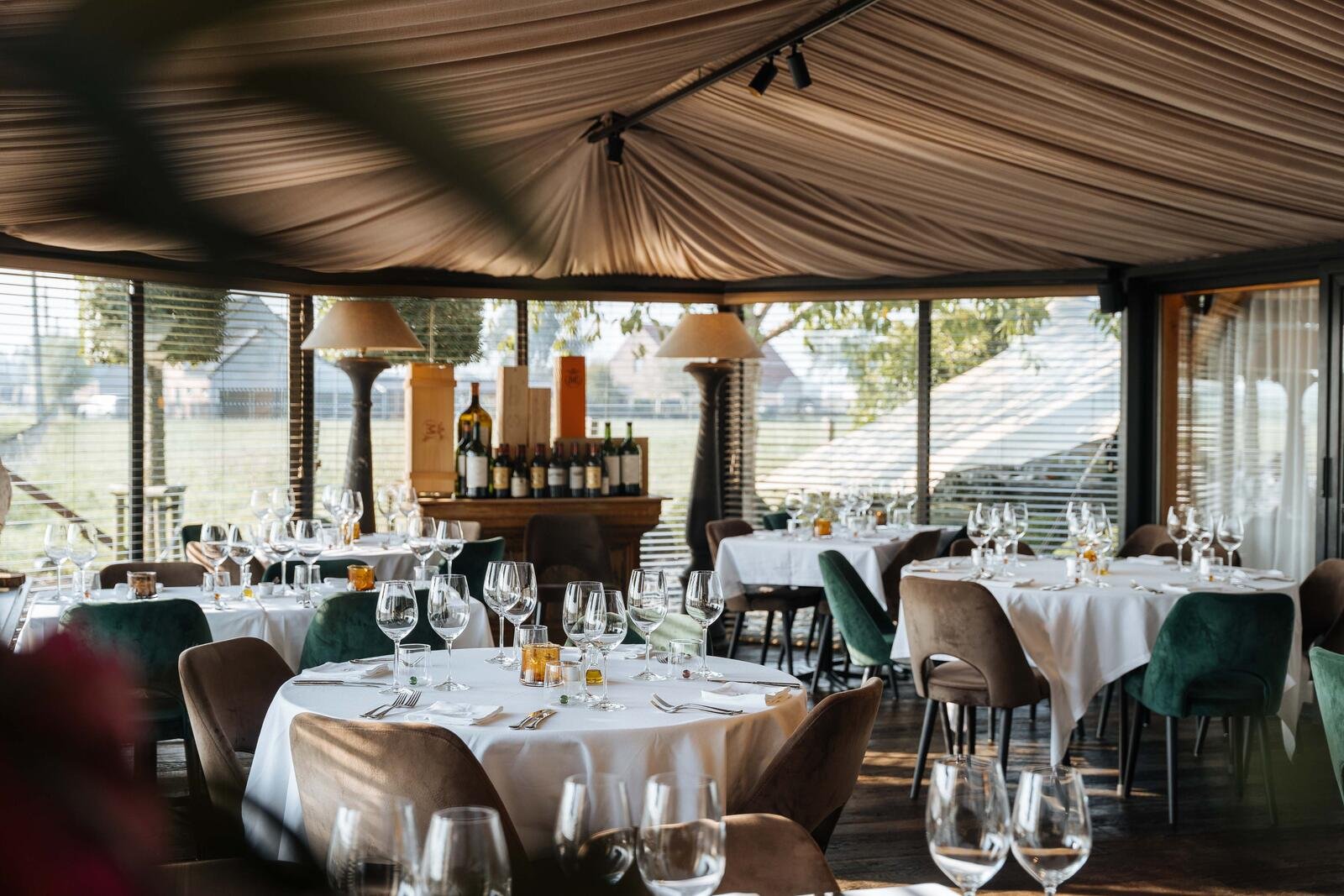
About Coeur d'Amis
Coeur d'Amis in Zwevezele earned a White Star recognition from Star Wine List in June 2024, placing it among the West Flemish restaurants where wine program depth is taken seriously. Located on the Kortrijksteenweg in Wingene, it sits in the quieter agricultural corridor between Bruges and Ghent, where Belgian dining at this level tends to draw a local but well-informed crowd.
Where West Flanders Eats Without the Fanfare
The road into Zwevezele from Roeselare or Bruges passes through a flat, agricultural corridor of West Flanders that most international visitors drive through without stopping. That pattern is common across the region: the villages between the coastal strip and the larger Flemish cities hold restaurants that function primarily for the communities around them, drawing regulars from a 20- to 40-kilometre radius who treat them as weekly or monthly fixtures rather than special-occasion destinations. Coeur d'Amis, at Kortrijksteenweg 43 in Wingene, sits inside that logic. It is not competing for the same attention as Boury in Roeselare or Hof van Cleve in Kruishoutem. Its reference points are more grounded, more local, and arguably more honest for it.
The Wine Recognition That Places It
In June 2024, Star Wine List published Coeur d'Amis and awarded it a White Star, the platform's recognition for restaurants whose wine programs meet a defined quality threshold. Star Wine List's editorial team covers restaurants across Europe with particular attention to list curation, producer selection, and the ambition of a wine program relative to the restaurant's size and context. A White Star at this level in a West Flemish village is a signal worth reading carefully: it suggests a wine list that goes beyond the regional average, with choices that reflect genuine engagement with producers rather than a wholesale catalog default.
In Belgium, where the dining culture has long supported serious wine programs at all price points, that kind of recognition in a smaller commune carries real weight. The country's restaurant wine culture benefits from proximity to French, Dutch, and German distribution networks, and from a dining public that is, on average, more wine-literate than its counterparts in many northern European markets. West Flanders in particular has a tradition of restaurants where the cellar is taken as seriously as the kitchen. Bartholomeus in Heist and Willem Hiele in Oudenburg represent the coastal end of that spectrum. Coeur d'Amis sits further inland, in a quieter register, but the Star Wine List recognition aligns it with a tradition where wine and food are considered together rather than sequentially.
Ingredient Sourcing in the West Flemish Context
West Flanders is one of the most productive agricultural regions in Belgium, and the restaurants that take their sourcing seriously here have direct access to a supply chain that larger city restaurants often have to work harder to reach. The flat polderland between Bruges and Ghent produces chicory, leeks, potatoes, and beets on a commercial scale, but the smaller growers operating within that same geography supply restaurants in the region with seasonal produce that reflects what the soil and climate actually deliver. This proximity to ingredients is one reason why village restaurants in this part of Belgium can punch above their apparent weight: the raw material arrives fresher, at lower cost, and with less logistical friction than in an urban kitchen.
The sourcing dynamic matters because it shapes what a restaurant like Coeur d'Amis can offer in practice. Belgian restaurants at the upper end of the market, from Zilte in Antwerp to Bozar in Brussels, have built their identities partly on Belgian product specificity: North Sea fish, Ardennes game, Mechelen asparagus, Zeeland oysters. The same ingredient culture filters down into regional tables, where it is often expressed with less ceremony but equal integrity. A restaurant operating in Wingene has natural access to that agricultural network in a way that reinforces rather than mimics the sourcing credentials of its city counterparts.
The Peer Set and What It Implies
Comparing Coeur d'Amis to the restaurants on Belgium's formal award circuits is not the useful exercise here. The relevant comparison is with the layer of Belgian dining that functions between the destination table and the neighborhood brasserie: restaurants where you eat well, drink well, and pay a fair price without the occasion being defined by ceremony. Castor in Beveren, Cuchara in Lommel, and De Jonkman in Sint-Kruis each occupy a version of that tier with their own regional character. Coeur d'Amis sits in the same broad category, with the White Star wine recognition giving it a specific credential that not every restaurant in that middle band can claim.
Locally, the closest reference point in Zwevezele itself is Bistro Cuisine Kwizien, which takes a modern approach to Flemish cooking in the same village. The presence of two restaurants with distinct editorial identities in a commune of this size is itself a signal about the local appetite for dining that goes beyond convenience.
Getting There and Planning Your Visit
Zwevezele sits roughly equidistant between Bruges and Ghent, with Roeselare the nearest larger city to the south. Arriving by car is the practical option for most visitors; the village is not on a major rail line, and the address at Kortrijksteenweg 43 in Wingene sits along the main road corridor that connects the area's smaller communes. For visitors staying in Bruges, the drive is manageable as an evening out; for those based in Ghent, the route west on the E40 before turning into the agricultural interior is direct. The restaurant's Star Wine List recognition makes advance planning on the wine side worthwhile: recognitions at this level in Belgium tend to correlate with lists that reward conversation with the floor staff rather than defaulting to familiar labels.
For a broader sense of what the area offers, our full Zwevezele restaurants guide covers the dining picture across the village. Those planning a longer stay in the region can also refer to our Zwevezele hotels guide, our bars guide, our wineries guide, and our experiences guide for the wider commune. For those using the trip as a starting point into broader Belgian dining, d'Eugénie à Emilie in Baudour represents the kind of regional destination that rewards a longer route through the country.
Frequently Asked Questions
- What is the overall feel of Coeur d'Amis?
- The feel is consistent with the West Flemish village restaurant tradition: grounded rather than performative, with a wine program that signals more ambition than the setting might initially suggest. Its White Star recognition from Star Wine List in 2024 places it in a tier where the cellar is taken as seriously as the kitchen. For Zwevezele specifically, it represents the more formal end of local dining without the ceremony of a destination-category restaurant.
- What is Coeur d'Amis leading at?
- Based on its Star Wine List White Star recognition, the wine program is the clearest documented strength. In the broader context of Belgian regional dining, that kind of recognition correlates with a list that shows genuine producer engagement and curatorial thought. The kitchen's approach is not documented in detail in available records, but a restaurant that invests in its wine program at this level in a village setting tends to match that investment on the food side.
- What is the leading thing to order at Coeur d'Amis?
- Specific menu details are not available in current records. As a general principle at restaurants with a White Star wine credential in this region, the approach worth taking is to ask the floor team to lead on wine and build the food choice around it rather than the reverse. Belgian regional cooking at this level tends to follow seasonal produce logic, so timing your visit around what is in season in West Flanders gives the leading orientation.
- Do they take walk-ins at Coeur d'Amis?
- Booking details are not confirmed in available records. For a restaurant operating at this level in a Belgian village, advance booking is the sensible approach, particularly on weekend evenings when regional regulars tend to fill smaller dining rooms. Arriving without a reservation mid-week at lunch carries lower risk in most comparable settings, but contacting the restaurant directly before visiting is advisable.
- Can I bring kids to Coeur d'Amis?
- No specific family policy is confirmed in available records. Belgian village restaurants in this price tier and format generally accommodate families more readily than formal urban destination tables. If the occasion is important, confirming directly with the restaurant is the practical step. The Zwevezele setting, without the density and noise of a city dining room, tends to make the environment less pressured for families than an equivalent urban equivalent.
Recognized By

Similar venues by awards
Related editorial
- Asia's 50 Best Restaurants 2026: The Chairman and Wing Go 1-2 from the Same BuildingThe Chairman takes No. 1 and Wing climbs to No. 2 at Asia's 50 Best Restaurants 2026. Both operate from the same Hong Kong building. Here's what it means.
- Four Seasons Yachts Debut: 95 Suites, 11 Restaurants, and a March 2026 Maiden VoyageFour Seasons I launches March 20, 2026, with 95 suites, a one-to-one staff ratio, and 11 onboard restaurants. Worth tracking if you want hotel-grade service at sea.
- LA Michelin Guide 2026: Seven New Restaurants from Tlayudas to Uzbek DumplingsMichelin's March 2026 California Guide update adds six LA restaurants and one Montecito newcomer, spanning Oaxacan tlayudas, Uzbek manti, and Korean-Italian pasta.
Save or rate Coeur d'Amis on Pearl
Keep this venue in your Pearl passport, rate it after you visit, and track it alongside every other place you collect.