
Restaurant in Flayosc, France
Château de Berne
125ptsGarden-to-Table Provençal Terroir

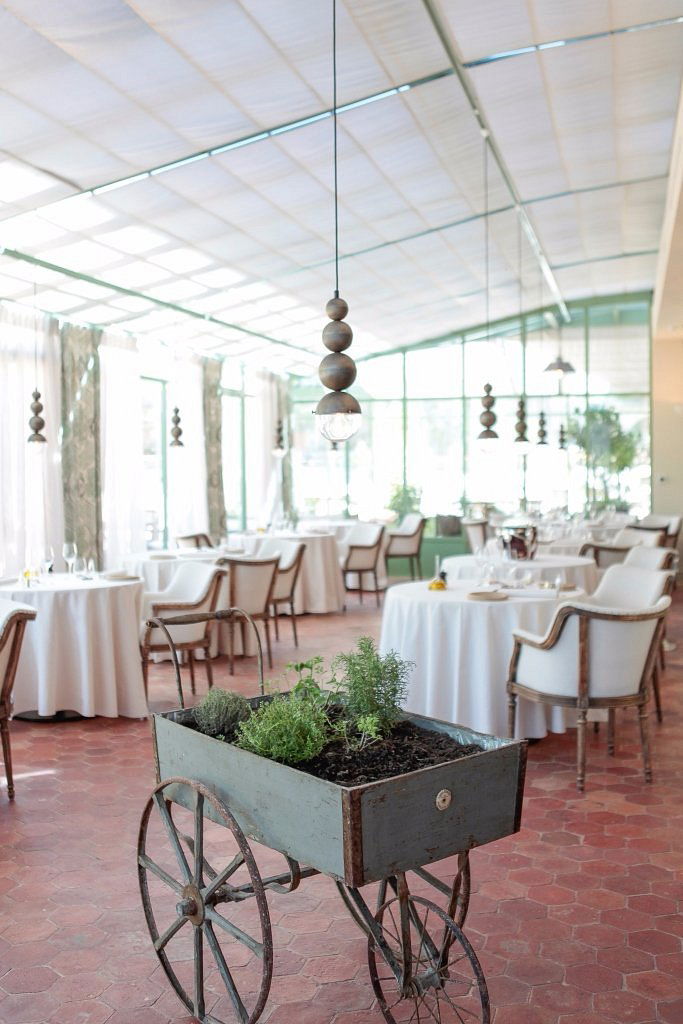
About Château de Berne
Set across 1,300 acres of Var countryside, Château de Berne holds a Michelin Star and a Green Star (2025) for a kitchen that draws directly from its estate gardens and surrounding Provençal terroir. Chef Benjamin Collombat leads the table at this Relais & Châteaux property, where the cooking is inseparable from the land it sits on. Multiple dining formats serve different appetites, from the flagship restaurant to a casual bistrot.
Where the Var's Agricultural Depth Meets the Plate
Approaching Château de Berne along the Chemin des Imberts outside Flayosc, the scale of the estate registers before any building does. Nineteen hundred acres of Var garrigue, vineyards, and kitchen gardens extend across the hillsides, and the sense that you are entering a working agricultural domain rather than a resort is immediate. This is not incidental to the dining experience here — it is the architecture of it. In Provence, the leading kitchens have always drawn their authority from proximity to source: the market garden at dawn, the estate vineyard at harvest, the olive grove in October. Château de Berne operates at the far end of that tradition, where sourcing is not a menu footnote but a structural commitment that spans the estate's 1,300 cultivated acres.
That commitment is recognised by Michelin in a way that goes beyond the single star awarded to the flagship table in 2025. The simultaneous award of a Green Star — Michelin's marker for kitchens leading on sustainable gastronomy , places Château de Berne in a distinct category: not simply cooking well, but cooking with a demonstrable and audited relationship to land stewardship. Across France, relatively few kitchens hold both distinctions at once. Properties like Bras in Laguiole, long identified with the landscape-driven cooking of the Aubrac plateau, and Flocons de Sel in Megève occupy related territory in their respective regions. In Provence, the peer set for this combination of fine dining recognition and environmental credential is narrow.
The Kitchen's Relationship to the Estate
Chef Benjamin Collombat's cooking at the flagship table operates from a position that few restaurant kitchens in the Var can replicate: direct access to an estate-scale growing operation. Garden-to-table cooking is a phrase that has been diluted by overuse, but the specific conditions here give it concrete meaning. When the kitchen's herb garden, vegetable plots, and olive production are measured in hundreds of acres rather than a courtyard, the range of ingredients under the kitchen's direct control expands accordingly. Seasonal variation in the menu reflects not supplier availability but estate availability, which anchors the cooking to a more granular reading of the Provençal growing year.
This is the defining tension in contemporary Provençal fine dining: how to remain legible to an international audience familiar with the region's canon of sun-warmed tomatoes, tapenade, and lavender-scented reductions, while pushing the cooking into territory that earns critical recognition on its own terms. The Michelin dual-star achievement in 2025 suggests Collombat has found workable ground between those pressures. For context on how Provençal cooking has been interpreted at the highest level across the south of France, Mirazur in Menton and AM par Alexandre Mazzia in Marseille represent the wider arc of what the Mediterranean southern kitchen has become in recent years. Château de Berne's position within that arc is rooted specifically in estate agriculture rather than coastal produce or urban reinvention.
Three Formats, One Estate
The estate's dining offer is structured across multiple registers, which is both a practical necessity for a 1,300-acre resort property and a genuinely useful arrangement for visitors with different aims. The Michelin-starred experience is concentrated in Le Jardin de Berne, the flagship modern cuisine table, which operates at the €€€€ price tier and carries the full weight of the estate's sourcing philosophy. For those who want proximity to the estate's Provençal character without the formality or price point of a tasting menu format, Le Bistrot du Château de Berne offers traditional cuisine at the €€ level , a more approachable entry into the property's food culture, and one that draws on the same estate ingredients through a less architectured lens. A third option, Le Nid, also operates at the €€ tier with a modern cuisine orientation, providing further flexibility for guests staying on the estate or visiting for a half-day.
This tiered structure has become increasingly common at large estate properties across southern France, where the economics of maintaining a Michelin-level kitchen require supporting revenue from more casual formats. What matters for the visitor is whether the casual formats retain genuine connection to the estate's character , or whether they become generic hotel dining. The shared sourcing philosophy across all three tables at Berne, drawing from the same estate gardens and vineyards, is the clearest answer to that question.
Provençal Terroir in the Var: The Wider Context
Flayosc sits in the Var department, inland from the coastal Riviera that commands most international attention in this part of France. The distinction matters gastronomically. Inland Var operates at a different pace from Cannes or Saint-Tropez: the agriculture is more present, the olive oil and wine production more immediately visible, and the kitchen traditions more tied to the land than to the tourist calendar. This is the context in which Château de Berne makes most sense , an estate property that could not exist in the same form on the coast, because the coast cannot offer 1,300 acres of agricultural continuity.
For comparison across Provence's fine dining geography, Baumanière in Les Baux and Moulin de Mougins both represent estate-anchored Provençal cooking with long critical histories. Château de Berne's 2025 Michelin recognition places it in conversation with that lineage while staking a more specific claim around ecological practice through the Green Star. Among the broader range of French fine dining, properties certified across both categories , starred cooking and environmental leadership , include some of the country's most considered tables: Alléno Paris au Pavillon Ledoyen, Troisgros in Ouches, and Auberge de l'Ill in Illhaeusern all carry star recognition with roots in a defined regional terroir, though the Green Star dimension adds a layer of contemporary accountability that the older generation of French classics did not face.
Planning a Visit
Château de Berne is a Relais & Châteaux property, which provides a booking and quality framework recognisable to travellers who use that network as a filter. The estate address is Chemin des Imberts, 83780 Flayosc, and reservations can be reached at +33 (0)4 94 60 48 88 or via berne@relaischateaux.com. The website is chateauberne.com. Given the 2025 Michelin recognition, advance reservations for Le Jardin de Berne are advisable, particularly for summer visits when the Var sees its highest visitor volumes. Google review data across 852 reviews averages 4.4 out of 5, which for a property of this scale and price tier represents a consistent quality signal across diverse guest types. For broader orientation, the EP Club guides to Flayosc restaurants, Flayosc hotels, Flayosc wineries, Flayosc bars, and Flayosc experiences map the full offer of the area. The estate's wine production also positions it as a natural starting point for exploring the Var's appellation structure, which runs from Côtes de Provence through to more specific crus across the department.
FAQ
What do regulars order at Château de Berne?
At Le Jardin de Berne, the Michelin-starred flagship, the kitchen's strongest point is the connection between estate agriculture and the plate , dishes that draw on the estate's garden production and Provençal seasonal cycle are where the cooking operates with the most authority. The Green Star recognition specifically signals that the kitchen's sourcing from the estate's own land is a defining feature rather than a background detail. For those eating at Le Bistrot du Château de Berne or Le Nid, the estate wines are the natural pairing anchor: with production across hundreds of acres of Var vineyard, the cellar offers depth that most restaurant wine lists cannot match by volume alone. Asking for pairings drawn from the estate's own production is the most coherent way to experience Château de Berne as an integrated whole, with glass and plate reflecting the same parcel of Provençal land.
Recognized By

Related editorial
- Best Fine Dining Restaurants in ParisFrom three-Michelin-star icons to the next generation of Parisian chefs pushing boundaries, these are the restaurants that define fine dining in the world's culinary capital.
- Best Luxury Hotels in RomeFrom rooftop terraces overlooking ancient ruins to Michelin-starred hotel dining, these are the luxury hotels that make Rome unforgettable.
- Best Cocktail Bars in KyotoFrom sleek lounges to hidden speakeasies, Kyoto's cocktail scene blends Japanese precision with global influence in ways you won't find anywhere else.
Save or rate Château de Berne on Pearl
Keep this venue in your Pearl passport, rate it after you visit, and track it alongside every other place you collect.