
Restaurant in New York City, United States
Chongqing Lao Zao
100ptsChongqing-Tradition Hot Pot

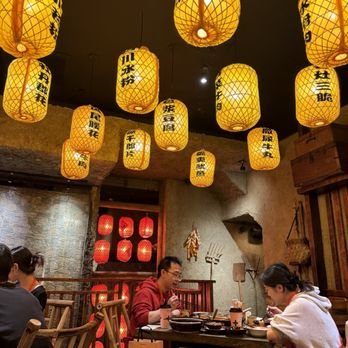
About Chongqing Lao Zao
Among Flushing's crowded hot-pot field, Chongqing Lao Zao holds a different position: a menu deep enough to reward repeat visits, with milky beef, basket crab, and at least six tofu preparations pointing to Chongqing-style specificity rather than crowd-pleasing generalism. A 4.6 Google rating across more than 1,500 reviews reflects consistent delivery at a neighborhood fixture that draws lines without much fanfare.
The Queue Outside Prince Street
Prince Street in Flushing moves at a particular pace on weekend afternoons: produce vendors, bubble tea counters, and the low-grade hum of a neighborhood that handles serious volume without ceremony. The line outside Chongqing Lao Zao fits that rhythm. It is rarely short, and it is almost never explained by a viral moment or a press cycle — just the kind of steady word-of-mouth that accumulates when a kitchen delivers the same thing reliably across years. A 4.6 rating drawn from more than 1,500 Google reviews is not an outlier result; it is a consistency record.
Flushing's hot-pot field is dense enough that proximity alone explains nothing. The neighborhood hosts Cantonese seafood rooms, Sichuan ma-la specialists, and Hunanese counters within a few blocks of one another. What separates the durable addresses from the transient ones is usually range — the ability to cover a table of six with different appetites and leave everyone with something specific to remember. Chongqing Lao Zao works in that register. The menu covers the expected categories and then keeps going, with enough variation in protein, offal, and tofu preparations to constitute a taxonomy of the form rather than a simple checklist.
What the Menu Says About the Kitchen
Chongqing-style hot pot carries a different brief than its Cantonese or Mongolian counterparts. The Chongqing tradition prioritizes tallow-based broths, high Sichuan peppercorn load, and ingredient selections that lean into offal and secondary cuts rather than retreating from them. That orientation shows in what the kitchen at Chongqing Lao Zao puts in front of you. Milky beef , connective-tissue-rich, slow-cooked until the broth turns opaque white , is the kind of item that appears on menus claiming Chongqing lineage but rarely survives contact with a broader audience. Here it does, and it holds a favored position among regulars precisely because it requires no translation for the people ordering it.
Basket crab enters the same category: an ingredient that signals a specific sourcing and preparation commitment rather than a default seafood option. Pig kidney rounds out an offal selection that hot-pot operators at the less committed end of the spectrum tend to omit. Against the broader Flushing field, where some operators have trimmed menus toward accessibility, the range here reads as a deliberate position. Connoisseurs will encounter preparations that don't appear on the shortened menus of more cautious competitors. Newcomers, meanwhile, will find the format approachable enough that the depth doesn't become an obstacle.
The tofu section warrants specific attention. Six or more preparations of a single ingredient within a single format is the kind of specificity that reflects culinary thinking rather than filler. Tofu in hot-pot contexts varies substantially by texture, density, and how it behaves in a boiling broth , silken tofu disintegrates differently than pressed tofu, and each preparation picks up the broth's spice profile at a different rate. A kitchen that bothers to maintain that many variations is making a statement about the seriousness of the category.
The Lunch-to-Dinner Shift
The editorial angle on Chongqing Lao Zao shifts depending on when you arrive. Daytime service in Flushing's hot-pot houses tends to run lighter in atmosphere and heavier in value , smaller tables, quicker turnover, and a crowd that skews toward solo diners and pairs working through the menu methodically. Lunch at a place like this functions almost as a tasting exercise: fewer people at the table means fewer variables in the pot, which makes individual ingredient quality more legible.
Evening service changes the calculus. Hot pot is fundamentally a social format , the shared broth, the negotiated order, the pacing dictated by whoever reaches for the ladle , and those dynamics require a table of some size to fully activate. The dinner crowd at Chongqing Lao Zao reflects that: larger groups, longer stays, a higher noise floor. The dessert menu becomes more relevant in the evening context, when the meal has room to extend beyond the pot itself. The pumpkin pancake and brown sugar rice cakes that close the menu are not afterthoughts. In a hot-pot setting where dessert is often an industry-standard sesame ball and nothing else, a kitchen that invests in two distinct sweet preparations is signaling that the meal has a proper structure, with a beginning, a middle, and an end.
For the solo visitor or a pair with limited time, a weekday lunch represents the more contained version of the experience: shorter waits, a focused order, and the ability to assess the kitchen's fundamentals without the social machinery of a full table. For anyone arriving in a group of four or more, an evening booking activates everything the format is designed to do.
Flushing in Context
Flushing's Chinese dining scene has no direct equivalent in the United States. The density of regional Chinese cuisine within a few blocks of Main Street , Shanghainese, Fujianese, Cantonese, Sichuan, and the Chongqing tradition that Chongqing Lao Zao represents , is a function of decades of immigration and community investment, not restaurant programming. Addresses like Alley 41, Asian Jewel Seafood Restaurant, Big Wong, Blue Willow, and Chuan Tian Xia cover different regional traditions within a few blocks of one another , a concentration that makes Flushing the appropriate peer set for evaluating any individual address here, not Manhattan's Chinatown and certainly not the uptown Chinese restaurants serving a different audience.
The comparison with fine-dining Chinese elsewhere in the country is instructive for understanding what Flushing is not. Mister Jiu's in San Francisco operates in a tasting-menu register that translates Chinese culinary tradition for a specific fine-dining audience. Restaurant Tim Raue in Berlin applies Chinese flavor architecture to a European format. Chongqing Lao Zao has no interest in either translation. It operates in the Chongqing tradition for an audience that knows what that tradition is, and the menu's depth reflects that orientation. That's not a compromise position , it's a choice about who the kitchen is cooking for.
For anyone building a broader New York itinerary, see our full New York City restaurants guide, our full New York City hotels guide, our full New York City bars guide, our full New York City wineries guide, and our full New York City experiences guide. For reference points in other cities, Emeril's in New Orleans, Lazy Bear in San Francisco, Alinea in Chicago, Single Thread Farm in Healdsburg, The French Laundry in Napa, and Providence in Los Angeles each anchor different positions in the American dining canon.
Know Before You Go
| Address | 37-04 Prince St, Flushing, NY 11354 |
|---|---|
| Cuisine | Chinese (Chongqing-style hot pot) |
| Google Rating | 4.6 (1,544 reviews) |
| Reservations | Walk-in; expect a wait, particularly on weekends |
| Getting There | Flushing–Main St station (7 train), a short walk from Prince St |
| Leading For | Groups of four or more in the evening; solo or pairs at weekday lunch |
| Tip | The dessert menu , pumpkin pancake, brown sugar rice cakes , is worth keeping space for; it is not a formality |
Frequently Asked Questions
What do people recommend at Chongqing Lao Zao?
Regulars point to milky beef as the item to order first , it is a Chongqing signature that reflects the kitchen's commitment to the tradition rather than a crowd-pleasing shortcut. Basket crab and pig kidney are the items most likely to distinguish the menu from comparable Flushing hot-pot addresses. The tofu section, which runs to six or more preparations, is a reliable benchmark for the kitchen's range. On the dessert side, the pumpkin pancake and brown sugar rice cakes have accumulated their own following among people who might otherwise skip the close of the meal. The consensus across more than 1,500 Google reviews , averaging 4.6 , suggests that the kitchen delivers across categories rather than excelling at one item at the expense of others.
Do I need a reservation at Chongqing Lao Zao?
Chongqing Lao Zao operates as a walk-in address in Flushing's hot-pot field , a category where most neighborhood fixtures run on the same model. Waits are common and, on weekends, can be significant. The practical response is timing: weekday lunch shifts run shorter waits and a different crowd than Friday or Saturday evenings. In a neighborhood where the 7 train drops you within walking distance of several competing hot-pot addresses, a long wait at one door doesn't mean abandoning the format for the night. That said, the depth of menu at Chongqing Lao Zao , particularly the tofu range and offal selections , makes it worth waiting for rather than defaulting to the next available seat down the block.
Recognized By

More restaurants in New York City
- Le BernardinLe Bernardin is one of the most consistently awarded seafood restaurants in the world — three Michelin stars, 99.5 points from La Liste, and four New York Times stars held for over 30 years. At $157 for four courses at dinner ($225 for the tasting menu), it is the right call for a formal occasion or a serious seafood meal in Midtown Manhattan, provided you book well in advance.
- AtomixAtomix is the No. 1 restaurant in North America (50 Best, 2025) and one of the hardest reservations in New York: 14 seats, one seating per night, three Michelin stars. Junghyun and Ellia Park's Korean tasting menu pairs precision-sourced ingredients with Korean culinary heritage, explained course by course through hand-designed cards. Book months ahead or plan around a cancellation.
- Eleven Madison ParkEleven Madison Park is the definitive case for plant-based fine dining in New York City: three Michelin stars, a 22,000-bottle wine cellar, and an eight-to-ten course tasting menu in a landmark Art Deco room. Book it for a special occasion with a plant-forward appetite and three hours to spare. Reservations open on the 1st of each month and go within hours.
- Jungsik New YorkJungsik is the restaurant that put progressive Korean fine dining on the New York map, and over a decade in, it still holds that position. With two Michelin stars, a 2025 James Beard Award for Outstanding Chef, and a seasonally rotating nine-course tasting menu in a quietly formal Tribeca room, it earns its $$$$ price point for special occasions and serious dining. Book well in advance.
- DanielDaniel is the benchmark for classic French fine dining in New York: three Michelin stars, a 10,000-bottle cellar, and formal Upper East Side service that has stayed consistent for over 30 years. Book four to six weeks out minimum. At $$$$, it is a genuine special-occasion restaurant, but the wine program alone — 2,000 selections with particular depth in Burgundy and Bordeaux — makes it the strongest wine-and-food pairing destination in its category.
- Per SePer Se is one of New York's two or three most complete special-occasion restaurants: three Michelin stars, Central Park views, and two nine-course tasting menus that change daily at $425 per person. Book exactly one month out — the window fills fast. The salon accepts walk-ins for à la carte if you miss the main dining room.
Related editorial
- Best Fine Dining Restaurants in ParisFrom three-Michelin-star icons to the next generation of Parisian chefs pushing boundaries, these are the restaurants that define fine dining in the world's culinary capital.
- Best Luxury Hotels in RomeFrom rooftop terraces overlooking ancient ruins to Michelin-starred hotel dining, these are the luxury hotels that make Rome unforgettable.
- Best Cocktail Bars in KyotoFrom sleek lounges to hidden speakeasies, Kyoto's cocktail scene blends Japanese precision with global influence in ways you won't find anywhere else.
Save or rate Chongqing Lao Zao on Pearl
Keep this venue in your Pearl passport, rate it after you visit, and track it alongside every other place you collect.