
Restaurant in 成都市, China
Chen's Mapo Doufu (陈麻婆豆腐)
100ptsSingle-Dish Sichuan Precision
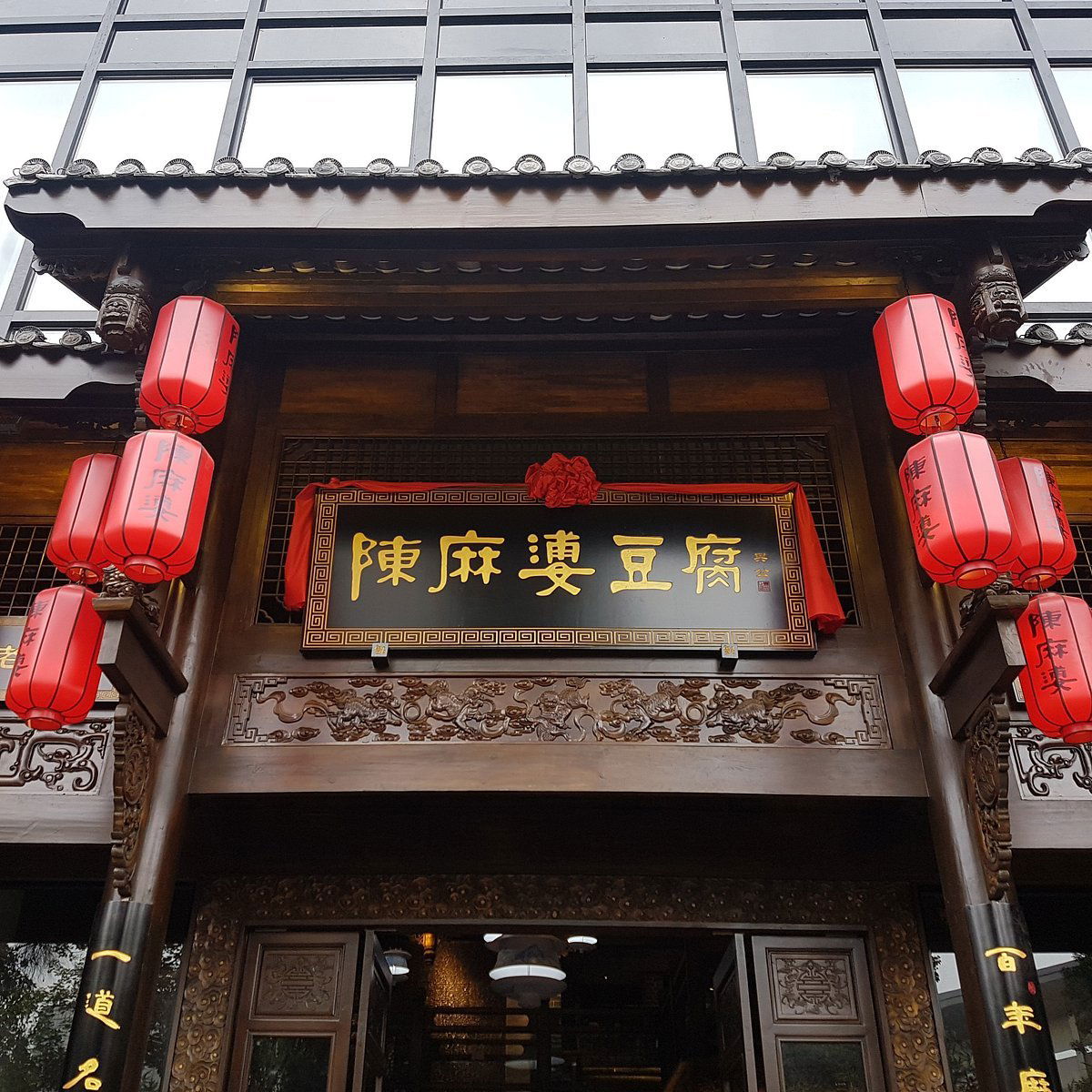
About Chen's Mapo Doufu (陈麻婆豆腐)
Few addresses in Chengdu carry the documentary weight of Chen's Mapo Doufu on Qinghua Road, where a dish that defined Sichuan cooking across two centuries is still served in something close to its original form. The kitchen's reliance on the region's signature fermented and fresh-ground ingredients places it inside a living culinary argument about what mapo doufu actually is, and where it came from.
Where a Dish Became a Category
Mapo doufu occupies an unusual position in Chinese cooking: it is simultaneously a restaurant dish, a home staple, a regional export, and a contested cultural text. Walk into Chen's on Qinghua Road in Chengdu's Huanhua district and the room makes the argument physically. The dining hall runs loud and functional, with the kind of tile-and-table density that signals a kitchen confident enough in its food to invest nothing in ambience theatre. Steam rises in columns. Tables turn fast. The smell that hits first is doubanjiang, the fermented broad-bean chilli paste that is the load-bearing flavour of the dish, and it arrives before you're seated.
That olfactory signature matters as an ingredient story. Doubanjiang of the quality used in traditional mapo doufu preparation is not a generic condiment. The dominant benchmark comes from Pixian, a county-level district on Chengdu's western edge, where fermentation times run from one to three years under open sky and the local water and microclimate produce a paste with a depth of umami that shorter-fermented versions cannot replicate. The Chen's address on Qinghua Road sits within reasonable distance of that supply chain, and the proximity is part of the restaurant's culinary identity. Chengdu's Sichuan kitchens have always operated close to their ingredient sources in a way that, say, Xin Rong Ji in Chengdu addresses differently through a refined, cross-regional format.
The Ingredient Architecture of the Dish
To understand why the sourcing question matters here, consider what mapo doufu actually requires to work. Beyond Pixian doubanjiang, the canonical version calls for douban fermented black beans (douchi), fresh-ground or stone-milled chilli powder, Sichuan huajiao peppercorns for the ma (numbing) component, high-heat wok technique to bloom the aromatics without burning them, and silken tofu with sufficient structural integrity to absorb sauce without collapsing. Each of those inputs has a geography. Huajiao grown in the Han Yuan and Mao Wen areas of Sichuan carries a different volatile-oil profile than peppercorn from outside the province, producing the characteristic electric-tingle mouthfeel that defines the dish's ma quality. This is not metaphor; it is agricultural chemistry, and it is why mapo doufu served outside Sichuan with generic Sichuan pepper rarely lands the same way.
Restaurants across China and internationally have built versions of this dish, including interpretations at premium addresses. The refined Chinese kitchens appearing across the country's dining tier, from Fu He Hui in Shanghai to Imperial Treasure Fine Chinese Cuisine in Guangzhou, may riff on Sichuan flavour profiles within broader tasting menus, but none of those formats centres on mapo doufu as the primary culinary commitment. At Qinghua Road, the dish is not a menu item among others. It is the menu's reason for existing.
Chengdu's Specialist Restaurant Tradition
Chengdu has long organised parts of its dining culture around single-dish or narrow-format specialists, a model that runs parallel to but distinct from the city's broader hotpot culture and its growing tier of refined Sichuan restaurants. The specialist format rewards repetition and sourcing depth in ways that multi-dish menus cannot easily match. A kitchen cooking mapo doufu across multiple seatings daily can develop a granular understanding of tofu water content, chilli bloom timing, and oil temperature that a kitchen dividing attention across thirty dishes simply cannot replicate at the same resolution. 武侯首席 and 十二桥包子店 operate in different specialist registers within the same city, pointing to a wider Chengdu habit of rewarding depth over breadth.
That specialist logic also explains why the Chen's address continues to draw visitors who would otherwise be booking into Chengdu's more decorated dining rooms. The question the restaurant poses is not whether it competes with places like Chun Yang Guan (纯阳馆) in the city's fine-dining register, but whether a single dish executed at high frequency with regionally sourced ingredients can offer something that a broader kitchen cannot. For mapo doufu specifically, the answer the Qinghua Road address implies is yes.
Context Within China's Premium Dining Conversation
China's premium dining tier has spent the last decade building refined Chinese restaurant formats that compete on international credibility and tasting-menu architecture, from Chef Tam's Seasons in Macau to Dai Yuet Heen in Nanjing to Ru Yuan in Hangzhou. That tier is real, and for certain readers it is the right context. But it occupies a different cultural lane from a Chengdu specialist house whose claim is not refinement but fidelity: to a specific ingredient origin, a specific technical tradition, and a dish that needs no upgrade. The comparison is more instructive than competitive. The same curiosity that takes a reader to Le Bernardin in New York City for the canonical version of a particular culinary tradition can equally justify the trip to Qinghua Road for mapo doufu in its most historically rooted local form.
For readers building a broader map of Chinese regional cooking, the full 成都市 restaurants guide places this address in a wider Chengdu context, alongside venues working across different price tiers and formats. Venues such as Xin Rong Ji (Xinyuan South Road) in Beijing, Fleurs Et Festin in Xiamen, Pingjiangsong in Suzhou, Shang Palace in Yangzhou, Wenru No.9 in Fuzhou, Ensue at Hotel in Shenzhen, and Lazy Bear in San Francisco each represent different national or regional cooking traditions; reading them alongside a Sichuan specialist address clarifies how differently various cultures weight sourcing, technique, and format.
Planning Your Visit
The restaurant sits at 8-10 Qinghua Road (Huanhua North Road), in a part of Chengdu accessible from the city centre without complicated routing. Given that the venue operates at volume and that Chengdu's dining culture trends toward full rooms at peak meal times, arriving outside the lunch and dinner rush windows reduces wait time. No advance booking information is confirmed in public records for this address, which suggests walk-in is the operative format, though arrival before peak hours is advisable during national holidays and the October Golden Week period, when Chengdu's visitor numbers spike significantly. Dress code expectations at this type of Chengdu specialist house are casual. Pricing information is not publicly confirmed, but the category positions the meal well below the premium tasting-menu tier.
Frequently Asked Questions
What's the must-try dish at Chen's Mapo Doufu?
The mapo doufu is the kitchen's sole reason for existing at this address, and the version served here draws on the regional ingredient tradition that defines the dish: Pixian-county doubanjiang, Sichuan huajiao peppercorn, and the high-heat wok technique that produces the characteristic oily, numbing, fragrant sauce. Ordering anything else at a specialist house of this type misses the point of going. The dish's reputation in Chengdu's dining culture rests on exactly this kind of sourcing fidelity, a quality you can trace in the broader Sichuan culinary conversation anchored in the city's specialist-format restaurants.
Should I book Chen's Mapo Doufu in advance?
No confirmed advance booking channel is recorded for this address, which places it in the walk-in category typical of Chengdu's high-volume specialist houses. The practical implication: arrive early in the service window, particularly during Golden Week or Chinese New Year travel periods when Chengdu absorbs a significant increase in domestic visitors. Midweek lunches outside national holiday windows are the lower-pressure option for readers who want the dish without the wait.
How does Chen's Mapo Doufu relate to the historical origins of the dish in Chengdu?
Mapo doufu is documented to have originated in Chengdu in the Qing dynasty, with early accounts tracing it to the city's northern districts, and Chen's on Qinghua Road operates within that geographic and culinary lineage. The restaurant's focus on a single dish with regionally sourced Sichuan ingredients, particularly Pixian doubanjiang and local huajiao peppercorn, aligns it with the preparation conventions that distinguish an authentic Chengdu version from the dish's many international adaptations. For readers interested in where Chinese regional cooking traditions remain most intact, this address is the reference point for mapo doufu specifically.
Related editorial
- Best Fine Dining Restaurants in ParisFrom three-Michelin-star icons to the next generation of Parisian chefs pushing boundaries, these are the restaurants that define fine dining in the world's culinary capital.
- Best Luxury Hotels in RomeFrom rooftop terraces overlooking ancient ruins to Michelin-starred hotel dining, these are the luxury hotels that make Rome unforgettable.
- Best Cocktail Bars in KyotoFrom sleek lounges to hidden speakeasies, Kyoto's cocktail scene blends Japanese precision with global influence in ways you won't find anywhere else.
Save or rate Chen's Mapo Doufu (陈麻婆豆腐) on Pearl
Keep this venue in your Pearl passport, rate it after you visit, and track it alongside every other place you collect.