
Restaurant in Chaumont-Gistoux, Belgium
Chemin de l'herbe
100ptsBrabant Wallon Country Table
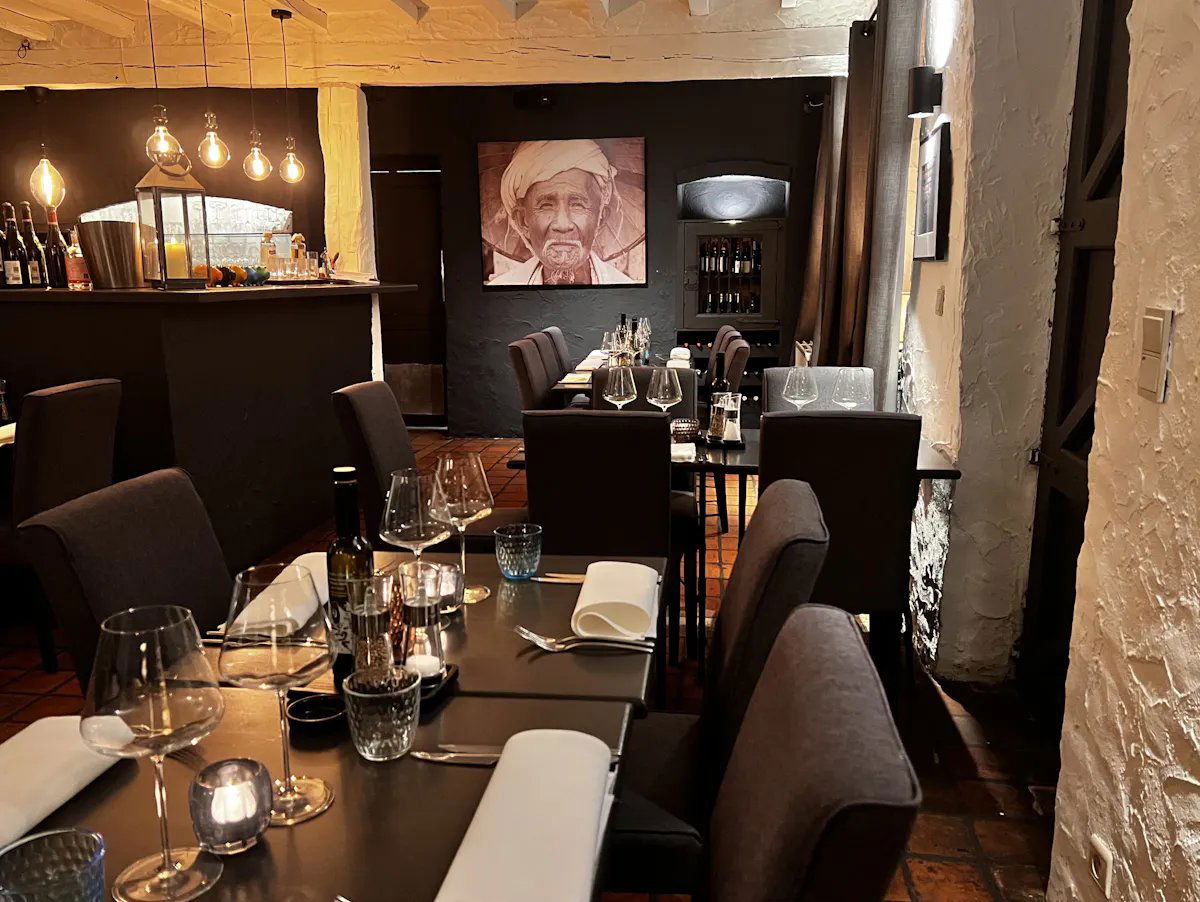
About Chemin de l'herbe
Chemin de l'herbe sits on Chem. de l'Herbe 32 in Chaumont-Gistoux, a quiet Brabant Wallon commune that has quietly developed a small but serious dining scene. The address places it among a cluster of independently operated tables in a region where the meal tends to unfold at its own pace, rooted in seasonal Belgian produce and a sense of rural occasion.
Dining at a Different Tempo: The Chaumont-Gistoux Table
There is a particular kind of meal that belongs to the Belgian countryside — not rushed, not theatrical, but structured around a rhythm that city restaurants rarely achieve. In the communes southeast of Brussels, where the Brabant Wallon farmland opens into quiet village roads, the dinner table still functions as an event in itself: a fixed hour, a set procession of courses, and a pacing that assumes you have nowhere else to be. Chemin de l'herbe, addressed at Chem. de l'Herbe 32 in Chaumont-Gistoux, sits inside this tradition. The road itself — a lane name that translates literally as the grass path , signals the register before you arrive.
Chaumont-Gistoux is not a dining destination in the way that Brussels or Bruges attract attention, but that is precisely what defines the experience on offer here. The commune has developed a small cluster of independently operated tables , 7ICI, Bernard Schobbens, Chem. de l'Herbe 32, and Table Roberti among them , each operating with the kind of autonomy that rural Belgium allows. These are not outposts of city ambition; they are places where the meal is the point, and the setting reinforces it. See our full Chaumont Gistoux restaurants guide for the broader picture of what the commune offers.
The Architecture of the Meal
Belgian dining in this register follows a specific etiquette, one that differs from the brisk urban tasting menu or the open-ended à la carte. The ritual begins outside the dining room: an apéritif, often with small preparations, that establishes a social pause before the table is taken. This is not ceremony for its own sake. It separates the commute from the meal and signals to the kitchen that the rhythm can begin. In rural Brabant Wallon, that pacing tends to run longer than a Michelin-flagged urban counter , two and a half to three hours is normal, and the kitchen is not apologising for it.
The seasonal frame matters here. Belgian cooking in the countryside has always organised itself around what is immediately available: white asparagus in spring, game through autumn, root vegetables and preserved preparations through winter. At addresses like Chemin de l'herbe, the menu is less a fixed document and more a response to the week's produce, which means that what arrives at the table in April will not resemble what arrives in October. This is not a novelty selling point; it is simply how kitchens in this region have always worked.
Where Chemin de l'herbe Sits in the Belgian Scene
Belgium's fine dining geography is concentrated in a handful of well-documented nodes: the Flemish coast, Ghent, Antwerp, and the Brussels periphery. Awarded houses like Hof van Cleve - Floris Van Der Veken in Kruishoutem, Boury in Roeselare, and Zilte in Antwerp represent the high end of that spectrum , kitchens with verifiable Michelin recognition and reservation queues to match. The Walloon side of the country runs a quieter parallel track. Bozar Restaurant in Brussels anchors the capital's formal dining conversation, while addresses further into the countryside operate at lower volume and lower visibility.
Chemin de l'herbe belongs to this quieter tier. It does not compete on the same metrics as the Flemish flagships, nor does it need to. The comparison set here is more usefully drawn from regional Belgian tables committed to personal-scale operations: Willem Hiele in Oudenburg, Vrijmoed in Gent, or d'Eugénie à Emilie in Baudour , tables where format discipline and local sourcing carry more weight than public profile. La Durée in Izegem and Ralf Berendsen in Neerharen similarly operate in the lower-profile, higher-intention bracket. Internationally, the format logic is not far from what Lazy Bear in San Francisco does with its communal, set-format dinner, or the precision-led restraint that defines Le Bernardin in New York City at the other end of the scale. The underlying principle , a meal shaped by deliberate ritual rather than reactive service , connects these rooms despite the difference in scale and geography.
Practical Orientation
Chaumont-Gistoux sits roughly 25 kilometres southeast of central Brussels, in the Brabant Wallon province. The commune is most easily reached by car; the address on Chem. de l'Herbe is a residential lane rather than a commercial strip, and the approach itself reinforces the sense of arriving somewhere considered. For those coming from Brussels, the drive along the E411 is direct and takes under 40 minutes outside peak hours. Dining at rural Belgian tables in this region typically follows a single sitting per evening, which means that confirming your booking and arrival time matters more than it would in a larger city restaurant. Given the format , a meal built around a fixed progression of courses , arriving late disrupts the kitchen's rhythm and your own experience of the pacing.
Comparable tables in similar formats , Cuchara in Lommel or Le Chalet de la Forêt in Uccle , typically require booking two to four weeks in advance for weekend sittings. Small-capacity rural addresses at this level of intention often fill faster than their modest profile suggests, particularly in spring and autumn when seasonal menus are at their most considered.
Frequently Asked Questions
- What should I order at Chemin de l'herbe?
- Specific menu details are not publicly listed at this time, and the kitchen's output appears to change with the season rather than following a fixed card. At Belgian countryside addresses of this type, the practical answer is to trust the menu as presented on arrival. The format almost certainly involves a set procession of courses rather than a wide à la carte selection, which means the ordering decision is largely made for you. For reference, comparable Belgian tables , including those recognised by Michelin in the Brabant Wallon region , typically anchor their menus to a small number of central ingredients treated across multiple preparations.
- How far ahead should I plan for Chemin de l'herbe?
- Booking lead times are not published in available data, but the practical logic of small-capacity Belgian countryside restaurants applies: if you are targeting a Friday or Saturday evening, or a weekend during asparagus season (April to June) or the autumn game period, plan at least three to four weeks out. Addresses at this scale operate single sittings per service, which means availability resets infrequently. Given Chaumont-Gistoux's small total pool of serious tables, the commune does not function as a walk-in dining destination.
- What makes Chemin de l'herbe worth seeking out?
- The case for this address rests on the dining tradition it represents rather than on a specific award or public credential. Rural Belgian tables of this type , intimate in capacity, seasonally anchored, removed from city-centre dining traffic , offer a meal paced and structured in a way that urban restaurants rarely replicate. The Chaumont-Gistoux cluster, which includes Bernard Schobbens, Table Roberti, 7ICI, and Chem. de l'Herbe 32 nearby, suggests a local concentration of dining intention that is unusual for a commune of this size.
- Is Chemin de l'herbe suitable for a special occasion dinner from Brussels?
- The address on Chem. de l'Herbe places it in a setting , a quiet rural lane roughly 25 kilometres from central Brussels , that functions well as a deliberate occasion rather than a casual dinner. Belgian countryside restaurants in this format typically build the meal around a fixed progression of courses over two to three hours, which gives the evening a defined shape that works for celebratory or milestone dining. The drive from Brussels is under 40 minutes by car, making it accessible without requiring an overnight stay in the commune.
Related editorial
- Best Fine Dining Restaurants in ParisFrom three-Michelin-star icons to the next generation of Parisian chefs pushing boundaries, these are the restaurants that define fine dining in the world's culinary capital.
- Best Luxury Hotels in RomeFrom rooftop terraces overlooking ancient ruins to Michelin-starred hotel dining, these are the luxury hotels that make Rome unforgettable.
- Best Cocktail Bars in KyotoFrom sleek lounges to hidden speakeasies, Kyoto's cocktail scene blends Japanese precision with global influence in ways you won't find anywhere else.
Save or rate Chemin de l'herbe on Pearl
Keep this venue in your Pearl passport, rate it after you visit, and track it alongside every other place you collect.