
Restaurant in Bremen, Germany
Chapeau La Vache
150ptsVilla Brasserie Classicism

About Chapeau La Vache
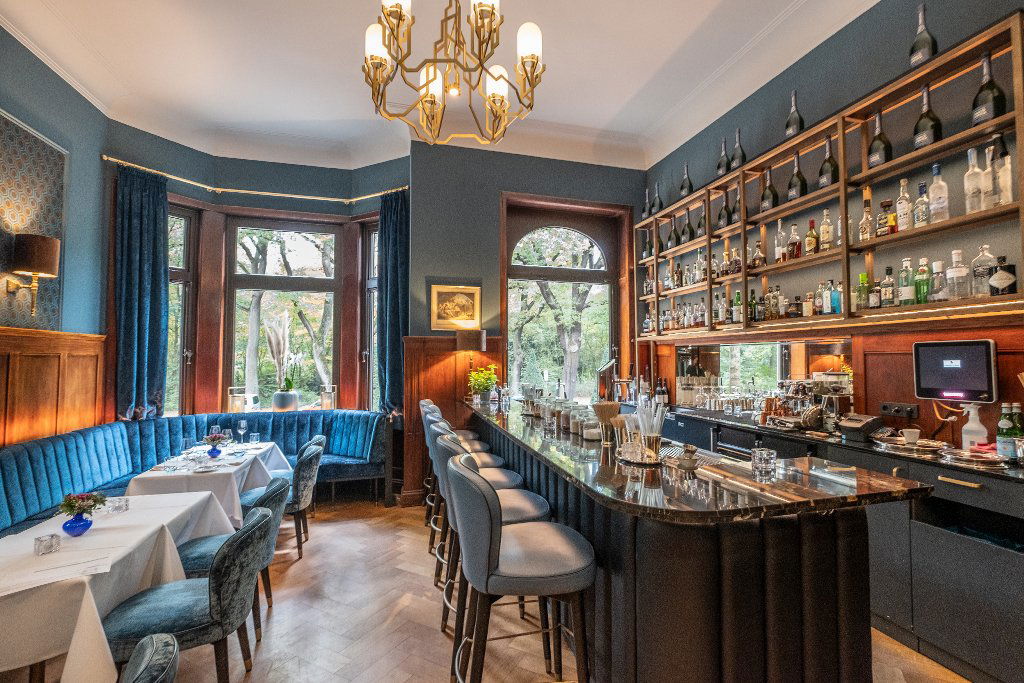
Set inside a stately Bürgerpark villa, Chapeau La Vache brings classic French brasserie cooking to one of Bremen's most architecturally considered dining rooms. High stuccoed ceilings, hardwood floors, and chandelier light frame a menu built around the canon of French cuisine, from bouillabaisse to beef bourguignon. It is the kind of room that makes occasion dining feel effortless rather than stiff.
A Villa in the Park, and What That Setting Demands
Bremen's Bürgerpark occupies a particular place in the city's social geography. Laid out in the nineteenth century as a civic green space of real ambition, it sits north of the centre as a kind of pastoral counterweight to the dense merchant architecture of the Altstadt. The villa at Hollerallee 77 belongs to that tradition of bourgeois confidence — the kind of building that was designed to signal permanence and good taste in equal measure. Chapeau La Vache occupies it without apology, and the setting shapes everything that follows inside.
The approach through the Bürgerpark already primes expectations. By the time you reach the open reception area and register the wooden staircase rising from it, you have understood the register. This is not a stripped-back contemporary dining room, nor a concept-driven space built around a single ingredient or technique. High stuccoed ceilings, hardwood floors worn to an honest patina, chandeliers that diffuse light into something warm rather than theatrical, and a selection of decorative modern pictures that prevent the room from tipping into museum-piece territory — all of it adds up to an atmosphere of considered ease. The staff are noted as friendly and experienced, which matters in a room of this scale, where stiffness could easily replace the warmth the decor implies.
French Brasserie in a Northern German Context
German cities north of Frankfurt have a complicated relationship with French cuisine. Hamburg has its long tradition of trade-route cosmopolitanism, which makes French cooking feel like a natural import. Bremen, smaller and more self-contained, tends to look inward toward its own Hanseatic culinary identity , smoked fish, hearty cold-weather preparations, and a general preference for directness over elaboration. Against that backdrop, a kitchen built explicitly around the French brasserie canon occupies a specific and somewhat deliberate position.
The brasserie format as it developed in France was never about precision tasting menus or ingredient minimalism. It was about the reliable delivery of cooking with a clear point of view: stocks reduced properly, proteins cooked with real attention to technique, and sauces that reflect hours of preparation rather than shortcuts. Dishes like bouillabaisse and beef bourguignon are not there to surprise , they are there to demonstrate that the kitchen takes the tradition seriously. Both dishes are specifically cited as standouts at Chapeau La Vache, and both are useful benchmarks. Bouillabaisse, in particular, is a dish that separates kitchens that understand classical French cooking from those that approximate it. The sourcing of fish matters enormously here: the combination of varieties, the quality of the stock, and the rouille all reflect whether a kitchen is genuinely engaged with the source material.
For a broader map of Germany's most rigorous French-influenced kitchens, the reference points include Vendôme in Bergisch Gladbach and Restaurant Haerlin in Hamburg, both of which operate at the Michelin-starred end of French technique in Germany. Chapeau La Vache does not position itself in that tier , this is brasserie cooking, not gastronomic French , but the comparison is useful for understanding where the category sits and what it asks of its kitchens.
Where the Ingredients Come From, and Why the Format Amplifies It
The editorial angle on French brasserie cooking is, at its core, an ingredient story. The recipes that define the genre , bourguignon, bouillabaisse, blanquette, soupe de poisson , are deeply dependent on sourcing quality. A beef bourguignon made with correctly aged, well-marbled beef from a named regional producer reads entirely differently from one made with undifferentiated commodity beef, even if the technique is identical. The braising time, the wine reduction, and the aromatics are fixed quantities; the ingredient is the variable that separates a competent rendition from one worth returning for.
Bremen's position as a historically significant port city gives it access to seafood supply lines that most inland German cities lack. The North Sea coast is within reach, and the city's trade heritage means its wholesale markets have long carried ingredients that a landlocked equivalent might not. For a kitchen preparing bouillabaisse with any regularity, that geographic context is not incidental. The quality of the stock depends on the bones and heads that go into it; those come from fish that need to arrive fresh.
This is the lens through which the Chapeau La Vache kitchen is most usefully read: not as a restaurant that happens to cook French food, but as one that has committed to a format where sourcing decisions are made visible through the dishes themselves. The menu's brasserie framing keeps the focus on a relatively contained set of preparations, which means there is nowhere to hide if the raw material is not there.
Bremen's Restaurant Tier and Where This Fits
Bremen's higher-end dining scene is small relative to Hamburg or Berlin, which gives each position in it more definition. Park Restaurant, with its contemporary format and higher price point, occupies the most formal tier in the city. alto sits in the contemporary bracket at a similar price band. Al Pappagallo covers Italian at a comparable level. Chapeau La Vache's brasserie French positioning fills a gap in that landscape that the others do not: classic European cooking in a room with genuine architectural character, framed as occasion dining without the formality of a tasting menu structure.
For a broader sense of what serious French-influenced cooking can look like in Germany, Schwarzwaldstube in Baiersbronn and Aqua in Wolfsburg represent the three-Michelin-star tier, while JAN in Munich shows how French technique gets reinterpreted through a contemporary lens. ES:SENZ in Grassau and CODA Dessert Dining in Berlin demonstrate the range of formats German fine dining now accommodates. For transatlantic reference points where classical French technique meets institutional authority, Le Bernardin in New York City and Emeril's in New Orleans offer useful calibration. Chapeau La Vache operates at a different scale and register, but the comparison clarifies what brasserie French is and what it is not.
Planning a Visit
Chapeau La Vache sits at Hollerallee 77, on the edge of the Bürgerpark. The villa setting makes it a natural choice for dinner rather than a quick midweek lunch , the room rewards time spent in it. Given the architectural setting and its positioning as one of Bremen's more considered dining addresses, reservations in advance are advisable, particularly for weekend evenings. For further context on the city's dining, drinking, and hospitality options, see our full Bremen restaurants guide, our full Bremen hotels guide, our full Bremen bars guide, our full Bremen wineries guide, and our full Bremen experiences guide.
Frequently Asked Questions
- Is Chapeau La Vache suitable for children?
- The formal atmosphere of a stately villa dining room in Bremen's Bürgerpark makes this a better fit for adult occasion dining than for young children.
- How would you describe the vibe at Chapeau La Vache?
- Bremen's dining scene skews toward the understated and considered, and Chapeau La Vache fits that character. The room , stuccoed ceilings, chandeliers, hardwood floors , creates warmth without theatrics, and the brasserie French menu reinforces the sense that this is a place where the experience is more important than any single flourish. It sits in a different register from the city's contemporary fine dining options, occupying the classic-European niche with real architectural conviction.
- What do people recommend at Chapeau La Vache?
- Go directly to the brasserie classics. The bouillabaisse and the beef bourguignon are the dishes most specifically cited, and both are reliable tests of whether a kitchen is serious about French technique. Order one of them and you will understand quickly what the kitchen is doing.
- How far ahead should I plan for Chapeau La Vache?
- If you are visiting Bremen for a specific occasion and the villa setting is part of the appeal, book at least a week ahead for weekends. The combination of a distinctive address and a relatively contained room means availability can tighten quickly, particularly when the Bürgerpark draws visitors in spring and summer.
Recognized By

Similar venues by awards
Related editorial
- Best Fine Dining Restaurants in ParisFrom three-Michelin-star icons to the next generation of Parisian chefs pushing boundaries, these are the restaurants that define fine dining in the world's culinary capital.
- Best Luxury Hotels in RomeFrom rooftop terraces overlooking ancient ruins to Michelin-starred hotel dining, these are the luxury hotels that make Rome unforgettable.
- Best Cocktail Bars in KyotoFrom sleek lounges to hidden speakeasies, Kyoto's cocktail scene blends Japanese precision with global influence in ways you won't find anywhere else.
Save or rate Chapeau La Vache on Pearl
Keep this venue in your Pearl passport, rate it after you visit, and track it alongside every other place you collect.