
Restaurant in Vale do Bosque, Brazil
Castelo Saint Andrews - Gramado
125ptsScottish Baronial Valley Dining

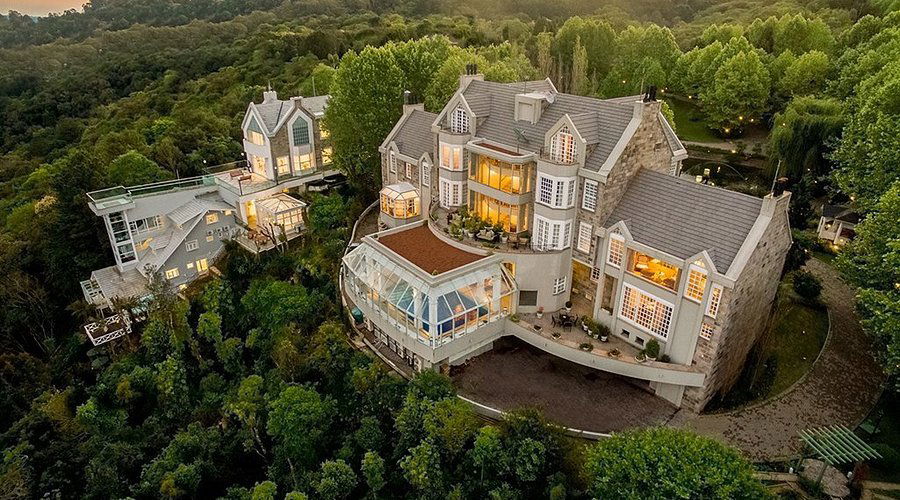
About Castelo Saint Andrews - Gramado
A Scottish Baronial castle perched above the Quilombo Valley in Gramado, Serra Gaúcha, Castelo Saint Andrews sets a theatrical stage for Brazilian fine dining under Chef Stefan McEnteer. The property draws on the region's European settler heritage while the kitchen pursues a Brazilian fine cuisine format that sits in a distinct niche among Rio Grande do Sul's more formal dining addresses. Rated 4.8 across nearly 9,000 Google reviews, it earns its place on any serious Gramado itinerary.
Where Serra Gaúcha's European Heritage Meets the Quilombo Valley
Gramado occupies a particular position in Brazilian travel: a city in Rio Grande do Sul's highland interior where German and Italian settler architecture has been layered, over generations, into something that reads as distinctly regional rather than imitative. That context matters when approaching Castelo Saint Andrews, because the property's Scottish Baronial silhouette — crenellated towers, dressed stone, the visual grammar of the Scottish Highlands translated to southern Brazil — is not an aberration. It sits inside a broader tradition of European architectural transplantation that defines Gramado's built environment. The Quilombo Valley drops away below the property, and the views across that valley give the approach a sense of arrival that most urban dining rooms cannot replicate.
This is the editorial angle worth holding onto: the castle format is not decoration applied to a restaurant. It is the primary spatial experience, and everything else , the kitchen, the service register, the occasion framing , operates inside it. Few dining addresses in Brazil present this kind of architectural commitment to setting, and that places Castelo Saint Andrews in a narrow peer set nationally, even before the food enters the conversation.
Brazilian Fine Dining in a Format Built for Occasion
Brazil's serious restaurant tier has consolidated, over the past decade, around a handful of cities. São Paulo dominates, with addresses like D.O.M. in São Paulo and Evvai operating at the leading of the Michelin-starred bracket. Rio de Janeiro has Lasai in Rio de Janeiro in a regional-modern register. Manu in Curitiba and Mina in Campos do Jordão anchor the southern and mountain-town contingent. Against that national picture, a Brazilian fine dining operation in Gramado occupies genuinely different ground: it is not competing for the São Paulo critic's attention on São Paulo's terms. It is positioned for a traveller who is already in the Serra Gaúcha, already oriented toward occasion dining, and already primed by the environment to spend time at the table.
Chef Stefan McEnteer leads the kitchen. In the context of Brazilian fine cuisine, what matters about a kitchen leadership credential is less biography than alignment: does the approach suit the setting, and does the menu speak to Brazilian ingredients and technique rather than defaulting to a generic European fine-dining template? The cuisine classification here is Brazilian Fine, which signals a kitchen working with local product under a formal structure, rather than the purely creative-modern Brazilian mode of addresses like Manga in Salvador or Orixás North Restaurant in Itacaré.
The Serra Gaúcha Table: Ingredient Traditions Worth Understanding
The editorial angle assigned to this page concerns foundational ingredients, and in the Serra Gaúcha, the relevant tradition is not corn and masa in the Mexican sense but the region's own agricultural heritage. Rio Grande do Sul's highlands produce some of Brazil's most serious cold-climate agricultural output: lamb, trout from the local rivers, winter vegetables, and the stone fruits and grapes that have sustained the Vale dos Vinhedos wine corridor since the late nineteenth century. A kitchen in Gramado working at a fine dining register has access to ingredient sources that São Paulo's urban restaurants must source at greater remove.
The parallel with corn and masa as a foundational frame is instructive even at a distance: just as the leading Mexican fine dining tables build credibility through their sourcing of heirloom masa rather than commodity corn, the leading Serra Gaúcha kitchens build credibility through their specificity with regional product. The question a visitor should carry into any serious restaurant in this part of Brazil is whether the menu is using the geography it sits inside, or importing a generic luxury food register from somewhere else. That distinction separates the addresses worth seeking out from those merely performing fine dining's conventions. For comparison points at the international level, the way Lazy Bear in San Francisco or Atomix in New York City build tasting menus around hyper-specific regional sourcing offers a useful framework for evaluating any fine dining operation's relationship to its location.
What 8,869 Reviews Actually Signal
A 4.8 Google rating across 8,869 reviews is a data point that deserves some interpretation rather than simple citation. Review volume at that scale means the property is not a specialist address drawing a narrow audience of fine-dining initiates. It is drawing broadly: tourists, anniversary diners, visitors to Gramado experiencing the castle as spectacle, and guests who happen to eat well there. The 4.8 aggregate across that volume is harder to sustain than the same score across two hundred reviews. It suggests that the experience is consistently delivering against what visitors expect, and that the gap between what the property promises visually and what it delivers at the table is not large enough to generate significant disappointment.
For comparison, venues like Emeril's in New Orleans or Le Bernardin in New York City operate in markets where review culture skews toward informed diners with higher baselines. A broad-audience score at the level Castelo Saint Andrews holds represents a different kind of validation: the property works for the full range of visitors, not just the food-specific traveller.
Planning Your Visit: Access and Positioning
The property sits at GPS coordinates -29.3853, -50.8654, accessible by the Estrada Romântica (Romantica Road) from central Gramado. The nearest international airport is Porto Alegre's Salgado Filho, approximately 125 kilometres away, making Gramado a viable overnight or multi-day trip from Porto Alegre rather than a day excursion from São Paulo. Caxias do Sul's regional airport sits closer, at roughly 80 kilometres. The address is R. Bela Vista, 05, Centro, Gramado, RS.
Gramado's accommodation offer is covered in our full Vale do Bosque hotels guide, and visitors planning time in the area around a dinner here would do well to build in at least two nights to allow for the Serra Gaúcha wine corridor and Gramado's broader dining circuit. The city's bar offer is mapped in our full Vale do Bosque bars guide, and wine-focused visitors should consult our full Vale do Bosque wineries guide for the Vale dos Vinhedos producers that anchor the region's wine identity. For a fuller picture of what to do beyond the table, our full Vale do Bosque experiences guide covers the region's specialist programming.
Within Gramado itself, Primrose in Gramado represents an alternative fine dining option for visitors building a multi-meal itinerary in the city. The broader regional restaurant picture is mapped in our full Vale do Bosque restaurants guide.
For international reference points in the castle-and-heritage fine dining category, Alain Ducasse's Louis XV in Monte Carlo and 8½ Otto e Mezzo Bombana in Hong Kong represent how a grand physical setting can support rather than overwhelm serious kitchen work. The Castelo Saint Andrews proposition operates on different scale and at different price geography, but the structural question is the same: does the room amplify the meal, or compete with it?
Frequently Asked Questions
What kind of setting is Castelo Saint Andrews - Gramado?
The property is a Scottish Baronial style castle above the Quilombo Valley in Gramado, Serra Gaúcha, with views across the valley and architecture drawn from the European settler tradition that defines much of the city's built identity. It positions itself as an occasion venue: the scale and drama of the space make it suited to formal meals, celebrations, and visits where the setting is part of what you are paying for. Gramado's mountain location, roughly 125 kilometres from Porto Alegre, gives the property a resort-adjacent character that is distinct from urban fine dining addresses in São Paulo or Rio.
Would Castelo Saint Andrews - Gramado be comfortable with kids?
Gramado as a city skews family-friendly, and the castle's visual theatricality tends to read as genuinely compelling for younger visitors. The formal fine dining register may require some assessment against the age and temperament of children in the party, but the setting itself is not exclusionary. Visitors bringing children should consider timing: a lunch or early evening booking is likely to suit a mixed-age group better than a late dinner format. Price information is not published in available data, so budget assessment will require direct inquiry with the property.
What should I eat at Castelo Saint Andrews - Gramado?
The kitchen operates under a Brazilian Fine cuisine classification with Chef Stefan McEnteer leading the team. No specific menu data is available in the public record, so dish-level recommendations require direct consultation with the restaurant. As a guiding principle, Serra Gaúcha's cold-climate agricultural output , trout, lamb, stone fruits, winter vegetables , represents the ingredient register most directly tied to the property's location. Visitors approaching the meal with that regional context will be better positioned to read the menu against what the kitchen is actually doing with its geography.
Recognized By

Related editorial
- Asia's 50 Best Restaurants 2026: The Chairman and Wing Go 1-2 from the Same BuildingThe Chairman takes No. 1 and Wing climbs to No. 2 at Asia's 50 Best Restaurants 2026. Both operate from the same Hong Kong building. Here's what it means.
- Four Seasons Yachts Debut: 95 Suites, 11 Restaurants, and a March 2026 Maiden VoyageFour Seasons I launches March 20, 2026, with 95 suites, a one-to-one staff ratio, and 11 onboard restaurants. Worth tracking if you want hotel-grade service at sea.
- LA Michelin Guide 2026: Seven New Restaurants from Tlayudas to Uzbek DumplingsMichelin's March 2026 California Guide update adds six LA restaurants and one Montecito newcomer, spanning Oaxacan tlayudas, Uzbek manti, and Korean-Italian pasta.
Save or rate Castelo Saint Andrews - Gramado on Pearl
Keep this venue in your Pearl passport, rate it after you visit, and track it alongside every other place you collect.